Loading...
Elizabeth I vs Suleiman the Magnificent
Suleiman the Magnificent leads by 7.5 pts · 2 figures compared
…
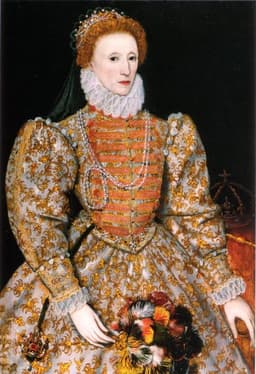
Elizabeth I
Politician · Modern
65.7Total
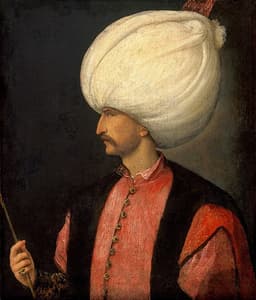
Suleiman the Magnificent
Emperor · Medieval
73.2Total
Basic Information
Born
1533
1494
Died
1603
1566
Era
Modern
Medieval
Nationality
England
Ottoman Empire
Occupation
Politician
Emperor
Civilization
Western
Middle Eastern
Score Comparison
Military (10%)
45.0
85.0
Political (20%)
78.0
78.0
Influence (20%)
65.0
72.0
Legacy (20%)
68.0
68.0
Leadership (15%)
75.0
72.0
Strategy (15%)
50.0
72.0
TOTAL
65.7
73.2
Elizabeth I — Complete Timeline
1559 AD
Act of Supremacy 1559Political Action◆ Major
Elizabeth I re-established the Church of England's independence from Rome, declaring herself Supreme Governor. This act, part of the Elizabethan Religious Settlement, restored Protestantism while maintaining some Catholic traditions, creating a via media that aimed to unify the nation.
Religious SettlementProtestantismChurch of England
Impact: nationalconstructive
1587 AD
Execution of Mary, Queen of ScotsPolitical Action◆ Major
After years of imprisonment, Elizabeth I signed the death warrant for Mary, Queen of Scots, who had been implicated in the Babington Plot to assassinate Elizabeth and claim the English throne. Mary's execution removed a major Catholic rival and solidified Elizabeth's position.
ExecutionCatholic RivalPlot
Impact: nationaltragic
1588 AD
Defeat of the Spanish ArmadaWar
The English navy under Lord Howard and Sir Francis Drake defeated the Spanish Armada, a massive invasion fleet sent by Philip II. Storms and English fireships scattered the Spanish fleet, preventing the invasion and establishing England as a major naval power.
Naval BattleSpainProtestantism
Impact: globalconstructive
1600 AD
Chartering of the East India CompanyPolitical Action◆ Major
Elizabeth I granted a royal charter to the East India Company, giving it a monopoly on English trade with Asia. This company would become a powerful instrument of British imperialism, eventually controlling large parts of India and shaping global trade.
TradeColonialismCharter
Impact: globalconstructive
1601 AD
Golden SpeechPolitical Action
In her final address to Parliament, Elizabeth I delivered the 'Golden Speech,' expressing her love for her subjects and her dedication to the realm. She addressed grievances over monopolies, promising reform, and cemented her image as a beloved monarch devoted to her people.
SpeechParliamentMonarchy
Impact: nationalconstructive
Suleiman the Magnificent — Complete Timeline
1522 AD
Siege of RhodesWar◆ Major
Suleiman personally led a massive Ottoman campaign against the Knights Hospitaller on Rhodes. After a six-month siege, the knights surrendered and were allowed to leave. This victory secured Ottoman control over the eastern Mediterranean.
SiegeMediterraneanKnights Hospitaller
Impact: regional
1526 AD
Battle of MohácsWar
Suleiman's Ottoman army defeated the Hungarian forces of King Louis II at Moh
BattleHungaryOttoman expansion
Impact: regional
1529 AD
Siege of ViennaWar◆ Major
Suleiman besieged Vienna, the Habsburg capital, with a large army. The siege failed due to supply issues, disease, and strong defenses. This defeat halted Ottoman expansion into central Europe and marked the empire's furthest advance westward.
SiegeViennaDefeat
Impact: regional
1530 AD
Codification of Ottoman lawReform◆ Major
Suleiman oversaw the compilation and standardization of Ottoman legal codes, known as Kanun. These laws regulated criminal justice, land tenure, and taxation, creating a unified legal system that balanced sharia with secular law. He earned the title 'Kanuni' (the Lawgiver).
Legal reformKanunOttoman Empire
Impact: nationalconstructive
1536 AD
Execution of Ibrahim PashaPolitical Action◆ Major
Suleiman ordered the execution of his grand vizier and close friend Ibrahim Pasha, who had served for 13 years. The reasons remain debated, but likely involved Ibrahim's growing power and conflicts with Suleiman's wife, Hurrem Sultan. This event demonstrated the absolute power of the sultan.
ExecutionCourt politicsPower
Impact: nationaltragic
Expert Analysis
Elizabeth I vs Suleiman the Magnificent
### The Virgin Queen and the Lawgiver: Two Titans of a Shared Century
In the autumn of 1588, a fifty-five-year-old woman in a white velvet gown and silver breastplate stood before her troops at Tilbury, promising to live or die among them. Across the continent, in the same decade, a sultan in his seventies had long since ceased to lead his armies in person, yet his name alone could make the walls of Christendom tremble. Elizabeth I of England and Suleiman the Magnificent of the Ottoman Empire never met, never exchanged a letter, and ruled worlds that barely touched. Yet they were the twin colossi of the sixteenth century, each shaping a golden age that would define their civilizations for centuries to come. How did two rulers, so different in gender, faith, and circumstance, achieve such parallel greatness—and why did their paths diverge so sharply?
### Origins
Elizabeth was born in 1533, the unwanted daughter of a king who had beheaded her mother. She grew up in the shadow of the axe, learning early that survival required silence, calculation, and a mask of perfect composure. Her England was a small, fractious island, still recovering from the chaos of the Reformation, surrounded by Catholic powers that considered her a bastard and a heretic.
Suleiman, born in 1494, was the only son of a sultan who had already conquered the Mamluk Sultanate. He grew up in the Topkapi Palace, surrounded by the machinery of empire, trained from childhood in the arts of war and governance. His Ottoman realm stretched from the Danube to the Euphrates, and his subjects called him *Kanuni*—the Lawgiver—long before he ever drew a sword. Where Elizabeth learned to rule through evasion and patience, Suleiman learned to rule through command and conquest.
### Rise to Power
Elizabeth’s path to the throne was a gauntlet. She survived the reigns of her brother Edward and her sister Mary, the latter of whom imprisoned her in the Tower of London on suspicion of treason. When she finally became queen in 1558 at age twenty-five, her kingdom was bankrupt, divided by religion, and at war with France. She inherited a crisis.
Suleiman’s ascent was seamless. He became sultan in 1520 at age twenty-six, after the death of his father Selim I, and faced no serious rival. The Janissaries, the empire’s elite slave-soldiers, hailed him. The ulema, the religious scholars, blessed him. He stepped onto a throne that was already the most powerful in the Islamic world, and he immediately began to expand it.
### Leadership & Governance
Here, the contrast is most striking. Elizabeth governed through a delicate dance of manipulation. She never married, using the prospect of her hand as a diplomatic weapon. She played her advisors against each other, listened to Parliament when it suited her, and ignored it when it did not. Her Act of Supremacy in 1559 re-established the Church of England with herself as Supreme Governor—a masterstroke that avoided the extremes of both Catholic and Puritan zealotry. She was not a military commander; she never led an army. Her greatest victory, the defeat of the Spanish Armada in 1588, was won by her admirals and the weather. But she understood the power of symbols, and her Tilbury speech turned a naval skirmish into a national myth.
Suleiman ruled through presence and law. He personally led campaigns, most famously the Siege of Rhodes in 1522, where he forced the Knights Hospitaller to surrender after six months, and the Battle of Mohács in 1526, where he annihilated the Hungarian army and killed their king. He codified Ottoman law into a single system, the *Kanun*, which regulated everything from taxation to criminal punishment, creating a framework that held the empire together for centuries. Yet his governance had a dark side: in 1536, he ordered the execution of his grand vizier and closest friend, Ibrahim Pasha, on suspicion of overreaching ambition. Elizabeth executed Mary, Queen of Scots in 1587, but only after years of agonizing hesitation. Suleiman acted without visible remorse.
### Triumph & Tragedy
Elizabeth’s greatest triumph was survival: she kept England independent, Protestant, and increasingly prosperous, and she chartered the East India Company in 1600, planting the seed of a future empire. Her tragedy was personal and political: she never married, never produced an heir, and her Golden Speech of 1601, in which she declared that she had “reigned with your loves,” was a poignant farewell to a nation she had led for forty-five years. She died childless, the last Tudor.
Suleiman’s triumphs were military: he pushed Ottoman borders to their greatest extent, besieged Vienna in 1529 (though he failed to take it), and dominated the Mediterranean. His tragedy was dynastic: his beloved wife, the Russian slave-girl Hurrem Sultan, schemed to have his eldest son executed, and his successor, Selim II, was a drunkard. The empire Suleiman built began to decay almost as soon as he died.
### Character & Destiny
Elizabeth’s character was her armor. She was cautious, calculating, and deeply aware of her vulnerability as a woman in a man’s world. She once said, “I know I have the body but of a weak and feeble woman, but I have the heart and stomach of a king.” That duality—the mask of frailty and the will of iron—defined her reign.
Suleiman’s character was his engine. He was confident, ruthless, and genuinely interested in justice and culture. He wrote poetry under the pen name *Muhibbi* and patronized the architect Sinan, who built the Süleymaniye Mosque, one of the great monuments of Istanbul. But his confidence could become arrogance, and his love for Hurrem led to decisions that fatally weakened the succession.
### Legacy
Elizabeth left a legend: the Virgin Queen, the golden age of Shakespeare and Drake, the founding myth of English greatness. Her legacy is cultural and political—a small island that became a global power.
Suleiman left an empire, but one that would slowly decline. His legacy is legal and architectural—a system of law that outlasted his dynasty, and buildings that still define Istanbul’s skyline. In the West, he is remembered as “the Magnificent”; in the Muslim world, as “the Lawgiver.”
### Conclusion
Two rulers, one century, two different kinds of greatness. Elizabeth built a nation; Suleiman built an empire. She ruled through indirection; he ruled through command. Both understood that power is a performance, but they performed for different audiences. Elizabeth played to her people, Suleiman to his God and his army. In the end, both left worlds that were transformed by their will—and both remind us that history’s greatest figures are not always the ones who conquer, but the ones who endure.
Rankings
🥇
Suleiman the MagnificentLeader
Mil: 85.0Pol: 78.0Inf: 72.0
73.2
🥈
Elizabeth I
Mil: 45.0Pol: 78.0Inf: 65.0
65.7
+7.5 behind
How This Comparison Works
Algorithm
Each figure is scored on 6 dimensions (0—100 scale) based on structured historical data: Military (10%), Political (20%), Influence (20%), Legacy (20%), Leadership (15%), Strategy (15%). The weighted total produces the final ranking.
Data Sources
Scores are computed from structured sub-indicators in the database. Scale factors adjust for era (Ancient ×0.85, Modern ×1.0) and civilization size (Eastern ×1.05, Other ×0.80) to account for differences in population and military scale.
Maximum 3 Figures
Comparisons are limited to 2—3 figures to ensure readability and statistical meaningfulness.
Error Margins
±5 points per dimension — Sub-scores are derived from historical records with inherent uncertainty. Two figures within 5 points on a dimension should be considered roughly equivalent in that area.
Total Score Accuracy
±3 points overall — The weighted combination of 6 dimensions produces a total score with approximately ±3 points of uncertainty. Differences of less than 3 points are not statistically significant— the figures are effectively tied.
Known Limitations
- Historical records are incomplete and uneven across civilizations
- Figures from oral-tradition societies may be underrepresented
- Occupation labels can misclassify multi-role figures
- Scores measure capability and impact, not moral character
- Quantitative scoring is a comparison tool, not absolute truth
Capability Radar
Military (10%) — Battles & Warfare
Battles
45
95
Win Rate
70
90
Expansion
55
95
Political (20%) — Governance & Reform
Reform
80
90
Diplomacy
85
88
Economy
80
85
Influence (20%) — Cultural & Global Reach
Cultural
85
90
Global
80
88
Legacy (20%) — Historical Impact
Historical
85
92
Longevity
85
85
Leadership (15%) — Power & Stability
Tenure
90
95
Stability
75
85
Strategy (15%) — Tactics & Innovation
Strategy
75
92
Tactics
60
85
Reform
65
80
Similar Comparisons
Comments & Discussion
Iron Magnolia6/16/2026
Military historian here. Let's be real: Suleiman conquered Belgrade, Rhodes, and Budapest before Elizabeth even took the throne. By 1566, he'd personally led 13 campaigns; her Tilbury speech was theater—she never drew a sword. His artillery shattered walls; her navy barely held off the Spanish Armada (with a lot of luck and storms). Size matters: Suleiman ruled 20 million; Elizabeth, 4 million. She was a brilliant diplomat, but he was a conqueror. Sorry, Liz, but the Magnificent wins the "ruler