Loading...
Mao Zedong vs Suleiman the Magnificent
Mao Zedong leads by 6.2 pts · 2 figures compared
…
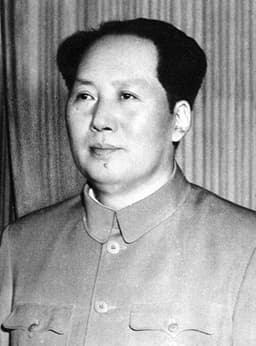
Mao Zedong
Politician · Modern
79.4Total
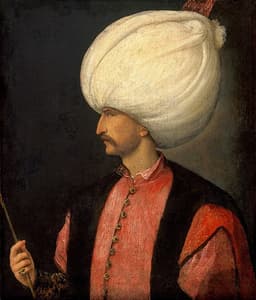
Suleiman the Magnificent
Emperor · Medieval
73.2Total
Basic Information
Born
1893
1494
Died
1976
1566
Era
Modern
Medieval
Nationality
China
Ottoman Empire
Occupation
Politician
Emperor
Civilization
Eastern
Middle Eastern
Score Comparison
Military (10%)
75.0
85.0
Political (20%)
88.0
78.0
Influence (20%)
85.0
72.0
Legacy (20%)
70.0
68.0
Leadership (15%)
85.0
72.0
Strategy (15%)
72.0
72.0
TOTAL
79.4
73.2
Mao Zedong — Complete Timeline
1934 AD
Long MarchWar
Mao Zedong led the Chinese Red Army on a strategic retreat from Nationalist forces, covering approximately 6,000 miles over 370 days. The march solidified Mao's leadership within the Chinese Communist Party and became a foundational myth of the Communist revolution.
Chinese Civil WarCommunist RevolutionRetreat
Impact: national
1949 AD
Proclamation of the People's Republic of ChinaPolitical Action
Mao Zedong declared the founding of the People's Republic of China from Tiananmen Gate in Beijing. This ended the Chinese Civil War and established Communist rule over mainland China, with Mao as Chairman of the Central People's Government.
Founding of PRCCommunist VictoryRevolution
Impact: global
1958 AD
Great Leap ForwardReform◆ Major
Mao launched a campaign to rapidly industrialize China and collectivize agriculture. The policy led to widespread mismanagement, resulting in a famine that caused an estimated 15-45 million deaths between 1959 and 1961.
FamineIndustrializationCollectivization
Impact: nationaldestructive
1960 AD
Sino-Soviet SplitPolitical Action◆ Major
Mao's ideological differences with Soviet leader Nikita Khrushchev led to a breakdown in relations between China and the Soviet Union. The split ended the Sino-Soviet alliance and reshaped global Cold War dynamics, with China pursuing an independent path.
Cold WarIdeological ConflictAlliance Breakdown
Impact: global
1966 AD
Cultural RevolutionPolitical Action
Mao initiated a sociopolitical movement to purge capitalist and traditional elements from Chinese society. The Red Guard youth groups attacked intellectuals and officials, leading to widespread violence, destruction of cultural artifacts, and an estimated 1-2 million deaths.
Political PurgeSocial UpheavalRed Guard
Impact: nationaldestructive
1971 AD
Ping-Pong DiplomacyCultural◆ Major
Mao approved an invitation for the U.S. table tennis team to visit China, initiating a thaw in Sino-American relations. This cultural exchange paved the way for President Nixon's visit to China in 1972 and the eventual normalization of diplomatic ties.
DiplomacyU.S.-China RelationsCultural Exchange
Impact: globalconstructive
Suleiman the Magnificent — Complete Timeline
1522 AD
Siege of RhodesWar◆ Major
Suleiman personally led a massive Ottoman campaign against the Knights Hospitaller on Rhodes. After a six-month siege, the knights surrendered and were allowed to leave. This victory secured Ottoman control over the eastern Mediterranean.
SiegeMediterraneanKnights Hospitaller
Impact: regional
1526 AD
Battle of MohácsWar
Suleiman's Ottoman army defeated the Hungarian forces of King Louis II at Moh
BattleHungaryOttoman expansion
Impact: regional
1529 AD
Siege of ViennaWar◆ Major
Suleiman besieged Vienna, the Habsburg capital, with a large army. The siege failed due to supply issues, disease, and strong defenses. This defeat halted Ottoman expansion into central Europe and marked the empire's furthest advance westward.
SiegeViennaDefeat
Impact: regional
1530 AD
Codification of Ottoman lawReform◆ Major
Suleiman oversaw the compilation and standardization of Ottoman legal codes, known as Kanun. These laws regulated criminal justice, land tenure, and taxation, creating a unified legal system that balanced sharia with secular law. He earned the title 'Kanuni' (the Lawgiver).
Legal reformKanunOttoman Empire
Impact: nationalconstructive
1536 AD
Execution of Ibrahim PashaPolitical Action◆ Major
Suleiman ordered the execution of his grand vizier and close friend Ibrahim Pasha, who had served for 13 years. The reasons remain debated, but likely involved Ibrahim's growing power and conflicts with Suleiman's wife, Hurrem Sultan. This event demonstrated the absolute power of the sultan.
ExecutionCourt politicsPower
Impact: nationaltragic
Expert Analysis
Mao Zedong vs Suleiman the Magnificent
# The Lion and the Dragon: Suleiman the Magnificent and Mao Zedong
On a September morning in 1529, Suleiman the Magnificent stood before the walls of Vienna, the mightiest city in Christian Europe, his army stretching across the Danube plain like a vast, disciplined sea. Four centuries later, in October 1949, Mao Zedong stood atop Tiananmen Gate in Beijing, proclaiming to a million assembled souls that the Chinese people had finally stood up. One man commanded the greatest empire of his age from a tent outside a foreign capital; the other commanded a shattered nation from its ancient heart. Both sought to remake the world in their image. Yet one built a legal order that lasted centuries, while the other unleashed storms that consumed millions. Why did two men of such ambition and power leave such different marks on history? The answer lies not in their goals, but in the soil from which they grew.
Origins
Suleiman was born into destiny. The only surviving son of Sultan Selim I, he was raised in the Topkapi Palace in Istanbul, surrounded by scholars, poets, and administrators who drilled into him the Ottoman ideal: the sultan as both warrior and lawgiver. His world was one of inherited legitimacy, where power flowed through bloodlines sanctified by centuries of conquest. By contrast, Mao was born in 1893 in the village of Shaoshan, the son of a prosperous peasant. His China was a crumbling empire, humiliated by foreign powers, torn by warlords, and suffocating under the weight of its own decay. Where Suleiman inherited a machine of state, Mao had to build one from scratch—and the desperation of that task would shape everything he did.
Rise to Power
Suleiman ascended the throne at age twenty-six without a single rival. His father had killed off potential claimants, leaving the young sultan a unified realm and a veteran army. His first great test came in 1522 at the Siege of Rhodes, where he personally led a six-month campaign against the Knights Hospitaller. The victory was complete, and it established his reputation as a commander who could overcome any fortress. Mao’s path was far bloodier and more uncertain. His rise came through the Long March of 1934–1935, a desperate 6,000-mile retreat from Nationalist forces that killed nine out of every ten soldiers who began it. Mao did not inherit power; he seized it through sheer endurance, outlasting rivals and turning catastrophe into legend.
Leadership & Governance
Here the two men diverged most sharply. Suleiman codified the *Kanun*, a unified legal system that regulated everything from criminal punishment to taxation, balancing Islamic law with secular statecraft. He governed through a bureaucracy of merit, where even Christian-born slaves could rise to become grand vizier. His court patronized the architect Sinan, who built the Süleymaniye Mosque, and the poet Baki, who turned Turkish into a language of sublime verse. Mao, by contrast, governed through permanent revolution. The Great Leap Forward of 1958 sought to industrialize China overnight by mobilizing hundreds of millions of peasants into backyard steel furnaces—a policy that led to the deadliest famine in human history. The Cultural Revolution of 1966 turned society against itself, as Mao unleashed the Red Guard to purge “bourgeois” elements, destroying temples, books, and the lives of millions. Where Suleiman built institutions, Mao broke them.
Triumph & Tragedy
Suleiman’s greatest triumph was the Battle of Mohács in 1526, where he annihilated the Hungarian army and killed King Louis II, opening Central Europe to Ottoman influence. His greatest tragedy was the execution of his grand vizier Ibrahim Pasha in 1536—a friend who had served him for thirteen years, killed on suspicion of overreaching ambition. It was a moment that revealed the loneliness of absolute power. Mao’s greatest triumph was the proclamation of the People’s Republic in 1949, uniting a shattered nation after a century of foreign domination. His greatest tragedy was the Great Leap Forward, which by some estimates caused 30 to 45 million deaths through starvation. Yet Mao never acknowledged failure; he blamed nature, sabotage, or his subordinates.
Character & Destiny
Suleiman was called “the Lawgiver” by his own people and “the Magnificent” by Europeans—a man who could order a siege and write a poem in the same day. He believed in order, hierarchy, and the divine right of his dynasty. Mao was a poet of chaos, a man who wrote that “revolution is not a dinner party” and who believed that perpetual struggle was the engine of history. Suleiman’s personality sought to stabilize; Mao’s sought to shatter. One died in his tent during the Siege of Szigetvár at age seventy-two, still commanding his army. The other died in his bed at age eighty-two, his body preserved in a mausoleum where millions still come to pay respects.
Legacy
Suleiman’s legacy is stone and ink: the mosques of Istanbul, the laws that governed the Balkans and the Middle East for centuries, the Ottoman Golden Age that became a model of Islamic civilization. Mao’s legacy is more ambiguous. He lifted China from colonial humiliation to nuclear power, gave it a unified state and a sense of national pride, but at a cost so staggering that historians still debate whether the price was worth paying. Mao’s China is a superpower; Suleiman’s empire is dust.
Conclusion
Standing at the gates of Vienna, Suleiman could not have imagined that his empire would one day be called “the sick man of Europe.” Standing on Tiananmen Gate, Mao could not have imagined that his successors would embrace the very capitalism he spent his life destroying. Both men were prisoners of their time—Suleiman of a world where empire was eternal, Mao of a world where revolution was the only answer. History judges them not by their intentions, but by what they left behind. And what they left behind asks us a question that has no comfortable answer: Is it better to build a house that will stand for centuries, or to tear down a prison so that something new can be built, even if the rubble buries millions? The Lion and the Dragon offer no easy reply.
Rankings
🥇
Mao ZedongLeader
Mil: 75.0Pol: 88.0Inf: 85.0
79.4
🥈
Suleiman the Magnificent
Mil: 85.0Pol: 78.0Inf: 72.0
73.2
+6.2 behind
How This Comparison Works
Algorithm
Each figure is scored on 6 dimensions (0—100 scale) based on structured historical data: Military (10%), Political (20%), Influence (20%), Legacy (20%), Leadership (15%), Strategy (15%). The weighted total produces the final ranking.
Data Sources
Scores are computed from structured sub-indicators in the database. Scale factors adjust for era (Ancient ×0.85, Modern ×1.0) and civilization size (Eastern ×1.05, Other ×0.80) to account for differences in population and military scale.
Maximum 3 Figures
Comparisons are limited to 2—3 figures to ensure readability and statistical meaningfulness.
Error Margins
±5 points per dimension — Sub-scores are derived from historical records with inherent uncertainty. Two figures within 5 points on a dimension should be considered roughly equivalent in that area.
Total Score Accuracy
±3 points overall — The weighted combination of 6 dimensions produces a total score with approximately ±3 points of uncertainty. Differences of less than 3 points are not statistically significant— the figures are effectively tied.
Known Limitations
- Historical records are incomplete and uneven across civilizations
- Figures from oral-tradition societies may be underrepresented
- Occupation labels can misclassify multi-role figures
- Scores measure capability and impact, not moral character
- Quantitative scoring is a comparison tool, not absolute truth
Capability Radar
Military (10%) — Battles & Warfare
Battles
85
95
Win Rate
80
90
Expansion
85
95
Political (20%) — Governance & Reform
Reform
95
90
Diplomacy
80
88
Economy
70
85
Influence (20%) — Cultural & Global Reach
Cultural
90
90
Global
90
88
Legacy (20%) — Historical Impact
Historical
95
92
Longevity
85
85
Leadership (15%) — Power & Stability
Tenure
95
95
Stability
60
85
Strategy (15%) — Tactics & Innovation
Strategy
85
92
Tactics
75
85
Reform
90
80
Similar Comparisons
Comments & Discussion
Reformist Critic6/16/2026
Let’s stop romanticizing Suleiman as a “lawgiver”—he executed his own son Mustafa for suspected revolt, and his Kanun was designed to centralize terror, not justice. Mao’s land reforms broke feudal chains for millions of peasants, even if executed brutally. Both were ruthless pragmatists: Suleiman strangled rivals with silk;
数据侦探6/16/2026
看数据:苏莱曼治下奥斯曼人口约1200万到1500万,法律改革稳定了49个省,但帝国财政依赖掠夺,后期通胀飙升。毛泽东时期中国人口从5.4亿涨到10亿,人均粮食却从1952年的288公斤降到1961年的207公斤——大跃进饿死三千多万人。别跟我扯“伟大君主”,数字不会撒谎。苏莱曼的长治久安是相对稳定;毛泽东的“站起来”是统计数字上的悲剧。我只信账本,不信城墙上的豪言。
Kanun vs Mass Line6/16/2026
As a classical scholar of empires, I see Suleiman as a juridical genius: his Kanun law harmonized sharia with secular decree, creating a multi-ethnic order that let Jews, Christians, and Muslims coexist under a single tax code. Mao’s “mass line” was a rhetorical weapon—endless campaigns like the Cultural Revolution tore apart social fabric, purging intellectuals and terrorizing peasants. Suleiman wrote laws to endure; Mao wrote slogans to inflame. One built a structure for centuries; the other b
史海钓客6/16/2026
有趣的是,两人都对“改革”痴迷,但土壤决定了果实。苏莱曼在伊斯坦布尔宫里长大,周围是学者和行政官,他改成法律——奥斯曼之法延续了三百年。毛泽东从韶山农民起步,周围是饥荒和列强,他改成土地改革和阶级斗争——十年内死了两千万人。不是能力,是根基:苏莱曼继承了帝国机器,只需微调;毛泽东得从废墟上造新轮子,结果轮子碾碎了人。历史选角色,不选道德。
Chronicler77246/16/2026
As a military historian, I’d argue Suleiman’s siege of Vienna in 1529 reveals a fatal overreach—he left cannons behind in Belgrade due to mud, then got bogged down by Habsburg logistics. Mao’s Long March in 1935, by contrast, turned strategic retreat into mythic endurance, covering 6,000 miles with guerrilla adaptability. Suleiman had Janissaries and superior artillery; Mao had peasant morale and terrain. Power is about reading the ground, not just commanding from a tent. Suleiman didn’t underst