Loading...
Charles de Gaulle vs Suleiman the Magnificent
Suleiman the Magnificent leads by 5.0 pts · 2 figures compared
…
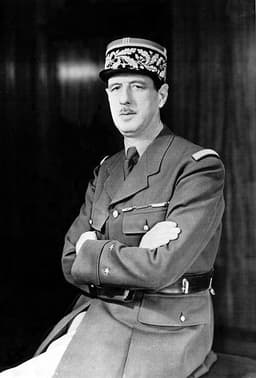
Charles de Gaulle
Politician · Modern
68.2Total
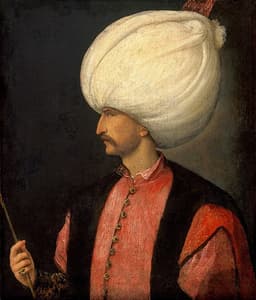
Suleiman the Magnificent
Emperor · Medieval
73.2Total
Basic Information
Born
1890
1494
Died
1970
1566
Era
Modern
Medieval
Nationality
France
Ottoman Empire
Occupation
Politician
Emperor
Civilization
Western
Middle Eastern
Score Comparison
Military (10%)
55.0
85.0
Political (20%)
75.0
78.0
Influence (20%)
65.0
72.0
Legacy (20%)
68.0
68.0
Leadership (15%)
78.0
72.0
Strategy (15%)
65.0
72.0
TOTAL
68.2
73.2
Charles de Gaulle — Complete Timeline
1940 AD
Appeal of 18 June 1940Political Action
From London, de Gaulle broadcast a radio appeal urging French resistance against Nazi occupation. He called on French soldiers and citizens to continue the fight, founding the Free French Forces and becoming the symbol of French defiance.
World War IIResistanceLeadership
Impact: nationalconstructive
1958 AD
Founding of the Fifth RepublicPolitical Action
De Gaulle returned to power during the Algerian crisis and oversaw the drafting of a new constitution. The Fifth Republic established a strong executive presidency, replacing the unstable parliamentary system of the Fourth Republic.
ConstitutionGovernment ReformPolitical System
Impact: nationalconstructive
1962 AD
End of the Algerian WarPolitical Action◆ Major
De Gaulle negotiated the
DecolonizationPeace TreatyAlgeria
Impact: regionalconstructive
1968 AD
May 1968 CrisisPolitical Action◆ Major
Mass student protests and general strikes paralyzed France, challenging de Gaulle's government. De Gaulle briefly fled to Germany, then returned to dissolve the National Assembly and call elections, which his party won, but his authority was weakened.
ProtestPolitical CrisisSocial Unrest
Impact: nationaldestructive
1969 AD
Resignation as PresidentPolitical Action
De Gaulle resigned after losing a referendum on regional reform and Senate restructuring. The defeat marked the end of his political career, as he withdrew from public life and died the following year.
ResignationPolitical DefeatReferendum
Impact: nationaltragic
Suleiman the Magnificent — Complete Timeline
1522 AD
Siege of RhodesWar◆ Major
Suleiman personally led a massive Ottoman campaign against the Knights Hospitaller on Rhodes. After a six-month siege, the knights surrendered and were allowed to leave. This victory secured Ottoman control over the eastern Mediterranean.
SiegeMediterraneanKnights Hospitaller
Impact: regional
1526 AD
Battle of MohácsWar
Suleiman's Ottoman army defeated the Hungarian forces of King Louis II at Moh
BattleHungaryOttoman expansion
Impact: regional
1529 AD
Siege of ViennaWar◆ Major
Suleiman besieged Vienna, the Habsburg capital, with a large army. The siege failed due to supply issues, disease, and strong defenses. This defeat halted Ottoman expansion into central Europe and marked the empire's furthest advance westward.
SiegeViennaDefeat
Impact: regional
1530 AD
Codification of Ottoman lawReform◆ Major
Suleiman oversaw the compilation and standardization of Ottoman legal codes, known as Kanun. These laws regulated criminal justice, land tenure, and taxation, creating a unified legal system that balanced sharia with secular law. He earned the title 'Kanuni' (the Lawgiver).
Legal reformKanunOttoman Empire
Impact: nationalconstructive
1536 AD
Execution of Ibrahim PashaPolitical Action◆ Major
Suleiman ordered the execution of his grand vizier and close friend Ibrahim Pasha, who had served for 13 years. The reasons remain debated, but likely involved Ibrahim's growing power and conflicts with Suleiman's wife, Hurrem Sultan. This event demonstrated the absolute power of the sultan.
ExecutionCourt politicsPower
Impact: nationaltragic
Expert Analysis
Charles de Gaulle vs Suleiman the Magnificent
# The Magnificent and the Indomitable: Suleiman and de Gaulle
In the summer of 1529, Suleiman the Magnificent stood before the walls of Vienna, commanding the most powerful army on earth. Four centuries later, in June 1940, Charles de Gaulle stood before a microphone in London, commanding nothing but his own voice. One was the sultan of an empire stretching from Budapest to Baghdad; the other was a recently promoted brigadier general whose country had just surrendered. Yet both men would come to define their nations' greatest moments of pride and peril. What separates a ruler who inherits glory from one who creates it from ashes?
Origins
Suleiman was born into supremacy. The only surviving son of Sultan Selim I, he ascended to the Ottoman throne at age twenty-six, inheriting a war machine that had already crushed the Mamluks and the Safavids. His world was the medieval Mediterranean, where empires rose and fell by the sword and the siege engine. The son of a conqueror, he was trained from childhood in statecraft, theology, and military command. He had never known defeat, poverty, or exile.
Charles de Gaulle was born in 1890 in Lille, into a devoutly Catholic, patriotic family. His father taught philosophy and history, and young Charles absorbed a vision of France as a nation of eternal greatness—a vision that the Third Republic seemed determined to betray. He grew up in the shadow of France's humiliation in the Franco-Prussian War, and he would spend his life trying to reverse that trajectory. Unlike Suleiman, de Gaulle knew what it meant to lose: he was wounded and captured at Verdun in World War I, spending nearly three years as a prisoner of war. That experience of captivity, of helplessness, forged a man who would never again accept submission.
Rise to Power
Suleiman's path to power was a coronation, not a struggle. When his father died in 1520, the empire's elite simply acknowledged the obvious: the new sultan was ready. His first major test came in 1522, when he personally led the Siege of Rhodes. For six months, the Knights Hospitaller held out against overwhelming Ottoman forces, but Suleiman's patience and logistics prevailed. The victory announced that the young sultan was his father's equal.
De Gaulle's rise was the opposite of inevitable. In 1940, he was a fifty-year-old colonel with a reputation for difficult brilliance and a book on tank warfare that nobody had read. When France fell, he escaped to London just hours before the armistice. On June 18, 1940, he broadcast his famous appeal: "France has lost a battle, but France has not lost the war." At that moment, he was a fugitive speaking to a defeated nation. His authority was entirely self-proclaimed. The Free French forces he assembled started with a few thousand men, a handful of ships, and the implacable will of one man.
Leadership & Governance
Suleiman ruled through codification. In 1530, he oversaw the compilation of Ottoman law—the Kanun—which standardized criminal, land, and tax regulations across his vast empire. This was not innovation but consolidation: he took existing customary law, Islamic jurisprudence, and sultanic decrees and wove them into a coherent system. The Kanun gave the empire stability, but it also gave the sultan control. Every judge, every governor, every tax collector now operated under a single framework. Suleiman was called "the Lawgiver" by his own people; "the Magnificent" was a European epithet.
De Gaulle ruled through constitution-making. When he returned to power in 1958, during the Algerian crisis, he did not simply take command—he transformed the French state. The Fifth Republic was his creation: a presidential system with a strong executive, designed to prevent the parliamentary paralysis that had doomed the Third and Fourth Republics. De Gaulle gave France institutions that could survive him. Suleiman gave the Ottoman Empire laws that would be followed for centuries. Both men understood that personal power was fleeting; systems endure.
Triumph & Tragedy
Suleiman's greatest triumph was the Battle of Mohács in 1526, where he annihilated the Hungarian army in two hours. King Louis II drowned in a river while fleeing. Hungary lay open, and the Ottoman Empire reached its European zenith. But triumph was followed by tragedy: the Siege of Vienna in 1529 failed. Disease, supply lines stretched to breaking, and the onset of winter forced a retreat. Suleiman never took Vienna, and that failure marked the empire's northern limit. The greatest Ottoman sultan could not break the Habsburg wall.
De Gaulle's greatest triumph was the end of the Algerian War in 1962. Against the fury of the French army and the pied-noir population, he negotiated independence for Algeria, a decision that required extraordinary political courage. He survived assassination attempts, a military putsch, and the hatred of those who called him a traitor. But tragedy came in May 1968, when student protests and general strikes paralyzed France. De Gaulle, the man of order, was bewildered by a rebellion that was not about bread or borders but about ideas. He fled briefly to Germany to consult with French generals—a moment of panic that shattered his mystique. He resigned a year later, after losing a referendum on minor reforms. The man who had saved France twice—from the Nazis and from civil war—was brought down by students.
Character & Destiny
Suleiman was capable of immense magnanimity and cold cruelty. In 1536, he ordered the execution of his grand vizier and closest friend, Ibrahim Pasha, who had served him for thirteen years. The reasons remain murky—perhaps Ibrahim had grown too powerful, perhaps his wife Roxelana had whispered against him. What matters is that Suleiman did it. He was a man who could love and kill in equal measure, who saw friendship and power as separate realms. That duality defined his reign: magnificent in achievement, terrible in judgment.
De Gaulle was a man of granite certainty. He once wrote, "I have a certain idea of France." That idea was not negotiable. He could be petty, aloof, and impossibly arrogant. But that arrogance was also his strength: only a man who believed he embodied France could have led it through defeat, occupation, and decolonization. He was not a warm leader; he was a necessary one.
Legacy
Suleiman's legacy is the Ottoman golden age—architecture by Sinan, poetry by Baki, law that lasted until the empire's death. But his failure at Vienna, the execution of Ibrahim, and the naval defeat at Lepanto (which occurred after his death but stemmed from his policies) also mark his reign. He left an empire at its peak, but peaks are followed by descents.
De Gaulle left a republic that still stands. The Fifth Republic is his monument, and every French president since has governed within its framework. He also left a certain idea of France—independent, proud, and resistant to domination—that still shapes French foreign policy. His legacy is not a golden age but a foundation.
Conclusion
Suleiman inherited an empire and made it magnificent. De Gaulle inherited a defeat and made it a nation. One ruled by ancient right, the other by sheer force of will. Their differences are the differences between medieval and modern, between east and west, between the son of a sultan and the son of a professor. But both understood that leadership is not about power alone—it is about the laws you leave behind, the walls you breach or fail to breach, the idea of a country that you carry in your mind and impose on history. Suleiman built an empire on conquest; de Gaulle built one on memory. Both are still standing, in different ways.
Rankings
🥇
Suleiman the MagnificentLeader
Mil: 85.0Pol: 78.0Inf: 72.0
73.2
🥈
Charles de Gaulle
Mil: 55.0Pol: 75.0Inf: 65.0
68.2
+5.0 behind
How This Comparison Works
Algorithm
Each figure is scored on 6 dimensions (0—100 scale) based on structured historical data: Military (10%), Political (20%), Influence (20%), Legacy (20%), Leadership (15%), Strategy (15%). The weighted total produces the final ranking.
Data Sources
Scores are computed from structured sub-indicators in the database. Scale factors adjust for era (Ancient ×0.85, Modern ×1.0) and civilization size (Eastern ×1.05, Other ×0.80) to account for differences in population and military scale.
Maximum 3 Figures
Comparisons are limited to 2—3 figures to ensure readability and statistical meaningfulness.
Error Margins
±5 points per dimension — Sub-scores are derived from historical records with inherent uncertainty. Two figures within 5 points on a dimension should be considered roughly equivalent in that area.
Total Score Accuracy
±3 points overall — The weighted combination of 6 dimensions produces a total score with approximately ±3 points of uncertainty. Differences of less than 3 points are not statistically significant— the figures are effectively tied.
Known Limitations
- Historical records are incomplete and uneven across civilizations
- Figures from oral-tradition societies may be underrepresented
- Occupation labels can misclassify multi-role figures
- Scores measure capability and impact, not moral character
- Quantitative scoring is a comparison tool, not absolute truth
Capability Radar
Military (10%) — Battles & Warfare
Battles
60
95
Win Rate
55
90
Expansion
20
95
Political (20%) — Governance & Reform
Reform
95
90
Diplomacy
90
88
Economy
70
85
Influence (20%) — Cultural & Global Reach
Cultural
70
90
Global
80
88
Legacy (20%) — Historical Impact
Historical
85
92
Longevity
75
85
Leadership (15%) — Power & Stability
Tenure
85
95
Stability
75
85
Strategy (15%) — Tactics & Innovation
Strategy
85
92
Tactics
70
85
Reform
80
80
Similar Comparisons
Comments & Discussion
IronSultan6/16/2026
Suleiman inherited a war machine and a treasury; de Gaulle inherited a radio microphone. That's the difference between empire management and nation-building from scratch. Suleiman never had to convince anyone he was legitimate—his sword spoke for him. De Gaulle had to persuade the Free French, the British, and eventually the Americans that France still existed. One ruled by divine right, the other by sheer will. Give me the exile over the emperor any day—true leadership is creating authority, no
戈地图的幽灵6/16/2026
这对比漏了关键点:苏莱曼是靠火药帝国收割中世纪红利,戴高乐是靠工业化民族国家的动员能力翻盘。两人完全不在同一经济基础上。苏莱曼的奥斯曼靠奴隶制和战利品经济,戴高乐的法国靠石油、钢铁和殖民地资源。你比的不该是个人,是两种生产模式的顶峰。没有阿金奇骑兵和蒂玛尔制的根基,苏莱曼也搞不定维也纳。没有雷诺工厂和核能规划,戴高乐也撑不起第五共和。
ClassicsNerd6/16/2026
Suleiman styled himself as "the Second Solomon," literally framing his reign as the heir to biblical and Roman imperial traditions. De Gaulle invoked Joan of Arc and Clovis. Both men understood that political power requires a usable past—one that justifies your present authority. But Suleiman had three centuries of Ottoman dynastic myth to draw on, while de Gaulle had to selectively resurrect France's glory from the ruins of 1940. The Magnificent inherited his narrative; the Indomitable had to w
老八路看历史6/16/2026
拿一个十六世纪封建君主和一个二十世纪民族主义领袖比功业,本身就是历史观错位。苏莱曼扩张领土靠的是火器优势和游牧骑兵的机动性,戴高乐保住法国主权靠的是原子弹和联合国常任理事国席位。前者是冷兵器时代最后的余晖,后者是核威慑时代的最初曙光。别扯什么"伟人气质",两人成功的物质基础完全不同。你要真比,比的是谁更适应自己时代的游戏规则——苏莱曼赢了奥斯曼的规则,戴高乐改写了法国的规则。
SkepticalData6/16/2026
Point of order: Suleiman's empire had 15 million subjects and 40,000 professional troops. De Gaulle's Free French peaked at maybe 300,000 under arms, but never controlled more than a fraction of French territory until 1944. By any objective metric—population, economic output, territorial extent—Suleiman outranks de Gaulle by orders of magnitude. But lasting influence? Suleiman's legal code was superseded, his institutions crumbled, and his dynasty ended. De Gaulle's constitution still governs Fr