Loading...
Elizabeth I vs Otto von Bismarck
Otto von Bismarck leads by 0.1 pts · 2 figures compared
…
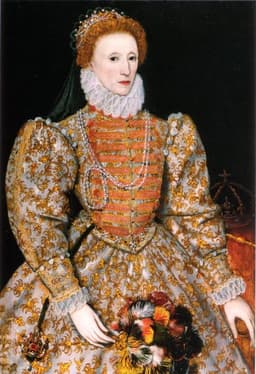
Elizabeth I
Politician · Modern
65.7Total
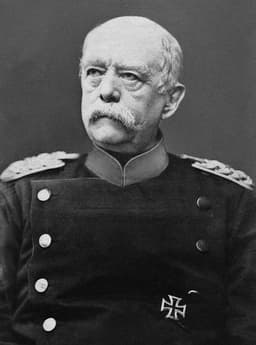
Otto von Bismarck
Politician · Modern
65.8Total
Basic Information
Born
1533
1815
Died
1603
1898
Era
Modern
Modern
Nationality
England
Germany
Occupation
Politician
Politician
Civilization
Western
Western
Score Comparison
Military (10%)
45.0
55.0
Political (20%)
78.0
85.0
Influence (20%)
65.0
82.0
Legacy (20%)
68.0
40.0
Leadership (15%)
75.0
80.0
Strategy (15%)
50.0
50.0
TOTAL
65.7
65.8
Elizabeth I — Complete Timeline
1559 AD
Act of Supremacy 1559Political Action◆ Major
Elizabeth I re-established the Church of England's independence from Rome, declaring herself Supreme Governor. This act, part of the Elizabethan Religious Settlement, restored Protestantism while maintaining some Catholic traditions, creating a via media that aimed to unify the nation.
Religious SettlementProtestantismChurch of England
Impact: nationalconstructive
1587 AD
Execution of Mary, Queen of ScotsPolitical Action◆ Major
After years of imprisonment, Elizabeth I signed the death warrant for Mary, Queen of Scots, who had been implicated in the Babington Plot to assassinate Elizabeth and claim the English throne. Mary's execution removed a major Catholic rival and solidified Elizabeth's position.
ExecutionCatholic RivalPlot
Impact: nationaltragic
1588 AD
Defeat of the Spanish ArmadaWar
The English navy under Lord Howard and Sir Francis Drake defeated the Spanish Armada, a massive invasion fleet sent by Philip II. Storms and English fireships scattered the Spanish fleet, preventing the invasion and establishing England as a major naval power.
Naval BattleSpainProtestantism
Impact: globalconstructive
1600 AD
Chartering of the East India CompanyPolitical Action◆ Major
Elizabeth I granted a royal charter to the East India Company, giving it a monopoly on English trade with Asia. This company would become a powerful instrument of British imperialism, eventually controlling large parts of India and shaping global trade.
TradeColonialismCharter
Impact: globalconstructive
1601 AD
Golden SpeechPolitical Action
In her final address to Parliament, Elizabeth I delivered the 'Golden Speech,' expressing her love for her subjects and her dedication to the realm. She addressed grievances over monopolies, promising reform, and cemented her image as a beloved monarch devoted to her people.
SpeechParliamentMonarchy
Impact: nationalconstructive
Otto von Bismarck — Complete Timeline
1870 AD
Franco-Prussian WarWar
Bismarck provoked France into declaring war by editing the Ems Dispatch to appear insulting. The resulting conflict saw Prussia and its allies decisively defeat France, leading to the fall of Napoleon III, the capture of Paris, and the annexation of Alsace-Lorraine.
WarProvocationAnnexation
Impact: globaldestructive
1871 AD
Unification of Germany ProclaimedPolitical Action
Following the Franco-Prussian War, Bismarck orchestrated the proclamation of the German Empire in the Hall of Mirrors at Versailles. King Wilhelm I of Prussia was declared German Emperor, uniting the German states under Prussian leadership and establishing the Second Reich.
UnificationGerman EmpireNationalism
Impact: globalconstructive
1878 AD
Enactment of the Anti-Socialist LawsPolitical Action◆ Major
After two assassination attempts on Kaiser Wilhelm I, Bismarck pushed through laws banning socialist organizations, publications, and meetings. The laws remained in force until 1890, suppressing the Social Democratic Party while Bismarck simultaneously introduced welfare reforms to undercut its appeal.
RepressionSocialismWelfare State
Impact: nationaldestructive
Congress of BerlinPolitical Action◆ Major
Bismarck hosted the Congress of Berlin to revise the Treaty of San Stefano and resolve the Eastern Crisis. He acted as 'honest broker,' reducing Russian gains, granting independence to Romania, Serbia, and Montenegro, and placing Bosnia-Herzegovina under Austro-Hungarian administration.
DiplomacyBalkansBalance of Power
Impact: global
1883 AD
Establishment of the Welfare StateReform◆ Major
Bismarck introduced the Health Insurance Bill (1883), Accident Insurance Bill (1884), and Old Age and Disability Insurance Bill (1889). These laws created the first modern welfare state, providing workers with social security and aiming to reduce support for socialist movements.
Social ReformWelfareInsurance
Impact: globalprogressive
1890 AD
Dismissal as ChancellorPolitical Action◆ Major
Emperor Wilhelm II forced Bismarck to resign due to policy disagreements, particularly over anti-socialist laws and foreign policy. Bismarck's departure marked the end of an era, leading to a more aggressive German foreign policy and the eventual unraveling of his alliance system.
ResignationWilhelm IIPolicy Shift
Impact: global
Expert Analysis
Otto von Bismarck vs Elizabeth I
### The Iron Chancellor and the Virgin Queen: Two Paths to Power
In the Hall of Mirrors at Versailles, a scene of supreme irony unfolded on January 18, 1871. The Prussian King Wilhelm I, surrounded by a host of German princes and generals, was proclaimed German Emperor. The man who had orchestrated this moment, dressed not in a crown but in a simple uniform, stood in the shadows, his face betraying a grim satisfaction. Just over three hundred years earlier, another ruler, a woman in a jeweled gown, stood before her Parliament in London, her voice a silken thread of power. She declared herself wedded to her kingdom. One forged a nation from blood and iron; the other nurtured an age of gold. Otto von Bismarck and Elizabeth I, separated by centuries, both wielded immense power, yet their methods, their characters, and their destinies could not have been more different. What drove these two titans of the West to such divergent outcomes?
### Origins
Otto von Bismarck was born in 1815 into the Junker class, the landed Prussian aristocracy. His world was one of rigid hierarchy, military discipline, and a deep, almost mystical loyalty to the Hohenzollern crown. The upheavals of the Napoleonic Wars had scarred his father’s generation, instilling in Bismarck a pragmatic, cynical view of politics as a raw struggle for survival. He was a man of the 19th century, an age of nationalism and realpolitik, where states were forged in the crucible of war.
Elizabeth Tudor, born in 1533, was the daughter of a king who had broken with Rome for a wife. Her world was one of religious schism, dynastic insecurity, and the constant threat of foreign invasion. She was the unwanted child of Anne Boleyn, a queen executed for treason. Her early life was a lesson in survival—tutored in statecraft by the finest humanist minds, yet constantly under suspicion. She was a child of the Renaissance, an age of exploration, religious conflict, and the burgeoning of the modern state. Her era demanded a ruler who could navigate a sea of conspiracies with a mask of ambiguity.
### Rise to Power
Bismarck’s rise was a calculated ascent through the ranks of Prussian diplomacy. He was not a popular figure; his brilliance was in his political maneuvering. His key turning point came in 1862 when King Wilhelm I, desperate to push through army reforms against a hostile parliament, appointed him Minister President. Bismarck’s response to the crisis was a declaration of intent: “The great questions of the day will not be decided by speeches and majority decisions… but by blood and iron.” He governed without a legal budget for four years, a masterful act of constitutional defiance.
Elizabeth’s path to the throne was a treacherous journey through the Tower of London. She was the last hope of the Tudor dynasty, a Protestant queen in a divided England. Her accession in 1558 was greeted with relief, but her position was precarious. She had to establish her authority over a fractious nobility, a divided church, and the looming power of Catholic Spain. Her rise was not a coup but a restoration, a careful balancing act between the competing factions that had torn England apart under her half-sister, Mary.
### Leadership & Governance
Bismarck’s leadership was one of masterful manipulation. He was the “Iron Chancellor,” a man who saw politics as a chess game where pawns were nations. His military genius was not on the battlefield but in the chancellery. He engineered the Franco-Prussian War in 1870 by editing the Ems Dispatch, a diplomatic telegram, to make it appear insulting to the French ambassador. This provocation, a stroke of political genius, led to a French declaration of war and the subsequent unification of Germany. His domestic policy was equally shrewd. To undercut the socialist threat, he created the modern welfare state in 1883, introducing health, accident, and old-age insurance. His strategy was to buy off the working class with state benefits while simultaneously crushing their political organizations with the Anti-Socialist Laws of 1878.
Elizabeth’s rule was a masterclass in ambiguity. She was the “Virgin Queen,” a carefully cultivated image of purity and devotion to her people. Her military achievements were not of her own making; she relied on brilliant commanders like Lord Howard and Sir Francis Drake. Her greatest triumph, the defeat of the Spanish Armada in 1588, was a defensive victory, a testament to her navy’s skill and the weather. Her political wisdom lay in her restraint. She avoided costly continental wars, managed a turbulent Parliament with a mix of flattery and firmness, and established a religious settlement—the Act of Supremacy of 1559—that was a compromise, a “middle way” between Catholicism and radical Protestantism. She chartered the East India Company in 1600, planting the seed of a global empire, but she did so by granting a monopoly, not by state decree.
### Triumph & Tragedy
Bismarck’s greatest moment was the unification of Germany, a feat that reshaped the map of Europe. His tragedy was his fall from power. In 1890, the young, ambitious Emperor Wilhelm II forced him to resign. The man who had built the German Empire was cast aside by the very monarchy he had served. His creation, a powerful, militaristic state, was left in the hands of a ruler who would steer it toward the catastrophe of World War I.
Elizabeth’s triumph was the survival and flourishing of her kingdom. The defeat of the Armada was a national epic. Her tragedy was the personal cost of her rule. She never married, a decision that was both a political strategy and a personal sacrifice. She executed her rival, Mary, Queen of Scots, in 1587, a decision that haunted her. Her final years were marked by melancholy and a sense of isolation. Her “Golden Speech” of 1601, a heartfelt address to Parliament, was a poignant farewell: “Though God hath raised me high, yet this I count the glory of my crown, that I have reigned with your loves.”
### Character & Destiny
Bismarck’s character was that of a cynical realist. He was ruthless, calculating, and supremely confident. He once said, “A statesman cannot create anything himself. He must wait and listen until he hears the steps of God sounding through events, then leap up and grasp the hem of his garment.” His destiny was to be the architect of a unified Germany, but his methods—the reliance on war, the manipulation of public opinion, the suppression of dissent—planted the seeds of future conflict. He was a brilliant builder of a state, but a poor builder of its soul.
Elizabeth’s character was one of brilliant performance. She was a master of disguise, a woman who used her gender as a weapon. She cultivated an image of indecisiveness to keep her enemies guessing, but when the moment came, she could act with terrifying decisiveness. Her destiny was to be the symbol of a golden age, a period of cultural flowering and national confidence. She was not a conqueror but a cultivator. Her legacy was not a new state but a new sense of English identity, one that would endure for centuries.
### Legacy
Bismarck is remembered as the “Iron Chancellor,” the unifier of Germany, and the father of the modern welfare state. His political legacy is complex. He is admired for his realism and his statecraft, but his creation of a militaristic, authoritarian Germany is often seen as a prelude to the horrors of the 20th century. His scores—Political: 88, Leadership: 82—reflect his immense skill, but his Military score of 55 and Strategy of 55 hint at the limitations of his approach. He was a master of the short game, but his long-term strategy was flawed.
Elizabeth is remembered as “Good Queen Bess,” the ruler of a golden age. Her legacy is one of cultural and national flourishing. The defeat of the Armada, the works of Shakespeare, the founding of the East India Company—these are the pillars of her legend. Her scores—Political: 82, Leadership: 80—are high, but her Military score of 45 is lower, reflecting her preference for diplomacy and caution over war. She left behind a stable, prosperous kingdom, but one that was still a minor power compared to the empires that would follow.
### Conclusion
One built a nation with a hammer; the other nurtured it with a steady hand. Bismarck’s Germany was a creation of will and war, a state that would, in time, tear itself apart. Elizabeth’s England was a cultivation of compromise and culture, a kingdom that would grow into a global empire. The difference between them is not just in their methods, but in their vision. Bismarck saw the state as a machine to be built; Elizabeth saw it as a garden to be tended. In the end, the gardener’s work proved more durable than the engineer’s. The Iron Chancellor’s creation lasted less than a century; the Virgin Queen’s legacy endures to this day.
Rankings
🥇
Otto von BismarckLeader
Mil: 55.0Pol: 85.0Inf: 82.0
65.8
🥈
Elizabeth I
Mil: 45.0Pol: 78.0Inf: 65.0
65.7
+0.1 behind
How This Comparison Works
Algorithm
Each figure is scored on 6 dimensions (0—100 scale) based on structured historical data: Military (10%), Political (20%), Influence (20%), Legacy (20%), Leadership (15%), Strategy (15%). The weighted total produces the final ranking.
Data Sources
Scores are computed from structured sub-indicators in the database. Scale factors adjust for era (Ancient ×0.85, Modern ×1.0) and civilization size (Eastern ×1.05, Other ×0.80) to account for differences in population and military scale.
Maximum 3 Figures
Comparisons are limited to 2—3 figures to ensure readability and statistical meaningfulness.
Error Margins
±5 points per dimension — Sub-scores are derived from historical records with inherent uncertainty. Two figures within 5 points on a dimension should be considered roughly equivalent in that area.
Total Score Accuracy
±3 points overall — The weighted combination of 6 dimensions produces a total score with approximately ±3 points of uncertainty. Differences of less than 3 points are not statistically significant— the figures are effectively tied.
Known Limitations
- Historical records are incomplete and uneven across civilizations
- Figures from oral-tradition societies may be underrepresented
- Occupation labels can misclassify multi-role figures
- Scores measure capability and impact, not moral character
- Quantitative scoring is a comparison tool, not absolute truth
Capability Radar
Military (10%) — Battles & Warfare
Battles
45
60
Win Rate
70
70
Expansion
55
80
Political (20%) — Governance & Reform
Reform
80
90
Diplomacy
85
95
Economy
80
80
Influence (20%) — Cultural & Global Reach
Cultural
85
65
Global
80
75
Legacy (20%) — Historical Impact
Historical
85
85
Longevity
85
70
Leadership (15%) — Power & Stability
Tenure
90
85
Stability
75
70
Strategy (15%) — Tactics & Innovation
Strategy
75
85
Tactics
60
55
Reform
65
75
Similar Comparisons
Comments & Discussion
IronScribe6/16/2026
Bismarck forged Germany with cold calculation while Elizabeth stumbled into England's golden age through sheer luck and Tudor propaganda. The Iron Chancellor deliberately provoked three wars to unify Germany - 1864, 1866, 1870. The Virgin Queen's greatest "achievement," the defeat of the Spanish Armada in 1588, was mostly due to a storm and Spanish incompetence. She spent decades avoiding war, while Bismarck embraced it as a tool. Give me the man who shapes history over the woman who lets it hap
铁血哲人6/16/2026
比俾斯麦和伊丽莎白?这就像拿铁锤和绣花针比。俾斯麦是个现实政治的冷酷艺术家,他搞出的1871年德意志帝国宪法巧妙平衡了普鲁士霸权与各邦利益。伊丽莎白一世呢?她那些情歌和童贞女王的人设不过是政治表演。没有塞西尔和沃尔辛厄姆这些能臣,她早就被玛丽·斯图亚特干掉了。俾斯麦自己就是战略家,伊丽莎白只是个剧场明星。
DataMiner426/16/2026
Let's look at actual metrics. Bismarck unified 39+ independent German states into a federal empire with 41 million people by 1871. Elizabeth inherited a kingdom of roughly 3 million English subjects, and after 45 years left it with maybe 4 million - stagnation. Germany's industrial output under Bismarck's policies quadrupled; England's under Elizabeth barely budged. The Iron Chancellor created a modern economic powerhouse; the Virgin Queen left her successor a country still stuck in feudal agric
浮世棋手6/16/2026
你们搞错了重点。俾斯麦的伟大不在于统一德国,而在于他创建了一个维持欧洲和平四十年的体系。他玩的是五球不落的高阶外交游戏,通过1878年柏林会议巧妙约束了俄国、奥匈和英国的利益。伊丽莎白却把英格兰拖入了一场没有赢家的宗教战争,迫害天主教徒,处决苏格兰女王,殖民爱尔兰的血腥行径。俾斯麦知道何时收手,伊丽莎白的狂热毁了真正的平衡。
RenaissanceMan6/16/2026
Pitting these two reveals our modern obsession with efficiency over culture. Elizabeth's England gave us Shakespeare, Marlowe, Spenser - the literary explosion that shaped the English language itself. What did Bismarck's Germany produce? Wagner's bombast, Nietzsche's bitter ravings, and the Prussian military march. Elizabeth patronized exploration, poetry, and the arts; Bismarck patronized Krupp arms factories and conservative newspapers. I'll take a queen who nurtures a Golden Age over a chance