Loading...
Elizabeth I vs Nelson Mandela
Elizabeth I leads by 8.7 pts · 2 figures compared
…
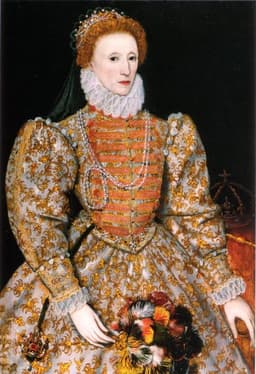
Elizabeth I
Politician · Modern
65.7Total
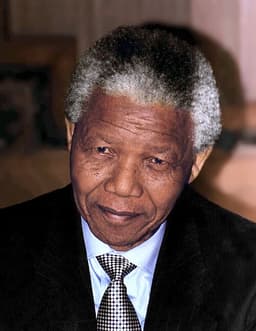
Nelson Mandela
Politician · Modern
57.0Total
Basic Information
Born
1533
1918
Died
1603
2013
Era
Modern
Modern
Nationality
England
South Africa
Occupation
Politician
Politician
Civilization
Western
Other
Score Comparison
Military (10%)
45.0
10.0
Political (20%)
78.0
78.0
Influence (20%)
65.0
40.0
Legacy (20%)
68.0
68.0
Leadership (15%)
75.0
82.0
Strategy (15%)
50.0
50.0
TOTAL
65.7
57.0
Elizabeth I — Complete Timeline
1559 AD
Act of Supremacy 1559Political Action◆ Major
Elizabeth I re-established the Church of England's independence from Rome, declaring herself Supreme Governor. This act, part of the Elizabethan Religious Settlement, restored Protestantism while maintaining some Catholic traditions, creating a via media that aimed to unify the nation.
Religious SettlementProtestantismChurch of England
Impact: nationalconstructive
1587 AD
Execution of Mary, Queen of ScotsPolitical Action◆ Major
After years of imprisonment, Elizabeth I signed the death warrant for Mary, Queen of Scots, who had been implicated in the Babington Plot to assassinate Elizabeth and claim the English throne. Mary's execution removed a major Catholic rival and solidified Elizabeth's position.
ExecutionCatholic RivalPlot
Impact: nationaltragic
1588 AD
Defeat of the Spanish ArmadaWar
The English navy under Lord Howard and Sir Francis Drake defeated the Spanish Armada, a massive invasion fleet sent by Philip II. Storms and English fireships scattered the Spanish fleet, preventing the invasion and establishing England as a major naval power.
Naval BattleSpainProtestantism
Impact: globalconstructive
1600 AD
Chartering of the East India CompanyPolitical Action◆ Major
Elizabeth I granted a royal charter to the East India Company, giving it a monopoly on English trade with Asia. This company would become a powerful instrument of British imperialism, eventually controlling large parts of India and shaping global trade.
TradeColonialismCharter
Impact: globalconstructive
1601 AD
Golden SpeechPolitical Action
In her final address to Parliament, Elizabeth I delivered the 'Golden Speech,' expressing her love for her subjects and her dedication to the realm. She addressed grievances over monopolies, promising reform, and cemented her image as a beloved monarch devoted to her people.
SpeechParliamentMonarchy
Impact: nationalconstructive
Nelson Mandela — Complete Timeline
1964 AD
Rivonia TrialPolitical Action
Nelson Mandela and other anti-apartheid leaders were tried for sabotage and conspiracy. Mandela was sentenced to life imprisonment, delivering a speech from the dock that became a rallying cry against apartheid. The trial drew international attention to the anti-apartheid struggle.
Impact: global
1990 AD
Release from PrisonPolitical Action
After 27 years of imprisonment, Mandela was released from Victor Verster Prison by President F.W. de Klerk. His release was a pivotal moment in South Africa's transition from apartheid to multiracial democracy, leading to negotiations for a new constitution.
Impact: globalprogressive
1993 AD
Awarding of the Nobel Peace PrizeCultural◆ Major
Mandela and F.W. de Klerk were jointly awarded the Nobel Peace Prize for their roles in ending apartheid and laying the foundations for a democratic South Africa. The award recognized their peaceful transition and commitment to reconciliation.
Impact: globalprogressive
1994 AD
Inauguration as President of South AfricaPolitical Action
Mandela was inaugurated as South Africa's first Black president after the country's first fully democratic elections. His presidency focused on national reconciliation, establishing the Truth and Reconciliation Commission, and dismantling the legacy of apartheid.
Impact: globalprogressive
Expert Analysis
Elizabeth I vs Nelson Mandela
# The Prisoner and the Virgin Queen: Two Paths to Power
History has a way of pairing unlikely figures across centuries, holding up mirrors that reveal more about leadership than any single biography can. Elizabeth I of England and Nelson Mandela of South Africa never shared a world—one ruled in the age of galleons and ruff collars, the other in an era of television and truth commissions. Yet both faced the same fundamental question: How does a leader transform a divided nation without being consumed by the very forces that seek to tear it apart? Their answers, forged in radically different circumstances, tell us something profound about the nature of political power and personal sacrifice.
Origins
Elizabeth was born into a world of dynastic chaos, the daughter of Henry VIII and Anne Boleyn, the second wife he would behead. Her mother's execution when Elizabeth was barely three years old left a permanent mark—a childhood spent in the shadow of the axe, learning to read the shifting winds of court favor. By the time she ascended the throne at twenty-five, she had survived imprisonment in the Tower of London, accusations of treason, and the constant threat of assassination. Her education was exceptional for a woman of her era: fluent in Latin, Greek, French, and Italian, trained in rhetoric and theology, she understood that knowledge was the only armor a woman could wear in a man's world.
Mandela's origins could not have been more different. Born in 1918 in the rural village of Mvezo, he was the son of a Thembu chief, raised in the traditions of Xhosa royalty. His given name, Rolihlahla, means "pulling the branch of a tree"—a euphemism for troublemaker. He was the first in his family to attend school, where a teacher gave him the English name Nelson. The world he entered was already brutally divided: the Union of South Africa had been founded in 1910 as a white supremacist state, and the legal architecture of apartheid was being built brick by brick around him. Where Elizabeth learned to survive by reading the faces of courtiers, Mandela learned to survive by reading the faces of policemen.
Rise to Power
Elizabeth's path to power was a slow, careful dance. She did not storm the throne; she inherited it through the death of her half-sister Mary, who had tried and failed to drag England back to Catholicism. Elizabeth understood that her legitimacy was fragile. She was a Protestant queen in a Europe dominated by Catholic powers, a woman in a world of male monarchs. Her genius lay in her restraint. She refused to marry, despite decades of pressure from Parliament and foreign princes, because marriage would mean surrendering her authority. "I will have but one mistress here, and no master," she told her Parliament in 1563. Every suitor was a threat; every alliance was a trap. She turned her singleness into a political weapon, dangling the prospect of marriage before France and Spain while committing to neither.
Mandela's rise was forged in the crucible of resistance. He joined the African National Congress in 1944, when he was still a young lawyer, and quickly became a leader of the Youth League. For nearly two decades, he pursued nonviolent protest—strikes, boycotts, civil disobedience. But the Sharpeville massacre of 1960, in which police killed sixty-nine unarmed protesters, changed everything. Mandela helped found Umkhonto we Sizwe, the armed wing of the ANC, and went underground. He was captured in 1962, and at the Rivonia Trial in 1964, he delivered a speech from the dock that would define his life: "I have fought against white domination, and I have fought against black domination. I have cherished the ideal of a democratic and free society in which all persons live together in harmony and with equal opportunities. It is an ideal which I hope to live for and to achieve. But if needs be, it is an ideal for which I am prepared to die." He was sentenced to life in prison.
Leadership & Governance
Elizabeth ruled from a throne; Mandela ruled from a prison cell. The difference shaped everything about their leadership styles. Elizabeth was a master of the possible, a pragmatist who understood that the art of governance was the art of compromise. The Act of Supremacy of 1559 established her as Supreme Governor of the Church of England, but she deliberately avoided the word "Supreme Head" to appease Catholics. She balanced Protestant reformers against conservative bishops, creating a religious settlement that was deliberately vague, a via media that allowed most English people to find a place. Her military leadership was cautious: when the Spanish Armada sailed in 1588, she did not command the fleet herself but stood at Tilbury, armor gleaming, delivering the speech that would echo through centuries: "I know I have the body of a weak and feeble woman, but I have the heart and stomach of a king."
Mandela's leadership was forged in the opposite direction—from absolute powerlessness to absolute responsibility. For twenty-seven years, he could not govern; he could only endure. And in that endurance, he learned something that Elizabeth never had to learn: how to forgive. When he was released from Victor Verster Prison in 1990, he walked out not as a revolutionary seeking revenge but as a statesman seeking reconciliation. He invited his white jailer to his inauguration. He wore the jersey of the Springboks, the rugby team that had been a symbol of apartheid, to the 1995 Rugby World Cup. Where Elizabeth had used her femininity as a shield, Mandela used his suffering as a bridge.
Triumph & Tragedy
Elizabeth's greatest triumph was the defeat of the Spanish Armada in 1588—a victory that seemed to confirm divine favor on her reign and her nation. But her greatest tragedy was personal: she never married, never had children, and left no heir. The Golden Speech of 1601, delivered in her final years, was a farewell to a nation she had ruled for over four decades: "Though God hath raised me high, yet this I count the glory of my crown: that I have reigned with your loves." But the glory was fading. Her final years were marked by court infighting and the execution of her favorite, the Earl of Essex. She died in 1603, and with her died the Tudor dynasty.
Mandela's triumph was the 1994 election, in which he became South Africa's first Black president. But his tragedy was more subtle: the transition to democracy could not erase the economic inequalities of apartheid. His presidency was a balancing act between the demands of his Black supporters for radical redistribution and the fears of white South Africans and international investors. He served only one term, stepping down in 1999—a decision that was itself a lesson in leadership. "After climbing a great hill," he wrote, "one only finds that there are many more hills to climb."
Character & Destiny
Elizabeth's character was forged by insecurity. She was a survivor, and she governed like one: cautious, calculating, never fully trusting anyone. Her intelligence was strategic, aimed at preserving her own power and her nation's independence. She was vain, imperious, and capable of breathtaking cruelty—the execution of Mary, Queen of Scots in 1587, after years of hesitation, was a political necessity that she turned into a personal tragedy.
Mandela's character was forged by suffering. He emerged from prison with a quality that is almost impossible to manufacture: moral authority. He was not naive—he had been a lawyer, a guerrilla leader, a negotiator—but he understood that the only way to break the cycle of hatred was to refuse to participate in it. "Resentment is like drinking poison and then hoping it will kill your enemies," he said. Where Elizabeth saw enemies everywhere, Mandela saw potential allies.
Legacy
Elizabeth left behind a nation that had become a major European power, a cultural renaissance that produced Shakespeare and Marlowe, and a Protestant identity that would shape England for centuries. The East India Company, chartered in 1600, would grow into the engine of the British Empire. She is remembered as Gloriana, the Virgin Queen, a symbol of national pride and feminine power.
Mandela left behind a nation that had avoided civil war, a constitution that guaranteed equality, and a model of transitional justice that inspired the world. The Truth and Reconciliation Commission, chaired by Archbishop Desmond Tutu, became a template for how societies can confront their past without destroying themselves. Mandela is remembered as Madiba, the father of the nation, a symbol of forgiveness and human dignity.
Conclusion
What separates these two leaders is not their vision—both wanted unity, peace, and prosperity for their people—but their circumstances. Elizabeth inherited a throne and spent her life defending it. Mandela inherited a prison cell and spent his life transforming it into a moral platform. One ruled through caution and compromise; the other ruled through suffering and forgiveness. And yet both understood the deepest truth of political leadership: that power is not an end in itself, but a means to create something that outlasts the leader. Elizabeth created a nation. Mandela created a possibility. In the end, perhaps that is all any leader can do.
Rankings
🥇
Elizabeth ILeader
Mil: 45.0Pol: 78.0Inf: 65.0
65.7
🥈
Nelson Mandela
Mil: 10.0Pol: 78.0Inf: 40.0
57.0
+8.7 behind
How This Comparison Works
Algorithm
Each figure is scored on 6 dimensions (0—100 scale) based on structured historical data: Military (10%), Political (20%), Influence (20%), Legacy (20%), Leadership (15%), Strategy (15%). The weighted total produces the final ranking.
Data Sources
Scores are computed from structured sub-indicators in the database. Scale factors adjust for era (Ancient ×0.85, Modern ×1.0) and civilization size (Eastern ×1.05, Other ×0.80) to account for differences in population and military scale.
Maximum 3 Figures
Comparisons are limited to 2—3 figures to ensure readability and statistical meaningfulness.
Error Margins
±5 points per dimension — Sub-scores are derived from historical records with inherent uncertainty. Two figures within 5 points on a dimension should be considered roughly equivalent in that area.
Total Score Accuracy
±3 points overall — The weighted combination of 6 dimensions produces a total score with approximately ±3 points of uncertainty. Differences of less than 3 points are not statistically significant— the figures are effectively tied.
Known Limitations
- Historical records are incomplete and uneven across civilizations
- Figures from oral-tradition societies may be underrepresented
- Occupation labels can misclassify multi-role figures
- Scores measure capability and impact, not moral character
- Quantitative scoring is a comparison tool, not absolute truth
Capability Radar
Military (10%) — Battles & Warfare
Battles
45
0
Win Rate
70
7
Expansion
55
9
Political (20%) — Governance & Reform
Reform
80
95
Diplomacy
85
95
Economy
80
60
Influence (20%) — Cultural & Global Reach
Cultural
85
85
Global
80
90
Legacy (20%) — Historical Impact
Historical
85
90
Longevity
85
80
Leadership (15%) — Power & Stability
Tenure
90
60
Stability
75
80
Strategy (15%) — Tactics & Innovation
Strategy
75
8
Tactics
60
12
Reform
65
17
Similar Comparisons
Comments & Discussion
CrucibleCrusader6/16/2026
Elizabeth was a master of survival, sure, but let's not pretend her "golden age" wasn't built on slavery and piracy. Mandela dismantled a system of racial oppression without a civil war. She consolidated power through execution and colonial plunder; he united a nation through truth and reconciliation. One wore a crown, the other earned a Nobel—history's verdict is clear on which path took real courage.
铁幕书虫6/16/2026
拿伊丽莎白和马德拉比根本不公平。一个是靠血统和阴谋登上王位的封建君主,另一个是蹲了27年监狱、亲手终结种族隔离的革命领袖。管理一个帝国和管理一个转型中的国家完全是两码事。说她俩面对同样的问题?那叫穿越剧,不是历史分析。
DataDrill6/16/2026
The comparison romanticizes "transformation" without measuring actual outcomes. Under Elizabeth, England's population grew from ~3 to ~4 million, but real wages fell 40% during her reign—most people were poorer. Mandela inherited a GDP per capita of $8,000 (PPP) for a nation of 40 million with 50% unemployment. By 2013, unemployment was still 25%+. Both were charismatic figures, but neither solved structural poverty. Let's stop pretending leadership alone fixes economies.
古罗马酒保6/16/2026
Elizabeth I was the ultimate pragmatist—she played Catholic and Protestant factions against each other for 45 years, executed Mary Queen of Scots without blinking, and never married to preserve her power. Mandela? He stepped down after one term. One clung to power like a lioness, the other let it go like a zen master. Different tactics, same goal: keep the ship from sinking. Both legends, just different flavors of steel.
PalacePrisoner6/16/2026
The real parallel is in their early trauma. Elizabeth watched her mother beheaded, was declared illegitimate, and spent months in the Tower fearing execution. Mandela saw apartheid police murder children, spent 27 years in prison, and emerged without bitterness. Both used their crucibles as political capital—Elizabeth to project divine right, Mandela to claim moral authority. Their suffering wasn't just endured; it was weaponized. That's the uncomfortable truth.