Loading...
Elizabeth I vs Mahatma Gandhi
Mahatma Gandhi leads by 3.0 pts · 2 figures compared
…
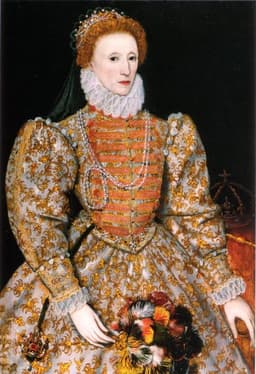
Elizabeth I
Politician · Modern
65.7Total
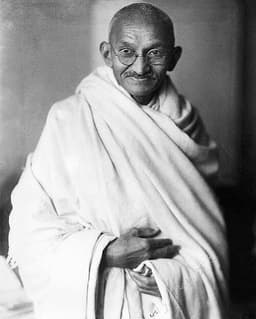
Mahatma Gandhi
Politician · Modern
68.7Total
Basic Information
Born
1533
1869
Died
1603
1948
Era
Modern
Modern
Nationality
England
India
Occupation
Politician
Politician
Civilization
Western
Indian
Score Comparison
Military (10%)
45.0
42.3
Political (20%)
78.0
65.0
Influence (20%)
65.0
80.0
Legacy (20%)
68.0
75.0
Leadership (15%)
75.0
70.0
Strategy (15%)
50.0
55.0
TOTAL
65.7
68.7
Elizabeth I — Complete Timeline
1559 AD
Act of Supremacy 1559Political Action◆ Major
Elizabeth I re-established the Church of England's independence from Rome, declaring herself Supreme Governor. This act, part of the Elizabethan Religious Settlement, restored Protestantism while maintaining some Catholic traditions, creating a via media that aimed to unify the nation.
Religious SettlementProtestantismChurch of England
Impact: nationalconstructive
1587 AD
Execution of Mary, Queen of ScotsPolitical Action◆ Major
After years of imprisonment, Elizabeth I signed the death warrant for Mary, Queen of Scots, who had been implicated in the Babington Plot to assassinate Elizabeth and claim the English throne. Mary's execution removed a major Catholic rival and solidified Elizabeth's position.
ExecutionCatholic RivalPlot
Impact: nationaltragic
1588 AD
Defeat of the Spanish ArmadaWar
The English navy under Lord Howard and Sir Francis Drake defeated the Spanish Armada, a massive invasion fleet sent by Philip II. Storms and English fireships scattered the Spanish fleet, preventing the invasion and establishing England as a major naval power.
Naval BattleSpainProtestantism
Impact: globalconstructive
1600 AD
Chartering of the East India CompanyPolitical Action◆ Major
Elizabeth I granted a royal charter to the East India Company, giving it a monopoly on English trade with Asia. This company would become a powerful instrument of British imperialism, eventually controlling large parts of India and shaping global trade.
TradeColonialismCharter
Impact: globalconstructive
1601 AD
Golden SpeechPolitical Action
In her final address to Parliament, Elizabeth I delivered the 'Golden Speech,' expressing her love for her subjects and her dedication to the realm. She addressed grievances over monopolies, promising reform, and cemented her image as a beloved monarch devoted to her people.
SpeechParliamentMonarchy
Impact: nationalconstructive
Mahatma Gandhi — Complete Timeline
1917 AD
Champaran SatyagrahaPolitical Action
Gandhi led his first nonviolent protest in India, supporting indigo farmers in Champaran, Bihar, against exploitative British planters. He organized a campaign of civil disobedience and negotiations, resulting in the abolition of the oppressive tinkathia system.
Civil disobedienceFarmers' rightsBritish Raj
Impact: nationalprogressive
1919 AD
Jallianwala Bagh massacre aftermathPolitical Action◆ Major
After British troops killed hundreds of unarmed civilians in Amritsar, Gandhi organized a nationwide hartal (strike) and nonviolent protests. He returned his medals and launched the Rowlatt Satyagraha, marking a shift from cooperation to non-cooperation with British rule.
ProtestBritish RajMassacre
Impact: nationaltragic
1930 AD
Salt MarchPolitical Action
Gandhi led a 240-mile march from Sabarmati to Dandi, Gujarat, to defy the British salt monopoly. Thousands joined him, making salt from seawater. This act of civil disobedience sparked mass protests across India and drew global attention to the independence movement.
Civil disobedienceSalt taxIndependence movement
Impact: globalprogressive
1942 AD
Quit India Movement launchPolitical Action◆ Major
Gandhi launched the Quit India Movement, calling for an end to British rule with the slogan 'Do or Die'. The British arrested him and other leaders, but the movement led to widespread protests and repression, accelerating the end of colonial rule.
IndependenceCivil disobedienceBritish Raj
Impact: nationalprogressive
1948 AD
AssassinationPolitical Action
Gandhi was shot and killed by Nathuram Godse, a Hindu nationalist, during a prayer meeting in New Delhi. His assassination shocked the world and led to a wave of grief and violence, but also reinforced his legacy as a martyr for nonviolence.
AssassinationMartyrdomNonviolence
Impact: globaltragic
Expert Analysis
Elizabeth I vs Mahatma Gandhi
### The Crown and the Spinning Wheel
On a January morning in 1603, an aging queen lay dying on cushions piled on the floor of Richmond Palace, too weak to move to her bed. Across the world and three centuries later, a frail man in a white dhoti would walk barefoot for twenty-four days to the Arabian Sea, picking up a handful of salt. Elizabeth I ruled by divine right, her power absolute; Mohandas Gandhi ruled by moral authority alone, his only weapon a spinning wheel. One commanded the mightiest navy in Europe; the other faced down an empire with nothing but his own frail body and an idea. How did two figures, both shaping the destiny of millions, arrive at such radically different forms of power? The answer lies not just in their personalities, but in the very nature of the worlds they inhabited.
### Origins
Elizabeth Tudor was born into a world of blood and legitimacy. Her father, Henry VIII, had beheaded her mother, Anne Boleyn, when Elizabeth was not yet three years old. Declared a bastard, she spent her childhood in the shadow of the executioner’s block, learning that survival meant keeping her own counsel. She was educated alongside her brother Edward, schooled in Latin, Greek, philosophy, and rhetoric—a humanist education usually reserved for princes. But she also learned the painful art of dissembling: when her Catholic half-sister Mary took the throne, Elizabeth spent months imprisoned in the Tower of London, expecting death each dawn.
Gandhi’s origins could not have been more different. Born in 1869 in the coastal town of Porbandar, he grew up in a devout Hindu household where his father was a chief minister to a minor prince. There were no beheadings, no plots against his life. Young Mohandas was a mediocre student, painfully shy, terrified of speaking in public. He married at thirteen, sailed to London at nineteen to study law, and returned to India a failure as a barrister—so timid that his first court case ended in humiliation. He was, by all accounts, an unlikely revolutionary. Yet the very ordinariness of his early life would become his greatest strength: he understood the common man because he had been one.
### Rise to Power
Elizabeth’s path to power was a matter of blood and timing. When Mary Tudor died childless in 1558, Elizabeth inherited a kingdom torn by religious war, bankrupt, and surrounded by enemies. She was twenty-five, a woman in a world that believed women unfit to rule. Her first act was to appoint a wise council, but her second was to establish the Church of England with the Act of Supremacy in 1559, declaring herself “Supreme Governor” rather than “Head” of the Church—a subtle compromise that allowed Catholics to accept her authority. She understood that power was theater, and she became its master.
Gandhi rose not through inheritance but through failure transformed into insight. In 1893, a year after Elizabeth’s death would have been ancient history, a young Indian lawyer traveled to South Africa on a legal case. There, he was thrown off a train for refusing to move from a first-class compartment, beaten for walking in a whites-only area, and kicked off a stagecoach. These humiliations lit a fire. Instead of returning to India in defeat, he stayed for twenty-one years, developing a new method of political struggle: *Satyagraha*, or “truth-force.” The Champaran Satyagraha of 1917, his first major protest in India, was not a march or a dramatic act—it was a quiet investigation of peasant grievances. But it worked. The British were not prepared for a man who refused to fight back.
### Leadership & Governance
Elizabeth governed through ambiguity and delay. She never married, turning courtship into a diplomatic weapon that kept Spain, France, and the Holy Roman Empire guessing for decades. Her genius lay in knowing when to act and when to wait. When the Spanish Armada sailed in 1588, she did not lead troops into battle—but she rode to Tilbury in armor, delivering a speech that still echoes: “I know I have the body but of a weak and feeble woman; but I have the heart and stomach of a king.” The victory that followed was as much about morale as about seamanship. Yet her military score of 45 reflects a queen who never commanded an army herself; her power was political, not martial.
Gandhi’s leadership was entirely different. He had no state, no treasury, no army. His power came from example. The Salt March of 1930 was a masterpiece of political theater: a 240-mile walk to the sea to make salt, a simple act that defied a British monopoly on a basic necessity. Thousands joined him; tens of thousands were arrested. The British won the battle—they crushed the protests—but they lost the moral war. Gandhi’s strategy score of 60 suggests a man who was not a grand strategist in the military sense. He made mistakes, called off movements when violence erupted, and often seemed to be improvising. But his political score of 70 and influence of 85 show a deeper truth: he changed what people believed was possible.
### Triumph & Tragedy
Elizabeth’s greatest triumph was survival itself. She outlived her enemies, outmaneuvered her rivals, and left England stronger than she found it. The defeat of the Armada in 1588 was her finest hour—a moment of national unity that cemented her legend. But tragedy haunted her reign too. The execution of Mary, Queen of Scots in 1587 was a decision she resisted for years, signing the death warrant only when her council forced her hand. She never forgave herself. And in her final years, she watched her closest advisor, the Earl of Essex, lead a rebellion against her—and ordered his execution. The Golden Speech of 1601, delivered when she was old and weary, was her farewell: “Though God hath raised me high, yet this I count the glory of my crown: that I have reigned with your loves.”
Gandhi’s triumph was India’s independence in 1947—a victory won without a single battle. But his tragedy was that independence came with partition, the bloody division of India and Pakistan, and the communal violence that killed a million people. He spent his final months walking through refugee camps, fasting to stop the killing, a frail old man trying to hold back a tide of hatred. On January 30, 1948, a Hindu nationalist named Nathuram Godse shot him three times at point-blank range during a prayer meeting. Gandhi’s last words were said to be “He Ram” (Oh God). The man who had preached nonviolence died violently, a martyr to the very peace he had tried to build.
### Character & Destiny
Elizabeth’s character was forged in the crucible of constant danger. She was cautious, calculating, and deeply suspicious—traits that served her well but also kept her from the grand gestures that might have made her a conqueror. She never married, never had children, and called herself “the virgin queen,” turning her celibacy into a political myth. Her total score of 70.2 reflects a leader who was brilliant within her constraints but never transcended them.
Gandhi’s character was shaped by his failures. The shy young man who could not speak in court became the world’s most famous orator of moral clarity. His score of 72.4 is slightly higher, not because he was a better politician—Elizabeth was far more skilled at the game of power—but because his influence transcended his own time. He inspired Martin Luther King Jr., Nelson Mandela, and every nonviolent movement that followed. He was not a ruler, but a moral force.
### Legacy
Elizabeth’s legacy is an age named after her: the Elizabethan Era, a golden age of Shakespeare, exploration, and national pride. The East India Company, which she chartered in 1600, would eventually rule India—the very land Gandhi would liberate. Her England became a global power, and the Church of England she established still stands. But her legacy is also one of empire, of ships that carried not just trade but slavery and conquest.
Gandhi’s legacy is more complicated. He is remembered as the Father of the Nation in India, his face on every currency, his birthday a national holiday. But modern India has often abandoned his values of simplicity and nonviolence. The spinning wheel he championed is a museum piece, and the economic self-reliance he preached has given way to global capitalism. Yet his method—nonviolent resistance—has become a universal tool of the powerless everywhere.
### Conclusion
Perhaps the deepest difference between them lies in the nature of their power. Elizabeth’s was the power of a crown, inherited, defended, and wielded over others. Gandhi’s was the power of a conscience, earned, shared, and offered to others. One built an empire; the other dismantled one. One ruled from a throne; the other from a prison cell. And yet both understood something essential about leadership: that it is not enough to be right. You must also be seen to be right, to embody your cause in your own life. Elizabeth wore her virginity like a shield; Gandhi wore his poverty like a badge. Both were performances, but performances that changed the world. The queen and the ascetic—so different, yet each in their own way, a mirror to the age that made them.
Rankings
🥇
Mahatma GandhiLeader
Mil: 42.3Pol: 65.0Inf: 80.0
68.7
🥈
Elizabeth I
Mil: 45.0Pol: 78.0Inf: 65.0
65.7
+3.0 behind
How This Comparison Works
Algorithm
Each figure is scored on 6 dimensions (0—100 scale) based on structured historical data: Military (10%), Political (20%), Influence (20%), Legacy (20%), Leadership (15%), Strategy (15%). The weighted total produces the final ranking.
Data Sources
Scores are computed from structured sub-indicators in the database. Scale factors adjust for era (Ancient ×0.85, Modern ×1.0) and civilization size (Eastern ×1.05, Other ×0.80) to account for differences in population and military scale.
Maximum 3 Figures
Comparisons are limited to 2—3 figures to ensure readability and statistical meaningfulness.
Error Margins
±5 points per dimension — Sub-scores are derived from historical records with inherent uncertainty. Two figures within 5 points on a dimension should be considered roughly equivalent in that area.
Total Score Accuracy
±3 points overall — The weighted combination of 6 dimensions produces a total score with approximately ±3 points of uncertainty. Differences of less than 3 points are not statistically significant— the figures are effectively tied.
Known Limitations
- Historical records are incomplete and uneven across civilizations
- Figures from oral-tradition societies may be underrepresented
- Occupation labels can misclassify multi-role figures
- Scores measure capability and impact, not moral character
- Quantitative scoring is a comparison tool, not absolute truth
Capability Radar
Military (10%) — Battles & Warfare
Battles
45
45
Win Rate
70
46
Expansion
55
51
Political (20%) — Governance & Reform
Reform
80
85
Diplomacy
85
80
Economy
80
40
Influence (20%) — Cultural & Global Reach
Cultural
85
85
Global
80
90
Legacy (20%) — Historical Impact
Historical
85
90
Longevity
85
85
Leadership (15%) — Power & Stability
Tenure
90
60
Stability
75
55
Strategy (15%) — Tactics & Innovation
Strategy
75
52
Tactics
60
56
Reform
65
55
Similar Comparisons
Comments & Discussion
王冠上的织布梭6/16/2026
真要较真,伊丽莎白和甘地压根不是同一种"权力"。女王手里攥着处决令和海军战舰,把玛丽·斯图亚特砍了头;甘地呢?连双像样的鞋都买不起,穿着土布纱丽走完了整个印度。但你想过没有,甘地那架纺车比伊丽莎白的王冠更吓人,因为它逼得大英帝国露出了真面目——文明外衣下的暴力机器。女王砍人头,甘地让人自愿挨打,这才是真正的权力游戏。
拉丁文与古吉拉特语6/16/2026
别被历史课本骗了。伊丽莎白的"黄金时代"建立在都铎王朝的专制机器上——她处死了超过600名天主教徒,把爱尔兰人当野人看待。甘地呢?他连自己的饭菜都要亲手做,为了反对种姓制度每天喝苦胆汁。最讽刺的是:伊丽莎白说自己"嫁给了英格兰",可她的统治不过是资本原始积累的遮羞布;而甘地那个破纺车,才是真正把权力还给了人民。
Chronicler35636/16/2026
Let's not romanticize this. Elizabeth inherited a functioning state apparatus and crushed Catholic dissent with state terror; Gandhi inherited nothing but his own moral capital. She had the Royal Navy; he had a spinning wheel precisely because that's all a colonial subject could wield. The comparison isn't about different forms of power—it's about different conditions of possibility. Elizabeth's "greatness" rests on 400 years of English nationalist mythmaking, while Gandhi's rests on his actual,
ArchMind186/16/2026
Objectively? Elizabeth managed a population of ~4 million with a government budget of about £500,000 annually. Gandhi mobilized over 300 million people with zero state budget and was imprisoned for 2,338 days across his life. Let's talk about efficiency: Elizabeth's state executed roughly 600 Catholics in her 45-year reign; Gandhi's nonviolence campaign cost the British Empire an estimated 20,000 troops and hundreds of millions in suppression costs. The spinning wheel outperformed the scepter by
Historian9876/16/2026
The real comparison is about symbolic capital. Elizabeth's power was literally visible—her portraits, her pearls, her processionals—all designed to project divine authority. Gandhi's power was invisible until it manifested in salt crystals on a beach. She needed to be seen as something other than human; he needed to be seen as precisely human, flawed, fasting, frail. Which is more durable? Elizabeth's myth lasted centuries; Gandhi's influence created Bangladesh, inspired King and Mandela, and co