Loading...
Elizabeth I vs Lord Dalhousie
Elizabeth I leads by 7.3 pts · 2 figures compared
…
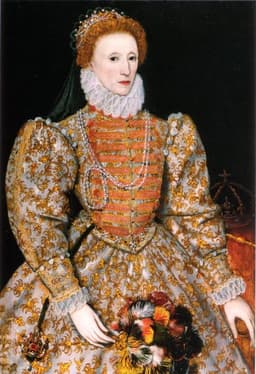
Elizabeth I
Politician · Modern
65.7Total
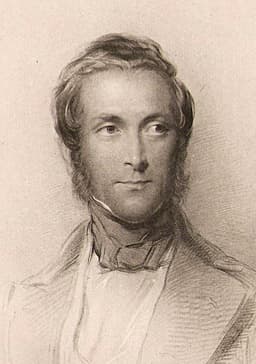
Lord Dalhousie
Politician · Modern
58.4Total
Basic Information
Born
1533
1812
Died
1603
1860
Era
Modern
Modern
Nationality
England
United Kingdom
Occupation
Politician
Politician
Civilization
Western
Western
Score Comparison
Military (10%)
45.0
40.0
Political (20%)
78.0
60.0
Influence (20%)
65.0
58.3
Legacy (20%)
68.0
55.0
Leadership (15%)
75.0
74.0
Strategy (15%)
50.0
60.0
TOTAL
65.7
58.4
Elizabeth I — Complete Timeline
1559 AD
Act of Supremacy 1559Political Action◆ Major
Elizabeth I re-established the Church of England's independence from Rome, declaring herself Supreme Governor. This act, part of the Elizabethan Religious Settlement, restored Protestantism while maintaining some Catholic traditions, creating a via media that aimed to unify the nation.
Religious SettlementProtestantismChurch of England
Impact: nationalconstructive
1587 AD
Execution of Mary, Queen of ScotsPolitical Action◆ Major
After years of imprisonment, Elizabeth I signed the death warrant for Mary, Queen of Scots, who had been implicated in the Babington Plot to assassinate Elizabeth and claim the English throne. Mary's execution removed a major Catholic rival and solidified Elizabeth's position.
ExecutionCatholic RivalPlot
Impact: nationaltragic
1588 AD
Defeat of the Spanish ArmadaWar
The English navy under Lord Howard and Sir Francis Drake defeated the Spanish Armada, a massive invasion fleet sent by Philip II. Storms and English fireships scattered the Spanish fleet, preventing the invasion and establishing England as a major naval power.
Naval BattleSpainProtestantism
Impact: globalconstructive
1600 AD
Chartering of the East India CompanyPolitical Action◆ Major
Elizabeth I granted a royal charter to the East India Company, giving it a monopoly on English trade with Asia. This company would become a powerful instrument of British imperialism, eventually controlling large parts of India and shaping global trade.
TradeColonialismCharter
Impact: globalconstructive
1601 AD
Golden SpeechPolitical Action
In her final address to Parliament, Elizabeth I delivered the 'Golden Speech,' expressing her love for her subjects and her dedication to the realm. She addressed grievances over monopolies, promising reform, and cemented her image as a beloved monarch devoted to her people.
SpeechParliamentMonarchy
Impact: nationalconstructive
Lord Dalhousie — Complete Timeline
1848 AD
Second Anglo-Sikh WarWar◆ Major
Dalhousie oversaw the Second Anglo-Sikh War in 1848-1849, which resulted in the British annexation of the Punjab. The Sikh army was defeated at the Battle of Gujrat, and the Treaty of Lahore in 1849 formally annexed the region, ending Sikh sovereignty and extending British rule to the northwest frontier.
Anglo-Sikh WarAnnexationPunjab
Impact: regional
Doctrine of LapsePolitical Action
Lord Dalhousie, as Governor-General of India, implemented the Doctrine of Lapse, a policy that allowed the British to annex any princely state where the ruler died without a natural heir. This policy led to the annexation of states like Satara, Jhansi, and Nagpur, causing widespread resentment among Indian rulers and contributing to the 1857 Rebellion.
AnnexationPolicy1857 Rebellion
Impact: regionaldestructive
1853 AD
Railway and Telegraph ExpansionInvention◆ Major
Dalhousie championed the development of railways and telegraphs in India. The first railway line from Bombay to Thane opened in 1853, and a telegraph network was established connecting major cities. These projects aimed to improve communication, trade, and military control, laying the foundation for India's modern infrastructure.
InfrastructureRailwayTelegraph
Impact: regionalconstructive
1856 AD
Annexation of AwadhPolitical Action◆ Major
Dalhousie annexed the Kingdom of Awadh in 1856 under the pretext of misgovernment. The annexation was highly controversial and deeply resented by the local population and nobility. It became a major cause of the 1857 Indian Rebellion, as Awadh's soldiers and landlords joined the uprising against British rule.
AnnexationAwadh1857 Rebellion
Impact: regionaldestructive
Expert Analysis
Elizabeth I vs Lord Dalhousie
### The Virgin Queen and the Iron Governor: Two Architects of Empire
On a gray November day in 1558, a young woman of twenty-five received the news that would change her life and her nation: her half-sister Mary was dead, and she was now Queen of England. England was a second-rate power, torn by religious strife, its treasury empty. Just over two hundred years later, in 1848, a thirty-six-year-old Scottish aristocrat, James Ramsay, the Marquess of Dalhousie, stepped off a ship in Calcutta to take up the same kind of mantle—the governance of a vast subcontinent. Elizabeth I inherited a fractured island; Dalhousie inherited an empire. One would build a nation from the wreckage of religious war; the other would push that empire to its breaking point. Their careers, separated by centuries, pose a haunting question: what makes a leader’s legacy one of golden triumph or of smoldering tragedy?
### Origins
Elizabeth was born into a crucible of danger. The daughter of Henry VIII and the executed Anne Boleyn, she was declared a bastard, then restored to the line of succession. Her childhood was a tightrope walk over a chasm of political intrigue and mortal peril. She learned to dissemble, to wait, and to read the hearts of men. Her era was one of Reformation and Counter-Reformation, where faith was a weapon and a queen’s life was never her own. This instability forged a ruler of profound caution and iron will.
Dalhousie, by contrast, was born into the solid, confident world of the British aristocracy in 1812. The Napoleonic Wars were ending; Britain’s global dominance was assured. He was educated at Harrow and Oxford, a man of the machine age, believing in progress, efficiency, and the unassailable rightness of British civilization. His era was one of industrial revolution and imperial expansion, where the question was not *if* the British should rule, but *how*. He had never known the precariousness of Elizabeth’s world, and it showed.
### Rise to Power
Elizabeth’s path to power was a masterclass in survival. She navigated the treacherous court of her sister, Queen Mary, a Catholic who saw her as a heretic and a rival. Imprisoned in the Tower of London, she faced the axe. Yet she played her cards with exquisite patience, professing loyalty, avoiding marriage plots, and waiting for the natural order to take its course. When Mary died, Elizabeth ascended not as a conqueror, but as a survivor who had earned her crown through sheer nerve.
Dalhousie’s rise was more conventional, a product of patronage and competence. He served as a junior minister under Sir Robert Peel, who noted his administrative brilliance. In 1847, at the age of thirty-five, he was appointed Governor-General of India—the youngest ever. He arrived in Calcutta with a mission: to modernize, to consolidate, and to expand British rule. He did not have to fight for his position; it was handed to him on a silver platter of imperial confidence.
### Leadership & Governance
Elizabeth’s leadership was a delicate art of balance. She was a political genius, not a military one (her Military score is a modest 45, her Political a towering 82). She understood that her power rested on the love of her people and the cooperation of a fractious Parliament. Her 1559 Act of Supremacy was a masterpiece of compromise: she re-established the Church of England but styled herself “Supreme Governor,” not “Head,” to appease those who saw Christ as the only head of the church. She let her commanders, like Lord Howard and Sir Francis Drake, win the glory against the Spanish Armada in 1588, while she gave the speech at Tilbury, declaring she had “the heart and stomach of a king.” Her rule was about persuasion, symbolism, and the strategic use of inaction.
Dalhousie governed with the opposite philosophy: relentless action. His Political score of 72 reflects a man of immense administrative energy, but his Strategy of 70 and Leadership of 72.9 show a rigid, top-down approach. He believed in the “Doctrine of Lapse,” a policy that allowed the British to annex any Indian state whose ruler died without a natural heir. It was legalistic, efficient, and profoundly arrogant. He annexed the Punjab after the Second Anglo-Sikh War in 1848-1849, and then, in 1856, annexed the rich kingdom of Awadh under the flimsy pretext of “misgovernment.” He also championed railways and telegraphs, laying the physical infrastructure of modern India. But he built his empire on a foundation of resentment, ignoring the cultural and religious sensibilities of the people he ruled.
### Triumph & Tragedy
Elizabeth’s greatest triumph was the defeat of the Spanish Armada in 1588. It was a national miracle, a storm-tossed victory that cemented England’s status as a naval power and a Protestant bulwark. Her greatest tragedy was perhaps the execution of Mary, Queen of Scots in 1587—a decision she agonized over for years, signing the death warrant only when Mary’s plotting became an existential threat. It was a necessary act, but it haunted her. Yet her true tragedy was personal: the “Virgin Queen” left no heir, and the Tudor dynasty died with her.
Dalhousie’s triumphs were administrative. He built railways, unified postal systems, and expanded British territory to its greatest extent. But his tragedy was immense and immediate. The annexation of Awadh, in particular, was a direct cause of the Indian Rebellion of 1857—a cataclysmic uprising that nearly ended British rule in India. Dalhousie had left India in 1856, exhausted and ill, but his policies lit the fuse. He died in 1860, a broken man, watching his life’s work explode in blood and fire. His Legacy score of 55 reflects this bitter truth: he was an architect of empire, but also of its greatest crisis.
### Character & Destiny
Elizabeth’s character was defined by caution and emotional intelligence. She was a master of delay, famously saying, “I have no desire to make windows into men’s souls.” She understood that a ruler’s greatest weapon was the ability to wait. Her destiny was to be the symbol of a nation’s coming of age.
Dalhousie was defined by certainty and a cold, administrative zeal. He believed in the “blessings of British rule” with an almost religious fervor. He once wrote that he wished to “leave behind me a name which will be remembered with gratitude.” His destiny was to be remembered instead as the man who sowed the dragon’s teeth. His character—brilliant, arrogant, and deaf to the voices of those he ruled—shaped his fate.
### Legacy
Elizabeth’s legacy is golden: a “Golden Age” of Shakespeare, exploration, and national confidence. She is remembered as Gloriana, the Virgin Queen, a figure of myth and history. The East India Company she chartered in 1600 would eventually become the instrument of the very empire Dalhousie served, but she could not have foreseen that.
Dalhousie’s legacy is far more complex. He is a villain in Indian historiography, the man whose policies sparked the 1857 rebellion. In British history, he is often seen as a great administrator who modernized India. The truth lies somewhere in between: a man of immense ability, but with a fatal blindness to the limits of power.
### Conclusion
Elizabeth I and Lord Dalhousie both sought to build. One built a nation by listening to its soul; the other built an empire by ignoring its heartbeat. Elizabeth’s caution created a golden age; Dalhousie’s certainty created a cataclysm. Their stories remind us that leadership is not about the force of one’s will, but about the wisdom to know when to act—and, more crucially, when to refrain. The Virgin Queen and the Iron Governor: one left a crown of love, the other a legacy of ash.
Rankings
🥇
Elizabeth ILeader
Mil: 45.0Pol: 78.0Inf: 65.0
65.7
🥈
Lord Dalhousie
Mil: 40.0Pol: 60.0Inf: 58.3
58.4
+7.3 behind
How This Comparison Works
Algorithm
Each figure is scored on 6 dimensions (0—100 scale) based on structured historical data: Military (10%), Political (20%), Influence (20%), Legacy (20%), Leadership (15%), Strategy (15%). The weighted total produces the final ranking.
Data Sources
Scores are computed from structured sub-indicators in the database. Scale factors adjust for era (Ancient ×0.85, Modern ×1.0) and civilization size (Eastern ×1.05, Other ×0.80) to account for differences in population and military scale.
Maximum 3 Figures
Comparisons are limited to 2—3 figures to ensure readability and statistical meaningfulness.
Error Margins
±5 points per dimension — Sub-scores are derived from historical records with inherent uncertainty. Two figures within 5 points on a dimension should be considered roughly equivalent in that area.
Total Score Accuracy
±3 points overall — The weighted combination of 6 dimensions produces a total score with approximately ±3 points of uncertainty. Differences of less than 3 points are not statistically significant— the figures are effectively tied.
Known Limitations
- Historical records are incomplete and uneven across civilizations
- Figures from oral-tradition societies may be underrepresented
- Occupation labels can misclassify multi-role figures
- Scores measure capability and impact, not moral character
- Quantitative scoring is a comparison tool, not absolute truth
Capability Radar
Military (10%) — Battles & Warfare
Battles
45
20
Win Rate
70
30
Expansion
55
85
Political (20%) — Governance & Reform
Reform
80
75
Diplomacy
85
55
Economy
80
65
Influence (20%) — Cultural & Global Reach
Cultural
85
40
Global
80
70
Legacy (20%) — Historical Impact
Historical
85
75
Longevity
85
60
Leadership (15%) — Power & Stability
Tenure
90
70
Stability
75
20
Strategy (15%) — Tactics & Innovation
Strategy
75
60
Tactics
60
15
Reform
65
40
Similar Comparisons
Comments & Discussion
Cannonball Scholar6/16/2026
Dalhousie was the Terminator of colonialism—efficient, relentless, and utterly destructive. His Doctrine of Lapse swallowed kingdoms like a Pac-Man on steroids, from Satara to Jhansi. But here’s the dirty secret: he also built the telegraph lines and railways that literally wired India for the Great Rebellion of 1857. He built the fuse, then blamed the match. Elizabeth at least had the decency to be paranoid; Dalhousie was dangerously overconfident. False dawns are the worst kind of progress.
古籍考据狂6/16/2026
说伊丽莎白是“黄金时代”,简直是对历史的粉饰。她不过是个女版的政治平衡大师,用宗教中庸主义打太极,结果让爱尔兰血流成河,尼德兰起义也没捞着好处。她处决玛丽·斯图亚特不是勇气,是求生本能。再看达尔豪西,他好歹是个铁腕实干家,铁轨和电报网摆在那儿,虽然殖民恶果累累,但至少没像伊丽莎白那样让海峡舰队在无敌舰队后腐锈。一个玩精致懦弱,一个玩粗暴高效,谁更高明?
Heretic Sceptic6/16/2026
The chart says Elizabeth “inherited a fractured island” but Dalhousie “inherited an empire”—that’s a false binary. Ireland was a colony in 1558, plain and simple. Elizabeth’s “nation” was built on the bones of Gaelic lords and Catholic recusants. Compare apples to apples: Dalhousie faced the Sikh Empire’s last stand at Gujrat (1849), while Elizabeth faced the Spanish Armada with fireships and luck. One was a strategic steamroller; the other was a defensive gambler. Don’t romanticize the Virgin Q
古典哲人6/16/2026
一个女王,一个总督,却都犯了相同的错误:迷信权力能驯服文化。伊丽莎白的宗教和解法案看似开明,实则把天主教徒变成了二等公民,埋下了英国内战的种子。达尔豪西呢?他推行英语教育、废除萨蒂习俗,用“文明使命”包装更深刻的暴力。两人都是帝国建筑师,但地基下都堆着尸体。区别在于:伊丽莎白活得太久,看见了自己的失败;达尔豪西死得早,把烂摊子甩给了继任者。谁更幸运?谁更悲剧?
Silk Stocking Critic6/16/2026
Let’s cut the romanticism: Elizabeth was a master of PR, not governance. She starved her navy during peacetime, sold monopolies to cronies, and her “Golden Speech” was damage control for a corrupt court. Dalhousie, whatever his sins, at least built railways, telegraph