Loading...
Elizabeth I vs Lazare Carnot
Lazare Carnot leads by 2.5 pts · 2 figures compared
…
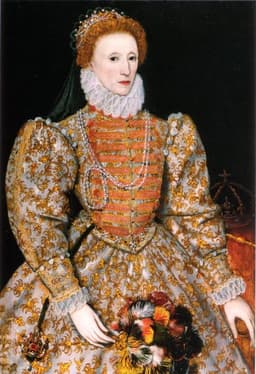
Elizabeth I
Politician · Modern
65.7Total
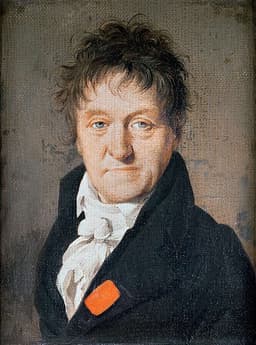
Lazare Carnot
Politician · Modern
68.2Total
Basic Information
Born
1533
1753
Died
1603
1823
Era
Modern
Modern
Nationality
England
France
Occupation
Politician
Politician
Civilization
Western
Western
Score Comparison
Military (10%)
45.0
61.7
Political (20%)
78.0
72.0
Influence (20%)
65.0
68.0
Legacy (20%)
68.0
65.0
Leadership (15%)
75.0
72.0
Strategy (15%)
50.0
72.0
TOTAL
65.7
68.2
Elizabeth I — Complete Timeline
1559 AD
Act of Supremacy 1559Political Action◆ Major
Elizabeth I re-established the Church of England's independence from Rome, declaring herself Supreme Governor. This act, part of the Elizabethan Religious Settlement, restored Protestantism while maintaining some Catholic traditions, creating a via media that aimed to unify the nation.
Religious SettlementProtestantismChurch of England
Impact: nationalconstructive
1587 AD
Execution of Mary, Queen of ScotsPolitical Action◆ Major
After years of imprisonment, Elizabeth I signed the death warrant for Mary, Queen of Scots, who had been implicated in the Babington Plot to assassinate Elizabeth and claim the English throne. Mary's execution removed a major Catholic rival and solidified Elizabeth's position.
ExecutionCatholic RivalPlot
Impact: nationaltragic
1588 AD
Defeat of the Spanish ArmadaWar
The English navy under Lord Howard and Sir Francis Drake defeated the Spanish Armada, a massive invasion fleet sent by Philip II. Storms and English fireships scattered the Spanish fleet, preventing the invasion and establishing England as a major naval power.
Naval BattleSpainProtestantism
Impact: globalconstructive
1600 AD
Chartering of the East India CompanyPolitical Action◆ Major
Elizabeth I granted a royal charter to the East India Company, giving it a monopoly on English trade with Asia. This company would become a powerful instrument of British imperialism, eventually controlling large parts of India and shaping global trade.
TradeColonialismCharter
Impact: globalconstructive
1601 AD
Golden SpeechPolitical Action
In her final address to Parliament, Elizabeth I delivered the 'Golden Speech,' expressing her love for her subjects and her dedication to the realm. She addressed grievances over monopolies, promising reform, and cemented her image as a beloved monarch devoted to her people.
SpeechParliamentMonarchy
Impact: nationalconstructive
Lazare Carnot — Complete Timeline
1793 AD
Directed the Victory at the Battle of WattigniesWar◆ Major
Carnot personally directed French forces at the Battle of Wattignies, a key victory that relieved the siege of Maubeuge. His strategic planning helped turn the tide against the Austrian army.
French RevolutionBattleVictory
Impact: regionalconstructive
Organized the Levée en MasseReform◆ Major
Carnot helped implement the lev
French RevolutionConscriptionMilitary Reform
Impact: globalconstructive
Appointed to the Committee of Public SafetyPolitical Action◆ Major
Carnot was appointed to the Committee of Public Safety, where he took charge of military organization. He reorganized the French army, introduced mass conscription, and coordinated the war effort against foreign coalitions.
French RevolutionCommittee of Public SafetyMilitary
Impact: nationalconstructive
1815 AD
Exiled as a RegicidePolitical Action
After the Bourbon restoration, Carnot was exiled as a regicide for having voted for the execution of Louis XVI. He spent his remaining years in Germany and died in Magdeburg.
ExileRegicideBourbon
Impact: nationaltragic
Expert Analysis
Elizabeth I vs Lazare Carnot
### The Virgin Queen and the Organizer of Victory
In the winter of 1601, an aging queen stood before her parliament, her voice trembling with emotion as she delivered what would be remembered as her "Golden Speech." Elizabeth I spoke not of power or conquest, but of love—the bond between a monarch and her people. Across the English Channel, barely two centuries later, another statesman would work through the night in a cramped Paris office, his pen scratching out orders that would send hundreds of thousands of French citizens to die for a revolution that had already begun to devour its own children. Elizabeth built a golden age through patience and restraint. Lazare Carnot saved a nation through sheer organizational fury. Both shaped history, but their paths—and their legacies—could not have been more different.
### Origins
Elizabeth Tudor was born into a world of peril. Her mother, Anne Boleyn, was executed when Elizabeth was not yet three years old. Declared illegitimate by her own father, Henry VIII, she spent her childhood dancing on a knife's edge between the throne and the Tower of London. The religious turmoil of the Reformation tore Europe apart, and Elizabeth learned early that survival meant keeping her own counsel. She was educated alongside her brother Edward, receiving a Renaissance humanist education that made her fluent in Latin, Greek, French, and Italian. Her mind became her greatest weapon.
Lazare Carnot emerged from an entirely different France. Born in 1753 in the Burgundy region, he was the son of a notary and a local magistrate. Where Elizabeth was shaped by court intrigue, Carnot was shaped by the Enlightenment. He studied engineering at the prestigious École du Génie in Mézières, where mathematics and military fortifications became his obsession. The French Revolution would find him a competent captain of engineers, but it would make him something far greater: the man who taught a nation how to fight.
### Rise to Power
Elizabeth’s ascent was a masterclass in survival. After the short reigns of her brother Edward VI and her sister Mary I—who had imprisoned her in the Tower on suspicion of treason—Elizabeth inherited a kingdom bankrupt, divided, and surrounded by enemies. She was twenty-five when she became queen in 1558, and she understood that her greatest vulnerability was also her greatest strength: her gender. She would spend the next forty-five years turning the expectations of a patriarchal world into a political art form.
Carnot’s rise was more abrupt and violent. In 1793, with revolutionary France besieged by Austrian, Prussian, and British armies, the Committee of Public Safety appointed Carnot to oversee military organization. He was not a general in the traditional sense—he never led a charge or commanded an army in the field for long—but he became the brain behind the revolution’s armies. The levée en masse, which he helped implement that same year, drafted hundreds of thousands of citizens into service, transforming a professional army into a national crusade.
### Leadership & Governance
Elizabeth governed through ambiguity. She never married, using the prospect of a royal match as a diplomatic tool to keep Spain, France, and the Holy Roman Empire perpetually off-balance. Her 1559 Act of Supremacy re-established the Church of England with herself as Supreme Governor—a compromise that angered both Catholics and radical Protestants but kept England from descending into the religious wars that ravaged the continent. She was cautious to the point of paralysis, often waiting until the last possible moment to act. Yet when she acted, she acted decisively: in 1587, she signed the death warrant for Mary, Queen of Scots, her cousin and rival, after years of hesitation. The following year, the Spanish Armada—a fleet of 130 ships sent by Philip II to invade England—was defeated by a combination of English seamanship, storms, and sheer luck. Elizabeth’s famous speech at Tilbury, in which she declared she had "the heart and stomach of a king," cemented her legend.
Carnot ruled through paper and logistics. Where Elizabeth cultivated loyalty through charm and ritual, Carnot cultivated efficiency through organization. He standardized army formations, improved supply lines, and established a system of rapid communication that allowed the revolutionary government to coordinate campaigns across multiple fronts. His victory at the Battle of Wattignies in 1793, where he personally directed troops to relieve the siege of Maubeuge, was a tactical triumph born of meticulous planning. But Carnot’s genius was not in battlefield command—it was in creating the machinery of total war. He understood that the French Revolution had unleashed something unprecedented: a nation willing to sacrifice everything for an idea.
### Triumph & Tragedy
Elizabeth’s greatest triumph was the longevity of her reign. By the time she died in 1603, England had become a Protestant nation, a naval power, and the home of Shakespeare and Marlowe. The East India Company, chartered in 1600, would lay the foundation for an empire that would outlast her by three centuries. But her tragedy was personal: she died without an heir, the last Tudor monarch, her body worn out by decades of political warfare. Her "Golden Speech" was a farewell to a people she had loved but never fully trusted.
Carnot’s tragedy was political. He had voted for the execution of King Louis XVI in 1793, a decision that branded him a regicide. When Napoleon rose to power, Carnot served him reluctantly, and when the Bourbon monarchy was restored in 1815, he was exiled for that single vote. He died in 1823 in Magdeburg, a forgotten man in a foreign land. The man who had saved revolutionary France spent his final years writing about fortifications and mathematics, never to see his homeland again.
### Character & Destiny
Elizabeth was defined by caution. She understood that a queen in a man’s world could not afford to be impulsive. Her strategy of delay—whether in marriage, war, or religious reform—was not weakness but calculation. She knew that time was often her best ally. Carnot, by contrast, was defined by conviction. He believed in the revolution even as it descended into terror, and he believed in the power of organization to overcome overwhelming odds. His personality was that of an engineer: precise, methodical, and unyielding.
### Legacy
Elizabeth’s legacy is golden—literally. The Elizabethan Age is remembered as a high point of English culture and power. Her image as the Virgin Queen, married to her nation, has endured for centuries. Yet her reign also had darker currents: the persecution of Catholics, the exploitation of Ireland, and the beginnings of the transatlantic slave trade under English auspices.
Carnot’s legacy is quieter but equally profound. He is remembered as the "Organizer of Victory," the man who mobilized a nation for total war. His ideas about mass conscription and national mobilization would influence military thinkers for generations, from Clausewitz to the architects of the World Wars. In France, his name is carved on the Arc de Triomphe. But he remains a figure of the revolution’s promise—and its tragedy.
### Conclusion
Elizabeth I and Lazare Carnot never met, never corresponded, and lived in worlds that seem centuries apart. Yet both faced the same fundamental question: how does a leader hold a nation together when everything around it is falling apart? Elizabeth answered with patience, performance, and the careful management of power. Carnot answered with organization, sacrifice, and the cold logic of survival. One built a golden age; the other saved a revolution. Both understood that leadership is not about glory—it is about the choices made in the silence before the storm.
Rankings
🥇
Lazare CarnotLeader
Mil: 61.7Pol: 72.0Inf: 68.0
68.2
🥈
Elizabeth I
Mil: 45.0Pol: 78.0Inf: 65.0
65.7
+2.5 behind
How This Comparison Works
Algorithm
Each figure is scored on 6 dimensions (0—100 scale) based on structured historical data: Military (10%), Political (20%), Influence (20%), Legacy (20%), Leadership (15%), Strategy (15%). The weighted total produces the final ranking.
Data Sources
Scores are computed from structured sub-indicators in the database. Scale factors adjust for era (Ancient ×0.85, Modern ×1.0) and civilization size (Eastern ×1.05, Other ×0.80) to account for differences in population and military scale.
Maximum 3 Figures
Comparisons are limited to 2—3 figures to ensure readability and statistical meaningfulness.
Error Margins
±5 points per dimension — Sub-scores are derived from historical records with inherent uncertainty. Two figures within 5 points on a dimension should be considered roughly equivalent in that area.
Total Score Accuracy
±3 points overall — The weighted combination of 6 dimensions produces a total score with approximately ±3 points of uncertainty. Differences of less than 3 points are not statistically significant— the figures are effectively tied.
Known Limitations
- Historical records are incomplete and uneven across civilizations
- Figures from oral-tradition societies may be underrepresented
- Occupation labels can misclassify multi-role figures
- Scores measure capability and impact, not moral character
- Quantitative scoring is a comparison tool, not absolute truth
Capability Radar
Military (10%) — Battles & Warfare
Battles
45
60
Win Rate
70
65
Expansion
55
80
Political (20%) — Governance & Reform
Reform
80
90
Diplomacy
85
60
Economy
80
75
Influence (20%) — Cultural & Global Reach
Cultural
85
60
Global
80
75
Legacy (20%) — Historical Impact
Historical
85
85
Longevity
85
70
Leadership (15%) — Power & Stability
Tenure
90
70
Stability
75
50
Strategy (15%) — Tactics & Innovation
Strategy
75
85
Tactics
60
70
Reform
65
95
Similar Comparisons
Comments & Discussion
QuillAndQuarter6/16/2026
Elizabeth was a master of soft power; Carnot, of hard logistics. She played the long game of dynastic survival, using virginity as a political shield. He played the short, brutal game of revolutionary necessity, inventing mass conscription. She gave England a golden age; he gave France a military machine that would conquer Europe. Neither was sentimental, but only one pretended to be.