Loading...
Elizabeth I vs Empress Dowager Cixi
Elizabeth I leads by 10.7 pts · 2 figures compared
…
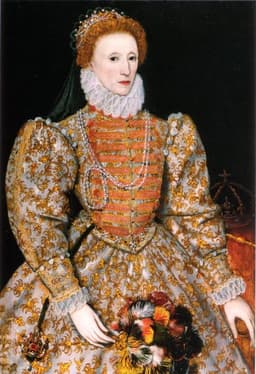
Elizabeth I
Politician · Modern
65.7Total
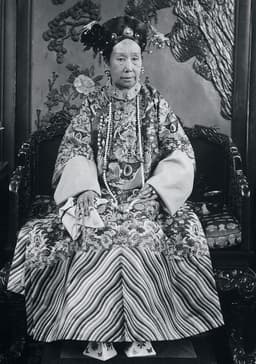
Empress Dowager Cixi
Politician · Modern
55.0Total
Basic Information
Born
1533
1835
Died
1603
1908
Era
Modern
Modern
Nationality
England
China
Occupation
Politician
Politician
Civilization
Western
Eastern
Score Comparison
Military (10%)
45.0
25.9
Political (20%)
78.0
53.8
Influence (20%)
65.0
58.3
Legacy (20%)
68.0
52.0
Leadership (15%)
75.0
72.0
Strategy (15%)
50.0
60.0
TOTAL
65.7
55.0
Elizabeth I — Complete Timeline
1559 AD
Act of Supremacy 1559Political Action◆ Major
Elizabeth I re-established the Church of England's independence from Rome, declaring herself Supreme Governor. This act, part of the Elizabethan Religious Settlement, restored Protestantism while maintaining some Catholic traditions, creating a via media that aimed to unify the nation.
Religious SettlementProtestantismChurch of England
Impact: nationalconstructive
1587 AD
Execution of Mary, Queen of ScotsPolitical Action◆ Major
After years of imprisonment, Elizabeth I signed the death warrant for Mary, Queen of Scots, who had been implicated in the Babington Plot to assassinate Elizabeth and claim the English throne. Mary's execution removed a major Catholic rival and solidified Elizabeth's position.
ExecutionCatholic RivalPlot
Impact: nationaltragic
1588 AD
Defeat of the Spanish ArmadaWar
The English navy under Lord Howard and Sir Francis Drake defeated the Spanish Armada, a massive invasion fleet sent by Philip II. Storms and English fireships scattered the Spanish fleet, preventing the invasion and establishing England as a major naval power.
Naval BattleSpainProtestantism
Impact: globalconstructive
1600 AD
Chartering of the East India CompanyPolitical Action◆ Major
Elizabeth I granted a royal charter to the East India Company, giving it a monopoly on English trade with Asia. This company would become a powerful instrument of British imperialism, eventually controlling large parts of India and shaping global trade.
TradeColonialismCharter
Impact: globalconstructive
1601 AD
Golden SpeechPolitical Action
In her final address to Parliament, Elizabeth I delivered the 'Golden Speech,' expressing her love for her subjects and her dedication to the realm. She addressed grievances over monopolies, promising reform, and cemented her image as a beloved monarch devoted to her people.
SpeechParliamentMonarchy
Impact: nationalconstructive
Empress Dowager Cixi — Complete Timeline
1861 AD
Self-Strengthening MovementReform◆ Major
Cixi supported the Self-Strengthening Movement, which modernized China's military and infrastructure. Arsenals, shipyards, and railways were built, and the Tongwen Guan language school was established. However, the movement avoided political reform, limiting its effectiveness.
Qing dynastyModernizationReform
Impact: nationalconstructive
Xinyou CoupPolitical Action
Cixi, with Prince Gong, staged a coup against the eight regents appointed by the dying Xianfeng Emperor. She had the regents arrested and executed, establishing herself as co-regent for the young Tongzhi Emperor. This began her effective control over the Qing government.
Qing dynastyCoupRegency
Impact: national
1898 AD
Hundred Days' Reform CoupPolitical Action◆ Major
Cixi staged a coup to end the Hundred Days' Reform, a series of modernization edicts by the Guangxu Emperor. She imprisoned the emperor, executed six reform leaders, and rescinded most reforms. This reversed political liberalization and strengthened conservative forces.
Qing dynastyReform suppressionCoup
Impact: nationaldestructive
1900 AD
Boxer RebellionWar◆ Major
Cixi declared war on eight foreign powers after the Boxers besieged foreign legations in Beijing. The Eight-Nation Alliance invaded, defeated Qing forces, and occupied Beijing. Cixi fled to Xi'an. The resulting Boxer Protocol imposed heavy reparations and further weakened the Qing.
Qing dynastyForeign interventionWar
Impact: globaldestructive
1901 AD
Late Qing ReformsReform◆ Major
After the Boxer Rebellion, Cixi initiated the Late Qing Reforms, including abolition of the civil service examination, establishment of modern schools, and military modernization. These reforms aimed to strengthen the dynasty but came too late to prevent its collapse.
Qing dynastyModernizationReform
Impact: nationalconstructive
Expert Analysis
Elizabeth I vs Empress Dowager Cixi
# Two Queens, Two Worlds: Elizabeth I and Empress Dowager Cixi
On a crisp November morning in 1601, an aging woman in a white silk gown stood before the Parliament of England, her voice steady despite her years. "Though God hath raised me high," she declared, "yet this I count the glory of my crown: that I have reigned with your loves." Across the globe and three centuries later, another woman—equally powerful, equally alone—sat behind a silk screen in the Forbidden City, her face unseen by the ministers who knelt before her. Elizabeth I and Empress Dowager Cixi never met, never corresponded, never knew the other existed. Yet both rose to absolute power in worlds that denied women such authority, and both shaped their nations' destinies with iron will. Why did one become the symbol of a golden age, while the other is remembered as the architect of a dynasty's collapse?
Origins
Elizabeth was born in 1533, the unwanted daughter of a king who had beheaded her mother. She spent her childhood in the shadow of the executioner's axe, learning to read political currents as other children learned to read books. Her education was rigorous—she spoke five languages, translated Seneca, and debated theology with bishops. But more than knowledge, she acquired caution. Her half-sister Mary's reign taught her that faith could kill, that a queen's bedchamber was a battlefield.
Cixi entered the world in 1835 as a daughter of a Manchu official's family—respectable but unremarkable. At sixteen, she was selected as a low-ranking concubine for the Xianfeng Emperor, one of dozens of women whose only purpose was to bear sons. She could not have known that the Opium Wars were exposing the Qing dynasty's weakness, that the British navy had already shattered China's illusion of supremacy. Her education was minimal; her weapons were beauty, cunning, and an extraordinary memory for faces and favors.
Rise to Power
Elizabeth's path to power was a matter of blood and law. When her Catholic half-sister Mary died in 1558, Elizabeth became queen by hereditary right. She inherited a kingdom torn between Protestants and Catholics, bankrupt from war with France, and surrounded by enemies who considered her a bastard and a heretic. Her coronation was a carefully staged performance of legitimacy.
Cixi's rise was a coup. In 1861, when the Xianfeng Emperor died, she was a twenty-six-year-old widow with a five-year-old son. The eight regents appointed to rule in his name underestimated her. With her brother-in-law Prince Gong, she staged the Xinyou Coup, arresting the regents and installing herself as co-regent behind the throne. She could not rule as empress—that was impossible for a woman—so she ruled as empress dowager, the mother of the child emperor. The screen she sat behind was not just decorum; it was the only way a woman could hold power in Confucian China.
Leadership & Governance
Elizabeth's political genius lay in knowing when to act and when to wait. The 1559 Act of Supremacy re-established the Church of England's independence from Rome, but she called herself "Supreme Governor," not "Supreme Head"—a subtle concession to those who believed no woman could lead the church. She balanced Catholics and Protestants, married no one to avoid tilting the European balance of power, and used her unmarried state as a diplomatic weapon. Her political score of 82 reflects a master of the possible.
Cixi's political score of 67 is lower, but her challenges were greater. She supported the Self-Strengthening Movement in 1861, building arsenals, shipyards, and a modern telegraph system. Yet she also crushed the Hundred Days' Reform in 1898, imprisoning her own nephew, the Guangxu Emperor, because his modernization threatened her power. She understood that reform could save China, but also that reform could destroy her. She chose herself.
Triumph & Tragedy
Elizabeth's greatest moment was the defeat of the Spanish Armada in 1588. When the massive invasion fleet approached, she rode to Tilbury in armor, addressing her troops: "I know I have the body of a weak and feeble woman, but I have the heart and stomach of a king." The English navy, led by Lord Howard and Sir Francis Drake, scattered the Armada with fireships and storms. It was a victory that seemed almost providential.
Cixi's greatest tragedy was the Boxer Rebellion of 1900. When the Boxers besieged foreign legations in Beijing, she declared war on eight foreign powers—a catastrophic miscalculation. The Eight-Nation Alliance marched on Beijing, and Cixi fled the Forbidden City disguised as a peasant woman. The dynasty never recovered. Her military score of 34.8 reflects her strategic blindness; Elizabeth's 45 is only modestly better, but Elizabeth never faced an enemy she could not outmaneuver.
Character & Destiny
Elizabeth's caution was her strength and her limitation. She refused to act decisively against Mary, Queen of Scots for nineteen years, until Mary's involvement in assassination plots left her no choice. In 1587, she signed the death warrant, then claimed it had been executed against her will—a lie that preserved her image as a merciful queen. She was a woman who ruled through ambiguity.
Cixi ruled through clarity. She executed her rivals, imprisoned her emperor, and centralized power with ruthless efficiency. But her clarity was also her blindness. She could not see that China needed more than military modernization—it needed political transformation. When she abolished the civil service examination in 1901, it was too late. The revolution was already brewing.
Legacy
Elizabeth left behind a golden age. The East India Company, chartered in 1600, would become the engine of British imperialism. Shakespeare wrote his greatest plays under her reign. She died in 1603, and England mourned her as "Good Queen Bess." Her legacy score of 75 reflects a nation that remembers her as a founder.
Cixi left behind a dying dynasty. Her legacy score of 78.5 is paradoxically higher, perhaps because she is remembered as the last great figure of imperial China—the woman who held the crumbling edifice together for forty years. But she also accelerated its collapse. The reforms she resisted would come anyway, under revolutionaries who had no use for empresses.
Conclusion
Two women, two worlds, one truth: power is never given to women; it must be taken and held against all odds. Elizabeth inherited a crown and kept it by never fully grasping it. Cixi seized power and held it by never letting go. Elizabeth's England rose; Cixi's China fell. But perhaps the difference was not in them, but in their times. Elizabeth governed a small island nation on the rise, united by Protestantism and ambition. Cixi governed an ancient empire in decline, torn by foreign exploitation and internal decay. One sailed with the wind; the other fought the storm. History judges the sailor more kindly, but both women knew that at sea, there is no safe harbor.
Rankings
🥇
Elizabeth ILeader
Mil: 45.0Pol: 78.0Inf: 65.0
65.7
🥈
Empress Dowager Cixi
Mil: 25.9Pol: 53.8Inf: 58.3
55.0
+10.7 behind
How This Comparison Works
Algorithm
Each figure is scored on 6 dimensions (0—100 scale) based on structured historical data: Military (10%), Political (20%), Influence (20%), Legacy (20%), Leadership (15%), Strategy (15%). The weighted total produces the final ranking.
Data Sources
Scores are computed from structured sub-indicators in the database. Scale factors adjust for era (Ancient ×0.85, Modern ×1.0) and civilization size (Eastern ×1.05, Other ×0.80) to account for differences in population and military scale.
Maximum 3 Figures
Comparisons are limited to 2—3 figures to ensure readability and statistical meaningfulness.
Error Margins
±5 points per dimension — Sub-scores are derived from historical records with inherent uncertainty. Two figures within 5 points on a dimension should be considered roughly equivalent in that area.
Total Score Accuracy
±3 points overall — The weighted combination of 6 dimensions produces a total score with approximately ±3 points of uncertainty. Differences of less than 3 points are not statistically significant— the figures are effectively tied.
Known Limitations
- Historical records are incomplete and uneven across civilizations
- Figures from oral-tradition societies may be underrepresented
- Occupation labels can misclassify multi-role figures
- Scores measure capability and impact, not moral character
- Quantitative scoring is a comparison tool, not absolute truth
Capability Radar
Military (10%) — Battles & Warfare
Battles
45
30
Win Rate
70
25
Expansion
55
15
Political (20%) — Governance & Reform
Reform
80
65
Diplomacy
85
60
Economy
80
50
Influence (20%) — Cultural & Global Reach
Cultural
85
60
Global
80
60
Legacy (20%) — Historical Impact
Historical
85
75
Longevity
85
55
Leadership (15%) — Power & Stability
Tenure
90
85
Stability
75
40
Strategy (15%) — Tactics & Innovation
Strategy
75
55
Tactics
60
40
Reform
65
70
Similar Comparisons
Comments & Discussion
TudorTactician6/16/2026
Elizabeth was a master of soft power, Cixi a despot of hard control. One inspired a navy to defeat Spain; the other watched China lose to Japan in 1895 because she siphoned naval funds for her Summer Palace. Elizabeth’s Tilbury speech rallied troops she never commanded; Cixi’s baby-browed regency crushed reformers. Queening isn’t just crown-wearing—it’s reading the room.
数据侦探6/16/2026
比船和人头?伊丽莎白时期英国人口约400万,人口增长率低;慈禧时中国人口超4亿。基数差百倍,但英国海军从34艘扩到约200艘(1588年后),清朝北洋舰队从25艘缩到几艘。谁在乱花钱?别吹“黄金时代”——英国靠海盗劫掠西班牙运银船发家,这叫“贸易”?我选务实但贪了的慈禧,至少她没卖鸦片粉饰太平。
ClassicsClio6/16/2026
Elizabeth wielded Pliny’s political theatre—a virgin queen as living allegory, Gloriana immortalizing herself through Spenser and Raleigh. Cixi played Taoist quietism, the dragon throne’s screen her stage. But parliaments outflanked English patriarchy; Qing eunuchs and ties that bound—like her 1900 declaration of war via telegraph that backfired—reveal context over character. Both were prisoners of their systems, not just women.
历史偏执狂6/16/2026
别扯“铁腕”神话!伊丽莎白把苏格兰玛丽送上断头台,不就是为了宗教迫害和政治清洗?她统治下爱尔兰人饿死几十万,还叫“黄金”?慈禧杀戊戌六君子是反动,但伊丽莎白杀天主教徒更是血债。两个都是专制老妖婆,只不过一个被文艺复兴光环洗白,一个被近代屈辱背锅。别让我选——两个我都骂。
Iconoclast20246/16/2026
Calling Elizabeth a golden age erases her dithering: she nearly bankrupted England with indecision over Mary Queen of Scots, leaving succession a crisis. Cixi stabilized a collapsing Qing for decades after the Taiping Rebellion—she kept the lid on until 1908. Different contexts: one sailed through a lucky wind (Armada), the other sailed into gunboats. Skills? Cixi outmaneuvered eight regents; Elizabeth outlasted four parliaments.