Loading...
Ehud Barak vs Sitiveni Rabuka
Ehud Barak leads by 8.2 pts · 2 figures compared
…
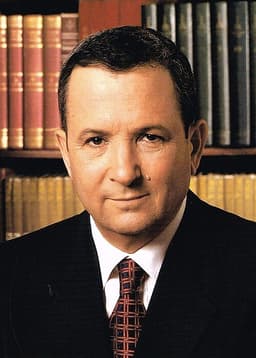
Ehud Barak
General · Modern
59.9Total
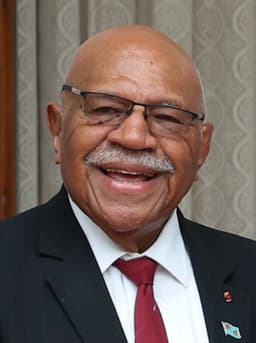
Sitiveni Rabuka
General · Modern
51.7Total
Basic Information
Born
1942
1948
Died
—
—
Era
Modern
Modern
Nationality
Israel
Fiji
Occupation
General
General
Civilization
Middle Eastern
Other
Score Comparison
Military (10%)
63.3
10.2
Political (20%)
72.0
60.0
Influence (20%)
55.0
53.3
Legacy (20%)
52.0
46.7
Leadership (15%)
66.0
85.0
Strategy (15%)
61.2
39.6
TOTAL
59.9
51.7
Ehud Barak — Complete Timeline
1973 AD
Awarded Medal of Distinguished ServiceOther
Barak received the Medal of Distinguished Service, Israel's highest military decoration, for his actions during the Yom Kippur War. He led a commando raid deep into Egyptian territory, destroying radar installations. This was part of a broader operation to open a supply route.
Military DecorationYom Kippur War
Impact: nationalconstructive
1976 AD
Led Operation Thunderbolt (Entebbe Raid)War◆ Major
As Chief of Staff, Barak planned and oversaw the Entebbe raid, a rescue of hostages hijacked by Palestinian and German militants in Uganda. Israeli commandos rescued 102 hostages. The operation was a major military success and boosted Israeli morale and international standing.
EntebbeHostage RescueCounterterrorism
Impact: globalconstructive
1991 AD
Appointed Chief of Staff of the IDFPolitical Action◆ Major
Barak was appointed the 14th Chief of Staff of the Israel Defense Forces. He served until 1995, overseeing military operations during the First Intifada and the Oslo Accords period. His tenure included the 1993 Operation Accountability in Lebanon.
Military CommandIDF
Impact: national
1999 AD
Elected Prime Minister of IsraelPolitical Action◆ Major
Barak was elected Prime Minister of Israel, defeating incumbent Benjamin Netanyahu. He campaigned on a platform of peace negotiations and domestic reform. His government pursued the Camp David Summit with Palestinians and withdrew from southern Lebanon.
ElectionPeace Process
Impact: regionalconstructive
2000 AD
Camp David Summit with ArafatPolitical Action
Barak participated in the Camp David Summit with Palestinian leader Yasser Arafat and U.S. President Bill Clinton. The summit aimed to reach a final status agreement but failed. Barak offered territorial concessions that were rejected. The failure contributed to the Second Intifada.
Peace NegotiationsCamp DavidIsraeli-Palestinian Conflict
Impact: global
Withdrew from Southern LebanonPolitical Action◆ Major
Barak ordered the unilateral withdrawal of Israeli forces from the security zone in southern Lebanon, ending 18 years of occupation. The withdrawal was completed in May 2000. Hezbollah claimed victory, and the move was criticized by some as a retreat under fire.
WithdrawalLebanonHezbollah
Impact: regional
Sitiveni Rabuka — Complete Timeline
1987 AD
1987 Fijian Coup d'étatPolitical Action
Rabuka, as a colonel in the Fijian military, led a coup overthrowing the elected government of Timoci Bavadra. The coup was motivated by ethnic Fijian opposition to Indo-Fijian political influence. Rabuka declared Fiji a republic.
CoupMilitary InterventionEthnic Tension
Impact: nationaldestructive
1992 AD
1992 Election as Prime MinisterPolitical Action◆ Major
Rabuka transitioned from military leader to civilian politician, winning the 1992 general election as leader of the Fijian Political Party. He became Prime Minister, serving until 1999.
ElectionCivilian GovernmentPolitical Transition
Impact: national
1997 AD
1997 Constitution ReformReform◆ Major
Rabuka's government oversaw the adoption of a new constitution that removed ethnic-based voting and provided for a multi-ethnic government. The constitution aimed to reduce ethnic tensions and promote national unity.
ConstitutionReformEthnic Reconciliation
Impact: nationalconstructive
1999 AD
1999 General Election DefeatPolitical Action◆ Major
Rabuka's government was defeated in the general election by the Labour Party led by Mahendra Chaudhry. Rabuka stepped down as Prime Minister, marking the end of his first period in power.
Election DefeatGovernment ChangeChaudhry
Impact: national
2022 AD
2022 Return as Prime MinisterPolitical Action◆ Major
Rabuka led the People's Alliance to victory in the 2022 general election, forming a coalition government. He became Prime Minister again, 23 years after his previous tenure, promising democratic reforms.
ElectionReturn to PowerCoalition Government
Impact: national
Expert Analysis
Sitiveni Rabuka vs Ehud Barak
### The General and the Democrat: Ehud Barak and Sitiveni Rabuka
In the summer of 2000, two generals stood at vastly different crossroads. In the Maryland hills of Camp David, Ehud Barak, Israel’s most decorated soldier, gambled his political future on a handshake with Yasser Arafat that never came. Half a world away, Sitiveni Rabuka, a former coup leader who had once shattered Fiji’s democracy, was shepherding a new constitution that would give every citizen an equal vote. How did two men, both forged in the crucible of military command, end up on such opposite trajectories—one reaching for a peace that eluded him, the other rebuilding the very system he had overthrown?
### Origins
Ehud Barak was born in 1942 on Kibbutz Mishmar Hasharon, a child of socialist Zionism. His parents were Holocaust survivors, and the young Barak grew up in a world where survival was synonymous with strength. The Israel Defense Forces were not just a career path but a national religion. Barak, brilliant and driven, absorbed this ethos completely. He joined an elite commando unit, and by his mid-twenties, he had already planned operations that would become legend.
Sitiveni Rabuka, born in 1948 in the village of Nakobo, came from a different world—a Fijian chiefly family where loyalty to tradition and land was paramount. Fiji was a British colony, a patchwork of indigenous Fijians and Indo-Fijian descendants of indentured laborers. Rabuka joined the military as a way to serve his nation, rising steadily through the ranks. His world was one of ethnic hierarchies and colonial legacies, where the army was the guardian of indigenous Fijian interests.
### Rise to Power
Barak’s path was a masterclass in meritocratic ascent. He commanded the legendary Sayeret Matkal, the special forces unit that would later rescue hostages at Entebbe. As Chief of Staff in 1991, he oversaw the entire IDF, a position that placed him at the center of every strategic decision. His military record was pristine: the Medal of Distinguished Service in 1973, the planning of Operation Thunderbolt in 1976, and a reputation for cold, analytical brilliance. When he entered politics in the mid-1990s, he did so as a man who had already conquered every summit the military could offer.
Rabuka’s rise was more violent and abrupt. In 1987, Colonel Rabuka stormed into Fiji’s Parliament and overthrew the newly elected government of Timoci Bavadra, which was dominated by Indo-Fijians. The coup was driven by fear—indigenous Fijians, though a majority, saw their political power slipping away. Rabuka did not plan a long career as a dictator. He handed power to a civilian government, then returned to the barracks. But when that government faltered, he stepped in again, this time as prime minister in 1992. He had seized power, then won it at the ballot box.
### Leadership & Governance
Barak governed like a chess grandmaster. He saw politics as a series of complex problems to be solved with logic and daring. His 1999 election campaign promised peace with the Palestinians and withdrawal from Lebanon. He delivered on the latter: in 2000, he ordered the unilateral pullout from southern Lebanon, ending an 18-year occupation. It was a bold, decisive move that surprised even his own military. But his approach to the Camp David summit was pure strategy: he offered Arafat a deal that included a Palestinian state in most of the West Bank and Gaza, with East Jerusalem as its capital. When Arafat said no, Barak was left with nothing but a collapsed coalition and a new intifada.
Rabuka, by contrast, learned to govern by listening. After the 1987 coup, he realized that military force could not solve Fiji’s ethnic divisions. As prime minister, he shepherded the 1997 Constitution Reform, which scrapped ethnic-based voting and created a multiracial parliament. It was a remarkable reversal: the man who had torn up the constitution now rewrote it to include everyone. He lost the 1999 election to an Indo-Fijian-led government, but he accepted the result peacefully—a sign of how far he had come.
### Triumph & Tragedy
Barak’s greatest triumph remains the Entebbe raid, a hostage rescue that defied distance, intelligence, and probability. His greatest tragedy was the collapse of the peace process. He had staked everything on a deal that required two partners, and he had only one. The Second Intifada erupted in 2000, and Barak’s political career was buried under its rubble. He resigned in 2001, a man who had achieved so much on the battlefield but could not win the peace.
Rabuka’s triumph was the 1997 constitution, a document that transformed Fiji from an ethnic state into a democracy. His tragedy was the 2000 coup, when a new generation of Fijian nationalists, inspired by his own example, overthrew the government of Mahendra Chaudhry. Rabuka condemned the coup, but he could not escape the shadow of 1987. He spent two decades in the political wilderness, a cautionary tale of how revolutions can devour their children.
### Character & Destiny
Barak was a man of immense self-discipline, but also immense self-belief. He trusted his own intellect above all else, and this made him a brilliant commander but a poor politician. He could not charm, he could not compromise, and he could not forgive. When the Camp David summit failed, he blamed Arafat entirely, never questioning whether his own rigid negotiating style had contributed to the deadlock.
Rabuka was more pragmatic and more humble. He had seen the consequences of his own actions—the coups had brought instability, not justice. He learned that leadership meant admitting mistakes. In 2022, at age 74, he returned to power as prime minister, this time as a democrat. It was a second act that few predicted, a testament to his ability to change.
### Legacy
Barak is remembered as a warrior who could not become a peacemaker. His military legacy is secure—he is Israel’s most decorated soldier, a man who saved lives at Entebbe. But his political legacy is ambiguous: he tried to end the conflict and failed, and the failure still haunts the region.
Rabuka’s legacy is more complex. He is both a coup leader and a democrat, a man who broke the law and then helped rebuild it. Fiji today is a multiracial democracy, albeit a fragile one, and Rabuka’s 1997 constitution made that possible. He is not a hero, but he is a human being who evolved.
### Conclusion
Two generals, two islands of conflict, two very different endings. Barak, the perfectionist, crashed against the hard realities of the Middle East. Rabuka, the pragmatist, learned that sometimes you must tear down a house to build a better one. Their stories remind us that leadership is not a fixed trait but a journey. The greatest generals are not always the greatest politicians, and the greatest politicians are not always the ones who start out that way. In the end, both men were defined not by their medals or their coups, but by what they did when the guns fell silent.
Rankings
🥇
Ehud BarakLeader
Mil: 63.3Pol: 72.0Inf: 55.0
59.9
🥈
Sitiveni Rabuka
Mil: 10.2Pol: 60.0Inf: 53.3
51.7
+8.2 behind
How This Comparison Works
Algorithm
Each figure is scored on 6 dimensions (0—100 scale) based on structured historical data: Military (10%), Political (20%), Influence (20%), Legacy (20%), Leadership (15%), Strategy (15%). The weighted total produces the final ranking.
Data Sources
Scores are computed from structured sub-indicators in the database. Scale factors adjust for era (Ancient ×0.85, Modern ×1.0) and civilization size (Eastern ×1.05, Other ×0.80) to account for differences in population and military scale.
Maximum 3 Figures
Comparisons are limited to 2—3 figures to ensure readability and statistical meaningfulness.
Error Margins
±5 points per dimension — Sub-scores are derived from historical records with inherent uncertainty. Two figures within 5 points on a dimension should be considered roughly equivalent in that area.
Total Score Accuracy
±3 points overall — The weighted combination of 6 dimensions produces a total score with approximately ±3 points of uncertainty. Differences of less than 3 points are not statistically significant— the figures are effectively tied.
Known Limitations
- Historical records are incomplete and uneven across civilizations
- Figures from oral-tradition societies may be underrepresented
- Occupation labels can misclassify multi-role figures
- Scores measure capability and impact, not moral character
- Quantitative scoring is a comparison tool, not absolute truth
Capability Radar
Military (10%) — Battles & Warfare
Battles
65
5
Win Rate
70
5
Expansion
55
5
Political (20%) — Governance & Reform
Reform
50
50
Diplomacy
60
45
Economy
45
40
Influence (20%) — Cultural & Global Reach
Cultural
50
30
Global
55
20
Legacy (20%) — Historical Impact
Historical
55
40
Longevity
45
30
Leadership (15%) — Power & Stability
Tenure
55
55
Stability
40
35
Strategy (15%) — Tactics & Innovation
Strategy
70
10
Tactics
75
10
Reform
60
5
Similar Comparisons
Comments & Discussion
Nick"Operation Defensive Shiel6/16/2026
Barak walked into Camp David like he was planning a hostage rescue—all operational brilliance, zero human insight. He offered Arafat 95% of the West Bank but forgot to read the room. Rabuka, meanwhile, pulled the rarest move in history: the coup leader who becomes the democrat. He actually read Machiavelli backwards. Think about it—one man had tactical genius, the other had strategic humility. I know which one built something that lasted.
数据拆解员6/16/2026
数据不会骗人:Barak在戴维营提出的领土比例听起来很大方,但去掉约旦河谷和定居点区块后,实际可控面积不到40%。Rabuka的1997年宪法在族裔比例上让步更多——原住民被迫接受土地权益重新分配,但换来了20年政治稳定。一个在数字上玩花活,一个用硬数据做交易。谁更懂数学?显然后者。
HellenicSpartan6/16/2026
Two different definitions of "decorated soldier" here. Barak is the IDF's most decorated—meaning he survived the most desperate firefights. Rabuka is literally "Rambo"—his men's nickname from the jungle. But here's the twist: Barak couldn't bring himself to trust a former enemy (Arafat), while Rabuka hugged his former Indo-Fijian opponents. The soldier who conquered fear led a nation into gridlock. The one who lived through chaos actually built peace. Ironic, isn't it?
历史侦探6/16/2026
别被"民主重建者"的光环迷惑了。Rabuka的1990年宪法才是他的杰作——把议会席位按族裔固定分配,原住民占37席,印度裔27席,其他族裔5席。这分明是制度化种族隔离。1997年修改只是把席位改成开放选举,但原住民仍保证拥有多数。Barak至少敢于在戴维营掏出地图画领土分割线,Rabuka从不敢动土地所有权这根神经。两人都是制度的修补匠,而非革命者。
BarbedWireBarak6/16/2026
Look, I get the Rabuka redemption arc, but can we stop pretending he's Gandhi? The man literally stormed parliament in 1987 with soldiers, then wrote a constitution locking ethnic Fijians into permanent power. Barak's failure was at least a failure of ambition—he tried to end a hundred-year war. Rabuka's "success" is just institutionalized apartheid with a smile. One man fell short of greatness; the other fell short of justice. Give me the former every time.