Loading...
Ehud Barak vs Yitzhak Rabin
Yitzhak Rabin leads by 6.5 pts · 2 figures compared
…
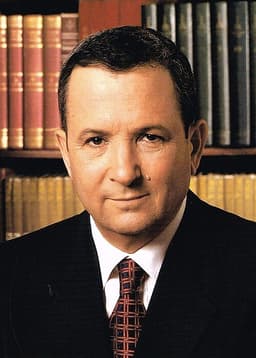
Ehud Barak
General · Modern
59.9Total
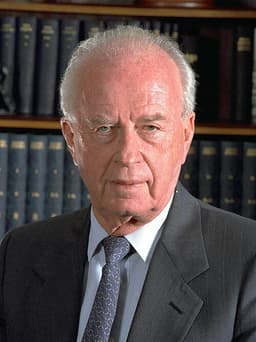
Yitzhak Rabin
General · Modern
66.4Total
Basic Information
Born
1942
1922
Died
—
—
Era
Modern
Modern
Nationality
Israel
Israel
Occupation
General
General
Civilization
Middle Eastern
Middle Eastern
Score Comparison
Military (10%)
63.3
61.7
Political (20%)
72.0
82.0
Influence (20%)
55.0
68.0
Legacy (20%)
52.0
55.0
Leadership (15%)
66.0
78.0
Strategy (15%)
61.2
55.0
TOTAL
59.9
66.4
Ehud Barak — Complete Timeline
1973 AD
Awarded Medal of Distinguished ServiceOther
Barak received the Medal of Distinguished Service, Israel's highest military decoration, for his actions during the Yom Kippur War. He led a commando raid deep into Egyptian territory, destroying radar installations. This was part of a broader operation to open a supply route.
Military DecorationYom Kippur War
Impact: nationalconstructive
1976 AD
Led Operation Thunderbolt (Entebbe Raid)War◆ Major
As Chief of Staff, Barak planned and oversaw the Entebbe raid, a rescue of hostages hijacked by Palestinian and German militants in Uganda. Israeli commandos rescued 102 hostages. The operation was a major military success and boosted Israeli morale and international standing.
EntebbeHostage RescueCounterterrorism
Impact: globalconstructive
1991 AD
Appointed Chief of Staff of the IDFPolitical Action◆ Major
Barak was appointed the 14th Chief of Staff of the Israel Defense Forces. He served until 1995, overseeing military operations during the First Intifada and the Oslo Accords period. His tenure included the 1993 Operation Accountability in Lebanon.
Military CommandIDF
Impact: national
1999 AD
Elected Prime Minister of IsraelPolitical Action◆ Major
Barak was elected Prime Minister of Israel, defeating incumbent Benjamin Netanyahu. He campaigned on a platform of peace negotiations and domestic reform. His government pursued the Camp David Summit with Palestinians and withdrew from southern Lebanon.
ElectionPeace Process
Impact: regionalconstructive
2000 AD
Camp David Summit with ArafatPolitical Action
Barak participated in the Camp David Summit with Palestinian leader Yasser Arafat and U.S. President Bill Clinton. The summit aimed to reach a final status agreement but failed. Barak offered territorial concessions that were rejected. The failure contributed to the Second Intifada.
Peace NegotiationsCamp DavidIsraeli-Palestinian Conflict
Impact: global
Withdrew from Southern LebanonPolitical Action◆ Major
Barak ordered the unilateral withdrawal of Israeli forces from the security zone in southern Lebanon, ending 18 years of occupation. The withdrawal was completed in May 2000. Hezbollah claimed victory, and the move was criticized by some as a retreat under fire.
WithdrawalLebanonHezbollah
Impact: regional
Yitzhak Rabin — Complete Timeline
1967 AD
Chief of Staff during the Six-Day WarWar
As Chief of Staff of the Israel Defense Forces, Rabin commanded the Israeli military during the Six-Day War against Egypt, Jordan, and Syria. Israel captured the Sinai Peninsula, Gaza Strip, West Bank, East Jerusalem, and Golan Heights, reshaping the region.
Six-Day WarTerritorial ExpansionMilitary Victory
Impact: global
1993 AD
Signing of the Oslo AccordsPolitical Action
As prime minister, Rabin signed the Oslo Accords with PLO Chairman Yasser Arafat on the White House lawn. The agreement established the Palestinian Authority and set a framework for Palestinian self-governance in the West Bank and Gaza Strip.
Peace ProcessPalestiniansOslo
Impact: globalconstructive
1995 AD
Assassination at Peace RallyPolitical Action
Rabin was assassinated by Israeli extremist Yigal Amir after a peace rally in Tel Aviv. The assassination shocked Israel and the world, derailing the Oslo peace process and leading to a period of political instability.
AssassinationPeace ProcessPolitical Violence
Impact: globaltragic
Expert Analysis
Yitzhak Rabin vs Ehud Barak
# The General and the Peacemaker
On a balmy November evening in 1995, Yitzhak Rabin stood before a crowd of 100,000 in Tel Aviv’s Kings of Israel Square, singing “The Song of Peace” with a rare, unguarded smile. Moments later, three bullets from an Israeli extremist’s pistol ended his life—and with it, the most audacious experiment in Middle Eastern diplomacy. Five years earlier, Ehud Barak had been the most decorated soldier in Israeli history, a man who had once disguised himself as a woman to assassinate PLO commanders in Beirut. When he became prime minister in 1999, he too would gamble everything on peace—but his story would end not in martyrdom, but in failure. Why did one general’s pursuit of peace make him a legend, while the other’s left him a footnote?
Origins
Yitzhak Rabin was born in 1922 in Jerusalem to socialist Zionist parents who had emigrated from Russia. He grew up in a world where survival was not abstract—Arab riots, British restrictions, and the Holocaust shaped his generation’s psyche. Rabin was not a natural warrior; he was a quiet, introspective boy who found solace in agriculture. But the 1948 War of Independence forged him into a soldier. He commanded the Harel Brigade in the brutal battles for Jerusalem, learning that war was not glorious but necessary.
Ehud Barak, born twenty years later in 1942 on a kibbutz, came of age in a very different Israel. The state was established, the army was victorious, and the Holocaust was a wound, not a fresh scar. Barak was driven, almost obsessive—he taught himself to play piano by ear, mastered mathematics, and earned a physics degree while climbing the military ladder. Where Rabin was cautious and deliberate, Barak was audacious and calculating. The difference in their eras was profound: Rabin’s Israel fought for existence; Barak’s Israel fought for supremacy.
Rise to Power
Rabin’s ascent was methodical. He served as Chief of Staff during the Six-Day War of 1967, a conflict that reshaped the Middle East. Under his command, Israel captured the Sinai, Gaza, the West Bank, and the Golan Heights in six astonishing days. But Rabin was not a triumphant figure—he suffered a nervous breakdown before the war, overwhelmed by the weight of responsibility. He recovered, but the episode revealed a man who felt history pressing on his shoulders.
Barak’s rise was more spectacular. In 1973, he received the Medal of Distinguished Service for leading a commando raid that destroyed a Palestinian hijacking team in Beirut. In 1976, as a key planner of the Entebbe Raid, he helped rescue 102 hostages from a hijacked Air France plane in Uganda—a feat that became legend. By 1991, he was Chief of Staff, overseeing the suppression of the First Intifada. Barak was Israel’s most decorated soldier, a man who seemed to walk on water. His path to politics was natural, but his confidence bordered on arrogance.
Leadership & Governance
As prime minister from 1992 to 1995, Rabin governed with a quiet, almost reluctant authority. He was not a charismatic speaker—his speeches were halting, his hands often in his pockets. But he had a strategic mind. He understood that the Oslo Accords, signed in 1993 with Yasser Arafat on the White House lawn, were a gamble. “You don’t make peace with friends,” he said. “You make peace with enemies.” Rabin’s military background gave him credibility to sell concessions to a skeptical public. He was a hawk who became a dove, and Israelis trusted him because they knew he had fought.
Barak, elected in 1999, was the opposite. He campaigned as a peacemaker, promising to withdraw from Lebanon and revive negotiations with the Palestinians. But his style was transactional, not transformational. At the Camp David Summit in 2000, he offered Arafat unprecedented concessions—a Palestinian state in most of the West Bank, a capital in East Jerusalem, and sovereignty over the Temple Mount. Yet he failed to build trust. He negotiated like a general, not a statesman, expecting results from logic rather than relationships. The summit collapsed, and the Second Intifada erupted soon after.
Triumph & Tragedy
Rabin’s greatest triumph was the Oslo Accords—a framework that seemed to offer a path to two states living side by side. But his greatest tragedy was the price. Israeli extremists accused him of treason; right-wing protesters held posters of him in a Nazi uniform. On November 4, 1995, Yigal Amir, a religious law student, shot him at the peace rally. Rabin’s death was a national trauma, a moment that shattered Israel’s faith in its own unity.
Barak’s triumph was the unilateral withdrawal from southern Lebanon in 2000, ending an 18-year occupation that had cost hundreds of Israeli lives. It was a bold decision, but it backfired. Hezbollah claimed victory, and the withdrawal was seen as a retreat. Barak’s tragedy was Camp David—a failure that destroyed his political career. He lost the 2001 election to Ariel Sharon in a landslide, and his legacy became synonymous with the collapse of the peace process.
Character & Destiny
Rabin’s personality was shaped by humility and doubt. He once said, “I’ve learned that the only way to lead is to listen.” His hesitancy made him cautious, but it also made him wise. He knew that peace required sacrifice, and he was willing to pay the ultimate price. Barak, by contrast, was brilliant but brittle. He believed in his own intellect so completely that he dismissed opponents as fools. When Arafat rejected his offer at Camp David, Barak blamed the Palestinian leader entirely—never questioning whether his own approach had been flawed.
The difference was generational. Rabin was forged in the crucible of a nation fighting for survival; he understood that victory could be hollow. Barak was forged in the age of Israeli military supremacy; he believed that force could solve anything. Rabin’s tragedy was external—assassination by an enemy from within. Barak’s tragedy was internal—the failure of a man who could not connect.
Legacy
Rabin’s legacy is sacred in Israel and around the world. His assassination made him a martyr for peace. The Oslo Accords remain the only serious framework for Israeli-Palestinian resolution, though they have been battered by decades of violence. Every year, on the anniversary of his death, Israelis gather in the square now named for him to sing “The Song of Peace.” Rabin is remembered not as a perfect leader, but as one who dared to try.
Barak’s legacy is more ambiguous. He is remembered as a brilliant soldier who failed as a politician. The withdrawal from Lebanon is seen as a strategic blunder, and Camp David as a missed opportunity. He later served as Defense Minister under Netanyahu, but never regained the prime minister’s office. His story is a cautionary tale: that military genius does not translate into political wisdom.
Conclusion
Two generals, two paths. Rabin walked toward peace with the weight of history on his shoulders, and was killed. Barak walked toward peace with the confidence of a man who had never lost, and was defeated. The difference was not in their goals, but in their souls. Rabin understood that peace is fragile, that it requires patience and humility. Barak believed that peace could be achieved through sheer force of will. In the end, the general who doubted himself became a legend, while the general who never doubted became a lesson. Their stories remind us that history is not made by the strongest, but by those who understand their own weakness.
Rankings
🥇
Yitzhak RabinLeader
Mil: 61.7Pol: 82.0Inf: 68.0
66.4
🥈
Ehud Barak
Mil: 63.3Pol: 72.0Inf: 55.0
59.9
+6.5 behind
How This Comparison Works
Algorithm
Each figure is scored on 6 dimensions (0—100 scale) based on structured historical data: Military (10%), Political (20%), Influence (20%), Legacy (20%), Leadership (15%), Strategy (15%). The weighted total produces the final ranking.
Data Sources
Scores are computed from structured sub-indicators in the database. Scale factors adjust for era (Ancient ×0.85, Modern ×1.0) and civilization size (Eastern ×1.05, Other ×0.80) to account for differences in population and military scale.
Maximum 3 Figures
Comparisons are limited to 2—3 figures to ensure readability and statistical meaningfulness.
Error Margins
±5 points per dimension — Sub-scores are derived from historical records with inherent uncertainty. Two figures within 5 points on a dimension should be considered roughly equivalent in that area.
Total Score Accuracy
±3 points overall — The weighted combination of 6 dimensions produces a total score with approximately ±3 points of uncertainty. Differences of less than 3 points are not statistically significant— the figures are effectively tied.
Known Limitations
- Historical records are incomplete and uneven across civilizations
- Figures from oral-tradition societies may be underrepresented
- Occupation labels can misclassify multi-role figures
- Scores measure capability and impact, not moral character
- Quantitative scoring is a comparison tool, not absolute truth
Capability Radar
Military (10%) — Battles & Warfare
Battles
65
65
Win Rate
70
70
Expansion
55
50
Political (20%) — Governance & Reform
Reform
50
65
Diplomacy
60
85
Economy
45
60
Influence (20%) — Cultural & Global Reach
Cultural
50
55
Global
55
70
Legacy (20%) — Historical Impact
Historical
55
75
Longevity
45
60
Leadership (15%) — Power & Stability
Tenure
55
70
Stability
40
40
Strategy (15%) — Tactics & Innovation
Strategy
70
75
Tactics
75
60
Reform
60
55
Similar Comparisons
Comments & Discussion
Rabin's Reel6/16/2026
Rabin’s peace legacy is overrated—he was a military realist who traded land for time, not genuine coexistence. Oslo was a tactical pause, not a transformation. Barak at least tried Camp David with real concessions; Rabin’s murder froze a flawed process into sainthood. History buffs need to stop canonizing the man and examine the deal’s collapse under its own contradictions. We glorify the martyr, ignore the pragmatist.
血腥玫瑰6/16/2026
说拉宾是和平烈士?别逗了。他1995年集会唱《和平之歌》时,台下10万人里多少是来喊“打死阿拉伯人”的?他的遗产被极端分子一枪打成了神,但之前他可是下令用橡皮子弹开枪打小孩的总参谋长老兵。巴拉克至少敢在戴维营提出约旦河西岸分区,拉宾回避了耶路撒冷,这才是真问题。历史爱好者该看看1993年前的他怎么镇压起义,再谈神圣和平。
The Syntax of Strategy6/16/2026
From a military historian’s lens, Rabin and Barak reveal two phases of Israeli power. Rabin’s 1967 Six-Day War planning was textbook coordinated assault; Barak’s 1973 disguised-entry raid into Beirut was audacious but asymmetric. As PMs, Rabin kept peace talks within IDF-led security structures, while Barak overreached by trusting Clinton’s diplomatic hand-holding. Barak’s failure wasn’t peace—it was operational hubris, expecting enemies to comply with his timetable. Different generals, same tra
废墟上的舞者6/16/2026
政治学家角度看,巴拉克其实比拉宾更激进,但时间不同。拉宾利用冷战后的美国单极窗口,巴拉克赶上911前的中东乱流。两人都在军队里学会了"先打后谈",但巴拉克太急,2000年单方面从黎巴嫩撤军却被真主党解读为软弱。拉宾的和平是军队出身的妥协,巴拉克的是精英式的幻想。历史给拉宾时间,给巴拉克嘲讽。