Loading...
Ehud Barak vs Muhammadu Buhari
Ehud Barak leads by 8.4 pts · 2 figures compared
…
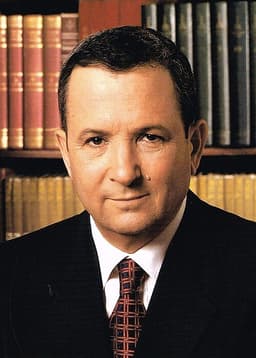
Ehud Barak
General · Modern
59.9Total
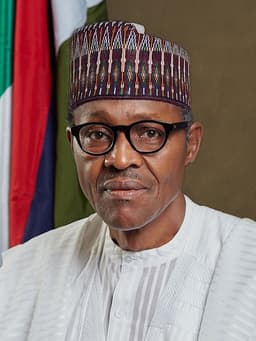
Muhammadu Buhari
General · Modern
51.5Total
Basic Information
Born
1942
1942
Died
—
—
Era
Modern
Modern
Nationality
Israel
Nigeria
Occupation
General
General
Civilization
Middle Eastern
Other
Score Comparison
Military (10%)
63.3
22.6
Political (20%)
72.0
68.0
Influence (20%)
55.0
53.3
Legacy (20%)
52.0
43.3
Leadership (15%)
66.0
72.0
Strategy (15%)
61.2
41.0
TOTAL
59.9
51.5
Ehud Barak — Complete Timeline
1973 AD
Awarded Medal of Distinguished ServiceOther
Barak received the Medal of Distinguished Service, Israel's highest military decoration, for his actions during the Yom Kippur War. He led a commando raid deep into Egyptian territory, destroying radar installations. This was part of a broader operation to open a supply route.
Military DecorationYom Kippur War
Impact: nationalconstructive
1976 AD
Led Operation Thunderbolt (Entebbe Raid)War◆ Major
As Chief of Staff, Barak planned and oversaw the Entebbe raid, a rescue of hostages hijacked by Palestinian and German militants in Uganda. Israeli commandos rescued 102 hostages. The operation was a major military success and boosted Israeli morale and international standing.
EntebbeHostage RescueCounterterrorism
Impact: globalconstructive
1991 AD
Appointed Chief of Staff of the IDFPolitical Action◆ Major
Barak was appointed the 14th Chief of Staff of the Israel Defense Forces. He served until 1995, overseeing military operations during the First Intifada and the Oslo Accords period. His tenure included the 1993 Operation Accountability in Lebanon.
Military CommandIDF
Impact: national
1999 AD
Elected Prime Minister of IsraelPolitical Action◆ Major
Barak was elected Prime Minister of Israel, defeating incumbent Benjamin Netanyahu. He campaigned on a platform of peace negotiations and domestic reform. His government pursued the Camp David Summit with Palestinians and withdrew from southern Lebanon.
ElectionPeace Process
Impact: regionalconstructive
2000 AD
Camp David Summit with ArafatPolitical Action
Barak participated in the Camp David Summit with Palestinian leader Yasser Arafat and U.S. President Bill Clinton. The summit aimed to reach a final status agreement but failed. Barak offered territorial concessions that were rejected. The failure contributed to the Second Intifada.
Peace NegotiationsCamp DavidIsraeli-Palestinian Conflict
Impact: global
Withdrew from Southern LebanonPolitical Action◆ Major
Barak ordered the unilateral withdrawal of Israeli forces from the security zone in southern Lebanon, ending 18 years of occupation. The withdrawal was completed in May 2000. Hezbollah claimed victory, and the move was criticized by some as a retreat under fire.
WithdrawalLebanonHezbollah
Impact: regional
Muhammadu Buhari — Complete Timeline
1983 AD
1983 Nigerian coup d'étatPolitical Action
Major General Muhammadu Buhari led a military coup that overthrew the civilian government of President Shehu Shagari. Buhari cited corruption and economic mismanagement as justifications, and he became the head of state.
CoupMilitary RuleCorruption
Impact: nationaldestructive
1984 AD
War Against Indiscipline (WAI)Reform◆ Major
Buhari launched the War Against Indiscipline, a campaign to enforce discipline and order in Nigerian society. It included harsh penalties for minor offenses, such as queue-jumping, and was criticized for human rights abuses.
DisciplineSocial PolicyHuman Rights
Impact: nationaldestructive
1985 AD
Overthrow by Ibrahim BabangidaPolitical Action◆ Major
Buhari was overthrown in a palace coup led by his Chief of Army Staff, Ibrahim Babangida. Babangida cited Buhari's authoritarian style and failure to address the economy as reasons for the coup.
CoupOverthrowBabangida
Impact: national
2015 AD
Anti-corruption campaignReform◆ Major
Buhari launched a high-profile anti-corruption campaign, targeting government officials and recovering stolen assets. The campaign was praised internationally but criticized for being selective and politically motivated.
Anti-CorruptionReformGovernance
Impact: nationalconstructive
Election as President of NigeriaPolitical Action
Buhari won the 2015 Nigerian presidential election, defeating incumbent Goodluck Jonathan. This was the first time an opposition candidate had defeated a sitting president in Nigeria's history, marking a democratic milestone.
ElectionDemocracyOpposition Victory
Impact: nationalprogressive
Expert Analysis
Muhammadu Buhari vs Ehud Barak
### The General’s Dilemma
In the summer of 2000, two men who had spent their lives in uniform stood at the precipice of history, yet their paths could not have diverged more sharply. One, Ehud Barak, was a former chief of staff of the Israel Defense Forces, a man who had planned the daring Entebbe raid and now sat across a table from Yasser Arafat at Camp David, gambling on a peace that would never come. The other, Muhammadu Buhari, was a Nigerian major general who had seized power in a coup seventeen years earlier, then been overthrown himself, only to rise again as a democratic president, waging a war against corruption that would define his second act. Both were generals who became politicians; both were shaped by the crucible of their nations’ struggles. But while Barak’s story is one of brilliance and disappointment—a soldier who nearly made peace but lost his grip on power—Buhari’s is a tale of discipline and endurance, a man who ruled with an iron fist, was cast out, and then returned, older and wiser, to try again. The difference between them is not merely a matter of geography or ideology; it is a question of what happens when a general must learn to lead a democracy.
### Origins
Born in 1942, Muhammadu Buhari grew up in Daura, a small town in northern Nigeria, under British colonial rule. His father was a farmer, and Buhari’s early life was steeped in the austere traditions of Hausa-Fulani culture, where respect for authority and order were paramount. When he joined the Nigerian Army in 1962, he entered a world of coups, civil war, and ethnic strife. Nigeria had won independence in 1960, but its democracy was fragile, and the military soon became the nation’s true arbiter. Buhari’s rise was steady, not spectacular—he commanded troops during the Biafran War, but his reputation was built on discipline, not daring. He was a man of few words, rigid, and deeply suspicious of the corruption that plagued civilian rule.
Ehud Barak, also born in 1942, came from a very different world. He was raised on Kibbutz Mishmar HaSharon, a socialist farming collective in what was then British Mandate Palestine. His parents were secular Jewish immigrants from Eastern Europe, and Barak grew up in a society forged in war, where survival depended on ingenuity and audacity. He joined the Israeli Defense Forces in 1959 and became a commando in the elite Sayeret Matkal unit, where he earned a reputation for extraordinary bravery. In 1973, during the Yom Kippur War, he led a mission to rescue wounded soldiers behind enemy lines, earning the Medal of Distinguished Service, Israel’s highest military honor. Where Buhari was a product of a fractious, post-colonial state struggling to cohere, Barak was the child of a nation that had already defined itself through conflict—and had learned to celebrate its warriors.
### Rise to Power
Buhari’s path to power was a coup—plain and simple. On December 31, 1983, as Major General, he led a bloodless overthrow of President Shehu Shagari, whose civilian government had become synonymous with corruption and economic mismanagement. Buhari justified the action as a “corrective” measure, and the Nigerian public initially welcomed him. He was 41 years old, and his rise was swift, but it was also narrow: he had no political base, no party, and no mandate beyond the loyalty of a few officers. His rule was a military dictatorship, and his legitimacy rested on force.
Barak’s ascent was longer and more deliberate. He rose through the ranks of the IDF, becoming Chief of Staff in 1991, a position that made him a national hero. After retiring from the military, he entered politics, joining the Labor Party. In 1999, he ran for prime minister against the incumbent Benjamin Netanyahu, campaigning on a platform of peace and security. He won decisively, becoming Israel’s most decorated soldier to hold the office. His rise was democratic, but it was also a gamble: he was a general who had to learn to compromise, to build coalitions, and to persuade a skeptical public.
### Leadership & Governance
As a ruler, Buhari was a disciplinarian. His signature policy was the War Against Indiscipline (WAI), launched in 1984, which sought to enforce order through draconian measures. Nigerians were forced to queue in lines, public workers were required to report on time, and those who violated the rules faced harsh punishment. The campaign was popular among those who craved order, but it also suppressed dissent and alienated many. Buhari’s governance was autocratic, and his economic policies—including a crackdown on smuggling and austerity measures—failed to revive the economy. His military score of 20.7 reflects his undistinguished battlefield record, but his political score of 61.0 suggests a man who understood the importance of legitimacy, even if he could not fully achieve it.
Barak, by contrast, was a strategist. As prime minister, he pursued peace with the Palestinians, attending the Camp David Summit in July 2000, where he offered Arafat a state in most of the West Bank and Gaza, along with a divided Jerusalem. The talks collapsed, and Barak was blamed for the failure. He also ordered the unilateral withdrawal of Israeli forces from southern Lebanon in May 2000, ending an 18-year occupation. The pullout was initially praised but later criticized as a retreat that emboldened Hezbollah. Barak’s military score of 63.7 reflects his battlefield brilliance, but his political score of 72.0 shows a man who could win elections but could not translate his strategic vision into lasting peace.
### Triumph & Tragedy
Buhari’s greatest triumph came decades after his first fall. In 2015, he won the Nigerian presidential election, defeating the incumbent Goodluck Jonathan in the first peaceful transfer of power between parties in Nigerian history. It was a stunning comeback for a man who had been overthrown in 1985 by his own chief of staff, Ibrahim Babangida, who cited Buhari’s authoritarian style. As president, Buhari launched an anti-corruption campaign that recovered billions of dollars and targeted high-profile officials. Yet his tragedy was that his second term was marred by economic stagnation, a struggling war against Boko Haram, and accusations of selective justice. He left office in 2023 with a mixed legacy.
Barak’s triumph was his military career. The Entebbe raid in 1976, which he planned as Chief of Staff, remains one of the most daring hostage rescues in history. His tragedy was the collapse of the peace process. After Camp David, the Second Intifada erupted, and Barak lost the 2001 election to Ariel Sharon. He resigned from politics, but later returned as defense minister, though his influence never matched his early promise.
### Character & Destiny
Buhari was a stoic, a man who believed in order above all. His personality was rigid, and his decisions often lacked nuance. He was a product of a military culture that saw politics as a mess to be cleaned up—not a process to be managed. This made him effective as a disciplinarian but ineffective as a democrat. Barak was a genius, a man who could solve complex military problems but struggled with the messiness of politics. He was impatient with compromise, and his arrogance alienated allies. Both men were shaped by their eras: Buhari by the chaos of post-colonial Africa, Barak by the existential threats of the Middle East.
### Legacy
Buhari is remembered as a paradox: a dictator who became a democrat, a reformer who failed to transform his country. His legacy score of 56.7 reflects this ambiguity. He is admired for his integrity but criticized for his lack of vision. Barak is remembered as a soldier who nearly made peace but fell short. His legacy score of 67.9 is higher, but it is tinged with what might have been. He is a hero of Israel’s military history, but a footnote in its political story.
### Conclusion
The difference between these two generals is the difference between a man who tried to impose order and a man who tried to negotiate peace. Buhari’s story is about endurance—the ability to survive failure and return, only to find that some problems cannot be solved by discipline alone. Barak’s story is about brilliance—the ability to see a solution, but not the patience to see it through. Both were shaped by their nations, but in the end, both were defeated by the very forces they sought to control: the chaos of democracy and the intractability of history. Their lives remind us that being a general is not enough—you must also be a leader, and that is a far more difficult art.
Rankings
🥇
Ehud BarakLeader
Mil: 63.3Pol: 72.0Inf: 55.0
59.9
🥈
Muhammadu Buhari
Mil: 22.6Pol: 68.0Inf: 53.3
51.5
+8.4 behind
How This Comparison Works
Algorithm
Each figure is scored on 6 dimensions (0—100 scale) based on structured historical data: Military (10%), Political (20%), Influence (20%), Legacy (20%), Leadership (15%), Strategy (15%). The weighted total produces the final ranking.
Data Sources
Scores are computed from structured sub-indicators in the database. Scale factors adjust for era (Ancient ×0.85, Modern ×1.0) and civilization size (Eastern ×1.05, Other ×0.80) to account for differences in population and military scale.
Maximum 3 Figures
Comparisons are limited to 2—3 figures to ensure readability and statistical meaningfulness.
Error Margins
±5 points per dimension — Sub-scores are derived from historical records with inherent uncertainty. Two figures within 5 points on a dimension should be considered roughly equivalent in that area.
Total Score Accuracy
±3 points overall — The weighted combination of 6 dimensions produces a total score with approximately ±3 points of uncertainty. Differences of less than 3 points are not statistically significant— the figures are effectively tied.
Known Limitations
- Historical records are incomplete and uneven across civilizations
- Figures from oral-tradition societies may be underrepresented
- Occupation labels can misclassify multi-role figures
- Scores measure capability and impact, not moral character
- Quantitative scoring is a comparison tool, not absolute truth
Capability Radar
Military (10%) — Battles & Warfare
Battles
65
10
Win Rate
70
10
Expansion
55
5
Political (20%) — Governance & Reform
Reform
50
30
Diplomacy
60
25
Economy
45
20
Influence (20%) — Cultural & Global Reach
Cultural
50
25
Global
55
25
Legacy (20%) — Historical Impact
Historical
55
30
Longevity
45
20
Leadership (15%) — Power & Stability
Tenure
55
45
Stability
40
15
Strategy (15%) — Tactics & Innovation
Strategy
70
15
Tactics
75
15
Reform
60
20
Similar Comparisons
Comments & Discussion
IRON General6/16/2026
Buhari’s military coup in 1983 was anything but clean—his “War Against Indiscipline” was basically a moral panic with lashes. Barak’s Entebbe plan was tactically brilliant but strategic overreach. If we’re judging generals as politicians, Barak’s peace gamble failed because he thought military problem-solving could fix deep-rooted political hatred. Buhari, at least, showed corrupt Nigerians the whip before democracy softened him. Two iron fists, different arenas.||苏丹战马|zh|巴拉克是个穿军装的幻想家,布哈里是穿西装的暴君