Loading...
Ehud Barak vs Ranoji Scindia
Ehud Barak leads by 2.9 pts · 2 figures compared
…
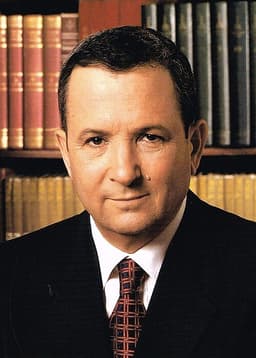
Ehud Barak
General · Modern
59.9Total
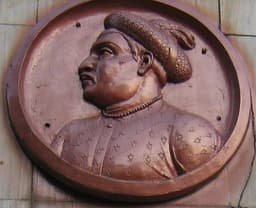
Ranoji Scindia
General · Modern
57.0Total
Basic Information
Born
1942
1700
Died
—
1745
Era
Modern
Modern
Nationality
Israel
India
Occupation
General
General
Civilization
Middle Eastern
Indian
Score Comparison
Military (10%)
63.3
50.0
Political (20%)
72.0
54.7
Influence (20%)
55.0
58.0
Legacy (20%)
52.0
54.0
Leadership (15%)
66.0
65.0
Strategy (15%)
61.2
60.0
TOTAL
59.9
57.0
Ehud Barak — Complete Timeline
1973 AD
Awarded Medal of Distinguished ServiceOther
Barak received the Medal of Distinguished Service, Israel's highest military decoration, for his actions during the Yom Kippur War. He led a commando raid deep into Egyptian territory, destroying radar installations. This was part of a broader operation to open a supply route.
Military DecorationYom Kippur War
Impact: nationalconstructive
1976 AD
Led Operation Thunderbolt (Entebbe Raid)War◆ Major
As Chief of Staff, Barak planned and oversaw the Entebbe raid, a rescue of hostages hijacked by Palestinian and German militants in Uganda. Israeli commandos rescued 102 hostages. The operation was a major military success and boosted Israeli morale and international standing.
EntebbeHostage RescueCounterterrorism
Impact: globalconstructive
1991 AD
Appointed Chief of Staff of the IDFPolitical Action◆ Major
Barak was appointed the 14th Chief of Staff of the Israel Defense Forces. He served until 1995, overseeing military operations during the First Intifada and the Oslo Accords period. His tenure included the 1993 Operation Accountability in Lebanon.
Military CommandIDF
Impact: national
1999 AD
Elected Prime Minister of IsraelPolitical Action◆ Major
Barak was elected Prime Minister of Israel, defeating incumbent Benjamin Netanyahu. He campaigned on a platform of peace negotiations and domestic reform. His government pursued the Camp David Summit with Palestinians and withdrew from southern Lebanon.
ElectionPeace Process
Impact: regionalconstructive
2000 AD
Camp David Summit with ArafatPolitical Action
Barak participated in the Camp David Summit with Palestinian leader Yasser Arafat and U.S. President Bill Clinton. The summit aimed to reach a final status agreement but failed. Barak offered territorial concessions that were rejected. The failure contributed to the Second Intifada.
Peace NegotiationsCamp DavidIsraeli-Palestinian Conflict
Impact: global
Withdrew from Southern LebanonPolitical Action◆ Major
Barak ordered the unilateral withdrawal of Israeli forces from the security zone in southern Lebanon, ending 18 years of occupation. The withdrawal was completed in May 2000. Hezbollah claimed victory, and the move was criticized by some as a retreat under fire.
WithdrawalLebanonHezbollah
Impact: regional
Ranoji Scindia — Complete Timeline
1726 AD
Appointed Subedar of MalwaPolitical Action◆ Major
Ranoji Scindia was appointed as the Maratha subedar of Malwa by Peshwa Baji Rao I. This gave him control over a large territory and laid the foundation for the Scindia dynasty of Gwalior.
Maratha EmpireMalwaScindia Dynasty
Impact: regionalconstructive
1737 AD
Battle of DelhiWar◆ Major
Ranoji Scindia participated in the Maratha raid on Delhi under Baji Rao I. The attack on the Mughal capital demonstrated Maratha power and led to the extraction of tribute.
Maratha-Mughal WarsDelhiRaid
Impact: national
1739 AD
Battle of VasaiWar
Ranoji Scindia fought alongside Malhar Rao Holkar in the siege of Vasai against the Portuguese. The victory ended Portuguese control in the Konkan region.
Maratha-Portuguese WarsSiegeKonkan
Impact: regional
1740 AD
Founded Gwalior as CapitalPolitical Action◆ Major
Ranoji Scindia established his capital at Gwalior, fortifying the Gwalior Fort and building a palace. This city became the center of Scindia power for over a century.
FoundingGwaliorScindia Dynasty
Impact: regionalconstructive
1745 AD
Death in BattleWar
Ranoji Scindia was killed in a battle against the Nizam of Hyderabad's forces near the Narmada River. His death occurred during a Maratha campaign to expand into the Deccan.
DeathBattleMaratha-Nizam Wars
Impact: regionaltragic
Expert Analysis
Ehud Barak vs Ranoji Scindia
# The General and the Founder: Two Paths to Power
In the summer of 2000, Ehud Barak sat across from Yasser Arafat at Camp David, the weight of a nation’s hopes on his shoulders. Two and a half centuries earlier, on a dusty battlefield near the Narmada River, Ranoji Scindia fell to an enemy blade, his blood soaking the soil of a kingdom he had built from nothing. One man negotiated peace; the other died fighting for it. Both were generals who became rulers, yet their stories diverged like rivers flowing from the same mountain. What drove these men—one a decorated Israeli soldier, the other a Maratha chieftain—to such different ends?
Origins
Ehud Barak was born in 1942 on Kibbutz Mishmar HaSharon, a child of socialist Zionism. His parents, Eastern European Jews who had fled persecution, raised him in a world where survival was a collective duty. The young Barak learned discipline early, mastering the piano and mathematics, but the call of military service was inevitable. Israel, barely four years old when he was born, demanded every citizen be a soldier. Barak’s rise was methodical: he joined the Israeli Defense Forces in 1959, trained as an elite commando, and soon became the most decorated soldier in Israeli history. His era was one of existential threat—wars with Arab neighbors, hostage crises, and the constant shadow of annihilation.
Ranoji Scindia, born in 1700, emerged from a different world. The Maratha Empire was a patchwork of clans and chieftains, rising from the ashes of Mughal decline. Ranoji’s father was a minor noble in the service of the Peshwa, the prime minister of the Maratha Confederacy. Unlike Barak, Ranoji inherited a world of feudal loyalty, where power was won through land grants and battlefield alliances. The Marathas were not a nation-state but a confederation of ambitious families, each carving out fiefdoms. Ranoji’s path was shaped by the sword, not the ballot box.
Rise to Power
Barak’s ascent was a ladder of scars and ribbons. In 1973, during the Yom Kippur War, he led a commando raid deep into Egyptian territory, destroying bridges and radar stations. For this, he received the Medal of Distinguished Service, Israel’s highest honor. But his defining moment came in 1976, when as Chief of Staff he planned Operation Thunderbolt—the Entebbe Raid. Israeli commandos flew 2,500 miles to Uganda, rescued over 100 hostages, and killed the hijackers. The operation was a masterpiece of daring and precision, cementing Barak’s reputation as a strategic genius. By 1991, he was appointed Chief of Staff of the IDF, overseeing military operations in Lebanon and the occupied territories. His rise was not through inheritance but through proving himself in the crucible of war.
Ranoji Scindia’s rise was more traditional. In 1726, Peshwa Baji Rao I appointed him Subedar of Malwa, a vast territory in central India. This was a reward for loyalty and military skill, but it came with strings: Ranoji had to extract taxes, suppress rebellions, and defend the Maratha frontier against the Mughals and the Nizam of Hyderabad. Unlike Barak, who commanded a professional army, Ranoji led a feudal levy—cavalrymen loyal to their clan, not the state. His power rested on personal relationships and the ability to distribute plunder. In 1737, he participated in the Maratha raid on Delhi, a lightning attack that humiliated the Mughal emperor. The raid was not a war of annihilation but a demonstration of force, a reminder that the Marathas were the new power in India.
Leadership & Governance
Barak governed Israel from 1999 to 2001, a brief but intense tenure. He campaigned on a platform of peace, promising to withdraw from southern Lebanon and negotiate a final settlement with the Palestinians. In 2000, he ordered the unilateral withdrawal from Lebanon, ending an 18-year occupation. It was a bold move, but it angered many Israelis who saw it as a retreat. That same year, he staked his legacy on the Camp David Summit with Arafat and President Clinton. Barak offered unprecedented concessions—a Palestinian state in Gaza and most of the West Bank, with East Jerusalem as its capital. But Arafat walked away, and the Second Intifada erupted. Barak’s political wisdom failed him; he misjudged his adversary and the mood of his own people. His military brilliance did not translate into political acumen.
Ranoji Scindia governed differently. He was a feudal lord, not a democrat. His rule was about expansion and consolidation. In 1740, he founded Gwalior as his capital, fortifying the ancient Gwalior Fort and building a palace that symbolized his dynasty’s ambition. He fought alongside Malhar Rao Holkar in the 1739 Battle of Vasai, defeating the Portuguese and ending their influence in the region. His leadership was personal—he led from the front, sharing the risks of his men. But his strategy was limited: he expanded territory but did not build institutions. The Maratha Empire would later collapse due to internal rivalries, a flaw rooted in its feudal structure.
Triumph & Tragedy
Barak’s greatest triumph was Entebbe. The raid was a symbol of Israeli resolve—a nation that would go to the ends of the earth to save its people. His greatest tragedy was Camp David. He came closer than any Israeli leader to peace, but the failure led to years of bloodshed. Barak’s political career ended in 2001, when he lost to Ariel Sharon in a landslide. He had gambled everything on peace and lost.
Ranoji Scindia’s triumph was founding the Scindia dynasty, which would rule Gwalior for over two centuries. His tragedy was his death in 1745, cut down in battle against the Nizam of Hyderabad’s forces. He died as he lived—fighting for territory and honor. But his death was a blow to Maratha expansion, and his son had to fight to hold the dynasty together.
Character & Destiny
Barak was a man of intellect and discipline, but also of arrogance. He believed his military genius could solve political problems, but peace requires patience, not just strategy. His character drove him to take risks, but also to overreach. Ranoji was a man of the sword, not the pen. He understood power as a personal bond, not a national project. His destiny was to build a dynasty, not a state.
Legacy
Barak is remembered as a brilliant soldier but a flawed politician. His legacy is mixed: the Lebanon withdrawal and Camp David failure are debated to this day. Ranoji’s legacy is more tangible: the Scindia dynasty ruled Gwalior until Indian independence, and the fort he fortified still stands as a monument to his ambition.
Conclusion
Both men were generals who became rulers, but their worlds were galaxies apart. Barak commanded a modern state with nuclear weapons and a professional army; Ranoji led feudal cavalry in an age of empires. Barak sought peace through negotiation; Ranoji sought power through conquest. Their different outcomes were not just a matter of character but of history itself. One lived in an era of nation-states and diplomacy; the other in an age of empires and swords. In the end, both remind us that leadership is a mirror of its time—and that the same qualities that make a great general can doom a ruler.
Rankings
🥇
Ehud BarakLeader
Mil: 63.3Pol: 72.0Inf: 55.0
59.9
🥈
Ranoji Scindia
Mil: 50.0Pol: 54.7Inf: 58.0
57.0
+2.9 behind
How This Comparison Works
Algorithm
Each figure is scored on 6 dimensions (0—100 scale) based on structured historical data: Military (10%), Political (20%), Influence (20%), Legacy (20%), Leadership (15%), Strategy (15%). The weighted total produces the final ranking.
Data Sources
Scores are computed from structured sub-indicators in the database. Scale factors adjust for era (Ancient ×0.85, Modern ×1.0) and civilization size (Eastern ×1.05, Other ×0.80) to account for differences in population and military scale.
Maximum 3 Figures
Comparisons are limited to 2—3 figures to ensure readability and statistical meaningfulness.
Error Margins
±5 points per dimension — Sub-scores are derived from historical records with inherent uncertainty. Two figures within 5 points on a dimension should be considered roughly equivalent in that area.
Total Score Accuracy
±3 points overall — The weighted combination of 6 dimensions produces a total score with approximately ±3 points of uncertainty. Differences of less than 3 points are not statistically significant— the figures are effectively tied.
Known Limitations
- Historical records are incomplete and uneven across civilizations
- Figures from oral-tradition societies may be underrepresented
- Occupation labels can misclassify multi-role figures
- Scores measure capability and impact, not moral character
- Quantitative scoring is a comparison tool, not absolute truth
Capability Radar
Military (10%) — Battles & Warfare
Battles
65
45
Win Rate
70
50
Expansion
55
55
Political (20%) — Governance & Reform
Reform
50
30
Diplomacy
60
45
Economy
45
35
Influence (20%) — Cultural & Global Reach
Cultural
50
30
Global
55
30
Legacy (20%) — Historical Impact
Historical
55
50
Longevity
45
55
Leadership (15%) — Power & Stability
Tenure
55
40
Stability
40
40
Strategy (15%) — Tactics & Innovation
Strategy
70
45
Tactics
75
40
Reform
60
35
Similar Comparisons
Comments & Discussion
CommandoConundrum6/16/2026
Comparing these two is like comparing a Swiss Army knife to a cavalry saber. Barak studied piano and math at a kibbutz, then led Operation Thunderbolt in Uganda (1976), a tactical masterpiece. Ranoji built an empire from a village with sheer grit, dying in battle. Barak’s legacy is complex peace talks; Scindia’s is blood-soaked soil. One negotiated with enemies, the other bled for land. In military terms, Barak was a precision strike, Scindia a relentless charge—different eras, different codes o
铁血数据控6/16/2026
别扯什么浪漫的“血染土地”了。Barak是现代化战争产物,他指挥了1973年的戈兰高地阻击战,以不足百辆坦克抵挡叙利亚千辆装甲洪流,这是有战报可查的。Ranoji在1720年代吞并马尔瓦,但史料模糊,他所谓“王座”更多是部落联盟。若论战术创新,Barak的闪电渗透远超冷兵器冲锋。数据不会撒谎:Scindia死于混战,Barak却在谈判桌上保住了国家。这才是真实比较。
ScrollAndSword6/16/2026
As a classics scholar, I see a clash of eras: Barak’s world was shaped by Clausewitz and nuclear deterrence, while Scindia lived in the age of Shivaji and guerrilla cavalry. Barak’s Camp David gamble was a chess move from a general who studied history—he knew Israel’s borders were impossible without diplomacy. Scindia’s death at the Narmada was a Romeo-and-Desdemona tragedy, a Maratha Agamemnon undone by hubris. One traded plots for peace; the other died to keep his kingdom alive. Both are lesso
历史复刻机6/16/2026
这比较根本是预设“两个将军都成王”的陷阱。Barak是现代民主国家的总理,Scindia是封建军阀。Barak在2000年巴拉克协议中敢拿戈兰高地谈判,不是因为他软弱,而是他懂现代国家需要妥协才能生存。Scindia死在马上是他的宿命,但别美化:他抢了中央邦的土地,靠的是骑兵优势和封建忠诚。一个在会议上推演十年后的和平,一个在战场上赌下一秒的性命。价值观不同,无法平行比较。
MarbledMonarchist6/16/2026
Scindia’s story is more visceral—a self-made king who built the Scindia dynasty from nothing. Barak was a product of state machinery, a brilliant tactician but never a founder. Ranoji didn’t just fight battles; he shaped a Maratha renaissance, marrying into Rajputs and fortifying Gwalior. Barak’s 1999 incursion into Lebanon was a strategic withdrawal disguised as a victory, while Scindia’s