Loading...
Ehud Barak vs J. B. M. Hertzog
Ehud Barak leads by 3.8 pts · 2 figures compared
…
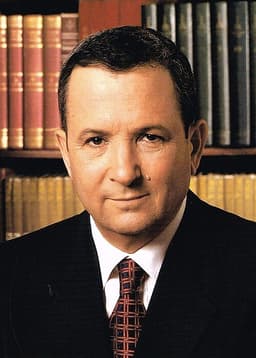
Ehud Barak
General · Modern
59.9Total
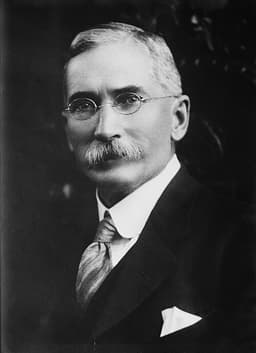
J. B. M. Hertzog
General · Modern
56.1Total
Basic Information
Born
1942
1866
Died
—
1942
Era
Modern
Modern
Nationality
Israel
South Africa
Occupation
General
General
Civilization
Middle Eastern
Other
Score Comparison
Military (10%)
63.3
25.0
Political (20%)
72.0
60.0
Influence (20%)
55.0
56.7
Legacy (20%)
52.0
50.0
Leadership (15%)
66.0
79.8
Strategy (15%)
61.2
60.0
TOTAL
59.9
56.1
Ehud Barak — Complete Timeline
1973 AD
Awarded Medal of Distinguished ServiceOther
Barak received the Medal of Distinguished Service, Israel's highest military decoration, for his actions during the Yom Kippur War. He led a commando raid deep into Egyptian territory, destroying radar installations. This was part of a broader operation to open a supply route.
Military DecorationYom Kippur War
Impact: nationalconstructive
1976 AD
Led Operation Thunderbolt (Entebbe Raid)War◆ Major
As Chief of Staff, Barak planned and oversaw the Entebbe raid, a rescue of hostages hijacked by Palestinian and German militants in Uganda. Israeli commandos rescued 102 hostages. The operation was a major military success and boosted Israeli morale and international standing.
EntebbeHostage RescueCounterterrorism
Impact: globalconstructive
1991 AD
Appointed Chief of Staff of the IDFPolitical Action◆ Major
Barak was appointed the 14th Chief of Staff of the Israel Defense Forces. He served until 1995, overseeing military operations during the First Intifada and the Oslo Accords period. His tenure included the 1993 Operation Accountability in Lebanon.
Military CommandIDF
Impact: national
1999 AD
Elected Prime Minister of IsraelPolitical Action◆ Major
Barak was elected Prime Minister of Israel, defeating incumbent Benjamin Netanyahu. He campaigned on a platform of peace negotiations and domestic reform. His government pursued the Camp David Summit with Palestinians and withdrew from southern Lebanon.
ElectionPeace Process
Impact: regionalconstructive
2000 AD
Camp David Summit with ArafatPolitical Action
Barak participated in the Camp David Summit with Palestinian leader Yasser Arafat and U.S. President Bill Clinton. The summit aimed to reach a final status agreement but failed. Barak offered territorial concessions that were rejected. The failure contributed to the Second Intifada.
Peace NegotiationsCamp DavidIsraeli-Palestinian Conflict
Impact: global
Withdrew from Southern LebanonPolitical Action◆ Major
Barak ordered the unilateral withdrawal of Israeli forces from the security zone in southern Lebanon, ending 18 years of occupation. The withdrawal was completed in May 2000. Hezbollah claimed victory, and the move was criticized by some as a retreat under fire.
WithdrawalLebanonHezbollah
Impact: regional
J. B. M. Hertzog — Complete Timeline
1899 AD
Boer War GeneralWar◆ Major
Hertzog served as a Boer general in the Second Boer War, commanding forces in the Orange Free State. He participated in several battles and became a prominent Afrikaner military leader.
Second Boer WarGeneralMilitary
Impact: regional
1914 AD
Founded the National PartyPolitical Action
Hertzog broke away from the South African Party and founded the National Party, which championed Afrikaner nationalism and opposed British imperial influence. The party would later implement apartheid.
National PartyAfrikaner NationalismFounding
Impact: nationalconstructive
1924 AD
Prime Minister of South AfricaPolitical Action◆ Major
Hertzog became Prime Minister after his National Party won the general election in coalition with the Labour Party. His government implemented policies to protect white workers and promote Afrikaner interests, including the 'civilized labour' policy.
Prime MinisterAfrikaner RightsLabour Policy
Impact: national
1934 AD
Merged with Smuts to Form United PartyPolitical Action◆ Major
Hertzog merged his National Party with Jan Smuts' South African Party to form the United Party. The coalition aimed to address the economic crisis of the Great Depression and promote national unity, but it alienated hardline Afrikaner nationalists.
United PartyCoalitionNational Unity
Impact: nationalconstructive
1936 AD
Passed the Representation of Natives ActReform◆ Major
Hertzog's government passed the Representation of Natives Act, which removed Black voters from the common voters' roll in the Cape Province and allowed them to elect white representatives instead. This further entrenched racial segregation.
SegregationDisenfranchisementLegislation
Impact: nationaldestructive
1939 AD
Resigned Over Neutrality in WWIIPolitical Action◆ Major
Hertzog advocated for South African neutrality in World War II, but his cabinet voted to enter the war on the Allied side. He resigned as Prime Minister and was succeeded by Jan Smuts, splitting the United Party.
World War IINeutralityResignation
Impact: national
Expert Analysis
J. B. M. Hertzog vs Ehud Barak
# The Soldier-Statesman’s Dilemma
In the summer of 2000, Ehud Barak stood before Yasser Arafat at Camp David, offering a Palestinian state on nearly all of the West Bank and Gaza. It was the boldest peace proposal an Israeli leader had ever made. It failed. Three decades earlier, in 1924, J. B. M. Hertzog took office as Prime Minister of South Africa, promising to protect Afrikaner rights from British domination. He succeeded—but at a terrible cost. Both men were decorated generals turned politicians, yet their paths diverged sharply: one reached for a dream and fell; the other built a fortress for his people that became a prison for others. Why?
Origins
Ehud Barak was born in 1942 on Kibbutz Mishmar HaSharon, a child of socialist Zionism. His parents were Holocaust survivors from Lithuania; the kibbutz was a world of collective farms, ideological fervor, and the constant threat of Arab neighbors. He was small, intense, and fiercely competitive—a boy who learned chess at four and military strategy from the underground fighters who visited his home. Israel in the 1950s was a nation forged in war, and Barak absorbed its ethos: survival through strength, and peace through deterrence.
James Barry Munnik Hertzog, born in 1866 near Wellington, South Africa, grew up in a different crucible. His father was a Boer farmer, a descendant of Dutch settlers who had trekked into the interior to escape British rule. The Anglo-Boer War (1899–1902) scarred Hertzog’s generation: British concentration camps killed thousands of Boer women and children, and the peace left Afrikaners as second-class citizens in their own land. Hertzog studied law in the Netherlands, then returned to a country where English speakers held the wealth and power. His driving passion was not survival but dignity—the restoration of Afrikaner pride.
Rise to Power
Barak’s ascent was meteoric, built on a legend of precision. He joined the Israeli Defense Forces in 1959 and became the most decorated soldier in Israeli history. In 1973, during the Yom Kippur War, he led a commando unit disguised as Egyptian soldiers, deep behind enemy lines, to destroy bridges and disrupt reinforcements. He received the Medal of Distinguished Service, Israel’s highest honor. In 1976, as a young colonel, he helped plan Operation Thunderbolt—the Entebbe Raid—where Israeli commandos rescued 102 hostages hijacked by Palestinian and German militants in Uganda. The raid was a masterpiece of audacity and logistics, and Barak’s role cemented his reputation as a strategic genius.
By 1991, he was Chief of Staff of the IDF, overseeing military operations in the occupied territories and preparing for the Gulf War. His transition to politics in 1995 was natural: Israel’s founding generation had always blurred the line between soldier and statesman. In 1999, he defeated Benjamin Netanyahu in a landslide, promising to revive the Oslo peace process and withdraw from Lebanon. He entered office with the aura of a man who could solve any problem.
Hertzog’s rise was slower, more political, and more ideological. He fought as a Boer general in the Second Boer War (1899–1902), commanding forces in the Orange Free State with a stubborn courage that earned him respect but not victory. After the war, he entered politics, and in 1914, he broke away from the South African Party to found the National Party, dedicated to Afrikaner nationalism and the fight for equality with English speakers. His breakthrough came in 1924, when his National Party won the general election in coalition with the Labour Party. He became Prime Minister at fifty-eight, an age when Barak was still a commando.
Leadership & Governance
Barak governed like a chess master: calculating, impatient, and convinced that bold moves could break deadlocks. In 2000, he ordered the unilateral withdrawal of Israeli forces from southern Lebanon, ending eighteen years of occupation. It was a gamble—he hoped it would strengthen Israel’s security and revive peace talks. Instead, Hezbollah claimed victory, and the move emboldened Palestinian militants. Then came Camp David: Barak offered Arafat a Palestinian state on 95% of the West Bank, with East Jerusalem as its capital. Arafat said no. The talks collapsed, and the Second Intifada erupted. Barak’s military mind had failed to grasp the emotional, symbolic, and political complexities of peace.
Hertzog governed like a farmer: patient, stubborn, and focused on the soil. His first priority was to protect Afrikaner language and culture. He passed laws to make Afrikaans equal to English in schools and courts, and he secured South Africa’s independence from British oversight with the Statute of Westminster (1931). In 1934, he merged his National Party with Jan Smuts’ South African Party to form the United Party, a grand coalition to address the Great Depression. But his vision of Afrikaner rights came at a devastating price. In 1936, his government passed the Representation of Natives Act, which removed Black voters from the common voters’ roll in the Cape Province. It was the first major legal step toward apartheid. Hertzog believed he was protecting his people; he was building a cage.
Triumph & Tragedy
Barak’s greatest moment was the Entebbe Raid—a triumph of courage and planning that still stands as a symbol of Israel’s refusal to capitulate to terrorism. His greatest tragedy was Camp David. He had the vision to offer peace but not the patience to build trust. The failure shattered his government, and he lost the 2001 election to Ariel Sharon. He left office a broken figure, his legacy reduced to what might have been.
Hertzog’s triumph was the unification of Afrikaners. He gave them a voice, a government, and a nation within a nation. His tragedy was that he achieved this by silencing others. The 1936 Act was the foundation of a system that would devastate millions. When World War II broke out in 1939, Hertzog advocated for South African neutrality, fearing that war would drag the country into British imperial adventures. His cabinet voted to enter the war on the Allied side, and he resigned rather than compromise. He died in 1942, a bitter man, his party shattered.
Character & Destiny
Barak was a man of intellect and arrogance. He believed that if he could solve a problem on a chessboard, he could solve it in real life. He could not. His military training taught him to see enemies as targets, not as people with grievances. He offered Arafat a state, but he could not offer respect. The failure was not just tactical; it was psychological.
Hertzog was a man of principle and prejudice. He fought for Afrikaner rights with the same fervor that he denied rights to Black South Africans. He saw the world through a lens of ethnic survival: his people had been oppressed; now they must prevail. He could not see that his victory was another’s defeat. The tragedy of his life is that he was both a liberator and an oppressor, and he never understood the contradiction.
Legacy
Barak is remembered as a brilliant soldier who failed as a politician. His military achievements—the Medals, the Raids, the planning—are still taught in academies. But his political legacy is one of missed chances. He tried to end the conflict; he only deepened it.
Hertzog is remembered as the father of Afrikaner nationalism and the grandfather of apartheid. His statue stands in Bloemfontein, but it is a contested monument. For Afrikaners, he is a hero. For Black South Africans, he is a symbol of oppression. History has judged him harshly, and rightly so.
Conclusion
Both men were soldiers who became statesmen, yet they serve as warnings. Barak shows that military brilliance does not guarantee political wisdom. Hertzog shows that fighting for one’s own people can become a fight against others. Their stories remind us that the hardest battles are not fought on battlefields, but in the human heart—where the desire for peace and the instinct for power are forever at war.
Rankings
🥇
Ehud BarakLeader
Mil: 63.3Pol: 72.0Inf: 55.0
59.9
🥈
J. B. M. Hertzog
Mil: 25.0Pol: 60.0Inf: 56.7
56.1
+3.8 behind
How This Comparison Works
Algorithm
Each figure is scored on 6 dimensions (0—100 scale) based on structured historical data: Military (10%), Political (20%), Influence (20%), Legacy (20%), Leadership (15%), Strategy (15%). The weighted total produces the final ranking.
Data Sources
Scores are computed from structured sub-indicators in the database. Scale factors adjust for era (Ancient ×0.85, Modern ×1.0) and civilization size (Eastern ×1.05, Other ×0.80) to account for differences in population and military scale.
Maximum 3 Figures
Comparisons are limited to 2—3 figures to ensure readability and statistical meaningfulness.
Error Margins
±5 points per dimension — Sub-scores are derived from historical records with inherent uncertainty. Two figures within 5 points on a dimension should be considered roughly equivalent in that area.
Total Score Accuracy
±3 points overall — The weighted combination of 6 dimensions produces a total score with approximately ±3 points of uncertainty. Differences of less than 3 points are not statistically significant— the figures are effectively tied.
Known Limitations
- Historical records are incomplete and uneven across civilizations
- Figures from oral-tradition societies may be underrepresented
- Occupation labels can misclassify multi-role figures
- Scores measure capability and impact, not moral character
- Quantitative scoring is a comparison tool, not absolute truth
Capability Radar
Military (10%) — Battles & Warfare
Battles
65
45
Win Rate
70
40
Expansion
55
20
Political (20%) — Governance & Reform
Reform
50
60
Diplomacy
60
55
Economy
45
50
Influence (20%) — Cultural & Global Reach
Cultural
50
50
Global
55
45
Legacy (20%) — Historical Impact
Historical
55
55
Longevity
45
40
Leadership (15%) — Power & Stability
Tenure
55
65
Stability
40
45
Strategy (15%) — Tactics & Innovation
Strategy
70
50
Tactics
75
45
Reform
60
30
Similar Comparisons
Comments & Discussion
No comments yet. Be the first to share your thoughts!