Loading...
Ehud Barak vs Francisco Morazan
Ehud Barak leads by 1.9 pts · 2 figures compared
…
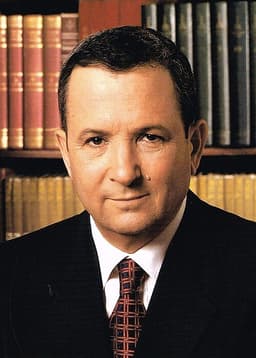
Ehud Barak
General · Modern
59.9Total
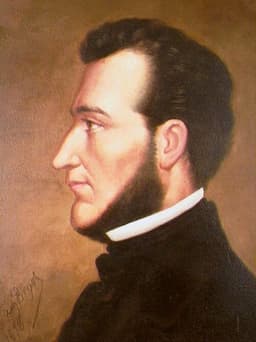
Francisco Morazan
General · Modern
58.0Total
Basic Information
Born
1942
1792
Died
—
1842
Era
Modern
Modern
Nationality
Israel
Honduras
Occupation
General
General
Civilization
Middle Eastern
Western
Score Comparison
Military (10%)
63.3
52.5
Political (20%)
72.0
60.0
Influence (20%)
55.0
62.0
Legacy (20%)
52.0
50.0
Leadership (15%)
66.0
68.0
Strategy (15%)
61.2
55.0
TOTAL
59.9
58.0
Ehud Barak — Complete Timeline
1973 AD
Awarded Medal of Distinguished ServiceOther
Barak received the Medal of Distinguished Service, Israel's highest military decoration, for his actions during the Yom Kippur War. He led a commando raid deep into Egyptian territory, destroying radar installations. This was part of a broader operation to open a supply route.
Military DecorationYom Kippur War
Impact: nationalconstructive
1976 AD
Led Operation Thunderbolt (Entebbe Raid)War◆ Major
As Chief of Staff, Barak planned and oversaw the Entebbe raid, a rescue of hostages hijacked by Palestinian and German militants in Uganda. Israeli commandos rescued 102 hostages. The operation was a major military success and boosted Israeli morale and international standing.
EntebbeHostage RescueCounterterrorism
Impact: globalconstructive
1991 AD
Appointed Chief of Staff of the IDFPolitical Action◆ Major
Barak was appointed the 14th Chief of Staff of the Israel Defense Forces. He served until 1995, overseeing military operations during the First Intifada and the Oslo Accords period. His tenure included the 1993 Operation Accountability in Lebanon.
Military CommandIDF
Impact: national
1999 AD
Elected Prime Minister of IsraelPolitical Action◆ Major
Barak was elected Prime Minister of Israel, defeating incumbent Benjamin Netanyahu. He campaigned on a platform of peace negotiations and domestic reform. His government pursued the Camp David Summit with Palestinians and withdrew from southern Lebanon.
ElectionPeace Process
Impact: regionalconstructive
2000 AD
Camp David Summit with ArafatPolitical Action
Barak participated in the Camp David Summit with Palestinian leader Yasser Arafat and U.S. President Bill Clinton. The summit aimed to reach a final status agreement but failed. Barak offered territorial concessions that were rejected. The failure contributed to the Second Intifada.
Peace NegotiationsCamp DavidIsraeli-Palestinian Conflict
Impact: global
Withdrew from Southern LebanonPolitical Action◆ Major
Barak ordered the unilateral withdrawal of Israeli forces from the security zone in southern Lebanon, ending 18 years of occupation. The withdrawal was completed in May 2000. Hezbollah claimed victory, and the move was criticized by some as a retreat under fire.
WithdrawalLebanonHezbollah
Impact: regional
Francisco Morazan — Complete Timeline
1824 AD
Abolition of slavery in Central AmericaReform◆ Major
As a key leader in the liberal movement, Moraz
AbolitionSlaveryLiberal Reform
Impact: regionalprogressive
1827 AD
Battle of La TrinidadWar◆ Major
Morazán led a liberal army to victory against conservative forces at La Trinidad, Honduras. This battle was a key turning point in the Central American civil war, allowing Morazán to consolidate power and eventually become president of the federation.
BattleLiberal VictoryCivil War
Impact: regional
1830 AD
Presidency of the Federal Republic of Central AmericaPolitical Action
Morazán was elected president of the Federal Republic of Central America, a union of Guatemala, El Salvador, Honduras, Nicaragua, and Costa Rica. He pursued liberal reforms including separation of church and state, free trade, and land reform, facing opposition from conservatives.
Federal RepublicLiberal ReformsCentral America
Impact: regionalconstructive
1842 AD
Execution by firing squadPolitical Action
After a failed attempt to restore the Federal Republic, Moraz
ExecutionEnd of FederationLiberal Defeat
Impact: regionaltragic
Expert Analysis
Francisco Morazan vs Ehud Barak
# The General Who Would Be Peacemaker: Ehud Barak and Francisco Morazán
On a July morning in 1976, a young Israeli colonel named Ehud Barak stood in the operations room of the Tel Aviv military headquarters, watching a map of Entebbe, Uganda. Thousands of miles away, his soldiers were storming an airport terminal to rescue 102 hostages. Barak had planned every detail—the timing, the deception, the escape route. It was the kind of operation that legends are made of, and Barak was already Israel’s most decorated soldier. Two decades later, he would become prime minister, staking his legacy not on military victory but on the elusive dream of peace.
Half a world away and a century earlier, another general, Francisco Morazán, had ridden into battle with a different vision. In 1827, at the Battle of La Trinidad in Honduras, Morazán led a ragged liberal army against conservative forces. He was not yet thirty-five, but he carried the hopes of a fractured region yearning for unity. Morazán would become president of the Federal Republic of Central America, a union he believed could bring progress and freedom to five nations. Both men were soldiers who became statesmen. Both reached the pinnacle of power. And both saw their greatest ambitions crumble, though in vastly different ways.
Origins
Ehud Barak was born in 1942 on Kibbutz Mishmar HaSharon, a collective farm in British Palestine. His parents were Holocaust survivors from Eastern Europe, and the kibbutz ethos of self-reliance and collective defense shaped him from childhood. He was a prodigy—a pianist, a mathematician, and a soldier who joined the Israeli Defense Forces at eighteen. The young state of Israel was surrounded by enemies, and military service was not a choice but a calling. Barak’s era was defined by existential threats: the 1948 War of Independence, the 1967 Six-Day War, and the 1973 Yom Kippur War, in which he earned the Medal of Distinguished Service for his daring behind-enemy-lines operations.
Francisco Morazán was born in 1792 in Tegucigalpa, Honduras, then part of the Spanish Empire. His father was a Creole merchant of French descent, and his mother was a local woman of Spanish and Indigenous heritage. Morazán grew up in a world of colonial decay and revolutionary ferment. The Enlightenment ideals of liberty, equality, and fraternity had crossed the Atlantic, and the Spanish American wars of independence were raging. Unlike Barak, who inherited a nation already forged, Morazán was born into a time when nations were still being imagined. He was a self-taught lawyer and a liberal reformer who believed that Central America could escape its colonial past through unity, education, and the abolition of slavery.
Rise to Power
Barak’s path to power was a ladder of military excellence. He commanded the elite Sayeret Matkal unit, led the planning of the Entebbe raid in 1976, and became Chief of Staff in 1991. His reputation was that of a brilliant strategist—calculating, precise, and unflappable. In 1999, he ran for prime minister on a platform of peace with the Palestinians and Syria. He defeated the incumbent Benjamin Netanyahu, a man of fiery rhetoric and suspicion, by promising to deliver what no Israeli leader had yet achieved: a final settlement.
Morazán’s rise was more chaotic. He entered politics as a liberal in a region dominated by conservative landowners and the Catholic Church. In 1827, after a conservative coup dissolved the federal government, Morazán took up arms. His victory at La Trinidad made him a military hero. By 1830, he was elected president of the Federal Republic of Central America. Unlike Barak, who inherited a stable, powerful state, Morazán inherited a fragile union already fraying under the weight of regional rivalries and class conflict.
Leadership & Governance
Barak governed as a technocrat. He was a man of numbers and maps, not of crowds and charisma. As prime minister, he withdrew Israeli forces from southern Lebanon in 2000, ending an eighteen-year occupation. It was a bold, unilateral move that reduced casualties but was seen by many as a retreat. His greatest gamble came at the Camp David Summit in July 2000, where he met Yasser Arafat and President Bill Clinton. Barak offered unprecedented concessions—a Palestinian state in roughly 95% of the West Bank, a capital in East Jerusalem, and a solution for refugees. Arafat walked away. The talks collapsed, and the Second Intifada erupted soon after. Barak’s political career never recovered.
Morazán governed as a revolutionary reformer. He abolished slavery in 1824, ended the forced labor of Indigenous peoples, and promoted public education and secular law. He fought to reduce the power of the Church and the landed elite. But his vision of a united Central America was constantly undermined by conservative revolts and regional separatism. He was a liberal idealist in a land of entrenched interests. His military genius could win battles but not peace.
Triumph & Tragedy
Barak’s triumph was Entebbe—a raid that became a symbol of Israeli ingenuity and resolve. His tragedy was Camp David. He had staked his political life on peace, only to see it slip away. The failure was not entirely his; Arafat’s rejectionism and the structural obstacles of the conflict were immense. But Barak’s clinical, almost detached style could not bridge the emotional chasm between Israelis and Palestinians. He was a general who thought peace could be engineered, not felt.
Morazán’s triumph was the brief flourishing of the Federal Republic. For a decade, he held together a union that had seemed impossible. His tragedy was its collapse—and his own death. In 1842, after a failed attempt to restore the federation, Morazán was captured in Costa Rica and executed by firing squad. He died as he had lived: a liberal soldier fighting for a dream that the nineteenth century was not ready to embrace.
Character & Destiny
Barak was a man of immense discipline and intellect, but also of aloofness. He did not suffer fools, and he did not inspire devotion. His leadership score of 74.2 reflects competence, not charisma. He was a product of a military culture that valued precision over passion, and that served him well in war but poorly in politics. His destiny was to be the peacemaker who failed—not because he lacked courage, but because he lacked the art of persuasion.
Morazán was a man of fire. His leadership score of 76.7 and influence score of 76.2 suggest a figure who moved people, even if he could not move institutions. He was a liberal in a conservative age, a unifier in a land of fractures. His destiny was to be a martyr for an idea—Central American unity—that would not be realized in his lifetime. He died at fifty, executed by his enemies, but his name became a symbol of hope across the isthmus.
Legacy
Barak is remembered today as a brilliant soldier and a flawed politician. His military legacy is secure: he shaped the IDF into a modern, agile force. His political legacy is mixed: Camp David is a cautionary tale of diplomacy’s limits. His total score of 68.9 places him as a significant but not transformative figure. He is a man of the present, still alive, still writing his story.
Morazán is a ghost who haunts Central America. His legacy score of 68.9 is similar to Barak’s, but his influence is deeper. He is celebrated as a founding father in Honduras, El Salvador, and Costa Rica. His face appears on currency, his name adorns streets and schools. He failed to unite Central America, but he planted a seed that still stirs the imagination of those who dream of a region without borders.
Conclusion
Both men were generals who tried to become peacemakers. Barak, the modern Israeli, sought peace through calculation and withdrawal. Morazán, the nineteenth-century liberal, sought it through union and reform. One failed because the world was too complex; the other because the world was too divided. Their stories remind us that the leap from soldier to statesman is the hardest of all. The skills that win wars—decisiveness, strategy, control—are not the same as those that build peace: patience, empathy, and the willingness to be wrong. In the end, both men gave everything for a vision that history, in its cruel way, chose not to fulfill.
Rankings
🥇
Ehud BarakLeader
Mil: 63.3Pol: 72.0Inf: 55.0
59.9
🥈
Francisco Morazan
Mil: 52.5Pol: 60.0Inf: 62.0
58.0
+1.9 behind
How This Comparison Works
Algorithm
Each figure is scored on 6 dimensions (0—100 scale) based on structured historical data: Military (10%), Political (20%), Influence (20%), Legacy (20%), Leadership (15%), Strategy (15%). The weighted total produces the final ranking.
Data Sources
Scores are computed from structured sub-indicators in the database. Scale factors adjust for era (Ancient ×0.85, Modern ×1.0) and civilization size (Eastern ×1.05, Other ×0.80) to account for differences in population and military scale.
Maximum 3 Figures
Comparisons are limited to 2—3 figures to ensure readability and statistical meaningfulness.
Error Margins
±5 points per dimension — Sub-scores are derived from historical records with inherent uncertainty. Two figures within 5 points on a dimension should be considered roughly equivalent in that area.
Total Score Accuracy
±3 points overall — The weighted combination of 6 dimensions produces a total score with approximately ±3 points of uncertainty. Differences of less than 3 points are not statistically significant— the figures are effectively tied.
Known Limitations
- Historical records are incomplete and uneven across civilizations
- Figures from oral-tradition societies may be underrepresented
- Occupation labels can misclassify multi-role figures
- Scores measure capability and impact, not moral character
- Quantitative scoring is a comparison tool, not absolute truth
Capability Radar
Military (10%) — Battles & Warfare
Battles
65
55
Win Rate
70
60
Expansion
55
40
Political (20%) — Governance & Reform
Reform
50
70
Diplomacy
60
45
Economy
45
50
Influence (20%) — Cultural & Global Reach
Cultural
50
45
Global
55
35
Legacy (20%) — Historical Impact
Historical
55
50
Longevity
45
40
Leadership (15%) — Power & Stability
Tenure
55
55
Stability
40
30
Strategy (15%) — Tactics & Innovation
Strategy
70
55
Tactics
75
50
Reform
60
45
Similar Comparisons
Comments & Discussion
No comments yet. Be the first to share your thoughts!