Loading...
Afonso de Albuquerque vs Ehud Barak
Afonso de Albuquerque leads by 19.7 pts · 2 figures compared
…
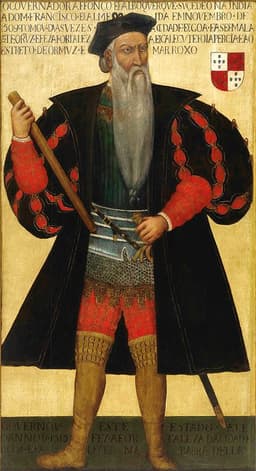
Afonso de Albuquerque
General · Medieval
79.6Total
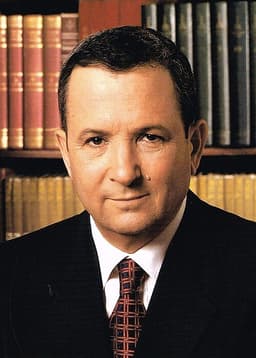
Ehud Barak
General · Modern
59.9Total
Basic Information
Born
1453
1942
Died
1515
—
Era
Medieval
Modern
Nationality
Portugal
Israel
Occupation
General
General
Civilization
Western
Middle Eastern
Score Comparison
Military (10%)
77.5
63.3
Political (20%)
88.0
72.0
Influence (20%)
80.0
55.0
Legacy (20%)
75.0
52.0
Leadership (15%)
78.0
66.0
Strategy (15%)
82.0
61.2
TOTAL
79.6
59.9
Afonso de Albuquerque — Complete Timeline
1503 AD
First voyage to IndiaWar◆ Major
Afonso de Albuquerque led a fleet to India, establishing the first Portuguese fort at Cochin. This voyage laid the foundation for Portuguese control of the Indian Ocean trade.
ExplorationColonialismIndia
Impact: global
1510 AD
Conquest of GoaWar◆ Major
Albuquerque captured Goa from the Sultan of Bijapur. He made Goa the capital of Portuguese India, a position it held for over 400 years.
ConquestColonialismIndia
Impact: regional
1511 AD
Conquest of MalaccaWar◆ Major
Albuquerque led a Portuguese fleet to capture the strategic port of Malacca. This gave Portugal control of the spice trade route between the Indian Ocean and the Pacific.
ConquestSpice TradeSoutheast Asia
Impact: global
1513 AD
Siege of AdenWar
Albuquerque attempted to capture Aden in Yemen but failed. This failure prevented Portugal from controlling the entrance to the Red Sea and limited their influence in the region.
SiegeFailureRed Sea
Impact: regional
1515 AD
Death at seaOther◆ Major
Afonso de Albuquerque died at sea off the coast of Goa, possibly from illness or poison. His death left the Portuguese Empire in the Indian Ocean without its most capable leader.
DeathLeadershipEmpire
Impact: regionaltragic
Ehud Barak — Complete Timeline
1973 AD
Awarded Medal of Distinguished ServiceOther
Barak received the Medal of Distinguished Service, Israel's highest military decoration, for his actions during the Yom Kippur War. He led a commando raid deep into Egyptian territory, destroying radar installations. This was part of a broader operation to open a supply route.
Military DecorationYom Kippur War
Impact: nationalconstructive
1976 AD
Led Operation Thunderbolt (Entebbe Raid)War◆ Major
As Chief of Staff, Barak planned and oversaw the Entebbe raid, a rescue of hostages hijacked by Palestinian and German militants in Uganda. Israeli commandos rescued 102 hostages. The operation was a major military success and boosted Israeli morale and international standing.
EntebbeHostage RescueCounterterrorism
Impact: globalconstructive
1991 AD
Appointed Chief of Staff of the IDFPolitical Action◆ Major
Barak was appointed the 14th Chief of Staff of the Israel Defense Forces. He served until 1995, overseeing military operations during the First Intifada and the Oslo Accords period. His tenure included the 1993 Operation Accountability in Lebanon.
Military CommandIDF
Impact: national
1999 AD
Elected Prime Minister of IsraelPolitical Action◆ Major
Barak was elected Prime Minister of Israel, defeating incumbent Benjamin Netanyahu. He campaigned on a platform of peace negotiations and domestic reform. His government pursued the Camp David Summit with Palestinians and withdrew from southern Lebanon.
ElectionPeace Process
Impact: regionalconstructive
2000 AD
Camp David Summit with ArafatPolitical Action
Barak participated in the Camp David Summit with Palestinian leader Yasser Arafat and U.S. President Bill Clinton. The summit aimed to reach a final status agreement but failed. Barak offered territorial concessions that were rejected. The failure contributed to the Second Intifada.
Peace NegotiationsCamp DavidIsraeli-Palestinian Conflict
Impact: global
Withdrew from Southern LebanonPolitical Action◆ Major
Barak ordered the unilateral withdrawal of Israeli forces from the security zone in southern Lebanon, ending 18 years of occupation. The withdrawal was completed in May 2000. Hezbollah claimed victory, and the move was criticized by some as a retreat under fire.
WithdrawalLebanonHezbollah
Impact: regional
Expert Analysis
Afonso de Albuquerque vs Ehud Barak
### The Admiral and the Commando
In the annals of history, few contrasts are as stark as that between a 16th-century Portuguese admiral dying at sea, possibly from poison, and a 20th-century Israeli prime minister withdrawing his troops from a contested border under the glare of television cameras. One built an empire with cannon and cross; the other tried to dismantle one with diplomacy and withdrawal. Afonso de Albuquerque and Ehud Barak, separated by five centuries, both rose as generals and fell as architects of grand, incomplete visions. Their stories reveal not just different eras, but fundamentally different definitions of what it means to command.
### Origins
Afonso de Albuquerque was born in 1453, the year Constantinople fell, into a Portugal already obsessed with breaking the Muslim stranglehold on the spice trade. He was a product of the *Reconquista* mindset—a world where Christianity and Islam were locked in existential struggle, and the ocean was a frontier for glory and gold. His nobility was real but modest; he learned war at sea and court intrigue on land, a combination that would make him ruthless and shrewd.
Ehud Barak was born in 1942 on a kibbutz in British Palestine, the son of Lithuanian Jewish immigrants. His world was one of survival: the Holocaust had just ended, and the state of Israel was five years from birth. Barak’s upbringing was secular, socialist, and fiercely pragmatic. Where Albuquerque saw a divine mission, Barak saw a geopolitical chessboard. The kibbutz taught him collective effort; the army taught him that a single mistake could mean annihilation.
### Rise to Power
Albuquerque’s path to power was brutal and bureaucratic. In 1503, he led his first voyage to India, establishing the first Portuguese fort at Cochin. This was not a glamorous conquest but a hard-nosed commercial-military operation—building alliances with local rajahs against Arab traders. His true ascent came in 1510, when he captured Goa from the Sultan of Bijapur. He made the city the capital of Portuguese India, a move that was as much about psychology as geography: he was planting a European city in Asia.
Barak’s rise was through the ranks of the Israel Defense Forces, a meritocracy of violence. In 1973, he received the Medal of Distinguished Service, Israel’s highest military decoration, for actions during the Yom Kippur War. But his defining moment came in 1976, when he planned Operation Thunderbolt—the Entebbe Raid. As Chief of Staff, he oversaw the rescue of hostages hijacked to Uganda, a feat of logistics and nerve that made him a national legend. In 1999, he rode that reputation into the prime minister’s office, defeating Benjamin Netanyahu on a platform of peace.
### Leadership & Governance
Albuquerque governed as a conqueror-administrator. After taking Malacca in 1511, he did not loot and leave; he built a fortress, minted coins, and encouraged Portuguese men to marry local women. He understood that empire required settlement, not just plunder. His failure at the Siege of Aden in 1513—where he tried to block the Red Sea—showed his limits: he could seize ports but not control entire seas. His political wisdom was cold: he executed rivals, burned enemy ships, and wrote long letters to King Manuel I justifying his brutality as necessary for Christendom.
Barak governed as a technocrat-soldier. As prime minister, he withdrew Israeli forces from southern Lebanon in 2000, ending an 18-year occupation. It was a clean, controversial pullout—no negotiation, no ceremony. He then went to Camp David that same year to negotiate with Yasser Arafat and Bill Clinton. The summit collapsed, and Barak took the blame. His style was analytical, not charismatic; he believed in grand gestures, not incremental steps. Unlike Albuquerque, who built walls, Barak tried to tear them down.
### Triumph & Tragedy
Albuquerque’s greatest triumph was the conquest of Goa, which became the nerve center of a maritime empire that lasted four centuries. His tragedy was dying at sea in 1515, possibly poisoned, before he could consolidate his gains. His last letter to the king was bitter: he felt abandoned, his work unfinished. The empire he built would decay, but it took centuries.
Barak’s triumph was Entebbe—a raid so perfect it became a movie. His tragedy was Camp David. He offered Arafat a Palestinian state on 95% of the West Bank, with East Jerusalem as its capital. Arafat said no. Barak returned home to a shattered coalition and a new intifada. His withdrawal from Lebanon, initially popular, was later criticized as a sign of weakness that emboldened Hezbollah.
### Character & Destiny
Albuquerque was a man of iron will and imperial vision. He believed in destiny—his own and Portugal’s. He wrote, “I am not afraid of the dangers of the sea, nor of the diseases of the climate, nor of the treachery of the natives.” His character drove him to overreach at Aden and to trust no one, which isolated him. His destiny was to be a founder, not a finisher.
Barak was a man of cold logic and tactical brilliance. He once said, “If I were a Palestinian, I would join a terrorist organization.” It was a statement of empathy, not sympathy—a soldier’s understanding of asymmetry. But his character—detached, analytical, impatient with emotion—failed him in politics. He could plan a raid but not a coalition. His destiny was to be a hero who could not translate heroism into peace.
### Legacy
Albuquerque is remembered as the father of the Portuguese Empire. Statues stand in Lisbon and Goa. His legacy is tangible: the language, the churches, the mixed-race populations of the Indian Ocean. But it is also controversial: he was a colonialist who used violence to impose a foreign culture.
Barak’s legacy is more ambiguous. He is remembered as Israel’s most decorated soldier, a man who tried for peace and failed. His withdrawal from Lebanon is now seen as a precursor to the 2005 Gaza disengagement. Camp David remains a cautionary tale. He lives in the shadow of what might have been.
### Conclusion
What drives the difference between these two men? Not just time, but the nature of their tasks. Albuquerque built an empire in a world where empires were the norm; Barak tried to end a conflict in a world where conflicts are endless. One died in the saddle, the other lives in a history that judges him harshly for not achieving the impossible. Both were generals who reached for more than war—and both found that the hardest battles are the ones you cannot win with a sword.
Rankings
🥇
Afonso de AlbuquerqueLeader
Mil: 77.5Pol: 88.0Inf: 80.0
79.6
🥈
Ehud Barak
Mil: 63.3Pol: 72.0Inf: 55.0
59.9
+19.7 behind
How This Comparison Works
Algorithm
Each figure is scored on 6 dimensions (0—100 scale) based on structured historical data: Military (10%), Political (20%), Influence (20%), Legacy (20%), Leadership (15%), Strategy (15%). The weighted total produces the final ranking.
Data Sources
Scores are computed from structured sub-indicators in the database. Scale factors adjust for era (Ancient ×0.85, Modern ×1.0) and civilization size (Eastern ×1.05, Other ×0.80) to account for differences in population and military scale.
Maximum 3 Figures
Comparisons are limited to 2—3 figures to ensure readability and statistical meaningfulness.
Error Margins
±5 points per dimension — Sub-scores are derived from historical records with inherent uncertainty. Two figures within 5 points on a dimension should be considered roughly equivalent in that area.
Total Score Accuracy
±3 points overall — The weighted combination of 6 dimensions produces a total score with approximately ±3 points of uncertainty. Differences of less than 3 points are not statistically significant— the figures are effectively tied.
Known Limitations
- Historical records are incomplete and uneven across civilizations
- Figures from oral-tradition societies may be underrepresented
- Occupation labels can misclassify multi-role figures
- Scores measure capability and impact, not moral character
- Quantitative scoring is a comparison tool, not absolute truth
Capability Radar
Military (10%) — Battles & Warfare
Battles
85
65
Win Rate
80
70
Expansion
95
55
Political (20%) — Governance & Reform
Reform
80
50
Diplomacy
85
60
Economy
80
45
Influence (20%) — Cultural & Global Reach
Cultural
70
50
Global
85
55
Legacy (20%) — Historical Impact
Historical
85
55
Longevity
80
45
Leadership (15%) — Power & Stability
Tenure
70
55
Stability
65
40
Strategy (15%) — Tactics & Innovation
Strategy
95
70
Tactics
90
75
Reform
75
60
Similar Comparisons
Comments & Discussion
LusitaniaHammer6/16/2026
Albuquerque wasn't just an admiral—he was the original naval strategist who understood that controlling choke points beats occupying land. His capture of Malacca in 1511 with only 18 ships proves quality trumps quantity in amphibious warfare. Barak? A tactical genius in special ops, but his Dov Gruner disguise during the Entebbe raid can't erase his catastrophic political timidity. Albuquerque would've never withdrawn from southern Lebanon—he'd have built a fortress. Real commanders don't disman
数据猎手Alfa6/16/2026
Ehud Barak在2000年从黎巴嫩撤军时,国防军情报部内部文件显示,真主党火箭弹袭击在撤军后暴增了400%。你们把这事儿当政治成功了?对比阿布奎基在印度洋建立的堡垒网络——每个据点都能互相支援,撤了等于白打。一个军事领袖的遗产不在于撤退时拍照多体面,而在于敌人是不是还怕你。Barak留下的安全真空,到今天还在流血。数字不会骗人。
SorrentoScribe6/16/2026
The classical mind sees deeper parallels: both men were *ephemeral empire-builders* whose grand designs crumbled within a decade of their deaths. Albuquerque's Portuguese *Estado da Índia* survived barely 50 years as a monopoly; Barak's Oslo framework collapsed by 2002. Plutarch's *Parallel Lives* would pair them as tragic overreachers—one killed by court intrigue and possibly poison, the other by coalition politics and a peace process he couldn't sell to his own people. Excellence in war rarely
铁幕史官6/16/2026
阿布奎基是殖民暴力的典型——1510年果阿屠城后,他改信寺庙为教堂,用火刑柱强迫当地人改宗。这叫"帝国建造者"?这叫宗教恐怖主义。Barak虽然不够激进,但至少选择撤军而非镇压——2000年从黎巴嫩撤兵,结束了18年的占领,这本身需要政治勇气。别拿杀人效率来衡量战略家。封建混子和现代民主国家的指挥官,根本不在同一道德维度上比较。我要选领导人,肯定选那个会撤退的。
FleetAdmiral5126/16/2026
Let's cut the romanticism: Albuquerque's "empire" was a naval logistics chain propped up by terror and bronze cannons, not a sustainable state. Barak's legacy is the Camp David Summit of 2000—where he offered Arafat 95% of the West Bank plus Gaza and got a rejection that launched the Second Intifada. One failed because of disease and court poison; the other failed because he believed diplomacy could solve asymmetrical hatred. Give me a commander who knows when to fight, not when to