Loading...
Ehud Barak vs Ramon Castilla
Ehud Barak leads by 0.2 pts · 2 figures compared
…
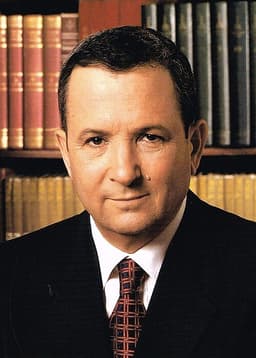
Ehud Barak
General · Modern
59.9Total
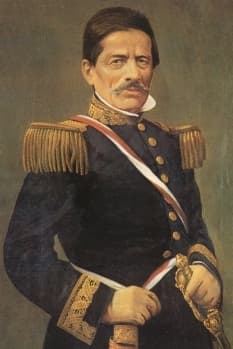
Ramon Castilla
General · Modern
59.7Total
Basic Information
Born
1942
1797
Died
—
1867
Era
Modern
Modern
Nationality
Israel
Peru
Occupation
General
General
Civilization
Middle Eastern
Western
Score Comparison
Military (10%)
63.3
40.0
Political (20%)
72.0
72.0
Influence (20%)
55.0
56.7
Legacy (20%)
52.0
52.0
Leadership (15%)
66.0
78.0
Strategy (15%)
61.2
60.0
TOTAL
59.9
59.7
Ehud Barak — Complete Timeline
1973 AD
Awarded Medal of Distinguished ServiceOther
Barak received the Medal of Distinguished Service, Israel's highest military decoration, for his actions during the Yom Kippur War. He led a commando raid deep into Egyptian territory, destroying radar installations. This was part of a broader operation to open a supply route.
Military DecorationYom Kippur War
Impact: nationalconstructive
1976 AD
Led Operation Thunderbolt (Entebbe Raid)War◆ Major
As Chief of Staff, Barak planned and oversaw the Entebbe raid, a rescue of hostages hijacked by Palestinian and German militants in Uganda. Israeli commandos rescued 102 hostages. The operation was a major military success and boosted Israeli morale and international standing.
EntebbeHostage RescueCounterterrorism
Impact: globalconstructive
1991 AD
Appointed Chief of Staff of the IDFPolitical Action◆ Major
Barak was appointed the 14th Chief of Staff of the Israel Defense Forces. He served until 1995, overseeing military operations during the First Intifada and the Oslo Accords period. His tenure included the 1993 Operation Accountability in Lebanon.
Military CommandIDF
Impact: national
1999 AD
Elected Prime Minister of IsraelPolitical Action◆ Major
Barak was elected Prime Minister of Israel, defeating incumbent Benjamin Netanyahu. He campaigned on a platform of peace negotiations and domestic reform. His government pursued the Camp David Summit with Palestinians and withdrew from southern Lebanon.
ElectionPeace Process
Impact: regionalconstructive
2000 AD
Camp David Summit with ArafatPolitical Action
Barak participated in the Camp David Summit with Palestinian leader Yasser Arafat and U.S. President Bill Clinton. The summit aimed to reach a final status agreement but failed. Barak offered territorial concessions that were rejected. The failure contributed to the Second Intifada.
Peace NegotiationsCamp DavidIsraeli-Palestinian Conflict
Impact: global
Withdrew from Southern LebanonPolitical Action◆ Major
Barak ordered the unilateral withdrawal of Israeli forces from the security zone in southern Lebanon, ending 18 years of occupation. The withdrawal was completed in May 2000. Hezbollah claimed victory, and the move was criticized by some as a retreat under fire.
WithdrawalLebanonHezbollah
Impact: regional
Ramon Castilla — Complete Timeline
1824 AD
Battle of AyacuchoWar
Castilla fought as a junior officer in the decisive Battle of Ayacucho, which ended Spanish rule in Peru. This victory secured Peruvian independence and marked the end of the Spanish Empire in South America, shaping Castilla's nationalist views.
Peruvian War of IndependenceBattleLiberation
Impact: regional
1845 AD
First Presidency of PeruPolitical Action◆ Major
Castilla was elected President of Peru in 1845, serving until 1851. His first term focused on economic development, including the guano boom, and infrastructure projects such as railroads and ports, modernizing the Peruvian state.
PresidencyEconomic DevelopmentGuano
Impact: nationalconstructive
1854 AD
Abolition of Slavery in PeruReform◆ Major
During his second presidency, Castilla issued a decree abolishing slavery in Peru on December 3, 1854. This reform freed approximately 25,000 slaves and was part of a broader liberal agenda, though it faced opposition from slave-owning elites.
AbolitionSlaveryHuman Rights
Impact: nationalprogressive
Abolition of Indigenous TributeReform◆ Major
Castilla also abolished the indigenous tribute tax in 1854, which had been a burden on native communities since colonial times. This measure aimed to integrate indigenous peoples into the Peruvian state as equal citizens, though its implementation was uneven.
Indigenous RightsTax ReformCitizenship
Impact: nationalprogressive
1855 AD
Second Presidency and Guano BoomPolitical Action◆ Major
Castilla served a second term from 1855 to 1862, during the peak of the guano export boom. He used guano revenues to fund public works, pay off foreign debt, and modernize the military, but also faced criticism for corruption and over-reliance on a single resource.
PresidencyGuanoModernization
Impact: nationalconstructive
1860 AD
Constitutional Reform of 1860Reform◆ Major
Castilla oversaw the adoption of a new constitution in 1860, which established a centralized republic with a strong executive. The constitution remained in effect until 1920 and shaped Peru's political structure, though it limited regional autonomy.
ConstitutionPolitical ReformCentralization
Impact: nationalconstructive
Expert Analysis
Ramon Castilla vs Ehud Barak
### The General and the Peacemaker: Two Paths from Battlefield to Power
In the high Andes of 1824, a young Peruvian cavalry officer named Ramon Castilla charged into the smoke of the Battle of Ayacucho, a clash that would seal the end of three centuries of Spanish dominion. More than a century later, on a dark runway in Entebbe, Uganda, an Israeli commando named Ehud Barak—disguised as a mechanic, armed with a pistol—led the most daring hostage rescue of the modern age. Both men were soldiers who became heads of state. Both wielded power at pivotal moments in their nations’ histories. Yet their journeys from the battlefield to the presidential palace, and the legacies they left behind, could hardly have been more different. Why did one become a nation-builder who abolished slavery and wrote a constitution, while the other became a peacemaker who saw his grandest ambitions crumble at the negotiating table?
### Origins
Ramon Castilla was born in 1797 in the remote Tarapacá province of Peru, into a family of modest means. His father was a Spanish colonial official, but the young Castilla grew up in a world of rigid hierarchy and simmering resentment. The wars of independence that swept South America in the 1810s offered a young man of ambition a chance to rise. Castilla joined the patriot army, and his courage at Ayacucho in 1824—where he fought as a junior officer in the decisive battle that ended Spanish rule—gave him a front-row seat to the birth of a nation. His era was one of chaos and opportunity: Peru was a fragile republic, its economy shattered by war, its society still bound by colonial institutions like slavery and tribute taxes.
Ehud Barak was born in 1942 on a kibbutz in British Mandate Palestine, the son of Jewish immigrants from Eastern Europe. His world was forged in the crucible of existential threat. Barak grew up on a collective farm, learning discipline and self-reliance, and joined the Israeli Defense Forces at eighteen. By the 1970s, he had become the most decorated soldier in Israeli history. His era was one of constant war: the Six-Day War, the Yom Kippur War, and the endless cycle of terrorism and retaliation. Where Castilla inherited a broken state, Barak inherited a strong, militarized one—but one whose very survival seemed always in doubt.
### Rise to Power
Castilla’s path to power was a slow, patient climb through the ranks of the Peruvian military and bureaucracy. After Ayacucho, he served in various administrative posts, learning the mechanics of governance. His big break came in 1845, when he was elected President of Peru. The country was poor, divided, and recovering from decades of war. But Castilla had a secret weapon: the guano boom. Peru’s coastal islands were piled high with centuries of bird droppings, a fertilizer that Europe craved. The sudden flood of revenue gave Castilla the resources to act. He used it not for personal enrichment, but to build infrastructure, pay off debts, and fund reforms.
Barak’s rise was meteoric. By 1991, he was appointed Chief of Staff of the IDF, the highest military post in Israel. He had already planned the Entebbe raid in 1976—a mission that, against all odds, rescued over 100 hostages from a hijacked Air France plane. The operation made Barak a national hero. In 1999, he rode that fame into the prime minister’s office, defeating the incumbent Benjamin Netanyahu on a platform of peace with the Palestinians and withdrawal from Lebanon. Where Castilla had decades to prepare, Barak went from soldier to politician in a single leap.
### Leadership & Governance
Castilla’s leadership was defined by his ability to seize the moment. During his first presidency (1845–1851), he modernized Peru’s finances and built the country’s first railroads. But his most enduring acts came during his second term (1855–1862). On December 3, 1854, he issued a decree abolishing slavery in Peru. That same year, he abolished the indigenous tribute tax, a colonial relic that had crushed native communities for centuries. These were not mere gestures—they were radical acts of social engineering that upended the old order. Castilla then oversaw the adoption of a new constitution in 1860, a document that centralized power in Lima but also enshrined civil liberties. He was a pragmatist, not an idealist, but he understood that a nation built on exploitation could not survive.
Barak’s governance was more volatile. As prime minister from 1999 to 2001, he pursued two major initiatives: withdrawal from southern Lebanon and a final peace deal with the Palestinians. In 2000, he ordered the unilateral withdrawal of Israeli forces from the security zone in southern Lebanon, ending an 18-year occupation. It was a bold move, but it was seen by many Israelis as a retreat under fire. That same year, he went to Camp David with Palestinian leader Yasser Arafat and U.S. President Bill Clinton, offering unprecedented concessions—including a divided Jerusalem. The summit collapsed. Barak had staked his political future on a deal that never came, and the Second Intifada erupted soon after.
### Triumph & Tragedy
Castilla’s greatest triumph was the abolition of slavery. It was not a popular move—many wealthy landowners opposed it—but he pushed it through by decree, using the guano revenues to compensate slave owners. His second term saw Peru at its most stable and prosperous. But the tragedy was that his achievements were fragile. The guano boom would eventually bust, and the constitution he wrote would be replaced. Still, Castilla died in 1867 with his reputation largely intact, a rare feat in the blood-soaked history of Latin American politics.
Barak’s tragedy was more personal. The Camp David summit was his defining moment, and it ended in failure. He had offered Arafat a Palestinian state on nearly all of the West Bank and Gaza, with East Jerusalem as its capital. Arafat walked away. Barak returned to Israel a broken man, his peace coalition shattered. He lost the 2001 election to Ariel Sharon in a landslide. His triumph—the Entebbe raid—remained a glorious memory, but his political career was over. The most decorated soldier in Israeli history had staked everything on peace and lost.
### Character & Destiny
Castilla was a survivor. He was cautious, calculating, and deeply pragmatic. He knew when to push and when to compromise. His personality reflected his era: a time when nations were being built from scratch, and a leader needed patience and a long view. He was not a visionary, but he was a builder. Barak was the opposite. He was brilliant, impatient, and driven by a sense of mission. He believed that his military record gave him the moral authority to make painful compromises. But he underestimated the intractability of the conflict and the power of his opponents. His character—decisive, bold, and sometimes arrogant—made him a great soldier but a flawed politician.
### Legacy
Castilla is remembered in Peru as the “Liberator of the Slaves” and a founding father of the modern state. His name adorns streets, schools, and a province. His legacy is concrete: the abolition of slavery, the end of indigenous tribute, a constitution. Barak’s legacy is more ambiguous. He is honored as a military hero, but his political legacy is one of missed chances and unfulfilled promises. The withdrawal from Lebanon is seen by some as a victory, by others as a strategic blunder. The Camp David failure is still debated. He is a figure of what might have been.
### Conclusion
Standing at the edge of history, Castilla and Barak embody two different kinds of leadership. Castilla built a nation from the wreckage of empire, using wealth and will to erase ancient injustices. Barak tried to end a conflict that had no easy solution, and his failure taught a bitter lesson about the limits of military heroism in politics. Both were generals who became statesmen, but their eras demanded different things. Castilla’s Peru needed order and reform; Barak’s Israel needed peace and security. One succeeded, the other did not. Yet both remind us that the path from the battlefield to the palace is never straight, and that the greatest battles are often the ones fought without weapons.
Rankings
🥇
Ehud BarakLeader
Mil: 63.3Pol: 72.0Inf: 55.0
59.9
🥈
Ramon Castilla
Mil: 40.0Pol: 72.0Inf: 56.7
59.7
+0.2 behind
How This Comparison Works
Algorithm
Each figure is scored on 6 dimensions (0—100 scale) based on structured historical data: Military (10%), Political (20%), Influence (20%), Legacy (20%), Leadership (15%), Strategy (15%). The weighted total produces the final ranking.
Data Sources
Scores are computed from structured sub-indicators in the database. Scale factors adjust for era (Ancient ×0.85, Modern ×1.0) and civilization size (Eastern ×1.05, Other ×0.80) to account for differences in population and military scale.
Maximum 3 Figures
Comparisons are limited to 2—3 figures to ensure readability and statistical meaningfulness.
Error Margins
±5 points per dimension — Sub-scores are derived from historical records with inherent uncertainty. Two figures within 5 points on a dimension should be considered roughly equivalent in that area.
Total Score Accuracy
±3 points overall — The weighted combination of 6 dimensions produces a total score with approximately ±3 points of uncertainty. Differences of less than 3 points are not statistically significant— the figures are effectively tied.
Known Limitations
- Historical records are incomplete and uneven across civilizations
- Figures from oral-tradition societies may be underrepresented
- Occupation labels can misclassify multi-role figures
- Scores measure capability and impact, not moral character
- Quantitative scoring is a comparison tool, not absolute truth
Capability Radar
Military (10%) — Battles & Warfare
Battles
65
45
Win Rate
70
50
Expansion
55
30
Political (20%) — Governance & Reform
Reform
50
85
Diplomacy
60
70
Economy
45
75
Influence (20%) — Cultural & Global Reach
Cultural
50
55
Global
55
50
Legacy (20%) — Historical Impact
Historical
55
65
Longevity
45
60
Leadership (15%) — Power & Stability
Tenure
55
65
Stability
40
60
Strategy (15%) — Tactics & Innovation
Strategy
70
45
Tactics
75
40
Reform
60
55
Similar Comparisons
Comments & Discussion
GENERAL'S GHOST6/16/2026
Sure, Castilla abolished slavery in 1854, but people forget he was basically a 19th-century military strongman who wrote a constitution to keep himself in power. Ayacucho made him a hero, but as president he was all about centralizing authority and crushing dissent. Barak, on the other hand, is a guy who led a commando raid at Entebbe, then crashed and burned as a peacemaker. Castilla built a nation; Barak got outmaneuvered by Arafat. Give me the steel spine over the Nobel dreamer any day.
战马中的刀笔侠6/16/2026
作为军事史爱好者,我不得不说,巴拉克在恩德培行动中伪装成修理工夺回人质的计划,那才是真正的冷静意志。1999年他当选总理,但真正让我敬佩的是他拿枪的几年。卡斯蒂利亚在1824年的阿亚库乔战役表现不错,但他治理时期不过是殖民残余的延续。巴拉克则用自己的生命书写了现代反恐的教科书,太可惜了,他的政治生涯没能延续那种精准打击的勇气。
TALE OF THE SCALES6/16/2026
Classics scholars love tidy contrasts but this one's trash. You're comparing a 19th-century caudillo with a modern state's prime minister. Castilla's "nation-building" was basic 1800s consolidation; Barak's "failure" at Camp David 2000 was actually a bold move that exposed Palestinian intransigence. Barak offered 97% of the West Bank and Arafat walked. Castilla never faced those choices. Let's stop romanticizing sword-waving and give credit where it's due: Barak had the guts to try peace when wa
白马上的幸存者6/16/2026
历史爱好者视角,卡斯蒂利亚废除奴隶制那是1845年的事?错了,是1854年跟政府条约的弯道超车。他到底是个有野心的军人,从塔拉帕卡小地方爬上来,靠着阿亚库乔的血腥战役给自己镀了金。而巴拉克,这个1967年六日战争中跳伞的工兵,1973年指挥装甲部队突破苏伊士运河,后来竞选总理搞的是和解路线。两人其实都靠武力起家,但卡斯蒂利亚的繁荣是打着解放旗号专制的胜利,巴拉克让我心碎的是他把战场胆量丢在了谈判桌。
REVISION'S EDGE6/16/2026
Every time I see this "nation-builder vs peacemaker" trope, I roll my eyes. Castilla didn't "build" anything—he used the Guano boom windfall to buy loyalty from elites while keeping indigenous peasants in forced labor. That abolition law? It came with a huge debt for landowners that crushed rural economies for decades. Barak's Ent