Loading...
Ehud Barak vs Plutarco Elias Calles
Ehud Barak leads by 1.4 pts · 2 figures compared
…
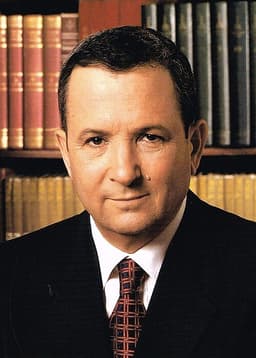
Ehud Barak
General · Modern
59.9Total
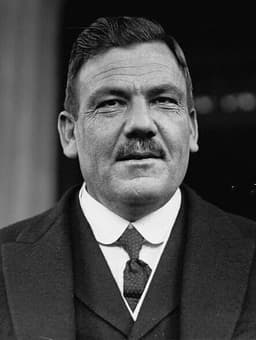
Plutarco Elias Calles
General · Modern
58.5Total
Basic Information
Born
1942
1877
Died
—
1945
Era
Modern
Modern
Nationality
Israel
Mexico
Occupation
General
General
Civilization
Middle Eastern
Western
Score Comparison
Military (10%)
63.3
40.0
Political (20%)
72.0
70.3
Influence (20%)
55.0
68.0
Legacy (20%)
52.0
40.0
Leadership (15%)
66.0
78.0
Strategy (15%)
61.2
52.5
TOTAL
59.9
58.5
Ehud Barak — Complete Timeline
1973 AD
Awarded Medal of Distinguished ServiceOther
Barak received the Medal of Distinguished Service, Israel's highest military decoration, for his actions during the Yom Kippur War. He led a commando raid deep into Egyptian territory, destroying radar installations. This was part of a broader operation to open a supply route.
Military DecorationYom Kippur War
Impact: nationalconstructive
1976 AD
Led Operation Thunderbolt (Entebbe Raid)War◆ Major
As Chief of Staff, Barak planned and oversaw the Entebbe raid, a rescue of hostages hijacked by Palestinian and German militants in Uganda. Israeli commandos rescued 102 hostages. The operation was a major military success and boosted Israeli morale and international standing.
EntebbeHostage RescueCounterterrorism
Impact: globalconstructive
1991 AD
Appointed Chief of Staff of the IDFPolitical Action◆ Major
Barak was appointed the 14th Chief of Staff of the Israel Defense Forces. He served until 1995, overseeing military operations during the First Intifada and the Oslo Accords period. His tenure included the 1993 Operation Accountability in Lebanon.
Military CommandIDF
Impact: national
1999 AD
Elected Prime Minister of IsraelPolitical Action◆ Major
Barak was elected Prime Minister of Israel, defeating incumbent Benjamin Netanyahu. He campaigned on a platform of peace negotiations and domestic reform. His government pursued the Camp David Summit with Palestinians and withdrew from southern Lebanon.
ElectionPeace Process
Impact: regionalconstructive
2000 AD
Camp David Summit with ArafatPolitical Action
Barak participated in the Camp David Summit with Palestinian leader Yasser Arafat and U.S. President Bill Clinton. The summit aimed to reach a final status agreement but failed. Barak offered territorial concessions that were rejected. The failure contributed to the Second Intifada.
Peace NegotiationsCamp DavidIsraeli-Palestinian Conflict
Impact: global
Withdrew from Southern LebanonPolitical Action◆ Major
Barak ordered the unilateral withdrawal of Israeli forces from the security zone in southern Lebanon, ending 18 years of occupation. The withdrawal was completed in May 2000. Hezbollah claimed victory, and the move was criticized by some as a retreat under fire.
WithdrawalLebanonHezbollah
Impact: regional
Plutarco Elias Calles — Complete Timeline
1915 AD
Governorship of SonoraPolitical Action
Calles served as Governor of Sonora from 1915 to 1919, implementing radical reforms including land redistribution, anti-clerical laws, and labor rights. His governorship established him as a key figure in the Sonoran dynasty and a proponent of revolutionary change.
GovernorshipSonoraReforms
Impact: regionalconstructive
1924 AD
Presidency of MexicoPolitical Action◆ Major
Calles was elected President of Mexico in 1924, serving until 1928. His administration continued revolutionary reforms, including land reform, labor rights, and secularization, but also faced opposition from the Catholic Church and conservative groups.
PresidencyMexican RevolutionReforms
Impact: nationalconstructive
1926 AD
Cristero WarWar◆ Major
Calles enforced anti-clerical laws, including the Calles Law, which restricted the Catholic Church's role in society. This sparked the Cristero War (1926-1929), a violent rebellion by Catholic peasants against the state, resulting in tens of thousands of deaths.
Cristero WarAnti-clericalismReligious Conflict
Impact: nationaldestructive
1928 AD
MaximatoPolitical Action◆ Major
After his presidency, Calles remained the de facto ruler of Mexico during the Maximato (1928-1934), controlling puppet presidents. He continued to influence policy, but his power waned as President L
MaximatoPolitical ControlCárdenas
Impact: national
1929 AD
Founding of the National Revolutionary Party (PNR)Political Action
Calles founded the National Revolutionary Party (PNR) in 1929, which later became the Institutional Revolutionary Party (PRI). This party dominated Mexican politics for over 70 years, institutionalizing the revolution's legacy and centralizing power.
Political PartyPRIInstitutionalization
Impact: nationalconstructive
Expert Analysis
Plutarco Elias Calles vs Ehud Barak
# The Strongman and the Soldier: Plutarco Elías Calles and Ehud Barak
In the summer of 1926, a wave of violence swept across Mexico’s countryside. Armed peasants, many carrying banners of the Virgin of Guadalupe, rose against a government that had dared to restrict the Catholic Church. Thousands would die in the Cristero War. Seventy-four years later, in the summer of 2000, another general-turned-politician, Ehud Barak, stood at a summit in Camp David, trying to broker a peace that would end a century of conflict. One man ignited a religious war; the other gambled everything on ending one. Both were decorated soldiers who climbed to the highest office in their nations. Yet their paths diverged so sharply that they seem to belong to different centuries. What explains the difference between the Mexican strongman who founded a ruling party that lasted seven decades and the Israeli commando whose peacemaking legacy collapsed in flames?
Origins
Plutarco Elías Calles was born in 1877 in Guaymas, Sonora, into a world of provincial poverty and revolutionary ferment. His father died before he was born; his mother sent him to live with an uncle. Calles had little formal education, working as a teacher, a bartender, and a farmer before joining the Mexican Revolution in 1910. He was a product of chaos—a self-made man in a country tearing itself apart. Mexico’s revolution was not a single event but a decade-long convulsion that destroyed the old Porfirian order and left a void that strongmen like Calles would fill.
Ehud Barak, born Ehud Brog in 1942 on a kibbutz in British Mandate Palestine, grew up in a very different kind of struggle. His parents were Jewish immigrants from Eastern Europe; his father had fought in the Spanish Civil War. Barak’s world was one of collective farming, socialist ideals, and the existential threat of annihilation. He was a prodigy—a concert pianist who chose the military instead. Where Calles emerged from a society that had collapsed, Barak emerged from one that was still being built.
Rise to Power
Calles rose through the ranks of the revolutionary army, proving himself a capable administrator and a ruthless politician. In 1915, he became Governor of Sonora, where he implemented radical land redistribution and anti-clerical reforms. He was efficient, authoritarian, and utterly pragmatic. By 1924, he was elected President of Mexico.
Barak’s ascent was different. He joined the Israeli Defense Forces in 1959 and quickly became Israel’s most decorated soldier. He led a commando unit that assassinated Black September leaders in Beirut, planned the Entebbe raid in 1976, and was awarded the Medal of Distinguished Service for his actions during the Yom Kippur War. In 1991, he became Chief of Staff, overseeing military operations that shaped Israel’s security posture. His path to power was through the elite, not the masses. In 1999, he defeated Benjamin Netanyahu to become Prime Minister, promising peace with the Palestinians and withdrawal from Lebanon.
Leadership & Governance
Calles governed Mexico with an iron fist. His presidency (1924–1928) was marked by the enforcement of the Calles Law, which severely restricted the Catholic Church. The result was the Cristero War (1926–1929), a brutal conflict that killed an estimated 90,000 people. Calles saw religion as a rival to state power and crushed it. After his presidency, he remained the de facto ruler during the Maximato (1928–1934), controlling puppet presidents. In 1929, he founded the National Revolutionary Party (PNR), which later became the Institutional Revolutionary Party (PRI)—a party that would dominate Mexican politics until 2000.
Barak’s leadership was more idealistic but less durable. In 2000, he ordered the unilateral withdrawal of Israeli forces from southern Lebanon, ending an 18-year occupation. He then went to Camp David to negotiate a final peace with Yasser Arafat. The summit failed, and the Second Intifada erupted shortly after. Barak’s military genius—his strategic brilliance—did not translate into political wisdom. He could plan a hostage rescue in Uganda, but he could not manage a peace process.
Triumph & Tragedy
Calles’s greatest triumph was the creation of the PRI, a political machine that brought stability to a fractured nation. His tragedy was the violence he unleashed—the Cristero War, the suppression of dissent, the authoritarianism that would haunt Mexico for generations. He died in 1945, still powerful, but his legacy was a one-party state that eventually became synonymous with corruption.
Barak’s greatest triumph was the Entebbe raid—a daring rescue that saved 102 hostages and became a symbol of Israeli resolve. His tragedy was the collapse of the peace process. He had offered Arafat more than any previous Israeli leader—a Palestinian state in most of the West Bank and Gaza, with East Jerusalem as its capital. Arafat said no. Barak’s reputation never recovered. He left office in 2001, defeated by Ariel Sharon, and has never held power again.
Character & Destiny
Calles was a pragmatist who believed in order above all. He was not an ideologue—he was a builder of institutions. His personality was cold, calculating, and relentless. He saw the world as a battlefield where the state must dominate every sphere. Barak was a soldier who believed in solutions. His personality was analytical, confident, and impatient. He thought that if he could solve a military problem, he could solve a political one. He was wrong.
Their destinies reflect their eras. Calles lived in a time when strongmen could shape nations for decades. Barak lived in a time when even the most brilliant leader could be undone by forces beyond his control—history, religion, nationalism, and the sheer intractability of conflict.
Legacy
Calles is remembered as the founder of modern Mexico’s political system—a system that brought stability but also authoritarianism. The PRI ruled until 2000, and its shadow still looms. Barak is remembered as a failed peacemaker, a man who came closer than anyone to ending the Israeli-Palestinian conflict but could not close the deal. His military legacy is secure, but his political legacy is a question mark.
Conclusion
Standing at the edge of their respective centuries, Calles and Barak offer a profound contrast. One built a machine that outlasted him; the other attempted a peace that collapsed before him. One used war to consolidate power; the other used power to end war. Both were soldiers who became statesmen, but they faced fundamentally different challenges. Calles’s Mexico was a country that needed to be unified; Barak’s Israel was a country that needed to be secure. In the end, the strongman’s legacy endured, while the soldier’s dream dissolved. Perhaps the lesson is that building a lasting order is easier than making a lasting peace—or perhaps it is that some conflicts are simply beyond the reach of any single leader, no matter how brilliant.
Rankings
🥇
Ehud BarakLeader
Mil: 63.3Pol: 72.0Inf: 55.0
59.9
🥈
Plutarco Elias Calles
Mil: 40.0Pol: 70.3Inf: 68.0
58.5
+1.4 behind
How This Comparison Works
Algorithm
Each figure is scored on 6 dimensions (0—100 scale) based on structured historical data: Military (10%), Political (20%), Influence (20%), Legacy (20%), Leadership (15%), Strategy (15%). The weighted total produces the final ranking.
Data Sources
Scores are computed from structured sub-indicators in the database. Scale factors adjust for era (Ancient ×0.85, Modern ×1.0) and civilization size (Eastern ×1.05, Other ×0.80) to account for differences in population and military scale.
Maximum 3 Figures
Comparisons are limited to 2—3 figures to ensure readability and statistical meaningfulness.
Error Margins
±5 points per dimension — Sub-scores are derived from historical records with inherent uncertainty. Two figures within 5 points on a dimension should be considered roughly equivalent in that area.
Total Score Accuracy
±3 points overall — The weighted combination of 6 dimensions produces a total score with approximately ±3 points of uncertainty. Differences of less than 3 points are not statistically significant— the figures are effectively tied.
Known Limitations
- Historical records are incomplete and uneven across civilizations
- Figures from oral-tradition societies may be underrepresented
- Occupation labels can misclassify multi-role figures
- Scores measure capability and impact, not moral character
- Quantitative scoring is a comparison tool, not absolute truth
Capability Radar
Military (10%) — Battles & Warfare
Battles
65
45
Win Rate
70
50
Expansion
55
30
Political (20%) — Governance & Reform
Reform
50
85
Diplomacy
60
65
Economy
45
60
Influence (20%) — Cultural & Global Reach
Cultural
50
70
Global
55
60
Legacy (20%) — Historical Impact
Historical
55
75
Longevity
45
70
Leadership (15%) — Power & Stability
Tenure
55
70
Stability
40
55
Strategy (15%) — Tactics & Innovation
Strategy
70
55
Tactics
75
40
Reform
60
60
Similar Comparisons
Comments & Discussion
MaximoViolencia6/16/2026
Calles wasn't a statesman; he was a religious crusader with a secular cross. The Cristero War killed 90,000 people because he couldn't grasp that faith isn't negotiable by decree. Compare that to Barak, who withdrew from Lebanon in 2000 - a tactical retreat that saved Israeli lives. Calles forced martyrdom; Barak chose survival. Different eras, same choice: fanaticism or pragmatism. Calles failed history; Barak just failed politics.
暴力统计家6/16/2026
数据会说谎:巴拉克谈判时的以色列GDP是墨西哥1926年的8倍多,这才是真正差异。和平是富国的奢侈,宗教战争是穷国的宿命。Calles执政时人均GDP不到1,000美元,巴拉克面对的是26,000美元经济体。所谓"领袖性格决定论"是历史学家的懒惰借口——你给Calles以色列的资源,他能不当和平使者?
SandalStraps6/16/2026
Barak's Camp David failure is the most overrated peace collapse in modern history. Arafat walked away from 95% of the West Bank and shared Jerusalem. That's not Barak's failure; that's a historical fact buried by apologists. Meanwhile, Calles' Ley Calles didn't just restrict clergy — it banned foreign priests outright. Two generals, one offered land, the other banned God. Tell me which was the bigger threat to human freedom.
沙漠之狐说的对6/16/2026
别拿巴拉克和Calles比。Calles从土匪爬到总统,杀了5万农民还搞了个一党制。巴拉克呢?他是以色列最牛的特种兵——恩德培行动策划者,22枚勋章。Calles只会烧教堂,巴拉克敢和敌人握手。一个留下PRM铁腕遗产,一个留下帐篷协议残骸。前者是法西斯雏形,后者是民主政客。根本不是一个物种。
HistoriaHeretic6/16/2026
Both men prove that military brilliance is inversely correlated with civilian governance. Calles won the Revolution but lost the peace by persecuting Catholics who made up 99% of Mexico. Barak won every war but lost the peace by offering too much too fast. The lesson: never let generals run countries. They see negotiation as surrender and tradition as weakness. Calles' Maximato and Barak's Camp David — two sides of the same militarized coin.