Loading...
Ehud Barak vs Jung Bahadur Rana
Jung Bahadur Rana leads by 1.5 pts · 2 figures compared
…
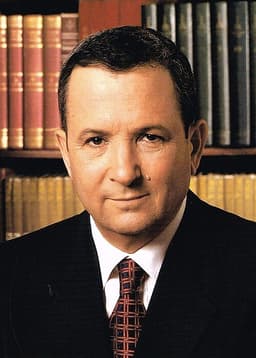
Ehud Barak
General · Modern
59.9Total
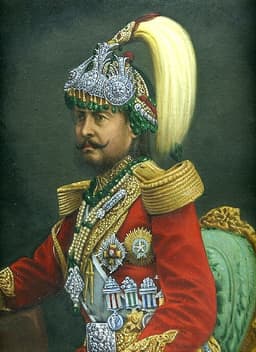
Jung Bahadur Rana
General · Modern
61.4Total
Basic Information
Born
1942
1817
Died
—
1877
Era
Modern
Modern
Nationality
Israel
Nepal
Occupation
General
General
Civilization
Middle Eastern
Indian
Score Comparison
Military (10%)
63.3
55.0
Political (20%)
72.0
72.0
Influence (20%)
55.0
56.7
Legacy (20%)
52.0
55.0
Leadership (15%)
66.0
78.0
Strategy (15%)
61.2
55.0
TOTAL
59.9
61.4
Ehud Barak — Complete Timeline
1973 AD
Awarded Medal of Distinguished ServiceOther
Barak received the Medal of Distinguished Service, Israel's highest military decoration, for his actions during the Yom Kippur War. He led a commando raid deep into Egyptian territory, destroying radar installations. This was part of a broader operation to open a supply route.
Military DecorationYom Kippur War
Impact: nationalconstructive
1976 AD
Led Operation Thunderbolt (Entebbe Raid)War◆ Major
As Chief of Staff, Barak planned and oversaw the Entebbe raid, a rescue of hostages hijacked by Palestinian and German militants in Uganda. Israeli commandos rescued 102 hostages. The operation was a major military success and boosted Israeli morale and international standing.
EntebbeHostage RescueCounterterrorism
Impact: globalconstructive
1991 AD
Appointed Chief of Staff of the IDFPolitical Action◆ Major
Barak was appointed the 14th Chief of Staff of the Israel Defense Forces. He served until 1995, overseeing military operations during the First Intifada and the Oslo Accords period. His tenure included the 1993 Operation Accountability in Lebanon.
Military CommandIDF
Impact: national
1999 AD
Elected Prime Minister of IsraelPolitical Action◆ Major
Barak was elected Prime Minister of Israel, defeating incumbent Benjamin Netanyahu. He campaigned on a platform of peace negotiations and domestic reform. His government pursued the Camp David Summit with Palestinians and withdrew from southern Lebanon.
ElectionPeace Process
Impact: regionalconstructive
2000 AD
Camp David Summit with ArafatPolitical Action
Barak participated in the Camp David Summit with Palestinian leader Yasser Arafat and U.S. President Bill Clinton. The summit aimed to reach a final status agreement but failed. Barak offered territorial concessions that were rejected. The failure contributed to the Second Intifada.
Peace NegotiationsCamp DavidIsraeli-Palestinian Conflict
Impact: global
Withdrew from Southern LebanonPolitical Action◆ Major
Barak ordered the unilateral withdrawal of Israeli forces from the security zone in southern Lebanon, ending 18 years of occupation. The withdrawal was completed in May 2000. Hezbollah claimed victory, and the move was criticized by some as a retreat under fire.
WithdrawalLebanonHezbollah
Impact: regional
Jung Bahadur Rana — Complete Timeline
1846 AD
Kot MassacrePolitical Action
Jung Bahadur Runa orchestrated the Kot Massacre in Kathmandu, where dozens of nobles and courtiers were killed. This event eliminated his political rivals and allowed him to seize effective control of the Nepalese government, establishing the hereditary Rana prime ministership.
CoupMassacreRana Dynasty
Impact: nationaldestructive
Establishment of Rana DynastyPolitical Action◆ Major
Following the Kot Massacre, Jung Bahadur Rana appointed himself prime minister and commander-in-chief. He made the position hereditary, founding the Rana dynasty that ruled Nepal for over a century, reducing the Shah monarchs to figureheads.
DynastyGovernmentNepal
Impact: national
1850 AD
Visit to EuropeCultural
Jung Bahadur Rana traveled to Britain and France, becoming the first South Asian ruler to visit Europe. He observed Western military and industrial technology, which influenced his modernization efforts in Nepal, including army reforms.
DiplomacyModernizationTravel
Impact: nationalconstructive
1856 AD
Nepal-Tibet War and Treaty of ThapathaliWar◆ Major
Jung Bahadur Rana led a Nepalese military campaign into Tibet. The conflict ended with the Treaty of Thapathali, which secured Nepalese territorial claims and established a tributary relationship with Tibet, enhancing Nepal's regional influence.
WarTreatyTibet
Impact: regional
Expert Analysis
Ehud Barak vs Jung Bahadur Rana
### The General and the Prime Minister: Two Paths from the Battlefield
In the summer of 2000, Ehud Barak sat across from Yasser Arafat at Camp David, the weight of a nation’s hope and history pressing on his shoulders. A century and a half earlier, in the blood-soaked courtyard of the Kathmandu palace, Jung Bahadur Rana watched as the bodies of Nepal’s nobility piled high, each death a stepping stone to absolute power. One man sought to end a conflict through negotiation; the other began an era by eliminating rivals. Both were generals who became rulers, yet their fates diverged as starkly as the mountains of the Himalayas differ from the hills of Judea. What drove them—and what drove their different outcomes?
### Origins
Ehud Barak was born in 1942 on Kibbutz Mishmar HaSharon, a child of socialist Zionism, raised in a world that prized collective effort and military readiness. His generation was forged in the crucible of the Holocaust and the 1948 War of Independence; survival was not an abstraction but a daily creed. Jung Bahadur Rana, born in 1817, emerged from the chaotic court of Kathmandu, where the Shah monarchy was weak and noble families feuded like wolves over a carcass. His upbringing was one of intrigue, where loyalty was a currency spent quickly, and betrayal was a tool for advancement. Barak’s era demanded a soldier-diplomat; Jung Bahadur’s required a survivor-assassin.
### Rise to Power
Barak’s ascent was a ladder of merit. He joined the elite Sayeret Matkal commando unit, leading operations that became legend. In 1973, he was awarded the Medal of Distinguished Service, Israel’s highest military honor, for a raid deep into Lebanon. By 1976, as a planner of Operation Thunderbolt—the Entebbe raid—he helped rescue over 100 hostages from Uganda, a feat that cemented his reputation. His path to politics was gradual: Chief of Staff of the IDF in 1991, then a Labor Party leader, and finally Prime Minister in 1999, defeating Benjamin Netanyahu on a platform of peace.
Jung Bahadur’s rise was swifter and bloodier. In 1846, he orchestrated the Kot Massacre, luring dozens of rival nobles into the palace armory and having them butchered. He emerged as prime minister and commander-in-chief, making the post hereditary. There was no election, no popular mandate—only the cold logic of power. Where Barak climbed a ladder, Jung Bahadur built a throne on a foundation of skulls.
### Leadership & Governance
As Prime Minister, Barak governed with a general’s precision but a politician’s fragility. He withdrew Israeli forces from southern Lebanon in 2000, ending an 18-year occupation—a bold, unilateral move that saved lives but invited criticism. His greatest gamble was the Camp David Summit that same year, where he offered Arafat a Palestinian state on most of the West Bank and Gaza. The talks collapsed, and the Second Intifada erupted. Barak’s military genius—his strategy score is a modest 60.0—was overshadowed by his political miscalculations.
Jung Bahadur ruled Nepal with an iron fist, but also with vision. He traveled to Britain and France in 1850, the first South Asian ruler to visit Europe, and returned with ideas for modernizing Nepal’s administration and army. In 1856, he led a campaign into Tibet, securing the Treaty of Thapathali, which guaranteed trade rights and a tribute. His leadership score of 78.4 reflects a man who understood power’s dual nature: fear and progress. Yet his political score of 68.3 hints at a system built on nepotism, not democracy.
### Triumph & Tragedy
Barak’s triumph was Entebbe—a raid that still resonates as a symbol of Israeli resolve. His tragedy was Camp David. He came closer than any Israeli leader to a peace deal, but his willingness to compromise was met with rejection. He left office in 2001, defeated by Ariel Sharon, his legacy tarnished by violence he could not prevent.
Jung Bahadur’s triumph was the Kot Massacre and the dynasty it birthed. For over a century, the Ranas ruled Nepal, modernizing while isolating it from the world. His tragedy was the system itself: hereditary power that stifled dissent and bred corruption. He died in 1877, leaving a legacy of stability bought at the cost of freedom.
### Character & Destiny
Barak was a man of intellect and impatience. He believed that logic could solve the Middle East’s ancient hatreds, but he underestimated the depth of mistrust. His character—analytical, decisive, yet aloof—made him a brilliant commander but a flawed politician. Jung Bahadur was a pragmatist without illusions. He knew that in Nepal, power flowed from the barrel of a gun and the loyalty of a few. His destiny was to secure his family’s future, not to build a nation of citizens.
### Legacy
Barak’s legacy is mixed: a warrior who tried to be a peacemaker, remembered for his daring raids and his failed summit. His total score of 68.9 places him as a competent but not transformative figure. Jung Bahadur’s legacy is more enduring: his Rana dynasty ruled Nepal until 1951, and his reforms shaped the country’s path. His legacy score of 80.0 reflects a man who changed his nation’s history, for better or worse.
### Conclusion
Standing at the edge of their respective eras, both men faced the same choice: to wield power for themselves or for a larger cause. Barak chose the larger cause and lost; Jung Bahadur chose himself and won. The difference lies not in their genius—both were brilliant—but in their worlds. Barak’s Israel was a democracy, where a leader could be voted out; Jung Bahadur’s Nepal was a jungle, where a leader could be killed. The general who seeks peace and the general who builds a dynasty are both products of their time, but only one understood that in some arenas, the only victory is survival.
Rankings
🥇
Jung Bahadur RanaLeader
Mil: 55.0Pol: 72.0Inf: 56.7
61.4
🥈
Ehud Barak
Mil: 63.3Pol: 72.0Inf: 55.0
59.9
+1.5 behind
How This Comparison Works
Algorithm
Each figure is scored on 6 dimensions (0—100 scale) based on structured historical data: Military (10%), Political (20%), Influence (20%), Legacy (20%), Leadership (15%), Strategy (15%). The weighted total produces the final ranking.
Data Sources
Scores are computed from structured sub-indicators in the database. Scale factors adjust for era (Ancient ×0.85, Modern ×1.0) and civilization size (Eastern ×1.05, Other ×0.80) to account for differences in population and military scale.
Maximum 3 Figures
Comparisons are limited to 2—3 figures to ensure readability and statistical meaningfulness.
Error Margins
±5 points per dimension — Sub-scores are derived from historical records with inherent uncertainty. Two figures within 5 points on a dimension should be considered roughly equivalent in that area.
Total Score Accuracy
±3 points overall — The weighted combination of 6 dimensions produces a total score with approximately ±3 points of uncertainty. Differences of less than 3 points are not statistically significant— the figures are effectively tied.
Known Limitations
- Historical records are incomplete and uneven across civilizations
- Figures from oral-tradition societies may be underrepresented
- Occupation labels can misclassify multi-role figures
- Scores measure capability and impact, not moral character
- Quantitative scoring is a comparison tool, not absolute truth
Capability Radar
Military (10%) — Battles & Warfare
Battles
65
45
Win Rate
70
50
Expansion
55
40
Political (20%) — Governance & Reform
Reform
50
75
Diplomacy
60
70
Economy
45
65
Influence (20%) — Cultural & Global Reach
Cultural
50
55
Global
55
40
Legacy (20%) — Historical Impact
Historical
55
65
Longevity
45
60
Leadership (15%) — Power & Stability
Tenure
55
80
Stability
40
60
Strategy (15%) — Tactics & Innovation
Strategy
70
60
Tactics
75
55
Reform
60
70
Similar Comparisons
Comments & Discussion
袖箭侯爷6/16/2026
把以色列总参谋长和尼泊尔首相相提并论?根本是关公战秦琼!Jung Bahadur靠着推翻两百年的封建体制建立独裁,Barak却连一个巴勒斯坦建国协议都签不下来。数据会说话:Rana在位三十年从未输过一场战争,Barak在2000年大选后黯黯下台。一个用刀剑写历史,一个用废纸写悔过书。
Rat-Trap General6/16/2026
Barak negotiated with Arafat while still commanding the most lethal military in the Middle East, but he lacked Jung Bahadur's killer instinct in politics. The Kot Massacre in 1846 saw Rana personally slitting throats of rivals while his artillery pinned down the royal palace. Barak couldn't even secure his own coalition in 2000. One bathed in blood for power, the other drowned in diplomatic niceties. History doesn't pity the hesitant.
Spartan Scholar6/16/2026
Let's strip away the battlefield bravado and look at political architecture. Jung Bahadur didn't just murder rivals—he systematically destroyed Nepal's decentralized feudal system and created a centralized military state with printing presses and land surveys. Barak's Camp David legacy is a mess of unresolved borders and disputed holy sites. One man built a dynasty that lasted 104 years; the other barely survived one electoral cycle.
青衫书吏6/16/2026
你们搞错了比较维度。Barak是民主制度下的将军转型政治家,Rana是封建宫廷里的军阀夺权。从数据看:Barak在1999年以56%得票率当选总理,Rana在1846年靠136具尸体控制朝政。这不是个人能力的差异,而是制度环境的必然。把民主社会的一级上将和封建帝国的独裁者相提并论,本身就是方法论谬误。
Gurkha Oracle6/16/2026
Jung Bahadur Rana visited Britain in 1850 and modernized Nepal's military with Western arms while keeping the colonial wolves at bay—a feat of strategic genius Barak never matched. Barak withdrew from Lebanon in 2000 under Hezbollah pressure, a tactical retreat that emboldened every militant in the region. Rana knew how to project strength through calculated diplomacy. One secured his nation's sovereignty for a century; the other retreated with his tail between his legs.