Loading...
Ehud Barak vs John Lambert
Ehud Barak leads by 3.2 pts · 2 figures compared
…
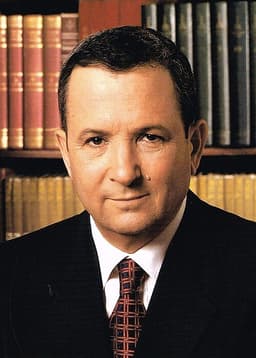
Ehud Barak
General · Modern
59.9Total
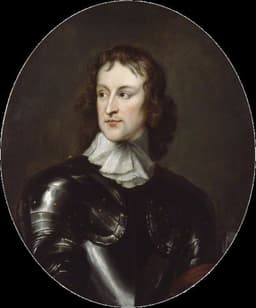
John Lambert
General · Modern
56.7Total
Basic Information
Born
1942
1619
Died
—
1684
Era
Modern
Modern
Nationality
Israel
England
Occupation
General
General
Civilization
Middle Eastern
Western
Score Comparison
Military (10%)
63.3
70.0
Political (20%)
72.0
45.0
Influence (20%)
55.0
59.0
Legacy (20%)
52.0
50.0
Leadership (15%)
66.0
68.0
Strategy (15%)
61.2
55.0
TOTAL
59.9
56.7
Ehud Barak — Complete Timeline
1973 AD
Awarded Medal of Distinguished ServiceOther
Barak received the Medal of Distinguished Service, Israel's highest military decoration, for his actions during the Yom Kippur War. He led a commando raid deep into Egyptian territory, destroying radar installations. This was part of a broader operation to open a supply route.
Military DecorationYom Kippur War
Impact: nationalconstructive
1976 AD
Led Operation Thunderbolt (Entebbe Raid)War◆ Major
As Chief of Staff, Barak planned and oversaw the Entebbe raid, a rescue of hostages hijacked by Palestinian and German militants in Uganda. Israeli commandos rescued 102 hostages. The operation was a major military success and boosted Israeli morale and international standing.
EntebbeHostage RescueCounterterrorism
Impact: globalconstructive
1991 AD
Appointed Chief of Staff of the IDFPolitical Action◆ Major
Barak was appointed the 14th Chief of Staff of the Israel Defense Forces. He served until 1995, overseeing military operations during the First Intifada and the Oslo Accords period. His tenure included the 1993 Operation Accountability in Lebanon.
Military CommandIDF
Impact: national
1999 AD
Elected Prime Minister of IsraelPolitical Action◆ Major
Barak was elected Prime Minister of Israel, defeating incumbent Benjamin Netanyahu. He campaigned on a platform of peace negotiations and domestic reform. His government pursued the Camp David Summit with Palestinians and withdrew from southern Lebanon.
ElectionPeace Process
Impact: regionalconstructive
2000 AD
Camp David Summit with ArafatPolitical Action
Barak participated in the Camp David Summit with Palestinian leader Yasser Arafat and U.S. President Bill Clinton. The summit aimed to reach a final status agreement but failed. Barak offered territorial concessions that were rejected. The failure contributed to the Second Intifada.
Peace NegotiationsCamp DavidIsraeli-Palestinian Conflict
Impact: global
Withdrew from Southern LebanonPolitical Action◆ Major
Barak ordered the unilateral withdrawal of Israeli forces from the security zone in southern Lebanon, ending 18 years of occupation. The withdrawal was completed in May 2000. Hezbollah claimed victory, and the move was criticized by some as a retreat under fire.
WithdrawalLebanonHezbollah
Impact: regional
John Lambert — Complete Timeline
1648 AD
Battle of PrestonWar◆ Major
John Lambert commanded parliamentary forces at the Battle of Preston, defeating a Scottish royalist army. The victory helped secure the parliamentary cause in the Second English Civil War.
BattleEnglish Civil WarParliament
Impact: national
1653 AD
Drafted the Instrument of GovernmentPolitical Action◆ Major
John Lambert was the principal author of the Instrument of Government, the written constitution that established the Protectorate under Oliver Cromwell. The document created a Lord Protector and a Council of State, but was never fully implemented.
ConstitutionProtectorateCromwell
Impact: nationalconstructive
1662 AD
Exiled to GuernseyPolitical Action◆ Major
After the Restoration, John Lambert was tried for treason and exiled to the island of Guernsey. He spent the remainder of his life in captivity, never regaining political influence.
ExileRestorationPunishment
Impact: nationaltragic
Expert Analysis
John Lambert vs Ehud Barak
# The General as Statesman: John Lambert and Ehud Barak
On a summer morning in 1653, John Lambert sat in a London chamber, quill in hand, drafting a document that would change England forever. Across the centuries and a continent away, another general—Ehud Barak—stood on the tarmac at Entebbe Airport in 1976, watching Israeli commandos execute a rescue that seemed to defy the laws of possibility. Both men were warriors who became architects of nations. Yet one ended his days in exile, forgotten by all but historians, while the other rose to lead his country, only to see his peacemaking dreams crumble. What separates the general who builds from the general who falls?
Origins
John Lambert was born in 1619 into a Yorkshire gentry family, a world of wool merchants and Puritan piety. The England of his youth was a powder keg: King Charles I ruled without Parliament, religious tensions simmered between Anglicans and Puritans, and the air was thick with grievances about taxation and liberty. Lambert grew up in the shadow of civil war, learning early that the sword could settle what words could not. His education was practical—law at the Inns of Court, then military service—but his mind was constitutional. He saw chaos and craved order.
Ehud Barak was born in 1942 on a kibbutz in British Palestine, the son of Jewish immigrants from Eastern Europe. His world was also a powder keg, but of a different kind: the Holocaust had ended only seven years earlier, and the State of Israel was barely four years old. Survival was the first lesson. Barak grew up surrounded by enemies who vowed to destroy his nation, and his education was martial—he joined the Israeli Defense Forces at seventeen, becoming a soldier before he could vote. Where Lambert saw a kingdom in need of a constitution, Barak saw a nation in need of security.
Rise to Power
Lambert’s path to prominence was forged in battle. At the Battle of Preston in 1648, he commanded parliamentary forces against a Scottish royalist army, crushing it with a combination of tactical brilliance and relentless pursuit. The victory was decisive—it ended the Second English Civil War and cemented Oliver Cromwell’s power. Lambert became Cromwell’s right hand, a man whose military skill was matched only by his political ambition. He was present at the king’s trial, though he did not sign the death warrant. He wanted a republic, not a regicide.
Barak’s rise was similarly martial but more decorated. In 1973, during the Yom Kippur War, he received the Medal of Distinguished Service, Israel’s highest military honor, for leading a commando raid deep behind Egyptian lines. But his defining moment came in 1976, when as Chief of Staff he planned and oversaw Operation Thunderbolt—the Entebbe Raid. Israeli commandos flew 2,500 miles to Uganda, rescued 102 hostages, and killed all seven hijackers. The world watched in awe. Barak became a national hero, the most decorated soldier in Israeli history, and the natural heir to political power.
Leadership & Governance
Lambert’s genius was constitutional. In 1653, after Cromwell dissolved the Rump Parliament, Lambert drafted the Instrument of Government, the first written constitution in English history. It established a Protectorate with Cromwell as Lord Protector, a Council of State, and a Parliament elected by property owners. For a moment, England had a framework—fragile, imperfect, but a framework nonetheless. Lambert believed that law, not the sword, should govern. He was a republican who wanted to institutionalize the revolution, to make it permanent.
Barak’s genius was strategic. As Chief of Staff from 1991 to 1995, he oversaw military operations that shaped Israel’s security doctrine. But his true test came as Prime Minister, elected in 1999 on a peace platform. He withdrew Israeli forces from southern Lebanon in 2000, ending an 18-year occupation that had become a quagmire. Then he went to Camp David with Yasser Arafat and Bill Clinton, offering a Palestinian state on nearly all of the West Bank and Gaza. It was the boldest peace proposal in Israeli history. It failed.
Triumph & Tragedy
Lambert’s triumph was the Instrument of Government. For a few years, England had a constitution, a Protectorate that seemed stable, and a general who could both fight and write laws. But his tragedy was Cromwell. When Cromwell died in 1658, Lambert tried to seize power, but the army fractured. He was outmaneuvered by his own subordinates, and when Charles II was restored to the throne in 1660, Lambert was tried for treason. He spent his remaining years in exile on the island of Guernsey, a prisoner from 1662 until his death in 1684. The man who drafted England’s first constitution died forgotten.
Barak’s triumph was Entebbe. The raid remains a symbol of Israeli daring, a moment when the impossible became routine. But his tragedy was Camp David. The summit collapsed in acrimony, and within months the Second Intifada erupted, killing thousands. Barak’s peace offer was rejected, and he lost the next election to Ariel Sharon. He had staked everything on a deal with Arafat, and he lost everything. Today, he is remembered as a brilliant soldier who could not translate military success into political peace.
Character & Destiny
Lambert was a constitutionalist in an age of chaos. He believed that institutions could tame power, that a written framework could prevent the return of tyranny. But he was also a man of ambition, and when Cromwell died, he could not resist the lure of the Protectorate. His character was his destiny: he wanted order, but he could not create it without the sword. And the sword, in the end, turned against him.
Barak was a pragmatist in an age of ideology. He believed that security required territory, but that peace required compromise. He was a soldier who became a dove, a hawk who learned to talk. But his character was also his destiny: he was too rational for a conflict driven by passion, too willing to trust that a deal could end a century of war. He offered Arafat everything, and when Arafat said no, Barak had nothing left.
Legacy
John Lambert is a footnote in English history, remembered only by specialists. His Instrument of Government lasted barely five years, and his name is absent from school textbooks. Yet he was a pioneer of constitutional government, a man who tried to give England a written framework when none existed. His legacy is invisible, but it is there—in every constitution that followed.
Ehud Barak is a hero in Israel, a man whose military exploits are taught in every officer course. But his political legacy is contested: some see him as a naive peacemaker, others as a visionary who almost succeeded. His withdrawal from Lebanon is now seen as a strategic mistake, and his Camp David offer remains a bitter memory. Yet he dared to try, and that counts for something.
Conclusion
Two generals, two nations, two centuries. Lambert built a constitution that crumbled; Barak built a peace that failed. Both were warriors who tried to be statesmen, and both were defeated by the forces they could not control. The difference is not in their ambition or their courage, but in the worlds they inhabited. Lambert’s England was a blank slate, waiting to be written upon; Barak’s Middle East was a palimpsest, overwritten by centuries of blood. The general who writes the law may be forgotten, but the general who tries to end a war may be remembered—for trying. And perhaps that is enough.
Rankings
🥇
Ehud BarakLeader
Mil: 63.3Pol: 72.0Inf: 55.0
59.9
🥈
John Lambert
Mil: 70.0Pol: 45.0Inf: 59.0
56.7
+3.2 behind
How This Comparison Works
Algorithm
Each figure is scored on 6 dimensions (0—100 scale) based on structured historical data: Military (10%), Political (20%), Influence (20%), Legacy (20%), Leadership (15%), Strategy (15%). The weighted total produces the final ranking.
Data Sources
Scores are computed from structured sub-indicators in the database. Scale factors adjust for era (Ancient ×0.85, Modern ×1.0) and civilization size (Eastern ×1.05, Other ×0.80) to account for differences in population and military scale.
Maximum 3 Figures
Comparisons are limited to 2—3 figures to ensure readability and statistical meaningfulness.
Error Margins
±5 points per dimension — Sub-scores are derived from historical records with inherent uncertainty. Two figures within 5 points on a dimension should be considered roughly equivalent in that area.
Total Score Accuracy
±3 points overall — The weighted combination of 6 dimensions produces a total score with approximately ±3 points of uncertainty. Differences of less than 3 points are not statistically significant— the figures are effectively tied.
Known Limitations
- Historical records are incomplete and uneven across civilizations
- Figures from oral-tradition societies may be underrepresented
- Occupation labels can misclassify multi-role figures
- Scores measure capability and impact, not moral character
- Quantitative scoring is a comparison tool, not absolute truth
Capability Radar
Military (10%) — Battles & Warfare
Battles
65
65
Win Rate
70
60
Expansion
55
40
Political (20%) — Governance & Reform
Reform
50
55
Diplomacy
60
50
Economy
45
45
Influence (20%) — Cultural & Global Reach
Cultural
50
35
Global
55
30
Legacy (20%) — Historical Impact
Historical
55
50
Longevity
45
40
Leadership (15%) — Power & Stability
Tenure
55
60
Stability
40
40
Strategy (15%) — Tactics & Innovation
Strategy
70
65
Tactics
75
70
Reform
60
55
Similar Comparisons
Comments & Discussion
战史硬核派6/16/2026
说Lambert是“国父”,是对英国历史的侮辱。他写的《政府约法》被他自己亲手毁掉——1657年他不是积极推动克伦威尔称王吗?一个连政治立场都站不稳的将军,凭什么和Barak比?Barak在2000年戴维营谈判中直接面对阿拉法特,敢为和平下赌注,哪怕输了也是负责任的政治家。Lambert最后就是被自己人放逐的失败者。
典籍考据癖6/16/2026
你们都在聊政治,却忽略了关键史实:Lambert不仅是将军,还是17世纪英格兰最懂军事地理的人之一。他的伍斯特战役不是莽撞冲锋,而是运用了当时革命性的“纵深迂回”战术,直接导致保王党主力覆灭。Barak的恩德培行动虽然漂亮,但本质是一次特种突袭,靠的是情报优势和运气的叠加。Lambert的战争艺术是系统性战胜了偶然性。
QuillAndQuarter6/16/2026
Let’s not romanticize Lambert as a constitutional genius. He was a failed revolutionary who literally drafted a constitution that everyone rejected, then tried to crown Cromwell, and eventually got exiled for treason. Barak at least led a country and negotiated peace. If “drafting a document” is the benchmark, I’ll take the guy who actually enacted policies, not the one who scribbled utopian fantasies on paper while his faction crumbled.
NumberNarrator6/16/2026
Data point: Barak’s Entebbe planning was actually controversial—he insisted on sending civilian doctors on the rescue mission, which nearly compromised operational secrecy. Compare that to Lambert’s 1651 Battle of Worcester, where he used a brilliant countermarch to trap the Royalists. One man micro-managed a tactical success; the other orchestrated a strategic victory that ended the Civil War. I’ll take Lambert’s military judgment any day over Barak’s micromanagement.