Loading...
Ehud Barak vs Huang Xing
Ehud Barak leads by 2.4 pts · 2 figures compared
…
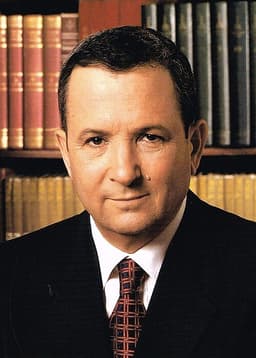
Ehud Barak
General · Modern
59.9Total
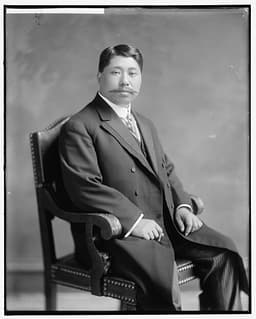
Huang Xing
General · Modern
57.5Total
Basic Information
Born
1942
1874
Died
—
1916
Era
Modern
Modern
Nationality
Israel
China
Occupation
General
General
Civilization
Middle Eastern
Eastern
Score Comparison
Military (10%)
63.3
46.7
Political (20%)
72.0
53.8
Influence (20%)
55.0
62.0
Legacy (20%)
52.0
56.0
Leadership (15%)
66.0
62.0
Strategy (15%)
61.2
60.0
TOTAL
59.9
57.5
Ehud Barak — Complete Timeline
1973 AD
Awarded Medal of Distinguished ServiceOther
Barak received the Medal of Distinguished Service, Israel's highest military decoration, for his actions during the Yom Kippur War. He led a commando raid deep into Egyptian territory, destroying radar installations. This was part of a broader operation to open a supply route.
Military DecorationYom Kippur War
Impact: nationalconstructive
1976 AD
Led Operation Thunderbolt (Entebbe Raid)War◆ Major
As Chief of Staff, Barak planned and oversaw the Entebbe raid, a rescue of hostages hijacked by Palestinian and German militants in Uganda. Israeli commandos rescued 102 hostages. The operation was a major military success and boosted Israeli morale and international standing.
EntebbeHostage RescueCounterterrorism
Impact: globalconstructive
1991 AD
Appointed Chief of Staff of the IDFPolitical Action◆ Major
Barak was appointed the 14th Chief of Staff of the Israel Defense Forces. He served until 1995, overseeing military operations during the First Intifada and the Oslo Accords period. His tenure included the 1993 Operation Accountability in Lebanon.
Military CommandIDF
Impact: national
1999 AD
Elected Prime Minister of IsraelPolitical Action◆ Major
Barak was elected Prime Minister of Israel, defeating incumbent Benjamin Netanyahu. He campaigned on a platform of peace negotiations and domestic reform. His government pursued the Camp David Summit with Palestinians and withdrew from southern Lebanon.
ElectionPeace Process
Impact: regionalconstructive
2000 AD
Camp David Summit with ArafatPolitical Action
Barak participated in the Camp David Summit with Palestinian leader Yasser Arafat and U.S. President Bill Clinton. The summit aimed to reach a final status agreement but failed. Barak offered territorial concessions that were rejected. The failure contributed to the Second Intifada.
Peace NegotiationsCamp DavidIsraeli-Palestinian Conflict
Impact: global
Withdrew from Southern LebanonPolitical Action◆ Major
Barak ordered the unilateral withdrawal of Israeli forces from the security zone in southern Lebanon, ending 18 years of occupation. The withdrawal was completed in May 2000. Hezbollah claimed victory, and the move was criticized by some as a retreat under fire.
WithdrawalLebanonHezbollah
Impact: regional
Huang Xing — Complete Timeline
1905 AD
Co-founded the TongmenghuiPolitical Action◆ Major
Huang Xing co-founded the Tongmenghui (Revolutionary Alliance) in Tokyo with Sun Yat-sen. He became its military leader, organizing armed uprisings against the Qing dynasty.
TongmenghuiRevolutionMilitary
Impact: nationalconstructive
1911 AD
Led the Wuchang UprisingWar
Huang Xing led the Wuchang Uprising, which sparked the Xinhai Revolution. He commanded revolutionary forces against Qing troops, securing initial victories that led to the dynasty's collapse.
Xinhai RevolutionUprisingMilitary
Impact: nationalconstructive
1912 AD
Served as Minister of War in the RepublicPolitical Action◆ Major
Huang Xing served as Minister of War in the provisional government of the Republic of China. He worked to organize a national army and defend the republic against counter-revolutionary forces.
GovernmentMilitaryRepublic
Impact: nationalconstructive
1913 AD
Led the Second Revolution Against Yuan ShikaiWar◆ Major
Huang Xing led the Second Revolution, an armed uprising against President Yuan Shikai's authoritarian rule. The rebellion failed due to lack of coordination and military inferiority, forcing Huang into exile.
Second RevolutionYuan ShikaiExile
Impact: nationaltragic
1916 AD
Died in Exile in ShanghaiPolitical Action
Huang Xing died in Shanghai after returning from exile in Japan and the United States. His death marked the loss of a key military leader of the Chinese revolution, though his legacy endured.
DeathExileRevolution
Impact: nationaltragic
Expert Analysis
Huang Xing vs Ehud Barak
# The General as Statesman: Ehud Barak and Huang Xing
On a July night in 1976, an Israeli commando team landed at Entebbe Airport in Uganda, their engines cut, their nerves steeled. The man who had planned every detail of that audacious rescue—the freeing of 102 hostages from Palestinian and German hijackers—was not on the ground but in the air, orbiting above in a command plane. Ehud Barak, then a rising star in Israeli intelligence, had crafted a mission that would become legend. Half a world away and three decades earlier, another general had stood in the chaos of Wuchang, China, in October 1911, leading revolutionary soldiers against the crumbling Qing dynasty. Huang Xing, the "Father of the Chinese Republic's military," had no command plane, no precision planning—only raw courage and a cause that would topple an empire. Two generals, two republics, two vastly different trajectories. What separates the soldier who becomes a peacemaker from the soldier who dies in exile?
Origins
Ehud Barak was born in 1942 on Kibbutz Mishmar HaSharon, a child of socialist Zionism in a land that had existed as a modern state for barely four years. His world was one of survival—a tiny nation surrounded by enemies, where military service was not a choice but a rite of passage. Barak excelled from the start: he joined the elite Sayeret Matkal commando unit, studied physics and mathematics at Hebrew University, and absorbed the pragmatic, technocratic ethos of Israel's founding generation. His Israel was a place where the impossible—making a desert bloom, winning wars against overwhelming odds—was simply expected.
Huang Xing was born in 1874 in Changsha, Hunan Province, at the twilight of an empire that had ruled for nearly three centuries. The Qing dynasty was rotting from within, humiliated by foreign powers and paralyzed by corruption. Huang came of age in a China where the question was not how to defend the nation but how to resurrect it. He studied in Japan, where he encountered revolutionary ideas that fused Western republicanism with Chinese nationalism. Unlike Barak, who inherited a state, Huang had to invent one.
Rise to Power
Barak's path was one of steady, almost inevitable ascent through the ranks of Israel's military. He commanded the Entebbe raid in 1976, was appointed Chief of Staff in 1991, and by 1999 had parlayed his military glory into the prime minister's office, defeating Benjamin Netanyahu on a platform of peace. His was a career built on competence and calculation—every step measured, every risk weighed.
Huang Xing's rise was more volatile, more visceral. He co-founded the Tongmenghui (Revolutionary Alliance) with Sun Yat-sen in 1905, becoming the movement's military leader. When the Wuchang Uprising erupted in 1911, Huang rushed to the front, commanding revolutionary forces in desperate street fighting. He was not a planner like Barak; he was a fighter, leading charges, inspiring loyalty, absorbing defeats. The revolution succeeded, but Huang's republic was born in chaos, not calculation.
Leadership & Governance
As prime minister from 1999 to 2001, Barak governed with the same analytical precision he had applied to military operations. He withdrew Israeli forces from southern Lebanon in 2000, a unilateral move that ended 18 years of occupation. Then came the Camp David Summit with Yasser Arafat and Bill Clinton that same year—a high-stakes gamble to resolve the Israeli-Palestinian conflict. Barak offered unprecedented concessions: a Palestinian state in most of the West Bank and Gaza, shared sovereignty over Jerusalem. Arafat said no. The talks collapsed, and the Second Intifada erupted. Barak's military mind had misjudged the nature of political compromise: he had treated peace as a problem to be solved, not a relationship to be built.
Huang Xing's governance was shorter and more tragic. As Minister of War in the provisional government of 1912, he tried to build a national army from the fragments of warlord forces. But Yuan Shikai, the former Qing general who had been made president, had no interest in democracy. In 1913, Huang led the Second Revolution against Yuan's authoritarian rule. It failed. Huang fled into exile, first to Japan, then to the United States. He returned to Shanghai only to die in 1916, broken and disillusioned.
Triumph & Tragedy
Barak's triumph was Entebbe—a raid that demonstrated Israel's reach and resolve, that saved lives and humiliated terrorists. His tragedy was Camp David—a peace that could have been but wasn't, a failure that haunted the region for decades. He had the courage to take risks, but not the luck to see them succeed.
Huang Xing's triumph was the Wuchang Uprising itself—the spark that ignited a revolution, that ended 2,000 years of imperial rule. His tragedy was everything that came after: the republic he helped create was stolen by a strongman, and he died before he could see it reclaimed. He was the architect of a house that others would live in.
Character & Destiny
Barak was a man of controlled intensity. He played chess while others played checkers, analyzing every move, anticipating every response. This made him a brilliant general but a frustrating politician—he seemed to believe that if he could just explain the logic of peace clearly enough, his opponents would have to agree. He lacked the common touch, the ability to inspire trust in those who did not share his calculations.
Huang Xing was the opposite: a man of passion and principle, beloved by his soldiers, respected by his peers. He fought not with diagrams but with his own body; he led charges, not committees. His tragedy was that revolutionary passion alone could not build a stable state. He was a better revolutionary than a statesman, a better fighter than a builder.
Legacy
Barak is remembered in Israel as a man of peace who failed, a general who could win wars but not the peace. His legacy is contested: some see him as a visionary who came too close, others as a naïf who gave away too much. The Medal of Distinguished Service he received in 1973 still gleams, but it cannot erase the shadow of Camp David.
Huang Xing is remembered in China as a founding father, a man who gave his life to the republic. His legacy is secure, if incomplete. He is the "Father of the Chinese Republic's military," but the republic he envisioned—democratic, unified, strong—would not fully emerge until decades after his death.
Conclusion
Both men were generals who became statesmen, but they lived in different kinds of time. Barak's Israel was a nation already forged, seeking peace; Huang Xing's China was a nation yet to be born, seeking existence. One failed because he tried to solve an insoluble problem; the other failed because he tried to build on quicksand. Their stories remind us that the skills of war do not always translate into the arts of peace—and that sometimes, the greatest generals are those who understand that some battles cannot be won by strategy alone.
Rankings
🥇
Ehud BarakLeader
Mil: 63.3Pol: 72.0Inf: 55.0
59.9
🥈
Huang Xing
Mil: 46.7Pol: 53.8Inf: 62.0
57.5
+2.4 behind
How This Comparison Works
Algorithm
Each figure is scored on 6 dimensions (0—100 scale) based on structured historical data: Military (10%), Political (20%), Influence (20%), Legacy (20%), Leadership (15%), Strategy (15%). The weighted total produces the final ranking.
Data Sources
Scores are computed from structured sub-indicators in the database. Scale factors adjust for era (Ancient ×0.85, Modern ×1.0) and civilization size (Eastern ×1.05, Other ×0.80) to account for differences in population and military scale.
Maximum 3 Figures
Comparisons are limited to 2—3 figures to ensure readability and statistical meaningfulness.
Error Margins
±5 points per dimension — Sub-scores are derived from historical records with inherent uncertainty. Two figures within 5 points on a dimension should be considered roughly equivalent in that area.
Total Score Accuracy
±3 points overall — The weighted combination of 6 dimensions produces a total score with approximately ±3 points of uncertainty. Differences of less than 3 points are not statistically significant— the figures are effectively tied.
Known Limitations
- Historical records are incomplete and uneven across civilizations
- Figures from oral-tradition societies may be underrepresented
- Occupation labels can misclassify multi-role figures
- Scores measure capability and impact, not moral character
- Quantitative scoring is a comparison tool, not absolute truth
Capability Radar
Military (10%) — Battles & Warfare
Battles
65
35
Win Rate
70
30
Expansion
55
20
Political (20%) — Governance & Reform
Reform
50
60
Diplomacy
60
55
Economy
45
30
Influence (20%) — Cultural & Global Reach
Cultural
50
40
Global
55
40
Legacy (20%) — Historical Impact
Historical
55
55
Longevity
45
45
Leadership (15%) — Power & Stability
Tenure
55
40
Stability
40
25
Strategy (15%) — Tactics & Innovation
Strategy
70
45
Tactics
75
40
Reform
60
50
Similar Comparisons
Comments & Discussion
LateImperialEcho6/16/2026
Huang Xing was a tragedy wrapped in a triumph. He led the Second Revolution in 1913 against Yuan Shikai and lost everything, fleeing to Japan where he died at 48—bitter, exiled, his republic crumbling. Barak became his country’s Prime Minister and sat at Camp David with Clinton. Huang Xing’s military brilliance was wasted by politics; Barak’s politics wasted his military brilliance.
民国刀客6/16/2026
说黄兴只有蛮勇那是睁眼瞎说。他留日时专攻军事学,带同盟会搞过多次起义,黄花岗一战他亲率敢死队攻两广总督署,断两指仍奋战。他的战略是“以革命军事养革命精神”,不是闷头蛮干。巴拉克是科技精英+特种兵出身,黄兴是流亡书生+野路子革命家,根本两种路数。
SayeretSkeptic6/16/2026
Barak gets way too much credit for Entebbe. The real hero was Yonatan Netanyahu, who actually died on the ground. Barak was circling safely at 30,000 feet while soldiers bled. Huang Xing at least was in the trenches at Wuchang, leading bayonet charges against Qing artillery. Give me the general who bleeds with his men over the technocrat who plans from above every time.
数据解构者6/16/2026
拿Entebbe和Wuchang比?根本不在一个量级。巴拉克指挥102名人质营救,伤亡极小;黄兴在阳夏战役里指挥上万士兵,死了几千人,最后革命还是赢了。巴拉克打的是一场精密的警察行动,黄兴打的是真正的革命战争。别把特种兵小打小闹和帝国覆灭混为一谈。
KibbutzKritik6/16/2026
Ehud Barak在以色列是神坛人物,但作为和平缔造者他失败了。2000年戴维营给了巴勒斯坦最多条件,阿拉法特拒绝了,然后就是第二次起义。他带着特种兵思维搞政治——精确,冷酷,不留余地——结果适得其反。黄兴至少懂得革命要“合群力”,拉着宋教仁、孙中山一起干。巴拉克输在太聪明,黄兴赢在太执着。