Loading...
Ehud Barak vs Hideki Tojo
Ehud Barak leads by 6.0 pts · 2 figures compared
…
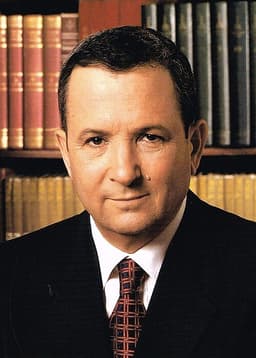
Ehud Barak
General · Modern
59.9Total
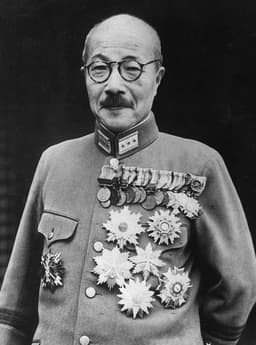
Hideki Tojo
General · Modern
53.9Total
Basic Information
Born
1942
1884
Died
—
1948
Era
Modern
Modern
Nationality
Israel
Japan
Occupation
General
General
Civilization
Middle Eastern
Eastern
Score Comparison
Military (10%)
63.3
70.0
Political (20%)
72.0
48.0
Influence (20%)
55.0
55.0
Legacy (20%)
52.0
50.0
Leadership (15%)
66.0
53.2
Strategy (15%)
61.2
55.0
TOTAL
59.9
53.9
Ehud Barak — Complete Timeline
1973 AD
Awarded Medal of Distinguished ServiceOther
Barak received the Medal of Distinguished Service, Israel's highest military decoration, for his actions during the Yom Kippur War. He led a commando raid deep into Egyptian territory, destroying radar installations. This was part of a broader operation to open a supply route.
Military DecorationYom Kippur War
Impact: nationalconstructive
1976 AD
Led Operation Thunderbolt (Entebbe Raid)War◆ Major
As Chief of Staff, Barak planned and oversaw the Entebbe raid, a rescue of hostages hijacked by Palestinian and German militants in Uganda. Israeli commandos rescued 102 hostages. The operation was a major military success and boosted Israeli morale and international standing.
EntebbeHostage RescueCounterterrorism
Impact: globalconstructive
1991 AD
Appointed Chief of Staff of the IDFPolitical Action◆ Major
Barak was appointed the 14th Chief of Staff of the Israel Defense Forces. He served until 1995, overseeing military operations during the First Intifada and the Oslo Accords period. His tenure included the 1993 Operation Accountability in Lebanon.
Military CommandIDF
Impact: national
1999 AD
Elected Prime Minister of IsraelPolitical Action◆ Major
Barak was elected Prime Minister of Israel, defeating incumbent Benjamin Netanyahu. He campaigned on a platform of peace negotiations and domestic reform. His government pursued the Camp David Summit with Palestinians and withdrew from southern Lebanon.
ElectionPeace Process
Impact: regionalconstructive
2000 AD
Camp David Summit with ArafatPolitical Action
Barak participated in the Camp David Summit with Palestinian leader Yasser Arafat and U.S. President Bill Clinton. The summit aimed to reach a final status agreement but failed. Barak offered territorial concessions that were rejected. The failure contributed to the Second Intifada.
Peace NegotiationsCamp DavidIsraeli-Palestinian Conflict
Impact: global
Withdrew from Southern LebanonPolitical Action◆ Major
Barak ordered the unilateral withdrawal of Israeli forces from the security zone in southern Lebanon, ending 18 years of occupation. The withdrawal was completed in May 2000. Hezbollah claimed victory, and the move was criticized by some as a retreat under fire.
WithdrawalLebanonHezbollah
Impact: regional
Hideki Tojo — Complete Timeline
1941 AD
Attack on Pearl HarborWar
As Prime Minister, Hideki Tojo authorized the attack on the US naval base at Pearl Harbor, Hawaii. The surprise attack brought the United States into World War II. Tojo's decision was based on the belief that war with the US was inevitable due to resource embargoes and diplomatic failures.
World War IIPearl HarborUS-Japan War
Impact: globaldestructive
Appointment as Prime MinisterPolitical Action◆ Major
Hideki Tojo was appointed Prime Minister of Japan, replacing Fumimaro Konoe. He retained his position as Army Minister and later took on other portfolios, consolidating power. His appointment marked the ascendancy of the military faction in the Japanese government and the shift towards total war.
Prime MinisterMilitary GovernmentWorld War II
Impact: national
1942 AD
Fall of SingaporeWar◆ Major
Under Tojo's leadership, Japanese forces captured Singapore from the British in a swift campaign. The fall of Singapore was one of the worst British military defeats in history. It demonstrated Japanese military prowess and led to the occupation of a key strategic location in Southeast Asia.
World War IISingaporeJapanese Victory
Impact: global
1948 AD
Execution by the International Military Tribunal for the Far EastPolitical Action◆ Major
Hideki Tojo was found guilty of war crimes by the International Military Tribunal for the Far East and sentenced to death. He was executed by hanging on December 23, 1948. His trial and execution symbolized the Allied effort to hold Japanese leaders accountable for wartime atrocities.
War CrimesExecutionTokyo Trials
Impact: globaltragic
Expert Analysis
Hideki Tojo vs Ehud Barak
# The General as Statesman
On a winter morning in December 1941, Hideki Tojo stood before the Japanese Diet and declared that Japan had entered a state of war with the United States and the British Empire. Half a century later and half a world away, another general, Ehud Barak, stood in the White House Rose Garden alongside Bill Clinton and Yasser Arafat, shaking hands in a gesture of hope for Middle East peace. Both men were warriors who became prime ministers. One led his nation into catastrophic defeat; the other led his nation toward a peace that ultimately eluded him. Why did two generals, both brilliant in uniform, meet such different fates in civilian power?
Origins
Hideki Tojo was born in 1884 into a samurai family in Tokyo, the son of a lieutenant general. His world was one of rigid hierarchy, imperial loyalty, and military discipline. Japan had emerged from isolation only decades earlier, and the nation was obsessed with catching up to the West through force of arms. Tojo absorbed this ethos completely. He was not intellectually brilliant—his classmates called him "the wooden sword" for his bluntness—but he was relentless, dutiful, and utterly convinced of Japan's divine destiny.
Ehud Barak was born in 1942 on a kibbutz in British Palestine, the son of Eastern European Jewish immigrants. His world was one of survival, collective effort, and existential threat. The Holocaust had just ended, and Israel's War of Independence was only years away. Barak grew up in a society where military competence was not merely admired but essential for national survival. Unlike Tojo, he was a prodigy—graduating high school at fifteen, excelling in physics and mathematics, and entering the military with a mind as sharp as his reflexes.
Rise to Power
Tojo's ascent was slow, methodical, and bureaucratic. He served in the Kwantung Army in Manchuria, rose through staff positions, and became head of the Kempeitai, the military police. By 1940, he was Army Minister, advocating for the Axis alliance and expansion into Southeast Asia. When Prime Minister Konoe resigned in October 1941, unable to resolve the crisis with the United States, Tojo was the natural successor. He was not a revolutionary; he was the system's ultimate product.
Barak's rise was spectacular and personal. He joined the elite Sayeret Matkal commando unit, where his missions became legend. In 1972, he led a team disguised as hotel workers to assassinate Black September terrorists. In 1973, during the Yom Kippur War, he commanded a tank battalion that broke through Egyptian lines, earning the Medal of Distinguished Service, Israel's highest honor. In 1976, as Chief of Staff, he planned Operation Thunderbolt—the Entebbe raid—rescuing over one hundred hostages in Uganda. When he became Chief of Staff in 1991, he was already a national hero. His path to prime minister in 1999 was a triumph of personal achievement over political machinery.
Leadership and Governance
Tojo governed as he commanded: with iron discipline and catastrophic strategic blindness. As prime minister, he held multiple portfolios—Army Minister, Home Minister, later Chief of the General Staff—concentrating power to a degree unprecedented in modern Japan. He authorized the attack on Pearl Harbor in 1941, believing that a decisive blow would force America to negotiate. The fall of Singapore in 1942 seemed to confirm his genius. But Tojo understood war as a series of battles, not as a contest of industrial might and national will. He had no plan for victory, only for expansion. When the tide turned at Midway and Guadalcanal, he had no strategy but defiance.
Barak governed as a problem-solver, not a commander. He withdrew Israeli forces from southern Lebanon in 2000, ending an eighteen-year occupation that had become a quagmire. He went to Camp David that same year, offering Arafat unprecedented concessions: a Palestinian state in Gaza and most of the West Bank, shared control of Jerusalem. He was willing to negotiate the very existence of settlements he had once defended as a soldier. But peace requires two willing parties. Arafat walked away, and the Second Intifada erupted. Barak's military decisiveness failed him in diplomacy; he could not impose peace through will alone.
Triumph and Tragedy
Tojo's greatest triumph was the fall of Singapore in February 1942—the surrender of 80,000 British troops, the largest capitulation in British history. It seemed to validate everything he believed about Japanese superiority and Western decadence. His tragedy was total: the firebombing of Tokyo, the atomic bombs, the surrender he could not prevent, and finally the hangman's noose in 1948. The International Military Tribunal for the Far East sentenced him to death for war crimes, including the maltreatment of prisoners of war. His last words were a prayer for Japan's rebirth.
Barak's greatest triumph was Entebbe—a mission so audacious and successful that it became the template for counterterrorism operations worldwide. His tragedy was more subtle: he won an election promising peace, but left office in 2001 after a landslide defeat to Ariel Sharon. The Camp David failure was not entirely his fault, but he owned it politically. Unlike Tojo, he lived to reflect on his failures. Unlike Tojo, he had failures worth reflecting on.
Character and Destiny
Tojo was a man of absolute certainty in a world that demanded flexibility. He believed in Japan's racial destiny, in the Emperor's divinity, in the power of will over material reality. These beliefs made him effective in conquest but useless in retreat. When defeat came, he attempted suicide and failed—a final indignity for a man who valued honor above life. His destiny was to embody the tragedy of imperial Japan: brilliant in execution, catastrophic in conception.
Barak was a man of immense competence and deep ambivalence. He was Israel's most decorated soldier, yet he spent his political capital trying to give up territory he had fought to secure. He was a hawk who became a dove, a general who wanted to be a peacemaker. This contradiction made him fascinating but politically vulnerable. His destiny was to be the man who came closest to peace and failed—a failure that, in the context of the Middle East, was perhaps inevitable.
Legacy
Tojo is remembered as a war criminal, his name synonymous with Japanese militarism and atrocity. In Japan, he is a figure of complex shame—condemned by history, yet still honored by a nationalist fringe. His legacy is a warning about what happens when military logic dominates civilian governance.
Barak is remembered as a flawed hero—a man of extraordinary courage and genuine vision, undone by the intractability of the conflict he sought to resolve. He remains active in Israeli politics, a figure of respect if not adoration. His legacy is a question: can a soldier ever truly become a peacemaker, or is the instinct for command incompatible with the art of compromise?
Conclusion
Two generals, two prime ministers, two nations at crossroads. Tojo chose war and found ruin. Barak chose peace and found frustration. Perhaps the lesson is not about the men themselves but about the systems they served. Tojo's Japan was a closed, hierarchical society that could not adapt. Barak's Israel was a fractured democracy that could not agree. Both men were products of their times, but Barak at least tried to transcend his. In the end, the general who led his nation to destruction is remembered with horror; the general who tried to lead his nation to peace is remembered with regret. History, it seems, reserves its harshest judgment not for those who fail, but for those who never try.
Rankings
🥇
Ehud BarakLeader
Mil: 63.3Pol: 72.0Inf: 55.0
59.9
🥈
Hideki Tojo
Mil: 70.0Pol: 48.0Inf: 55.0
53.9
+6.0 behind
How This Comparison Works
Algorithm
Each figure is scored on 6 dimensions (0—100 scale) based on structured historical data: Military (10%), Political (20%), Influence (20%), Legacy (20%), Leadership (15%), Strategy (15%). The weighted total produces the final ranking.
Data Sources
Scores are computed from structured sub-indicators in the database. Scale factors adjust for era (Ancient ×0.85, Modern ×1.0) and civilization size (Eastern ×1.05, Other ×0.80) to account for differences in population and military scale.
Maximum 3 Figures
Comparisons are limited to 2—3 figures to ensure readability and statistical meaningfulness.
Error Margins
±5 points per dimension — Sub-scores are derived from historical records with inherent uncertainty. Two figures within 5 points on a dimension should be considered roughly equivalent in that area.
Total Score Accuracy
±3 points overall — The weighted combination of 6 dimensions produces a total score with approximately ±3 points of uncertainty. Differences of less than 3 points are not statistically significant— the figures are effectively tied.
Known Limitations
- Historical records are incomplete and uneven across civilizations
- Figures from oral-tradition societies may be underrepresented
- Occupation labels can misclassify multi-role figures
- Scores measure capability and impact, not moral character
- Quantitative scoring is a comparison tool, not absolute truth
Capability Radar
Military (10%) — Battles & Warfare
Battles
65
65
Win Rate
70
40
Expansion
55
70
Political (20%) — Governance & Reform
Reform
50
30
Diplomacy
60
35
Economy
45
25
Influence (20%) — Cultural & Global Reach
Cultural
50
30
Global
55
55
Legacy (20%) — Historical Impact
Historical
55
55
Longevity
45
40
Leadership (15%) — Power & Stability
Tenure
55
60
Stability
40
20
Strategy (15%) — Tactics & Innovation
Strategy
70
50
Tactics
75
55
Reform
60
45
Similar Comparisons
Comments & Discussion
SAMURAI_SWORD6/16/2026
Tojo gets way too much credit as a "brilliant" general. His IJA record is solid in Manchuria but he completely mismanaged Japan's strategic position. He approved the attack on Pearl Harbor knowing the US had three times Japan's industrial output. That's not brilliance—that's gambling with a nation's future. His "wooden sword" nickname from classmates says it all. Barak at least understood that military strength is useless without political strategy. One was a tactician, the other actually tried
DUNE_BUGGY_KIBBUTZ6/16/2026
拿Barak和Tojo比本身就是侮辱历史。Barak在1973年指挥特种部队深入敌后破坏埃及雷达站,而Tojo只会坐在东京发号施令。Barak至少拿了诺贝尔和平奖提名的底气,Tojo得了东京审判的绞刑架。别把战役级的战术家跟国家战略的失败者混为一谈。
STATS_NERD6/16/2026
The comparison glosses over a critical metric: casualties per decision. Tojo's tenure directly caused 2.5+ million Japanese military deaths and approximately 10 million civilian deaths across Asia. Barak's 1999-2001 term saw roughly 400 Israeli and 1,100 Palestinian deaths in the Second Intifada. Not great, but orders of magnitude different. You can't compare "failed peace" with "catastrophic war of aggression." The body count doesn't lie.
老枪新弹6/16/2026
讲个事实:Tojo是甲级战犯,Barak是诺贝尔和平奖提名者,这已经是天壤之别。Tojo在1941年12月8日发动太平洋战争时,日本海军连美国航母的影子都没找到。Barak在2000年撤出黎巴嫩南部时,至少完成了一次战略收缩。同样是从战场到政坛,一个把国家推入深渊,一个试图把国家拉出泥潭。别搞什么"殊途同归"的伪平衡。