Loading...
Ehud Barak vs Fuad Chehab
Ehud Barak leads by 10.0 pts · 2 figures compared
…
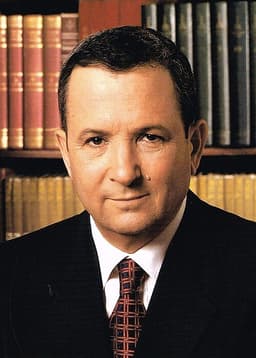
Ehud Barak
General · Modern
59.9Total
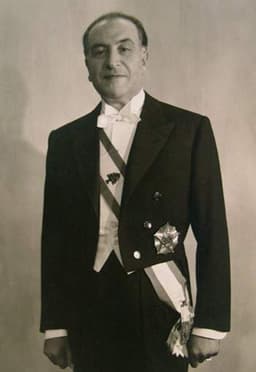
Fuad Chehab
General · Modern
49.9Total
Basic Information
Born
1942
1902
Died
—
1973
Era
Modern
Modern
Nationality
Israel
Lebanon
Occupation
General
General
Civilization
Middle Eastern
Middle Eastern
Score Comparison
Military (10%)
63.3
10.2
Political (20%)
72.0
70.0
Influence (20%)
55.0
54.1
Legacy (20%)
52.0
44.2
Leadership (15%)
66.0
72.0
Strategy (15%)
61.2
30.3
TOTAL
59.9
49.9
Ehud Barak — Complete Timeline
1973 AD
Awarded Medal of Distinguished ServiceOther
Barak received the Medal of Distinguished Service, Israel's highest military decoration, for his actions during the Yom Kippur War. He led a commando raid deep into Egyptian territory, destroying radar installations. This was part of a broader operation to open a supply route.
Military DecorationYom Kippur War
Impact: nationalconstructive
1976 AD
Led Operation Thunderbolt (Entebbe Raid)War◆ Major
As Chief of Staff, Barak planned and oversaw the Entebbe raid, a rescue of hostages hijacked by Palestinian and German militants in Uganda. Israeli commandos rescued 102 hostages. The operation was a major military success and boosted Israeli morale and international standing.
EntebbeHostage RescueCounterterrorism
Impact: globalconstructive
1991 AD
Appointed Chief of Staff of the IDFPolitical Action◆ Major
Barak was appointed the 14th Chief of Staff of the Israel Defense Forces. He served until 1995, overseeing military operations during the First Intifada and the Oslo Accords period. His tenure included the 1993 Operation Accountability in Lebanon.
Military CommandIDF
Impact: national
1999 AD
Elected Prime Minister of IsraelPolitical Action◆ Major
Barak was elected Prime Minister of Israel, defeating incumbent Benjamin Netanyahu. He campaigned on a platform of peace negotiations and domestic reform. His government pursued the Camp David Summit with Palestinians and withdrew from southern Lebanon.
ElectionPeace Process
Impact: regionalconstructive
2000 AD
Camp David Summit with ArafatPolitical Action
Barak participated in the Camp David Summit with Palestinian leader Yasser Arafat and U.S. President Bill Clinton. The summit aimed to reach a final status agreement but failed. Barak offered territorial concessions that were rejected. The failure contributed to the Second Intifada.
Peace NegotiationsCamp DavidIsraeli-Palestinian Conflict
Impact: global
Withdrew from Southern LebanonPolitical Action◆ Major
Barak ordered the unilateral withdrawal of Israeli forces from the security zone in southern Lebanon, ending 18 years of occupation. The withdrawal was completed in May 2000. Hezbollah claimed victory, and the move was criticized by some as a retreat under fire.
WithdrawalLebanonHezbollah
Impact: regional
Fuad Chehab — Complete Timeline
1958 AD
Launched Chehabist reforms and modernizationReform◆ Major
President Chehab implemented a series of reforms known as Chehabism, including administrative modernization, economic planning, and strengthening state institutions. He established the Central Bank of Lebanon and the Civil Service Board.
ReformModernizationState Building
Impact: nationalconstructive
Elected President of LebanonPolitical Action◆ Major
Fuad Chehab was elected President of Lebanon on September 23, 1958, succeeding Camille Chamoun. His election ended the 1958 crisis and was supported by both Christian and Muslim factions seeking stability.
PresidencyElectionStabilization
Impact: nationalconstructive
Created the Deuxième Bureau intelligence agencyPolitical Action
Chehab expanded the role of the Deuxi
IntelligenceSecurityAuthoritarianism
Impact: national
1960 AD
Presided over the 1960s economic boomOther
Under Chehab's presidency, Lebanon experienced a period of economic growth and stability, with Beirut becoming a major financial and tourism hub. His policies attracted foreign investment and expanded the middle class.
Economic GrowthBeirutProsperity
Impact: nationalconstructive
1964 AD
Refused to amend constitution for a second termPolitical Action
Chehab declined to seek a second term as president, respecting the constitutional limit. He retired from politics in 1964, setting a precedent for peaceful transitions of power in Lebanon.
ConstitutionTerm LimitRetirement
Impact: nationalconstructive
Expert Analysis
Fuad Chehab vs Ehud Barak
# The General's Dilemma: Two Paths from Soldier to Statesman
On a warm September morning in 1958, Fuad Chehab stood at the presidential palace in Beirut, a reluctant ruler who had just been handed a nation on the verge of collapse. Across the Mediterranean, forty-one years later, Ehud Barak strode into the prime minister’s office in Jerusalem, a man who had conquered every military challenge Israel could throw at him, now convinced he could conquer peace itself. Both were generals who became political leaders in the volatile Middle East. But their journeys—and their destinations—could not have been more different.
Origins
Fuad Chehab was born into Lebanon’s aristocratic Maronite Christian elite in 1902, a product of the Ottoman Empire’s dying decades. His family had produced soldiers and statesmen for generations, and he absorbed a deep sense of duty to Lebanon’s fragile sectarian balance. The young Chehab trained at the French military academy at Saint-Cyr, where he learned not just warfare but the French tradition of *dirigisme*—the belief that a strong, centralized state could modernize a society from above. When he returned to Lebanon, then under French mandate, he saw a country of eighteen recognized religious sects, each clinging to its own power base, and he understood that the army might be the only institution capable of transcending these divisions.
Ehud Barak’s origins could not have been more different. Born in 1942 on Kibbutz Mishmar HaSharon, his parents were Jewish immigrants from Eastern Europe who had come to Palestine to build a socialist utopia. The kibbutz was a world of collective ideals and military necessity, where every child learned to shoot before they learned to drive. Barak’s given name was Ehud Brog, but he later Hebraized it to Barak—meaning “lightning”—a name that suited his meteoric rise. While Chehab inherited a tradition of aristocratic service, Barak inherited a tradition of survival: the Holocaust was not abstract history but a fresh wound, and the state of Israel was still fighting for its existence.
Rise to Power
Chehab’s path was slow and institutional. He rose through the ranks of the Lebanese army during the French mandate and after independence in 1943, becoming commander of the military in 1945. He was not a battlefield hero; his reputation came from building an institution. When Lebanon’s sectarian system threatened to tear the country apart in the 1958 crisis—a civil war between pro-Western Christians and Arab nationalist Muslims—Chehab refused to use the army to crush the rebellion. Instead, he positioned himself as a neutral arbiter, a general who would not fire on his own people. This restraint made him the only acceptable compromise candidate for president. On September 23, 1958, he was elected to end the chaos.
Barak’s rise was forged in fire. He joined the Israeli Defense Forces in 1959 and quickly became the most decorated soldier in Israeli history. He led the legendary Operation Thunderbolt in 1976—the Entebbe raid—where Israeli commandos rescued hijacked hostages from Idi Amin’s Uganda. As a young officer, he had once disguised himself as a woman to assassinate Palestinian militants in Beirut. By 1991, he was Chief of Staff of the IDF, overseeing military operations that included the suppression of the First Intifada. His path to power was built on audacity, physical courage, and an almost superhuman capacity for risk. When he entered politics in 1995, he did so as a national hero who had never lost a battle.
Leadership & Governance
Chehab’s presidency was an exercise in institutional patience. He called his philosophy “Chehabism”—a doctrine of state-led modernization that would strengthen Lebanon’s central government enough to withstand sectarian pressures. He created the *Deuxième Bureau*, a military intelligence agency that monitored politicians from all sects, not to crush dissent but to prevent any single group from destabilizing the country. He launched economic reforms that made Beirut a financial hub, and he presided over a period of stability and growth. But Chehabism had a dark side: the intelligence apparatus became a tool of surveillance, and the reforms never addressed the underlying sectarian power-sharing that made Lebanon ungovernable in the long run.
Barak’s governance was the opposite: bold, high-stakes, and catastrophic in its failures. As prime minister from 1999, he pursued peace with Syria and the Palestinians with the same aggressive certainty he had shown on the battlefield. In 2000, he ordered the unilateral withdrawal of Israeli forces from southern Lebanon—the very country Chehab had tried to stabilize. Then came Camp David, where Barak offered Palestinian leader Yasser Arafat a peace deal that included a Palestinian state in most of the West Bank and Gaza. Arafat walked away. The failure triggered the Second Intifada, and Barak’s political career collapsed.
Triumph & Tragedy
Chehab’s greatest triumph was his restraint. He refused to amend the constitution to seek a second term in 1964, stepping down voluntarily and setting a precedent for democratic transition in a region of strongmen. His tragedy was that his reforms did not outlast him: the Chehabist state crumbled into civil war a decade after his death.
Barak’s greatest triumph was Entebbe—a mission so audacious that it became a legend. His tragedy was that he believed military success could be translated directly into political success. At Camp David, he took risks that no Israeli leader had taken before, but he could not make Arafat sign. The peace he offered was real; the partner was not.
Character & Destiny
Chehab was cautious, institutional, and deeply aware of Lebanon’s fragility. He governed like a man trying to hold a cracked vase together. Barak was bold, impatient, and convinced that decisive action could reshape history. He governed like a man who had always won by taking risks. Chehab’s caution preserved peace but prevented transformation. Barak’s boldness sought transformation but triggered war.
Legacy
Today, Fuad Chehab is remembered in Lebanon as a rare figure: a leader who put the nation above his sect. His name is still invoked by reformers who dream of a strong, secular state. But his legacy is also a warning: institutional reform cannot survive without a political consensus to sustain it.
Ehud Barak is remembered in Israel as a brilliant soldier who failed as a statesman. The Camp David summit is studied as a lesson in the limits of military thinking in diplomacy. But his withdrawal from Lebanon and his offers at Camp David set precedents that later Israeli leaders would follow—and that the region is still grappling with.
Conclusion
Both men were generals who believed that military discipline could solve political problems. Chehab learned that institutions matter more than leaders. Barak learned that courage is not enough. In the end, their stories remind us that the hardest battle a soldier can fight is not against an enemy, but against the illusion that war and peace are governed by the same rules.
Rankings
🥇
Ehud BarakLeader
Mil: 63.3Pol: 72.0Inf: 55.0
59.9
🥈
Fuad Chehab
Mil: 10.2Pol: 70.0Inf: 54.1
49.9
+10.0 behind
How This Comparison Works
Algorithm
Each figure is scored on 6 dimensions (0—100 scale) based on structured historical data: Military (10%), Political (20%), Influence (20%), Legacy (20%), Leadership (15%), Strategy (15%). The weighted total produces the final ranking.
Data Sources
Scores are computed from structured sub-indicators in the database. Scale factors adjust for era (Ancient ×0.85, Modern ×1.0) and civilization size (Eastern ×1.05, Other ×0.80) to account for differences in population and military scale.
Maximum 3 Figures
Comparisons are limited to 2—3 figures to ensure readability and statistical meaningfulness.
Error Margins
±5 points per dimension — Sub-scores are derived from historical records with inherent uncertainty. Two figures within 5 points on a dimension should be considered roughly equivalent in that area.
Total Score Accuracy
±3 points overall — The weighted combination of 6 dimensions produces a total score with approximately ±3 points of uncertainty. Differences of less than 3 points are not statistically significant— the figures are effectively tied.
Known Limitations
- Historical records are incomplete and uneven across civilizations
- Figures from oral-tradition societies may be underrepresented
- Occupation labels can misclassify multi-role figures
- Scores measure capability and impact, not moral character
- Quantitative scoring is a comparison tool, not absolute truth
Capability Radar
Military (10%) — Battles & Warfare
Battles
65
5
Win Rate
70
5
Expansion
55
5
Political (20%) — Governance & Reform
Reform
50
65
Diplomacy
60
60
Economy
45
50
Influence (20%) — Cultural & Global Reach
Cultural
50
30
Global
55
25
Legacy (20%) — Historical Impact
Historical
55
35
Longevity
45
30
Leadership (15%) — Power & Stability
Tenure
55
55
Stability
40
45
Strategy (15%) — Tactics & Innovation
Strategy
70
10
Tactics
75
10
Reform
60
20
Similar Comparisons
Comments & Discussion
尘埃落定6/16/2026
查了一下资料,Chehab把1964年总统任期交给赫卢时,黎巴嫩GDP增长8%,但1973年后他建的制度全崩了
KIBBUTZ GENERAL6/16/2026
Chehab came from aristocracy, Barak from a tent. But here’s the thing - Barak’s military record is unmatched. He personally led Operation Thunderbolt (Entebbe disguised as a mechanic), planned the Tunis raid on PLO HQ, and killed three terrorists with his bare hands in an operation. Chehab’s resume? He kept the peace. In the Middle East, that’s not a legacy, it’s a failure waiting to happen.
圣西尔的懦夫6/16/2026
Chehab在1958年接手黎巴嫩时,18个教派已经打了150年,但他居然相信"军队超越政治"。笑死人了——他解散了民兵,结果1975年内战爆发时,这些民兵比正规军还强。Barak至少知道,政治就是战争用其他手段继续,所以他试图用奥斯陆协议结束冲突。Chehab呢?他连打仗的胆子都没有,只想当个清官。在黎巴嫩,清官就是等死。
DATA SKEPTIC6/16/2026
The comparison paper says Chehab "absorbed a deep sense of duty" and Barak "conquered peace itself." Can we stop romanticizing? Chehab never held a real command - he was a staff officer who became president because the Maronites needed a puppet. Barak commanded Sayeret Matkal, Israel’s top unit, before leading IDF. The facts are clear: one was a desk general, the other actually fought. Not all soldiers are equal.
历史的书呆子6/16/2026
你们忘了最重要的事:Chehab的军旅生涯在1948年前就结束了——他是法国培养的军官,黎巴嫩独立后几乎没有打过仗。Barak在六日战争中指挥坦克营,在赎罪日战争中被升为旅长,还在恩德培行动中伪装成机械师。Chehab的政治改革(如计划委员会和公务员制度)确实现代,但Barak直接与阿拉法特谈判。一个是国家建设的官僚,一个是杀伐决断的将领。谁更像真正的"将军政治家"?答案太明显了。
REVISIONIST CRITIC6/16/2026
The real tragedy is both failed because they were too much like soldiers. Chehab tried to impose his "reform from above" French style on a feudal society - it worked for three years, then the Maronites and Druze both turned on him. Barak offered a "peace of the brave" (his words) but gave away the Temple Mount negotiations in 2000 like a stupid lieutenant. Soldiers think command works in politics. It doesn’t. The Middle East chews up generals and spits out failures.