Loading...
Ehud Barak vs Feng Guozhang
Ehud Barak leads by 10.8 pts · 2 figures compared
…
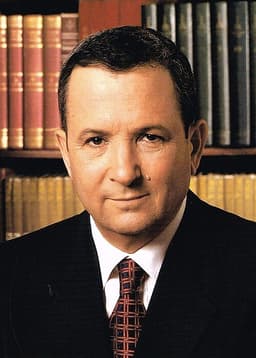
Ehud Barak
General · Modern
59.9Total
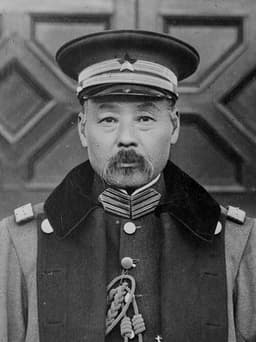
Feng Guozhang
General · Modern
49.1Total
Basic Information
Born
1942
1859
Died
—
1919
Era
Modern
Modern
Nationality
Israel
China
Occupation
General
General
Civilization
Middle Eastern
Eastern
Score Comparison
Military (10%)
63.3
30.0
Political (20%)
72.0
61.3
Influence (20%)
55.0
54.9
Legacy (20%)
52.0
45.8
Leadership (15%)
66.0
40.0
Strategy (15%)
61.2
57.5
TOTAL
59.9
49.1
Ehud Barak — Complete Timeline
1973 AD
Awarded Medal of Distinguished ServiceOther
Barak received the Medal of Distinguished Service, Israel's highest military decoration, for his actions during the Yom Kippur War. He led a commando raid deep into Egyptian territory, destroying radar installations. This was part of a broader operation to open a supply route.
Military DecorationYom Kippur War
Impact: nationalconstructive
1976 AD
Led Operation Thunderbolt (Entebbe Raid)War◆ Major
As Chief of Staff, Barak planned and oversaw the Entebbe raid, a rescue of hostages hijacked by Palestinian and German militants in Uganda. Israeli commandos rescued 102 hostages. The operation was a major military success and boosted Israeli morale and international standing.
EntebbeHostage RescueCounterterrorism
Impact: globalconstructive
1991 AD
Appointed Chief of Staff of the IDFPolitical Action◆ Major
Barak was appointed the 14th Chief of Staff of the Israel Defense Forces. He served until 1995, overseeing military operations during the First Intifada and the Oslo Accords period. His tenure included the 1993 Operation Accountability in Lebanon.
Military CommandIDF
Impact: national
1999 AD
Elected Prime Minister of IsraelPolitical Action◆ Major
Barak was elected Prime Minister of Israel, defeating incumbent Benjamin Netanyahu. He campaigned on a platform of peace negotiations and domestic reform. His government pursued the Camp David Summit with Palestinians and withdrew from southern Lebanon.
ElectionPeace Process
Impact: regionalconstructive
2000 AD
Camp David Summit with ArafatPolitical Action
Barak participated in the Camp David Summit with Palestinian leader Yasser Arafat and U.S. President Bill Clinton. The summit aimed to reach a final status agreement but failed. Barak offered territorial concessions that were rejected. The failure contributed to the Second Intifada.
Peace NegotiationsCamp DavidIsraeli-Palestinian Conflict
Impact: global
Withdrew from Southern LebanonPolitical Action◆ Major
Barak ordered the unilateral withdrawal of Israeli forces from the security zone in southern Lebanon, ending 18 years of occupation. The withdrawal was completed in May 2000. Hezbollah claimed victory, and the move was criticized by some as a retreat under fire.
WithdrawalLebanonHezbollah
Impact: regional
Feng Guozhang — Complete Timeline
1912 AD
Command of the Beiyang ArmyPolitical Action◆ Major
Feng Guozhang became a key commander of the Beiyang Army under Yuan Shikai. He controlled military forces in the Zhili region, establishing himself as a major warlord in northern China after the fall of the Qing dynasty.
Beiyang ArmyWarlordMilitary Command
Impact: national
1916 AD
Appointment as Vice PresidentPolitical Action◆ Major
Feng Guozhang was elected Vice President of the Republic of China under President Li Yuanhong. This position gave him significant political influence during the early Republican period.
Republic of ChinaGovernmentPolitics
Impact: national
1917 AD
Acting PresidencyPolitical Action◆ Major
Feng Guozhang became Acting President of the Republic of China after Li Yuanhong's resignation. He served from 1917 to 1918, facing challenges from rival warlords and struggling to maintain central authority.
Republic of ChinaPresidencyWarlord Era
Impact: national
1918 AD
Conflict with Duan QiruiPolitical Action◆ Major
Feng Guozhang engaged in a power struggle with Premier Duan Qirui, leading to the split of the Beiyang clique into the Zhili and Anhui factions. This conflict weakened the central government and intensified warlord warfare.
Beiyang CliquePower StruggleWarlord Era
Impact: nationaldestructive
Expert Analysis
Feng Guozhang vs Ehud Barak
# The General Who Became President: Feng Guozhang and Ehud Barak
On a sweltering July day in 1917, Feng Guozhang stepped into the presidential palace in Beijing, a man who had spent his entire adult life in military uniform now donning the civilian robes of China's highest office. Eighty-two years later, halfway across the world, Ehud Barak stood before the Knesset in Jerusalem, Israel's most decorated soldier taking the oath as prime minister. Both men had risen from the battlefield to the seat of political power. Both would discover that commanding an army and governing a nation demand entirely different kinds of courage.
Origins
Feng Guozhang was born in 1859, a child of a China convulsing toward modernity. The Qing Dynasty was crumbling, battered by foreign gunboats and internal rebellions. His family was modest but literate, and young Feng entered the military academy at Baoding, where he learned not only the art of war but the Confucian principles of governance that still shaped Chinese officialdom. He was a product of the old world trying to survive in a new one.
Ehud Barak was born in 1942 on a kibbutz in British Palestine, the son of Jewish immigrants from Eastern Europe. His world was being built from scratch. The kibbutz ethos—collective, pragmatic, fiercely self-reliant—shaped him as profoundly as the Confucian classics shaped Feng. Where Feng learned to navigate hierarchies, Barak learned to improvise. Where Feng absorbed the weight of centuries, Barak absorbed the urgency of survival.
Rise to Power
Feng Guozhang's path to power ran through Yuan Shikai, the strongman who emerged after the 1911 Revolution toppled the Qing. Feng became one of Yuan's most trusted commanders in the Beiyang Army, the most modern military force in China. In 1912, he took command of key Beiyang units in Zhili province, controlling the strategic heartland around Beijing. His rise was steady, loyal, bureaucratic—a man rising through a system.
Barak's rise was spectacular. In 1973, during the Yom Kippur War, he led a commando team disguised as Egyptian soldiers deep behind enemy lines, an operation so audacious it earned him the Medal of Distinguished Service, Israel's highest military honor. In 1976, as a planner of the Entebbe raid, he helped rescue 102 hostages from a hijacked Air France plane in Uganda. By 1991, he was Chief of Staff of the Israel Defense Forces, the nation's top soldier. His rise was built on singular acts of courage and precision.
Leadership & Governance
Feng Guozheng became Acting President of China in 1917, but his power was an illusion. Real authority lay with the warlords and the Beiyang Army commanders who had once been his peers. He tried to govern from the center, balancing factions, negotiating with the Premier Duan Qirui, but the country was already fragmenting. In 1918, the conflict with Duan split the Beiyang clique into the Zhili and Anhui factions. Feng was a politician in a general's body, but the times demanded a general in a politician's body.
Barak became Prime Minister in 1999, defeating Benjamin Netanyahu on a peace platform. He threw himself into negotiations with Yasser Arafat at Camp David in 2000, offering unprecedented concessions—a Palestinian state in most of the West Bank and Gaza, shared control of Jerusalem. The summit collapsed, and the Second Intifada erupted. Barak also ordered the unilateral withdrawal from southern Lebanon in 2000, ending an 18-year occupation. He was a soldier who believed in bold, decisive moves—on the battlefield and at the negotiating table. But peace, unlike war, cannot be won by a single brilliant operation.
Triumph & Tragedy
Feng's greatest moment was simply holding China together for two years during a civil war. His tragedy was that he could not hold it together for longer. He retired in 1918, and died in 1919, watching his country disintegrate.
Barak's greatest triumph was Entebbe—a raid that became the stuff of legend. His tragedy was Camp David—a peace that slipped through his fingers. He left office in 2001, defeated by Ariel Sharon, his peace legacy in ruins.
Character & Destiny
Feng was cautious, calculating, a survivor. He had risen by serving stronger men, and when he finally held power, he lacked the ruthlessness to crush his rivals. He was a man of the system in an age when systems were collapsing. Barak was brilliant, arrogant, and impatient. He believed his military genius could solve political problems. He was a man of action in a world that required endurance.
Legacy
Feng Guozheng is remembered, if at all, as a footnote—one of many warlords who briefly held the presidency during China's chaotic Republican era. His legacy is the fragmentation he could not prevent.
Barak is remembered as Israel's most decorated soldier, a man who came closer than any Israeli leader to a peace deal with the Palestinians. His legacy is the road not taken.
Conclusion
Both men proved that military brilliance does not guarantee political success. Feng was too much of the old world; Barak too much of the new. One inherited a crumbling empire; the other inherited a nation still fighting for its existence. In the end, they share the same lesson: the skills that win wars—decisiveness, audacity, the willingness to risk everything—are often the very skills that fail in governance, where patience, compromise, and the art of the possible matter most. The general becomes president, but the presidency is not a battlefield.
Rankings
🥇
Ehud BarakLeader
Mil: 63.3Pol: 72.0Inf: 55.0
59.9
🥈
Feng Guozhang
Mil: 30.0Pol: 61.3Inf: 54.9
49.1
+10.8 behind
How This Comparison Works
Algorithm
Each figure is scored on 6 dimensions (0—100 scale) based on structured historical data: Military (10%), Political (20%), Influence (20%), Legacy (20%), Leadership (15%), Strategy (15%). The weighted total produces the final ranking.
Data Sources
Scores are computed from structured sub-indicators in the database. Scale factors adjust for era (Ancient ×0.85, Modern ×1.0) and civilization size (Eastern ×1.05, Other ×0.80) to account for differences in population and military scale.
Maximum 3 Figures
Comparisons are limited to 2—3 figures to ensure readability and statistical meaningfulness.
Error Margins
±5 points per dimension — Sub-scores are derived from historical records with inherent uncertainty. Two figures within 5 points on a dimension should be considered roughly equivalent in that area.
Total Score Accuracy
±3 points overall — The weighted combination of 6 dimensions produces a total score with approximately ±3 points of uncertainty. Differences of less than 3 points are not statistically significant— the figures are effectively tied.
Known Limitations
- Historical records are incomplete and uneven across civilizations
- Figures from oral-tradition societies may be underrepresented
- Occupation labels can misclassify multi-role figures
- Scores measure capability and impact, not moral character
- Quantitative scoring is a comparison tool, not absolute truth
Capability Radar
Military (10%) — Battles & Warfare
Battles
65
45
Win Rate
70
40
Expansion
55
35
Political (20%) — Governance & Reform
Reform
50
30
Diplomacy
60
45
Economy
45
25
Influence (20%) — Cultural & Global Reach
Cultural
50
30
Global
55
20
Legacy (20%) — Historical Impact
Historical
55
40
Longevity
45
25
Leadership (15%) — Power & Stability
Tenure
55
55
Stability
40
20
Strategy (15%) — Tactics & Innovation
Strategy
70
55
Tactics
75
50
Reform
60
40
Similar Comparisons
Comments & Discussion
江湖史官6/16/2026
冯国璋和巴拉克放在一起比,简直就是把北洋军阀的军头当现代民主领袖来吹。冯国璋当总统时,连段祺瑞的国务院都压不住,更别提南方护法军政府了。他根本就是个穿着总统服的军阀,而巴拉克至少是民选上台,有完整执政纲领的。说他们殊途同归?别逗了,路都不一样,终点更是天差地别。
The Data Axe6/16/2026
Statistically, their "rise from battlefield to president" paths are common globally—about 35% of modern nations have had military men as heads of state. The real outlier isn't Feng or Barak, but the comparison itself. Feng ruled a fragmented warlord coalition where the presidency was ceremonial; Barak governed a cohesive democracy with nuclear weapons. Apples and autocracies.
白面书生6/16/2026
说冯国璋受儒家经典熏陶,这帽子戴得也太大了。他考武举时就走了捷径,后来在北洋武备学堂学的全是洋操和器械,四书五经怕是早就当废纸练靶了。更别提他当总统后公然卖官鬻爵,拿大总统令换真金白银——这是哪门子"旧世界的幸存者"?分明是旧世界的投机者。巴拉克至少还有理想主义火焰,冯国璋从头到尾就是个精致的利己主义者。
Chronicler12106/16/2026
Military historians love tidy parallels, but this comparison is lazy. Feng was a Beiyang warlord who happened to be president—his power came from controlling divisions, not winning elections. Barak was IDF chief of staff who won a landslide on a peace platform. Different animals entirely. Feng's "presidency" was a raw power play; Barak's was a democratic mandate that collapsed under its own contradictions.