Loading...
Edgar the Peaceful vs Sher Shah Suri
Sher Shah Suri leads by 15.2 pts · 2 figures compared
…
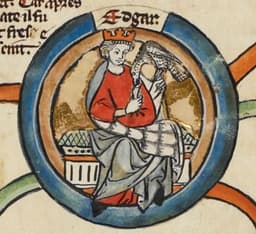
Edgar the Peaceful
Emperor · Medieval
53.5Total
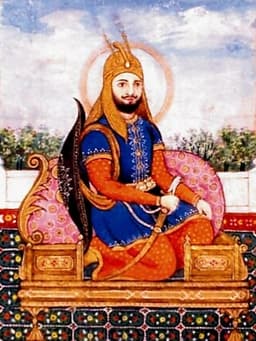
Sher Shah Suri
Emperor · Medieval
68.7Total
Basic Information
Born
943
1486
Died
975
1545
Era
Medieval
Medieval
Nationality
England
India
Occupation
Emperor
Emperor
Civilization
Western
Indian
Score Comparison
Military (10%)
21.2
80.0
Political (20%)
65.0
82.0
Influence (20%)
56.4
56.7
Legacy (20%)
49.2
65.0
Leadership (15%)
78.0
72.0
Strategy (15%)
35.7
72.0
TOTAL
53.5
68.7
Edgar the Peaceful — Complete Timeline
959 AD
Coronation as King of EnglandPolitical Action◆ Major
Edgar succeeded his brother Eadwig as King of England. His reign was marked by stability and the consolidation of monastic reform under Dunstan.
Impact: nationalconstructive
970 AD
Naval defense reformsReform
Edgar organized a standing navy and divided England into naval districts to defend against Viking raids. This created a period of peace and security along the coasts.
Impact: nationalconstructive
Council of WinchesterCultural◆ Major
Edgar convened the Council of Winchester, which established the Regularis Concordia, a code for monastic life. This standardized Benedictine practices across England.
Impact: nationalconstructive
Sher Shah Suri — Complete Timeline
1539 AD
Defeat of Humayun at ChausaWar◆ Major
Sher Shah Suri defeated the Mughal emperor Humayun at the Battle of Chausa in Bihar. This victory forced Humayun to flee to Persia and allowed Sher Shah to establish the Sur Empire in northern India.
BattleMughal-Sur Conflict
Impact: regional
1540 AD
Defeat of Humayun at KannaujWar◆ Major
Sher Shah Suri decisively defeated Humayun at the Battle of Kannauj (also known as Bilgram). This victory consolidated Sher Shah's control over the Delhi Sultanate and ended Mughal rule in India for 15 years.
BattleMughal-Sur Conflict
Impact: regional
Introduction of the RupeeReform◆ Major
Sher Shah Suri introduced a standardized silver coin called the 'rupiya', which became the basis for the modern Indian rupee. This reform stabilized the economy and facilitated trade across his empire.
Currency ReformEconomic Policy
Impact: regionalconstructive
1541 AD
Land Revenue ReformsReform◆ Major
Sher Shah Suri implemented a systematic land revenue system based on measurement of land and classification of soil types. This reform increased state revenue and reduced corruption, later adopted by the Mughals under Akbar.
Administrative ReformTaxation
Impact: regionalconstructive
1542 AD
Construction of the Grand Trunk RoadOther◆ Major
Sher Shah Suri built the Grand Trunk Road from Sonargaon (Bangladesh) to Peshawar (Pakistan), improving trade and communication. The road included rest houses and wells at regular intervals, facilitating travel and commerce.
InfrastructureTrade Route
Impact: regionalconstructive
Expert Analysis
Origins
Edgar the Peaceful was born in 943 in Wessex, England, the younger son of King Edmund I. His upbringing was shaped by the monastic reform movement led by Dunstan, who became his mentor. Edgar's education emphasized ecclesiastical matters, preparing him for a role as a king who would prioritize church unity. In contrast, Sher Shah Suri was born as Farid Khan in 1486 in Sasaram, Bihar, into an Afghan noble family. His father, Hasan Khan Suri, served as a jagirdar under the Lodi dynasty. Farid received a traditional education in Persian and Arabic, but his early life was marked by conflict with his father, leading him to leave home and seek military training. These divergent origins—one in a stable Christian kingdom, the other in the fractious Afghan nobility—set the stage for their contrasting approaches to power.
Rise to Power
Edgar became King of England in 959 after the death of his brother Eadwig, who had alienated the church and nobles. Edgar's accession was smooth due to his association with Dunstan, whom he recalled from exile and appointed Archbishop of Canterbury. By 957, Edgar had already been recognized as king of Mercia and Northumbria after a rebellion against Eadwig. His coronation at Bath in 973 was a ceremonial culmination of his authority. Sher Shah Suri rose through military prowess. He began as a manager of his father's jagir, but after a dispute, he entered the service of the Lodi sultan. In 1537, he defeated the Mughal emperor Humayun at the Battle of Chausa, followed by a decisive victory at Kannauj in 1540, forcing Humayun into exile. Sher Shah then claimed the throne of Delhi, founding the Suri dynasty. His rise was marked by ruthless ambition, while Edgar's was a matter of legitimate succession backed by clerical support.
Leadership & Governance
Edgar's leadership focused on ecclesiastical reform. He convened the Council of Winchester around 970, which produced the Regularis Concordia, a code standardizing Benedictine monastic practices across England. This unified the church under Dunstan's guidance. Edgar also restructured the navy, dividing the coast into districts to counter Viking raids, though his military score of 21.2 reflects limited martial activity. His governance was consultative, relying on Dunstan and other clergy. Sher Shah Suri, with a political score of 82.0, implemented sweeping administrative reforms. He introduced a standardized silver coin, the rupiya, which stabilized the economy. His land revenue system involved surveying fields, classifying soil types, and setting fixed rates—a precursor to Mughal reforms under Akbar. He built the Grand Trunk Road, spanning 2,400 km from Bengal to the Indus, with rest houses and wells. Sher Shah's governance was centralized and efficient, contrasting with Edgar's monastic focus.
Triumph & Tragedy
Edgar's greatest triumph was the peaceful consolidation of England after decades of Viking raids. His reign (959-975) saw no major wars, and he was crowned at Bath in a ceremony that symbolized unity. He earned the epithet 'the Peaceful' due to this stability. However, his failure was a lack of durable institutions; after his death, his son Edward the Martyr was murdered, leading to renewed conflict. Sher Shah's triumphs include the defeat of Humayun, which established Suri rule over North India. His administrative innovations, like the rupee and Grand Trunk Road, had lasting impact. Yet his tragedy was his short reign (1540-1545) and the collapse of his dynasty after his death. He died in a gunpowder explosion at Kalinjar fort in 1545, and within a decade, Humayun returned to reclaim the throne. Sher Shah's legacy survived through Mughal adoption of his systems, but his personal empire was ephemeral.
Character & Destiny
Edgar was described as a pious and just ruler, but also stern. He had a reputation for moral rigor, punishing lawlessness but also showing clemency. His character aligned with his destiny: a reign of peace built on church alliance. However, his dependence on Dunstan meant that after Dunstan's death, the kingdom lacked strong guidance. Sher Shah was pragmatic, strategic, and disciplined. He was known for justice and administrative detail, personally overseeing reforms. His character drove his rise from obscurity to emperor, but his ambition and military focus led to a premature death. Historians note that his administrative genius was unmatched among Afghan rulers, but his dynasty's fragility reflected a lack of succession planning. Both leaders' characters shaped their fates: Edgar's peace ended with his death, while Sher Shah's systems outlived his rule.
Legacy
Edgar's legacy is as a unifier of the English church. The Regularis Concordia influenced monastic life for centuries, and his naval reforms set a precedent for English sea defense. However, his political impact scored 65.0, while his influence is 56.4. He is remembered more as a transitional figure between Anglo-Saxon and Norman England. Sher Shah Suri's legacy is far more tangible. His rupee remained the standard currency in India until the 20th century, and his land revenue system was adopted by the Mughals and later the British. The Grand Trunk Road remains a major artery. His influence score of 56.7 is close to Edgar's, but his legacy score of 65.0 reflects concrete institutional survival. Sher Shah's administrative reforms directly shaped the Mughal Empire, making him a foundational figure in Indian governance.
Conclusion
While Edgar the Peaceful provided stability and ecclesiastical unity, his impact was largely confined to his reign and the English church. In contrast, Sher Shah Suri's administrative innovations—the rupee, land tax system, and road network—endured for centuries, influencing successive empires. Despite Edgar's higher leadership score (78.0 vs. 72.0), Sher Shah's total score of 68.7 versus Edgar's 53.5 reflects greater overall impact. Sher Shah's reforms were adopted by the Mughals, who ruled India for 300 years, while Edgar's work was overshadowed by the Norman Conquest. Therefore, Sher Shah Suri had a greater and more lasting impact on history.
Rankings
🥇
Sher Shah SuriLeader
Mil: 80.0Pol: 82.0Inf: 56.7
68.7
🥈
Edgar the Peaceful
Mil: 21.2Pol: 65.0Inf: 56.4
53.5
+15.2 behind
How This Comparison Works
Algorithm
Each figure is scored on 6 dimensions (0—100 scale) based on structured historical data: Military (10%), Political (20%), Influence (20%), Legacy (20%), Leadership (15%), Strategy (15%). The weighted total produces the final ranking.
Data Sources
Scores are computed from structured sub-indicators in the database. Scale factors adjust for era (Ancient ×0.85, Modern ×1.0) and civilization size (Eastern ×1.05, Other ×0.80) to account for differences in population and military scale.
Maximum 3 Figures
Comparisons are limited to 2—3 figures to ensure readability and statistical meaningfulness.
Error Margins
±5 points per dimension — Sub-scores are derived from historical records with inherent uncertainty. Two figures within 5 points on a dimension should be considered roughly equivalent in that area.
Total Score Accuracy
±3 points overall — The weighted combination of 6 dimensions produces a total score with approximately ±3 points of uncertainty. Differences of less than 3 points are not statistically significant— the figures are effectively tied.
Known Limitations
- Historical records are incomplete and uneven across civilizations
- Figures from oral-tradition societies may be underrepresented
- Occupation labels can misclassify multi-role figures
- Scores measure capability and impact, not moral character
- Quantitative scoring is a comparison tool, not absolute truth
Capability Radar
Military (10%) — Battles & Warfare
Battles
10
75
Win Rate
10
80
Expansion
10
75
Political (20%) — Governance & Reform
Reform
70
95
Diplomacy
70
70
Economy
65
90
Influence (20%) — Cultural & Global Reach
Cultural
40
60
Global
20
55
Legacy (20%) — Historical Impact
Historical
45
85
Longevity
40
80
Leadership (15%) — Power & Stability
Tenure
65
60
Stability
75
65
Strategy (15%) — Tactics & Innovation
Strategy
15
80
Tactics
10
85
Reform
20
90
Similar Comparisons
Comments & Discussion
No comments yet. Be the first to share your thoughts!