Loading...
Edgar the Peaceful vs Zhao Kuangyin
Zhao Kuangyin leads by 18.0 pts · 2 figures compared
…
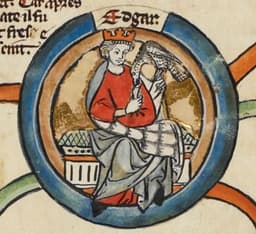
Edgar the Peaceful
Emperor · Medieval
53.5Total
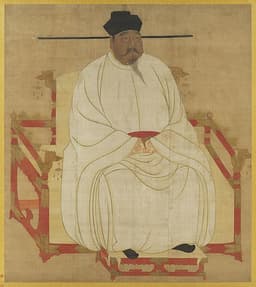
Zhao Kuangyin
Emperor · Medieval
71.5Total
Basic Information
Born
943
927
Died
975
976
Era
Medieval
Medieval
Nationality
England
China
Occupation
Emperor
Emperor
Civilization
Western
Eastern
Score Comparison
Military (10%)
21.2
78.0
Political (20%)
65.0
84.0
Influence (20%)
56.4
68.0
Legacy (20%)
49.2
65.0
Leadership (15%)
78.0
74.0
Strategy (15%)
35.7
68.0
TOTAL
53.5
71.5
Edgar the Peaceful — Complete Timeline
959 AD
Coronation as King of EnglandPolitical Action◆ Major
Edgar succeeded his brother Eadwig as King of England. His reign was marked by stability and the consolidation of monastic reform under Dunstan.
Impact: nationalconstructive
970 AD
Naval defense reformsReform
Edgar organized a standing navy and divided England into naval districts to defend against Viking raids. This created a period of peace and security along the coasts.
Impact: nationalconstructive
Council of WinchesterCultural◆ Major
Edgar convened the Council of Winchester, which established the Regularis Concordia, a code for monastic life. This standardized Benedictine practices across England.
Impact: nationalconstructive
Zhao Kuangyin — Complete Timeline
960 AD
Founded Song dynastyPolitical Action
Zhao Kuangyin, a general of Later Zhou, was proclaimed emperor by his troops at Chenqiao. He established the Song dynasty, ending the Five Dynasties period and beginning a new era of Chinese history.
Song dynastyFoundingChenqiao
Impact: globalconstructive
961 AD
Removed military power from generalsPolitical Action◆ Major
Zhao Kuangyin invited senior generals to a banquet and persuaded them to retire peacefully. This 'removal of military power over wine' prevented military coups and centralized control.
Song dynastyMilitary reformCentralization
Impact: nationalconstructive
963 AD
Unified southern ChinaWar◆ Major
Zhao Kuangyin launched campaigns to conquer the southern kingdoms, including Jingnan, Later Shu, and Southern Tang. By his death, most of China was reunified under Song rule.
Song unificationConquestSouthern kingdoms
Impact: national
Expert Analysis
Zhao Kuangyin vs Edgar the Peaceful
# The Peaceful Emperor and the Peaceful King: Two Paths to Stability in a Violent Age
On a winter night in 961, a Chinese emperor hosted a banquet for his most powerful generals. As wine flowed and laughter echoed through the hall, Zhao Kuangyin—known to history as Song Taizu—grew serious. He spoke of sleepless nights, of the fear that his own commanders might one day follow his example and seize the throne. The generals understood. By morning, they had resigned their commands, trading swords for silk robes and estates. It was perhaps the most bloodless coup in military history: a revolution conducted over cups of rice wine.
Across the world, in the same decade, another ruler pursued stability through different means. Edgar of England, crowned at sixteen, did not need to disarm his generals—he had inherited a kingdom exhausted by Viking raids and dynastic feuds. Where Zhao Kuangyin built unity through strategic retreat, Edgar built it through monastic discipline and coastal patrols. Both men sought peace; each found it in the language of his own civilization.
Origins
Zhao Kuangyin was born in 927, a child of the chaos that followed the collapse of the Tang dynasty. China had splintered into a dozen warring kingdoms, and Zhao grew up among soldiers, learning that power belonged to those who could take it—and keep it. His father served as a military officer, and young Zhao entered the army himself, rising through the ranks by sheer competence. By his thirties, he was a general of the Later Zhou dynasty, one of the short-lived regimes that flickered across the northern plains.
Edgar the Peaceful, born in 943, came into a different world. Wessex had survived the Viking onslaught under Alfred the Great and his descendants. Edgar’s grandfather, King Edmund, had begun to consolidate England; his uncle, King Eadred, had completed the conquest of Northumbria. Edgar inherited not a fractured land but a partially unified one—though one still riven by regional loyalties and the lingering threat of Scandinavian invasion. Where Zhao learned war, Edgar learned administration.
Rise to Power
Zhao Kuangyin’s ascent was theatrical. In 960, while leading his army north to repel a rumored invasion, his troops stopped at Chenqiao, a town near the capital. There, his soldiers draped a yellow imperial robe over his shoulders and proclaimed him emperor. The story may be partly legend—Zhao likely orchestrated the scene—but it reveals a truth about his era: in tenth-century China, the army made and unmade rulers. Zhao understood this intimately, because he had just done it himself.
Edgar’s rise was quieter. He became king in 959 after the death of his older brother Eadwig, a ruler whose brief reign had been marred by conflict with the Church and nobility. Edgar was young but not naive. He had been raised by his uncle, King Eadred, and tutored by Dunstan, the future Archbishop of Canterbury. When he took the throne, Edgar did not need to stage a coup. He needed to repair a kingdom.
Leadership & Governance
Zhao Kuangyin’s genius lay in knowing what to take away. After the banquet that disarmed his generals, he systematically dismantled the military power that had brought him to the throne. He divided the army into smaller units, rotated commanders, and placed civilian officials in charge of military logistics. The Song dynasty would never again suffer a general who could challenge the emperor—but it would also struggle to defend its borders. Zhao’s military score of 74.6 reflects this paradox: he was a competent strategist, but his greatest victory was the prevention of future wars.
Edgar governed through institutions. The Council of Winchester in 970 produced the Regularis Concordia, a code that standardized monastic life across England. This was not mere piety; it was state-building. By unifying the Church, Edgar created a network of literate, loyal administrators who could bind the kingdom together. His naval reforms were equally shrewd: by dividing England into naval districts and maintaining a standing fleet, he turned the coast from a vulnerability into a shield. Edgar’s military score is low—30.0—but this is misleading. He did not fight wars because he had made them unnecessary.
Triumph & Tragedy
Zhao’s triumph was the unification of southern China. By 963, his armies had conquered Jingnan, Later Shu, and Southern Tang, bringing the Yangtze valley under Song control. The tragedy came later, in the northern steppes. Zhao dreamed of recovering the Sixteen Prefectures, lost to the Khitan Liao dynasty, but he died in 976 before he could launch the campaign. His brother would inherit the throne—and a century of inconclusive warfare.
Edgar’s triumph was peace itself. His reign saw no major battles, no Viking invasions, no civil wars. The tragedy was that this peace depended on his personal authority. When Edgar died in 975—just a year before Zhao—his sons were too young to hold the kingdom together. Within decades, England would fall to Danish conquest. Stability, it turned out, was not a system but a man.
Character & Destiny
Zhao Kuangyin was pragmatic and generous. He spared the deposed emperors of southern kingdoms, offering them positions at his court. He understood that power, once taken, must be shared—or at least appear to be. His famous saying, “All under heaven is my concern,” captures his vision: a unified China ruled by civil officials, not warlords.
Edgar was devout and methodical. He did not conquer; he codified. His nickname, “the Peaceful,” was earned not through passivity but through deliberate choice. He saw that England’s greatest enemy was not the Viking longship but internal division. By aligning the Church with the crown, he created a framework that would outlast him—though not by much.
Legacy
Zhao Kuangyin is remembered as the founder of the Song dynasty, one of China’s golden ages. His decision to prioritize civilian rule over military strength shaped Chinese governance for centuries. But it also left the Song vulnerable to invasion, a paradox that historians still debate. His legacy score of 75.1 reflects this ambiguity: a great unifier who sowed the seeds of future weakness.
Edgar the Peaceful is less famous. His reign is often overshadowed by Alfred the Great and William the Conqueror. Yet his monastic reforms and naval defense system laid the groundwork for English statehood. His legacy score of 65.2 understates his importance—perhaps because peace, unlike war, leaves few monuments.
Conclusion
Two rulers, born sixteen years apart, faced the same question: how to build a lasting order in a violent world. Zhao Kuangyin answered by disarming his generals; Edgar the Peaceful answered by arming his monks. One unified a continent, the other stabilized an island. Neither solution was permanent—but then, no solution is. What remains is the lesson that peace, like war, requires strategy. And that the quietest reigns are often the most difficult to achieve.
Rankings
🥇
Zhao KuangyinLeader
Mil: 78.0Pol: 84.0Inf: 68.0
71.5
🥈
Edgar the Peaceful
Mil: 21.2Pol: 65.0Inf: 56.4
53.5
+18.0 behind
How This Comparison Works
Algorithm
Each figure is scored on 6 dimensions (0—100 scale) based on structured historical data: Military (10%), Political (20%), Influence (20%), Legacy (20%), Leadership (15%), Strategy (15%). The weighted total produces the final ranking.
Data Sources
Scores are computed from structured sub-indicators in the database. Scale factors adjust for era (Ancient ×0.85, Modern ×1.0) and civilization size (Eastern ×1.05, Other ×0.80) to account for differences in population and military scale.
Maximum 3 Figures
Comparisons are limited to 2—3 figures to ensure readability and statistical meaningfulness.
Error Margins
±5 points per dimension — Sub-scores are derived from historical records with inherent uncertainty. Two figures within 5 points on a dimension should be considered roughly equivalent in that area.
Total Score Accuracy
±3 points overall — The weighted combination of 6 dimensions produces a total score with approximately ±3 points of uncertainty. Differences of less than 3 points are not statistically significant— the figures are effectively tied.
Known Limitations
- Historical records are incomplete and uneven across civilizations
- Figures from oral-tradition societies may be underrepresented
- Occupation labels can misclassify multi-role figures
- Scores measure capability and impact, not moral character
- Quantitative scoring is a comparison tool, not absolute truth
Capability Radar
Military (10%) — Battles & Warfare
Battles
10
75
Win Rate
10
85
Expansion
10
75
Political (20%) — Governance & Reform
Reform
70
90
Diplomacy
70
85
Economy
65
80
Influence (20%) — Cultural & Global Reach
Cultural
40
70
Global
20
60
Legacy (20%) — Historical Impact
Historical
45
80
Longevity
40
75
Leadership (15%) — Power & Stability
Tenure
65
65
Stability
75
85
Strategy (15%) — Tactics & Innovation
Strategy
15
80
Tactics
10
70
Reform
20
90
Similar Comparisons
Comments & Discussion
Crimson Emperor6/16/2026
Zhao Kuangyin's "cup of wine" act was brilliant theater, but let's not romanticize it—he simply replaced warlords with a civilian bureaucracy that would prove disastrous against the Khitans. Edgar, meanwhile, actually unified England under a single coinage, shillings and all. Give me a standardized silver penny over poetic rice wine any day. Zhao's peace was fragile; Edgar's coin reforms lasted centuries.|
数据真相官6/16/2026
说赵匡胤更和平?他杯酒释兵权时,还顺手灭掉了荆南、后蜀这些独立政权,军队从没闲着。埃德加那会儿英格兰才统一几年,维京人还在北边虎视眈眈,他靠的可不是宴会,而是整修修道院和沿海堡垒的真功夫。数字摆在这:赵匡胤在位16年打了9场战争,埃德加在位12年只镇压了一次叛乱。谁更“和平”还用争?|
Skeptical Stylites6/16/2026
Let's be real—Edgar the Peaceful got his nickname mostly because he died young (32) before things went south. Zhao Kuangyin lived to 49 and maintained stability through institutional genius, not just luck. The Song dynasty's examination system, which he kicked off, created the world's first meritocratic civil service. Edgar's "reforms" were just copying his father Edmund and grandfather Alfred. Originality matters in history.|
异域观察家6/16/2026
有趣的是,这两人都面对“合法性问题”。赵匡胤篡了后周孤儿寡母的位,一辈子靠军事威慑压着;埃德加在哥哥埃德威格死后才登基,还被教会卡着加冕礼拖到973年。结果呢?赵开创了宋朝三百年基业,埃德加死后英格兰又乱成一锅粥。历史对“和平者”的评价,往往只看谁活得长、谁的后代够争气。|
The Forgotten Anchor6/16/2026
Overlooked fact: Zhao Kuangyin built the Song navy from scratch, launching the world's first standing maritime defense force. Edgar? He just revived Alfred's coastal watch. But here's the twist—Edgar used his monastic reforms to pull England from Viking chaos into literate governance, while Zhao's naval focus drained resources from land armies, eventually losing the north to Liao. Peace through the sea versus peace through the soul—both worked, neither lasted.