Loading...
Charles de Gaulle vs Edgar the Peaceful
Charles de Gaulle leads by 14.7 pts · 2 figures compared
…
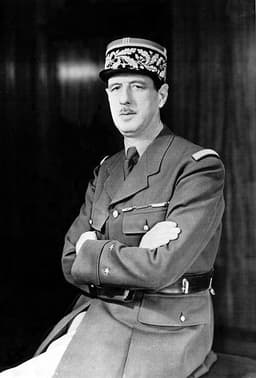
Charles de Gaulle
Politician · Modern
68.2Total
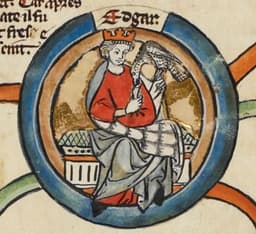
Edgar the Peaceful
Emperor · Medieval
53.5Total
Basic Information
Born
1890
943
Died
1970
975
Era
Modern
Medieval
Nationality
France
England
Occupation
Politician
Emperor
Civilization
Western
Western
Score Comparison
Military (10%)
55.0
21.2
Political (20%)
75.0
65.0
Influence (20%)
65.0
56.4
Legacy (20%)
68.0
49.2
Leadership (15%)
78.0
78.0
Strategy (15%)
65.0
35.7
TOTAL
68.2
53.5
Charles de Gaulle — Complete Timeline
1940 AD
Appeal of 18 June 1940Political Action
From London, de Gaulle broadcast a radio appeal urging French resistance against Nazi occupation. He called on French soldiers and citizens to continue the fight, founding the Free French Forces and becoming the symbol of French defiance.
World War IIResistanceLeadership
Impact: nationalconstructive
1958 AD
Founding of the Fifth RepublicPolitical Action
De Gaulle returned to power during the Algerian crisis and oversaw the drafting of a new constitution. The Fifth Republic established a strong executive presidency, replacing the unstable parliamentary system of the Fourth Republic.
ConstitutionGovernment ReformPolitical System
Impact: nationalconstructive
1962 AD
End of the Algerian WarPolitical Action◆ Major
De Gaulle negotiated the
DecolonizationPeace TreatyAlgeria
Impact: regionalconstructive
1968 AD
May 1968 CrisisPolitical Action◆ Major
Mass student protests and general strikes paralyzed France, challenging de Gaulle's government. De Gaulle briefly fled to Germany, then returned to dissolve the National Assembly and call elections, which his party won, but his authority was weakened.
ProtestPolitical CrisisSocial Unrest
Impact: nationaldestructive
1969 AD
Resignation as PresidentPolitical Action
De Gaulle resigned after losing a referendum on regional reform and Senate restructuring. The defeat marked the end of his political career, as he withdrew from public life and died the following year.
ResignationPolitical DefeatReferendum
Impact: nationaltragic
Edgar the Peaceful — Complete Timeline
959 AD
Coronation as King of EnglandPolitical Action◆ Major
Edgar succeeded his brother Eadwig as King of England. His reign was marked by stability and the consolidation of monastic reform under Dunstan.
Impact: nationalconstructive
970 AD
Naval defense reformsReform
Edgar organized a standing navy and divided England into naval districts to defend against Viking raids. This created a period of peace and security along the coasts.
Impact: nationalconstructive
Council of WinchesterCultural◆ Major
Edgar convened the Council of Winchester, which established the Regularis Concordia, a code for monastic life. This standardized Benedictine practices across England.
Impact: nationalconstructive
Expert Analysis
Charles de Gaulle vs Edgar the Peaceful
# Two Men Who Shaped Their Nations: Charles de Gaulle and Edgar the Peaceful
Imagine a man standing alone in a London studio, his voice crackling across the airwaves to a defeated nation. Now imagine a king, crowned at sixteen, whose reign was so quiet that history nearly forgot him. One is Charles de Gaulle, the towering figure of modern France; the other is Edgar the Peaceful, a medieval ruler whose name itself promises tranquility. What could these two men, separated by a thousand years, possibly have in common? Both inherited fractured realms and left them stronger. But their paths—and their endings—could not be more different.
Origins
Charles de Gaulle was born in 1890 into a devoutly Catholic, patriotic family in Lille, France. His father taught philosophy and history, instilling in young Charles a sense of national destiny. The Franco-Prussian War of 1870, which humiliated France, haunted his childhood. He grew up believing that France’s greatness was not a memory but a mission. His education at the elite Saint-Cyr military academy shaped a man who saw himself as a vessel for his country’s honor.
Edgar the Peaceful, born in 943, entered a world far more brutal. England was a patchwork of warring kingdoms, ravaged by Viking raids and dynastic bloodshed. His uncle, King Edmund, was stabbed to death at a feast. His brother, King Eadwig, died under mysterious circumstances after a reign marked by scandal. Edgar inherited not a nation but a crisis. Yet where de Gaulle’s formative years were defined by defeat, Edgar’s were defined by chaos—and the desperate need for order.
Rise to Power
De Gaulle’s rise was improbable. In 1940, as France collapsed before Nazi Germany, he was a little-known brigadier general. When Prime Minister Paul Reynaud wanted to continue fighting from North Africa, de Gaulle was sent to London to negotiate. But Reynaud fell, and Marshal Pétain surrendered. On June 18, 1940, de Gaulle broadcast his famous appeal from the BBC: “France has lost a battle, but France has not lost the war.” He was virtually alone—a voice in the wilderness. Yet that voice became a symbol. By 1944, he led the Free French Forces into liberated Paris, a man who had willed his country back into existence.
Edgar’s rise was quieter. He became king in 959 at age sixteen, after his brother Eadwig’s death. Unlike de Gaulle, he did not seize power through rhetoric or defiance. He inherited it. But his challenge was no less daunting: England needed unity, and the Church needed reform. Edgar’s genius lay not in dramatic gestures but in patient consolidation.
Leadership & Governance
De Gaulle governed with a vision of grandeur. As the founder of the Fifth Republic in 1958, he crafted a constitution that concentrated power in the presidency—his presidency. He believed the state needed a strong, independent leader to rise above partisan squabbles. His military strategy was less about battlefield brilliance and more about political survival: he understood that France’s honor required nuclear independence from the United States, and he withdrew from NATO’s integrated command in 1966. But his greatest test was Algeria. In 1962, after years of brutal war, he negotiated the Évian Accords, granting Algeria independence. It was a betrayal to the French colonists who had brought him to power, but de Gaulle saw that empire was a drain on France’s future. He chose the nation over the myth.
Edgar’s governance was the opposite of grand. He convened the Council of Winchester in 970, which produced the Regularis Concordia—a code that standardized monastic life across England. This was not a dramatic reform but a quiet revolution. By unifying the Church, Edgar created a spiritual backbone for the kingdom. He also organized a standing navy, dividing England into naval districts to defend against Vikings. No single battle defined his reign—because he prevented battles from happening. His strategy was prevention, not confrontation.
Triumph & Tragedy
De Gaulle’s triumph was the Liberation of Paris in 1944, when he walked down the Champs-Élysées as the embodiment of French resistance. His tragedy was the May 1968 Crisis. Student protests and a general strike paralyzed France. De Gaulle, bewildered by the rebellion of a generation he could not understand, briefly fled to Baden-Baden to consult with French generals. He returned, called elections, and won—but the magic was gone. In 1969, he resigned after losing a referendum on regional reform. The man who had saved France twice—from the Nazis and from civil war—ended his career in defeat.
Edgar’s triumph was his reign itself. He died in 975 at age thirty-two, leaving behind an England more stable than it had been in generations. His tragedy? He died young, and his sons—Edward the Martyr and Æthelred the Unready—inherited a kingdom that would soon collapse into Viking conquest. The peace he built was fragile, and it broke.
Character & Destiny
De Gaulle was arrogant, aloof, and utterly convinced of his own destiny. “I am France,” he once said, and he meant it. That arrogance allowed him to defy Hitler, Churchill, and Roosevelt. But it also blinded him to the changing world of 1968. He could not bend, and so he broke.
Edgar was pragmatic and patient. He was called “the Peaceful” not because he was passive, but because he understood that power was best exercised quietly. He reformed the Church, built a navy, and died before his peace could be tested. His character was suited to his age—an age that rewarded consolidation, not confrontation.
Legacy
De Gaulle’s legacy is the Fifth Republic, which still governs France today. He is remembered as the man who restored French pride after the humiliation of 1940. His name adorns airports, aircraft carriers, and plazas. But his shadow is long and heavy: every French president since has struggled to escape it.
Edgar’s legacy is more subtle. The Regularis Concordia shaped English monasticism for centuries. His naval reforms laid the groundwork for England’s future sea power. But he is largely forgotten, a footnote in the story of a nation that would later be conquered by William the Conqueror. His peace was real, but it was not permanent.
Conclusion
What drives the difference between these two men? De Gaulle lived in an age of nationalism, mass media, and total war, where a single voice could rally a nation. Edgar lived in an age of feudalism, faith, and local loyalties, where stability was the highest virtue. De Gaulle’s drama was his destiny; Edgar’s peace was his purpose. One shaped his nation through defiance, the other through devotion. Both succeeded. But only one left a legacy that still shouts—while the other whispers through the centuries. Perhaps that is the final lesson: history remembers the loud, but it is often built by the quiet.
Rankings
🥇
Charles de GaulleLeader
Mil: 55.0Pol: 75.0Inf: 65.0
68.2
🥈
Edgar the Peaceful
Mil: 21.2Pol: 65.0Inf: 56.4
53.5
+14.7 behind
How This Comparison Works
Algorithm
Each figure is scored on 6 dimensions (0—100 scale) based on structured historical data: Military (10%), Political (20%), Influence (20%), Legacy (20%), Leadership (15%), Strategy (15%). The weighted total produces the final ranking.
Data Sources
Scores are computed from structured sub-indicators in the database. Scale factors adjust for era (Ancient ×0.85, Modern ×1.0) and civilization size (Eastern ×1.05, Other ×0.80) to account for differences in population and military scale.
Maximum 3 Figures
Comparisons are limited to 2—3 figures to ensure readability and statistical meaningfulness.
Error Margins
±5 points per dimension — Sub-scores are derived from historical records with inherent uncertainty. Two figures within 5 points on a dimension should be considered roughly equivalent in that area.
Total Score Accuracy
±3 points overall — The weighted combination of 6 dimensions produces a total score with approximately ±3 points of uncertainty. Differences of less than 3 points are not statistically significant— the figures are effectively tied.
Known Limitations
- Historical records are incomplete and uneven across civilizations
- Figures from oral-tradition societies may be underrepresented
- Occupation labels can misclassify multi-role figures
- Scores measure capability and impact, not moral character
- Quantitative scoring is a comparison tool, not absolute truth
Capability Radar
Military (10%) — Battles & Warfare
Battles
60
10
Win Rate
55
10
Expansion
20
10
Political (20%) — Governance & Reform
Reform
95
70
Diplomacy
90
70
Economy
70
65
Influence (20%) — Cultural & Global Reach
Cultural
70
40
Global
80
20
Legacy (20%) — Historical Impact
Historical
85
45
Longevity
75
40
Leadership (15%) — Power & Stability
Tenure
85
65
Stability
75
75
Strategy (15%) — Tactics & Innovation
Strategy
85
15
Tactics
70
10
Reform
80
20
Similar Comparisons
Comments & Discussion
L'Etoile Solitaire6/16/2026
De Gaulle and Edgar? One's a reluctant messiah of a modern nation-state, the other a footnote in a chronicle. The real comparison is de Gaulle’s defiant 'Non!' to NATO in 1966 vs. Edgar’s quiet consolidation of monastic reform. Edgar’s legacy is a bureaucratic tax system; de Gaulle’s is a nuclear bomb and a Fifth Republic that still crushes street protests. Give me the general who saved a civilization, not the king who sorted out Danegeld payments. De Gaulle wins by a knockout.|en|De Gaulle stoo
铁血史官6/16/2026
这对比简直是关公战秦琼!戴高乐是核弹与抵抗的化身,而爱德加?一个连具体史料都模糊的“和平王”,名字好听,实际靠的是先王打下的底子。戴高乐1940年的《告法国人民书》才是真正的“和平缔造”——在废墟中点燃希望。爱德加那所谓的“和平”,不过是维京人忙着抢法国,暂时放过英格兰罢了。拿一个现代巨人去碰瓷一个中世纪影子,不公平。|zh|戴高乐用一句“法国输了战役,但没输战争”重塑了一个民族;爱德加这辈子最出名的就是被金雀花王朝的影子遮盖。说实话,爱德加的“稳定”更像历史记录的空白——没打仗?也许只是记录员睡着了。戴高乐在冷战棋盘上单挑美英,修核武、退北约,那才叫真“国王”。这两个摆一起比,简直是拿核潜艇对比独木舟。
Nihilistic Nerd6/16/2026
Yawn. The analysis is fluff. De Gaulle was a brilliant narcissist who nearly bankrupt France with his grandstanding; Edgar was a savvy manager who standardized coinage. Which one actually built something that lasted? Edgar’s silver penny became the bedrock of medieval English economy; de Gaulle’s ‘certain idea of France’ is a romantic slogan for tourists. Edgar’s peace bought literacy, monastic schools, and the Danelaw integration. De Gaulle’s peace bought student riots in '68. Give me the quiet