Loading...
Alexander the Great vs Edgar the Peaceful
Alexander the Great leads by 31.7 pts · 2 figures compared
…
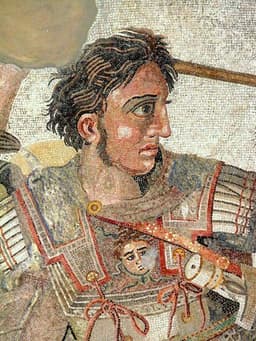
Alexander the Great
General · Ancient
85.2Total
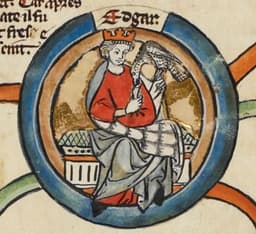
Edgar the Peaceful
Emperor · Medieval
53.5Total
Basic Information
Born
-356
943
Died
-323
975
Era
Ancient
Medieval
Nationality
Macedon
England
Occupation
General
Emperor
Civilization
Western
Western
Score Comparison
Military (10%)
95.0
21.2
Political (20%)
60.0
65.0
Influence (20%)
92.0
56.4
Legacy (20%)
90.0
49.2
Leadership (15%)
80.0
78.0
Strategy (15%)
92.0
35.7
TOTAL
85.2
53.5
Alexander the Great — Complete Timeline
334 BC
Battle of the Granicus RiverWar◆ Major
Alexander led his Macedonian army across the Hellespont into Asia Minor and defeated a Persian force under local satraps at the Granicus River. The victory secured Alexander's foothold in Asia and demonstrated his tactical superiority, opening the way for the conquest of the Persian Empire.
Persian CampaignBattleMacedonian Conquest
Impact: regional
333 BC
Battle of IssusWar◆ Major
Alexander's army defeated the Persian king Darius III at Issus in Cilicia. Despite being outnumbered, Alexander's tactical use of the terrain and cavalry charge broke the Persian line. Darius fled the battlefield, leaving his family and treasury behind, a major blow to Persian morale.
Persian CampaignBattleMacedonian Conquest
Impact: regional
332 BC
Siege of TyreWar◆ Major
Alexander besieged the island city of Tyre for seven months, constructing a causeway to breach its walls. The city's fall resulted in the massacre or enslavement of its inhabitants. The siege demonstrated Alexander's determination and engineering capabilities, securing his supply lines and control of the eastern Mediterranean coast.
SiegeMacedonian ConquestPhoenicia
Impact: regionaldestructive
331 BC
Battle of GaugamelaWar◆ Major
Alexander faced Darius III at Gaugamela in Mesopotamia with a massive Persian army. Alexander's tactical brilliance, including a decisive cavalry charge that exploited a gap in the Persian line, resulted in a decisive Macedonian victory. Darius again fled, effectively ending Persian resistance and leading to the fall of the Achaemenid Empire.
Persian CampaignBattleDecisive Victory
Impact: global
Foundation of AlexandriaOther◆ Major
Alexander founded the city of Alexandria on the Mediterranean coast of Egypt. He personally selected the site and oversaw the initial planning. Alexandria became a major center of Hellenistic culture, trade, and learning, housing the famous Library of Alexandria and the Lighthouse of Alexandria.
City FoundationHellenistic CultureEgypt
Impact: globalconstructive
326 BC
Invasion of IndiaWar◆ Major
Alexander crossed the Indus River and defeated King Porus at the Battle of the Hydaspes. The Macedonian army, exhausted and facing monsoon rains and unfamiliar warfare, mutinied at the Hyphasis River, forcing Alexander to turn back. This campaign marked the easternmost extent of his conquests.
Indian CampaignBattleMutiny
Impact: regional
Edgar the Peaceful — Complete Timeline
959 AD
Coronation as King of EnglandPolitical Action◆ Major
Edgar succeeded his brother Eadwig as King of England. His reign was marked by stability and the consolidation of monastic reform under Dunstan.
Impact: nationalconstructive
970 AD
Naval defense reformsReform
Edgar organized a standing navy and divided England into naval districts to defend against Viking raids. This created a period of peace and security along the coasts.
Impact: nationalconstructive
Council of WinchesterCultural◆ Major
Edgar convened the Council of Winchester, which established the Regularis Concordia, a code for monastic life. This standardized Benedictine practices across England.
Impact: nationalconstructive
Expert Analysis
Alexander the Great vs Edgar the Peaceful
# The Conqueror and the Peacemaker: Alexander the Great and Edgar the Peaceful
On a summer morning in 331 BCE, Alexander of Macedon stood before the vast army of Darius III at Gaugamela, his cavalry poised to strike at the heart of the Persian Empire. The air trembled with the war cries of tens of thousands. A millennium and a half later, in 970 CE, King Edgar of England sailed his fleet of warships around the coast of Wales, his navy gliding through calm waters, a demonstration of power that required no battle at all. Two rulers, both kings, both Western, yet their names evoke utterly different worlds: one synonymous with conquest, the other with calm. What drove a man to die at thirty-two, having never lost a battle, while another died at thirty-two having never fought one?
Origins
Alexander was born in 356 BCE into a kingdom forged by his father, Philip II, who had transformed Macedon from a Balkan backwater into a military powerhouse. His mother, Olympias, filled his childhood with tales of Achilles, his supposed ancestor. Aristotle tutored him in philosophy, science, and statecraft. Alexander inherited not just a throne but a vision: the conquest of Persia, the ancient enemy of Greece. His world was one of ambition, violence, and the belief that a man could reshape the known world through sheer will.
Edgar, born in 943 CE, inherited a kingdom already broken. England had suffered decades of Viking raids, weak kings, and shifting alliances. His uncle Edmund had fought to reclaim lost lands; his brother Eadwig had nearly undone that work through scandal and incompetence. Edgar grew up not in the shadow of Achilles but in the shadow of the monastery, where the great reformer Dunstan taught that a king’s duty was not glory but order. His world was one of survival, consolidation, and the quiet art of making peace last.
Rise to Power
Alexander became king at twenty, after Philip’s assassination. His first act was to crush rebellions in Greece, razing Thebes to the ground as a warning. Then, with an army of perhaps 40,000 men, he crossed into Asia Minor. Within three years, he had defeated Darius at Issus and taken Egypt without a fight. At Gaugamela in 331 BCE, his tactical genius—a feigned retreat followed by a cavalry charge into the Persian center—shattered the last hope of the Achaemenid Empire. He was twenty-five years old, master of the largest empire the world had ever seen.
Edgar became king at sixteen, but his path was slower. His brother Eadwig had exiled Dunstan and alienated the nobles. Edgar recalled Dunstan, made him Archbishop of Canterbury, and built his rule on alliance with the Church. He did not conquer; he convinced. He did not destroy; he unified. By the time of his coronation in 959 CE, England was already stable. His reign was not a series of battles but a series of councils, charters, and quiet reforms.
Leadership & Governance
Alexander’s leadership was the art of the impossible. He marched his men through the Hindu Kush, across the Gedrosian desert, and into the monsoon rains of India. He won every battle—from the Granicus to Hydaspes—by outthinking his enemies, using combined arms, and leading from the front. He was wounded repeatedly, once taking an arrow in the lung. But his political wisdom lagged behind his military genius. He tried to fuse Greek and Persian cultures, marrying a Persian princess and adopting Persian court rituals, but his Macedonian generals resented it. He executed his own friend Parmenion on suspicion of treason. He never built lasting institutions; his empire was a personal conquest, not a state.
Edgar’s leadership was the art of the sustainable. He convened the Council of Winchester in 970 CE, which produced the Regularis Concordia, a code that standardized monastic life across England. This was not a battle plan but a blueprint for stability. He organized a standing navy, dividing England into naval districts to defend against Viking raids—a system that protected the coast without constant warfare. His reign saw no major rebellions, no foreign invasions, no civil wars. He was not a conqueror but a manager, and his management was so effective that his era became known as the “Peace of Edgar.”
Triumph & Tragedy
Alexander’s greatest moment was Gaugamela, where he proved that a smaller, better-led force could destroy an empire. His greatest tragedy was his own ambition. At thirty-two, after years of marching, drinking, and brooding, he died in Babylon—some say of fever, some say of poison. His empire did not outlive him. His generals carved it up within a generation. His son was murdered as a child. He left behind no heir, no system, no peace.
Edgar’s greatest moment was the peaceful demonstration of his naval power around Wales in 970 CE, where eight kings rowed his barge on the River Dee—a symbolic submission that required no bloodshed. His greatest tragedy was his early death at thirty-two, in 975 CE, just as his reforms were taking root. But unlike Alexander, his work endured. The Regularis Concordia shaped English monasticism for centuries. His naval system became the foundation of the English fleet. His reign of peace gave England a generation of stability that allowed its culture to flourish.
Character & Destiny
Alexander was driven by a restless, almost divine hunger. He wept when there were no more worlds to conquer. He believed himself the son of Zeus, and he lived as if death were a distant rumor. His personality—charismatic, ruthless, brilliant, unstable—shaped his decisions at every turn. He could inspire men to march to the ends of the earth, but he could not inspire them to build a lasting home.
Edgar was driven by a quieter ambition: the desire to see England whole. He was called “the Peaceful” not because he was weak but because he understood that power is most effective when it is not used. His personality—patient, diplomatic, devout—shaped a reign of consolidation. He did not seek to be remembered; he sought to be effective. And in that, he succeeded where Alexander failed.
Legacy
Alexander’s legacy is immense but ambiguous. He spread Hellenistic culture from Egypt to India, founding cities like Alexandria that became centers of learning for centuries. His tactics are still studied in military academies. But his empire vanished, and his name became a warning: that conquest alone cannot build a civilization.
Edgar’s legacy is quieter but more solid. He is remembered as a king who brought peace to a fractured land. The Regularis Concordia influenced English monasticism for centuries. His naval reforms laid the groundwork for England’s future as a sea power. He is not a name that echoes through history like Alexander’s, but his England—unified, stable, and governed by law—was the foundation upon which later kings would build.
Conclusion
Standing on the deck of his warship, watching the Welsh coast glide by, Edgar would have known that his reign would never be sung by poets. He would never be called “the Great.” But perhaps he understood something that Alexander never did: that the greatest conquest is not of lands but of time. Alexander conquered the world and lost it; Edgar conquered nothing and built a kingdom. In the end, the conqueror’s name is shouted across the centuries, but the peacemaker’s work is the ground we walk on.
Rankings
🥇
Alexander the GreatLeader
Mil: 95.0Pol: 60.0Inf: 92.0
85.2
🥈
Edgar the Peaceful
Mil: 21.2Pol: 65.0Inf: 56.4
53.5
+31.7 behind
How This Comparison Works
Algorithm
Each figure is scored on 6 dimensions (0—100 scale) based on structured historical data: Military (10%), Political (20%), Influence (20%), Legacy (20%), Leadership (15%), Strategy (15%). The weighted total produces the final ranking.
Data Sources
Scores are computed from structured sub-indicators in the database. Scale factors adjust for era (Ancient ×0.85, Modern ×1.0) and civilization size (Eastern ×1.05, Other ×0.80) to account for differences in population and military scale.
Maximum 3 Figures
Comparisons are limited to 2—3 figures to ensure readability and statistical meaningfulness.
Error Margins
±5 points per dimension — Sub-scores are derived from historical records with inherent uncertainty. Two figures within 5 points on a dimension should be considered roughly equivalent in that area.
Total Score Accuracy
±3 points overall — The weighted combination of 6 dimensions produces a total score with approximately ±3 points of uncertainty. Differences of less than 3 points are not statistically significant— the figures are effectively tied.
Known Limitations
- Historical records are incomplete and uneven across civilizations
- Figures from oral-tradition societies may be underrepresented
- Occupation labels can misclassify multi-role figures
- Scores measure capability and impact, not moral character
- Quantitative scoring is a comparison tool, not absolute truth
Capability Radar
Military (10%) — Battles & Warfare
Battles
98
10
Win Rate
99
10
Expansion
99
10
Political (20%) — Governance & Reform
Reform
75
70
Diplomacy
80
70
Economy
70
65
Influence (20%) — Cultural & Global Reach
Cultural
95
40
Global
95
20
Legacy (20%) — Historical Impact
Historical
98
45
Longevity
95
40
Leadership (15%) — Power & Stability
Tenure
60
65
Stability
55
75
Strategy (15%) — Tactics & Innovation
Strategy
98
15
Tactics
99
10
Reform
85
20
Similar Comparisons
Comments & Discussion
The Sun-Devourer6/16/2026
Alexander wasn't just a conqueror; he was a walking demographic disaster. Gaugamela saw 40,000 Persians die for his glory. Edgar's "naval demonstration" was basically a tax-funded yacht parade. History romanticizes Alexander's bloodlust while ignoring that Edgar's peaceful reign literally rebuilt England's shattered economy. Edgar was the competent administrator; Alexander was a thrill-seeker who left a power vacuum that his generals filled with corpses for decades. Give me the man who fixed coi
沉默的统计员6/16/2026
数据不说谎:亚历山大统治13年,横跨三个大洲,但疆域在他死后10年内全部分裂。埃德加在位16年,英格兰统一稳定,修道院数量翻倍,货币改革让英镑保持纯度至诺曼征服。征服者的荣耀是短暂的烟花,和平者的遗产是地基。亚历山大是个完美的破坏者,埃德加才是真正的建造者。历史课本偏爱暴烈的英雄,但数字永远站在安静的成功者这边。
Legionary's Ghost6/16/2026
You're all missing the point. Alexander didn't conquer for administration; he conquered for immortality. His troops followed him because he was the first onto every breach, the one who took an arrow in the lung at Multan. Edgar never saw a man die in front of him in combat. Alexander's legacy isn't in borders, but in the cities he founded—Alexandria survived for a millennium. Edgar's monasteries? Burned by Vikings 50 years after his death. Alexander's empire was built in bone, but bone endures l
长安刀客6/16/2026
古典学者要说句公道话:亚历山大固然伟大,但他征服的波斯帝国本就摇摇欲坠,而埃德加的英格兰是从灭国边缘拉回来的。埃德加面对的是维京入侵、王权崩解、教会腐败三位一体,他用海军威慑、法律统一和宗教改革三招化解,没打一场大战。这位“和平王”的外交手腕比任何骑兵冲锋都难。亚历山大是天才赌徒,埃德加是冷静棋手——赌徒会输光,棋手才能赢到最后。
Wessex Chronicler6/16/2026
Revisionist nonsense. Edgar’s "peace" was built on his father’s blood and his uncle’s bones. Edmund fought five major battles against the Vikings before Edgar inherited a pacified kingdom. Alexander forged his own peace from scratch. Edgar was a fortunate son who happened to rule during a Viking lull. When the next wave hit under Aethelred, England collapsed. Alexander’s conquests forged a Hellenistic world that lasted 300 years. Edgar’s reign was an intermission between disasters, not a golden