Loading...
Edgar the Peaceful vs Qin Shi Huang
Qin Shi Huang leads by 31.7 pts · 2 figures compared
…
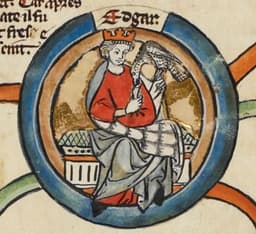
Edgar the Peaceful
Emperor · Medieval
53.5Total
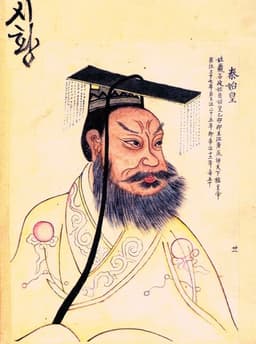
Qin Shi Huang
Emperor · Ancient
85.2Total
Basic Information
Born
943
-259
Died
975
-210
Era
Medieval
Ancient
Nationality
England
China
Occupation
Emperor
Emperor
Civilization
Western
Eastern
Score Comparison
Military (10%)
21.2
80.0
Political (20%)
65.0
90.0
Influence (20%)
56.4
85.0
Legacy (20%)
49.2
90.0
Leadership (15%)
78.0
78.0
Strategy (15%)
35.7
82.0
TOTAL
53.5
85.2
Edgar the Peaceful — Complete Timeline
959 AD
Coronation as King of EnglandPolitical Action◆ Major
Edgar succeeded his brother Eadwig as King of England. His reign was marked by stability and the consolidation of monastic reform under Dunstan.
Impact: nationalconstructive
970 AD
Naval defense reformsReform
Edgar organized a standing navy and divided England into naval districts to defend against Viking raids. This created a period of peace and security along the coasts.
Impact: nationalconstructive
Council of WinchesterCultural◆ Major
Edgar convened the Council of Winchester, which established the Regularis Concordia, a code for monastic life. This standardized Benedictine practices across England.
Impact: nationalconstructive
Qin Shi Huang — Complete Timeline
246 BC
Construction of the Mausoleum and Terracotta ArmyOther◆ Major
Qin Shi Huang commissioned a vast mausoleum complex near Xi'an, guarded by thousands of life-sized terracotta soldiers, horses, and chariots. The project employed hundreds of thousands of workers and reflected his obsession with immortality and imperial power.
Impact: global
230 BC
Conquest of the Six Warring StatesWar
From 230 to 221 BCE, Ying Zheng led the Qin state in a series of campaigns that conquered the Han, Zhao, Wei, Chu, Yan, and Qi states. This unified China under a single ruler for the first time, ending the Warring States period.
Impact: global
221 BC
Standardization of Writing, Currency, and MeasurementsReform◆ Major
Qin Shi Huang ordered the standardization of Chinese script, currency, and weights and measures across the unified empire. This facilitated administration, trade, and cultural integration, laying a foundation for future dynasties.
Impact: globalconstructive
Proclamation of the Qin DynastyPolitical Action
After conquering the last independent state, Ying Zheng declared himself Shi Huangdi (First Emperor), founding the Qin Dynasty. He adopted a new title to signify his supreme authority and initiated centralized imperial rule.
Impact: global
214 BC
Initiation of the Great Wall ConstructionOther◆ Major
Qin Shi Huang ordered the connection and extension of existing northern fortifications to create a unified defensive wall against nomadic Xiongnu raids. This project involved massive conscripted labor and became the precursor to the later Great Wall.
Impact: regional
213 BC
Burning of Books and Burying of ScholarsPolitical Action◆ Major
On the advice of Li Si, Qin Shi Huang ordered the burning of historical records and philosophical texts not aligned with Legalist doctrine. He also had 460 Confucian scholars buried alive to suppress dissent and consolidate ideological control.
Impact: nationaldestructive
Expert Analysis
edgar-the-peaceful-vs-qin-shi-huang
### The First Emperor and the Peaceful King: Two Visions of Power
On a windswept plain in northern China, an army of eight thousand terracotta soldiers stands silent guard over a tomb that has never been opened. Half a world away and a millennium later, a king of England sailed his fleet around the island of Wales each summer, a floating demonstration of royal authority that required no bloodshed. Qin Shi Huang and Edgar the Peaceful both inherited fractured kingdoms and left them transformed, yet their methods could hardly have been more different. One built his legacy on fire and iron, the other on ink and oaths. What drove such divergent paths?
### Origins
Qin Shi Huang was born into war. The year was 259 BC, and China was splintered into seven warring states, each vying for supremacy. His father was a Qin prince held hostage in the state of Zhao, and young Ying Zheng spent his earliest years as a pawn in a deadly game. When he ascended the throne of Qin at thirteen, his kingdom was already the most militarized of the seven, honed by centuries of border conflict and Legalist philosophy that valued order above all else.
Edgar, by contrast, was born in 943 AD into a kingdom that had already experienced unification under Alfred the Great. England was Christian, relatively stable, and recovering from generations of Viking raids. His father, King Edmund I, was assassinated when Edgar was only three, and his uncle Eadred ruled until Edgar’s brother Eadwig took the throne. The young prince grew up not in a war camp but in the shadow of a monastic revival led by figures like Dunstan, Archbishop of Canterbury. His world was one of scriptoriums and synods, not siege engines.
### Rise to Power
Ying Zheng’s path to supreme power was brutal and deliberate. At twenty-two, he crushed a rebellion led by his own regent, Lü Buwei, and began a decade-long campaign of conquest. From 230 to 221 BC, his armies rolled across China like a tide. The Han fell first, then the Zhao, the Wei, the Chu, the Yan, and finally the Qi. Each victory was followed by the systematic dismantling of the defeated state’s nobility and the imposition of Qin law. When the last king surrendered, Ying Zheng renamed himself Shi Huangdi—the First Emperor—and declared that his dynasty would last ten thousand generations.
Edgar’s rise was quieter but no less significant. He became king in 959 AD at age sixteen, after his brother Eadwig died under mysterious circumstances. Eadwig had quarreled with Dunstan and alienated the church, and Edgar’s first act was to recall the exiled archbishop. He did not conquer England; he inherited it. But he had to hold it together, and that required a different kind of strength.
### Leadership & Governance
The First Emperor governed through terror and uniformity. He standardized writing, currency, and measurements across his empire, ordering that all chariots have the same axle width so they could travel the same roads. He connected the northern fortifications into what would become the Great Wall, a project that cost hundreds of thousands of lives. In 213 BC, on the advice of his chancellor Li Si, he ordered the burning of all historical records and philosophical texts not aligned with Legalist doctrine, and buried alive 460 scholars who protested. His rule was efficient, centralized, and utterly ruthless.
Edgar governed through consensus and codification. In 970 AD, he convened the Council of Winchester, which produced the Regularis Concordia—a uniform rule for all English monasteries. This was not a decree from on high but a negotiated agreement between king, bishops, and abbots. He also reformed the navy, dividing England into naval districts and organizing a standing fleet that patrolled the coasts. Rather than building walls, he built ships. Rather than burning books, he standardized monastic practice. His nickname, “the Peaceful,” was earned not by avoiding conflict but by making it unnecessary.
### Triumph & Tragedy
Qin Shi Huang’s greatest triumph was the unification itself—an achievement that reshaped the world. But his greatest tragedy was the fragility of his creation. He died in 210 BC while searching for an elixir of immortality, and within three years the Qin Dynasty collapsed in rebellion. His mausoleum, with its terracotta army, was sealed and lost for over two thousand years.
Edgar’s triumph was the peace itself. For sixteen years, England knew no invasion, no civil war, no great famine. He was crowned twice—once at Bath, once at Kingston—in ceremonies that emphasized his role as a Christian king. But his tragedy was that his peace did not outlive him. When he died in 975 AD at age thirty-two, his sons Edward and Æthelred fought a succession war that opened the door for renewed Viking attacks. The stability Edgar had built crumbled within a generation.
### Character & Destiny
The First Emperor was paranoid, obsessive, and supremely confident. He believed he could conquer death itself. He traveled constantly, inspecting his realm and sleeping in a different palace each night to thwart assassins. His personality drove his decisions: the standardization, the wall, the book burnings, the tomb—all were acts of a man who wanted to control everything, including time.
Edgar was pragmatic, patient, and collaborative. He did not need to be the loudest voice in the room; he needed to be the one who made the room work. His personality shaped a reign of careful alliances and quiet reforms. He understood that power did not have to be demonstrated to be real.
### Legacy
Qin Shi Huang is remembered as the father of China—a figure of both awe and horror. His standardization of writing made Chinese civilization possible. His terracotta army is one of the world’s great archaeological wonders. But his cruelty is also legendary, and the word “tyrant” is never far from his name.
Edgar is remembered, if at all, as a footnote—a peaceful king in a violent age. His Regularis Concordia shaped English monasticism for centuries, and his naval reforms were a precursor to the Royal Navy. But he lacks the dramatic arc of conquerors and crusaders. He is a king who did his job well and then died young.
### Conclusion
Perhaps the difference between these two rulers is not one of character but of context. Qin Shi Huang faced a world of warring states, where survival demanded ruthlessness. Edgar faced a world of fragile unity, where survival demanded patience. One built an empire with blood and iron; the other built a kingdom with ink and oaths. Both saw their work undone after their deaths, but both left marks that endured. The First Emperor gave China its shape. The Peaceful King gave England a moment of grace. In the end, history remembers both—one with awe, the other with a quiet nod.
Rankings
🥇
Qin Shi HuangLeader
Mil: 80.0Pol: 90.0Inf: 85.0
85.2
🥈
Edgar the Peaceful
Mil: 21.2Pol: 65.0Inf: 56.4
53.5
+31.7 behind
How This Comparison Works
Algorithm
Each figure is scored on 6 dimensions (0—100 scale) based on structured historical data: Military (10%), Political (20%), Influence (20%), Legacy (20%), Leadership (15%), Strategy (15%). The weighted total produces the final ranking.
Data Sources
Scores are computed from structured sub-indicators in the database. Scale factors adjust for era (Ancient ×0.85, Modern ×1.0) and civilization size (Eastern ×1.05, Other ×0.80) to account for differences in population and military scale.
Maximum 3 Figures
Comparisons are limited to 2—3 figures to ensure readability and statistical meaningfulness.
Error Margins
±5 points per dimension — Sub-scores are derived from historical records with inherent uncertainty. Two figures within 5 points on a dimension should be considered roughly equivalent in that area.
Total Score Accuracy
±3 points overall — The weighted combination of 6 dimensions produces a total score with approximately ±3 points of uncertainty. Differences of less than 3 points are not statistically significant— the figures are effectively tied.
Known Limitations
- Historical records are incomplete and uneven across civilizations
- Figures from oral-tradition societies may be underrepresented
- Occupation labels can misclassify multi-role figures
- Scores measure capability and impact, not moral character
- Quantitative scoring is a comparison tool, not absolute truth
Capability Radar
Military (10%) — Battles & Warfare
Battles
10
85
Win Rate
10
90
Expansion
10
90
Political (20%) — Governance & Reform
Reform
70
95
Diplomacy
70
75
Economy
65
90
Influence (20%) — Cultural & Global Reach
Cultural
40
95
Global
20
85
Legacy (20%) — Historical Impact
Historical
45
95
Longevity
40
95
Leadership (15%) — Power & Stability
Tenure
65
70
Stability
75
65
Strategy (15%) — Tactics & Innovation
Strategy
15
85
Tactics
10
80
Reform
20
95
Similar Comparisons
Comments & Discussion
TerraCottaTruth6/17/2026
This comparison fundamentally misunderstands power. Qin Shi Huang ordered the burning of books and burial of scholars to control history itself - Edgar couldn't even control his own nobles without parading boats around Wales like a feudal showboat. One created standardized writing, currency, and measurements that lasted 2,000 years; the other is remembered mainly for not getting murdered. "Peaceful" just means you weren't important enough to kill.
铁血法家6/17/2026
拿秦始皇帝跟一个连维京人都打不利索的岛国村长比?大谬!嬴政灭六国、设郡县、筑长城、通驰道,哪一样不是血与火铸就的丰功伟业?那所谓"和平者"爱德加不过是侥幸生在英格兰相对安宁的年代,他那些绕岛巡游的把戏,跟始皇帝巡狩天下、勒石记功的气魄比,简直是萤火之于皓月。帝国的统一从来不是靠开会谈出来的!
RevisionistGlare6/17/2026
Let's be honest: both were military dictators who pacified their territories. Edgar's "naval pageants" were thinly veiled intimidation - same as Qin's terracotta army, just less durable. The real difference? Qin's standardization of script and measurements actually worked, while Edgar's "peace" fell apart within a generation under Æthelred the Unready. History romanticizes the quiet ones while demonizing the ambitious. Both shed blood; one just got better PR.
数据考据狂6/17/2026
从实质数据看,这场对比毫无悬念:秦朝统一后十年内动用民工超300万修筑工程,战时兵力峰值达百万级别;而埃德加统治时期英格兰常备军不超过5000人,其"舰队巡游"最多调动几十艘船。始皇帝改革涉及文字、货币、度量衡三大系统,影响人口约2000万;爱德加主要功绩是整理了几部法律文书。结论:两者治理规模完全不在一个维度。
ClassicsPolymath6/17/2026
The loaded term "Peaceful" glosses over Edgar's ecclesiastical reforms that centralized Church authority under royal control - a subtle but brutal power play Qin would've admired. Both rulers understood that controlling ideology was paramount: Qin burned competing philosophies, Edgar pried monasteries from local lords. The real divergence is temporal - Qin's Legalist absolutism collapsed with him, while Edgar's monastic alliance-building seeded England's medieval bureaucracy. Different tools, sa