Loading...
Duke of Wellington vs John Lambert
Duke of Wellington leads by 18.3 pts · 2 figures compared
…

Duke of Wellington
General · Modern
75.0Total
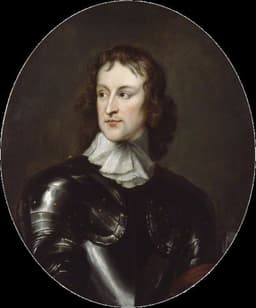
John Lambert
General · Modern
56.7Total
Basic Information
Born
1769
1619
Died
1852
1684
Era
Modern
Modern
Nationality
United Kingdom
England
Occupation
General
General
Civilization
Western
Western
Score Comparison
Military (10%)
78.0
70.0
Political (20%)
70.0
45.0
Influence (20%)
71.0
59.0
Legacy (20%)
80.0
50.0
Leadership (15%)
78.0
68.0
Strategy (15%)
72.0
55.0
TOTAL
75.0
56.7
Duke of Wellington — Complete Timeline
1803 AD
Battle of AssayeWar◆ Major
Wellington, then Sir Arthur Wellesley, led a British-Indian force to victory against the Maratha Confederacy at Assaye in India. Despite being outnumbered, his tactical skill secured British dominance in central India.
Maratha WarIndiaBattle
Impact: regional
1808 AD
Battle of VimeiroWar◆ Major
Wellington commanded British forces to defeat the French army at Vimeiro in Portugal. The victory halted the French invasion of Portugal and marked the beginning of the Peninsular War.
Peninsular WarPortugalBattle
Impact: regional
1815 AD
Battle of WaterlooWar
Wellington, commanding an Anglo-Allied army, defeated Napoleon Bonaparte at Waterloo in present-day Belgium. The battle ended the Napoleonic Wars and led to Napoleon's final exile to Saint Helena.
Napoleonic WarsBattleWaterloo
Impact: global
1828 AD
Prime Minister of the United KingdomPolitical Action◆ Major
Wellington served as Prime Minister of the UK from 1828 to 1830. His government passed the Catholic Relief Act 1829, granting Catholic emancipation, but his opposition to parliamentary reform led to his resignation.
PoliticsCatholic EmancipationReform
Impact: nationalconstructive
John Lambert — Complete Timeline
1648 AD
Battle of PrestonWar◆ Major
John Lambert commanded parliamentary forces at the Battle of Preston, defeating a Scottish royalist army. The victory helped secure the parliamentary cause in the Second English Civil War.
BattleEnglish Civil WarParliament
Impact: national
1653 AD
Drafted the Instrument of GovernmentPolitical Action◆ Major
John Lambert was the principal author of the Instrument of Government, the written constitution that established the Protectorate under Oliver Cromwell. The document created a Lord Protector and a Council of State, but was never fully implemented.
ConstitutionProtectorateCromwell
Impact: nationalconstructive
1662 AD
Exiled to GuernseyPolitical Action◆ Major
After the Restoration, John Lambert was tried for treason and exiled to the island of Guernsey. He spent the remainder of his life in captivity, never regaining political influence.
ExileRestorationPunishment
Impact: nationaltragic
Expert Analysis
Origins
Arthur Wellesley, the future Duke of Wellington, was born in Dublin in 1769 into the Anglo-Irish aristocracy. His family, the Wellesleys, were prominent but not wealthy; his father was the Earl of Mornington. Young Arthur attended Eton and later a military academy in France, though he showed little early promise. His elder brother Richard's political influence secured him a commission in the 73rd Foot in 1787. Wellington's early career was marked by service in the Netherlands and India, where he learned logistics and command.
John Lambert was born in 1619 in Kirkby Malham, Yorkshire, into a gentry family. His father was a lawyer, and Lambert studied law at the Inns of Court, but the English Civil War drew him to arms. He joined the Parliamentary army in 1642, serving under Thomas Fairfax. Lambert's legal background would later influence his political career.
Rise to Power
Wellington's rise came in India. At the Battle of Assaye in 1803, he commanded a British-Indian force of 4,500 against 40,000 Marathas. Despite being outnumbered, Wellington's aggressive tactics and disciplined troops won a decisive victory, earning him a knighthood. This campaign established his reputation as a commander of nerve and precision. Returning to Europe, he commanded in the Peninsular War from 1808, winning victories at Vimeiro (1808), Talavera (1809), and Salamanca (1812), driving French forces from Spain. His defensive prowess culminated at Waterloo in 1815, where his Anglo-Allied army, with Prussian aid, defeated Napoleon.
Lambert rose through the ranks of the New Model Army. At the Battle of Preston in 1648, he commanded Parliamentary forces against a Scottish royalist army, securing a victory that ended the Second English Civil War. His military success made him a trusted lieutenant of Oliver Cromwell. Politically, Lambert was a leading figure in the Commonwealth, serving in the Council of State. He drafted the Instrument of Government in 1653, the first written constitution in England, establishing the Protectorate with Cromwell as Lord Protector.
Leadership & Governance
Wellington's leadership was methodical and defensive. He drilled his troops relentlessly, emphasizing discipline and reserves. His governance as Prime Minister (1828-1830) was conservative but pragmatic: he passed the Catholic Relief Act 1829, granting Catholic emancipation, despite his own opposition, to prevent civil war. His later opposition to electoral reform led to his fall from power.
Lambert's leadership blended military command with constitutional innovation. He advocated for religious toleration and a republican commonwealth, but his drafting of the Instrument of Government concentrated power in Cromwell's hands. Lambert later opposed Cromwell's assumption of the title of king, leading to their estrangement. After Cromwell's death, Lambert attempted to maintain the Protectorate but was outmaneuvered by General Monck, who facilitated the Restoration.
Triumph & Tragedy
Wellington's greatest triumph was Waterloo (scoring 78.0 in military), where his defensive tactics and timely use of allied forces defeated Napoleon. His Peninsular campaigns liberated Spain and Portugal. His tragedy was his political career: as PM, his opposition to parliamentary reform led to riots and his resignation, and he was later blamed for the 'Duke of Wellington's victory' over the Reform Bill.
Lambert's triumph was the Instrument of Government, a pioneering constitutional document (scoring 55.0 in strategy). His military victories, especially Preston, secured parliamentary rule. His tragedy was the Restoration: after being exiled to Guernsey in 1662, he lived in captivity until his death in 1684, his work undone by the monarchy's return.
Character & Destiny
Wellington was cold, efficient, and pragmatic. He was known for his 'iron' discipline and lack of warmth, but his decisiveness won battles. His political rigidity, however, limited his influence. Lambert was an idealist and constitutionalist, but his loyalty to Cromwell and later his own ambition led to his downfall. He lacked the ruthless pragmatism needed to survive the Restoration.
Legacy
Wellington's legacy is immense: he is remembered as the victor of Waterloo, one of the greatest defensive commanders. His name adorns streets, buildings, and a university. His political legacy is mixed, but the Catholic Relief Act was a landmark. He scored 80.0 in legacy.
Lambert's legacy is more obscure but significant: the Instrument of Government influenced later constitutional thought, and his military role in the Civil War is studied. However, his scores (legacy 50.0) reflect his marginalization after the Restoration. He is a footnote compared to Wellington.
Conclusion
Wellington had greater impact. His total score of 75.0 against Lambert's 56.7 reflects his decisive role in European history. Wellington's military victories ended the Napoleonic Wars, reshaping the continent, while his political career, though flawed, produced lasting reform. Lambert's constitutional work was important but temporary; the Restoration swept it away. Wellington's legacy, from Waterloo to the modern British army, endures. Lambert, while a skilled general and thinker, never achieved the scale of influence that Wellington did. The Iron Duke's impact on global history is simply larger.
Rankings
🥇
Duke of WellingtonLeader
Mil: 78.0Pol: 70.0Inf: 71.0
75.0
🥈
John Lambert
Mil: 70.0Pol: 45.0Inf: 59.0
56.7
+18.3 behind
How This Comparison Works
Algorithm
Each figure is scored on 6 dimensions (0—100 scale) based on structured historical data: Military (10%), Political (20%), Influence (20%), Legacy (20%), Leadership (15%), Strategy (15%). The weighted total produces the final ranking.
Data Sources
Scores are computed from structured sub-indicators in the database. Scale factors adjust for era (Ancient ×0.85, Modern ×1.0) and civilization size (Eastern ×1.05, Other ×0.80) to account for differences in population and military scale.
Maximum 3 Figures
Comparisons are limited to 2—3 figures to ensure readability and statistical meaningfulness.
Error Margins
±5 points per dimension — Sub-scores are derived from historical records with inherent uncertainty. Two figures within 5 points on a dimension should be considered roughly equivalent in that area.
Total Score Accuracy
±3 points overall — The weighted combination of 6 dimensions produces a total score with approximately ±3 points of uncertainty. Differences of less than 3 points are not statistically significant— the figures are effectively tied.
Known Limitations
- Historical records are incomplete and uneven across civilizations
- Figures from oral-tradition societies may be underrepresented
- Occupation labels can misclassify multi-role figures
- Scores measure capability and impact, not moral character
- Quantitative scoring is a comparison tool, not absolute truth
Capability Radar
Military (10%) — Battles & Warfare
Battles
85
65
Win Rate
90
60
Expansion
75
40
Political (20%) — Governance & Reform
Reform
65
55
Diplomacy
80
50
Economy
60
45
Influence (20%) — Cultural & Global Reach
Cultural
75
35
Global
80
30
Legacy (20%) — Historical Impact
Historical
85
50
Longevity
80
40
Leadership (15%) — Power & Stability
Tenure
75
60
Stability
70
40
Strategy (15%) — Tactics & Innovation
Strategy
88
65
Tactics
92
70
Reform
70
55
Similar Comparisons
Comments & Discussion
No comments yet. Be the first to share your thoughts!