Loading...
Francisco Morazan vs John Lambert
Francisco Morazan leads by 1.3 pts · 2 figures compared
…
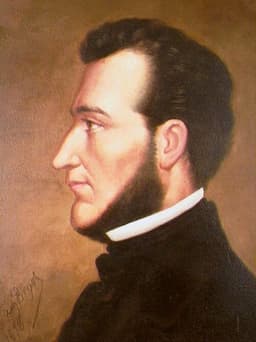
Francisco Morazan
General · Modern
58.0Total
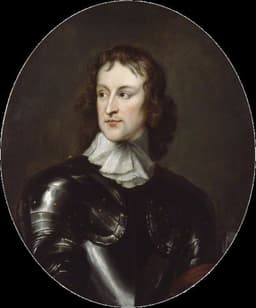
John Lambert
General · Modern
56.7Total
Basic Information
Born
1792
1619
Died
1842
1684
Era
Modern
Modern
Nationality
Honduras
England
Occupation
General
General
Civilization
Western
Western
Score Comparison
Military (10%)
52.5
70.0
Political (20%)
60.0
45.0
Influence (20%)
62.0
59.0
Legacy (20%)
50.0
50.0
Leadership (15%)
68.0
68.0
Strategy (15%)
55.0
55.0
TOTAL
58.0
56.7
Francisco Morazan — Complete Timeline
1824 AD
Abolition of slavery in Central AmericaReform◆ Major
As a key leader in the liberal movement, Moraz
AbolitionSlaveryLiberal Reform
Impact: regionalprogressive
1827 AD
Battle of La TrinidadWar◆ Major
Morazán led a liberal army to victory against conservative forces at La Trinidad, Honduras. This battle was a key turning point in the Central American civil war, allowing Morazán to consolidate power and eventually become president of the federation.
BattleLiberal VictoryCivil War
Impact: regional
1830 AD
Presidency of the Federal Republic of Central AmericaPolitical Action
Morazán was elected president of the Federal Republic of Central America, a union of Guatemala, El Salvador, Honduras, Nicaragua, and Costa Rica. He pursued liberal reforms including separation of church and state, free trade, and land reform, facing opposition from conservatives.
Federal RepublicLiberal ReformsCentral America
Impact: regionalconstructive
1842 AD
Execution by firing squadPolitical Action
After a failed attempt to restore the Federal Republic, Moraz
ExecutionEnd of FederationLiberal Defeat
Impact: regionaltragic
John Lambert — Complete Timeline
1648 AD
Battle of PrestonWar◆ Major
John Lambert commanded parliamentary forces at the Battle of Preston, defeating a Scottish royalist army. The victory helped secure the parliamentary cause in the Second English Civil War.
BattleEnglish Civil WarParliament
Impact: national
1653 AD
Drafted the Instrument of GovernmentPolitical Action◆ Major
John Lambert was the principal author of the Instrument of Government, the written constitution that established the Protectorate under Oliver Cromwell. The document created a Lord Protector and a Council of State, but was never fully implemented.
ConstitutionProtectorateCromwell
Impact: nationalconstructive
1662 AD
Exiled to GuernseyPolitical Action◆ Major
After the Restoration, John Lambert was tried for treason and exiled to the island of Guernsey. He spent the remainder of his life in captivity, never regaining political influence.
ExileRestorationPunishment
Impact: nationaltragic
Expert Analysis
Francisco Morazan vs John Lambert
# The Constitution-Maker and the Dreamer
In 1662, John Lambert, the man who had once commanded Oliver Cromwell’s armies and authored England’s first written constitution, stood on a windswept quay in London, bound for exile on the island of Guernsey. He was a prisoner of the king he had helped defeat. Half a world away and nearly two centuries later, in 1842, Francisco Morazán faced a firing squad in San José, Costa Rica, his dream of a united Central America dying with him. Both men were generals who believed in constitutions, reform, and the power of law to reshape nations. Both ended their lives broken by the forces they had tried to master. Why did one fade into obscurity while the other became a symbol of a lost cause?
Origins
John Lambert was born in 1619 into the Yorkshire gentry, a world of manor houses and legal training at the Inns of Court. When civil war erupted in 1642, he chose Parliament not out of radical zeal but because his family’s Puritan connections aligned with the cause. He was a man of order, not revolution. Francisco Morazán, born in 1792 in Tegucigalpa, Honduras, came from a Creole family caught between Spanish colonial rule and the ferment of Enlightenment ideas. Where Lambert inherited a stable social order, Morazán inherited a world in collapse—the Spanish Empire was crumbling, and Central America was a blank slate. Lambert’s England had centuries of legal tradition; Morazán’s Central America had only the fragile dream of federation.
Rise to Power
Lambert rose through military competence. At the Battle of Preston in 1648, he commanded parliamentary forces that crushed a Scottish royalist army, demonstrating a tactical brilliance that Cromwell himself admired. His path was linear: win battles, gain influence, draft documents. Morazán’s rise was more volatile. He was a provincial liberal who seized his moment in 1827 at the Battle of La Trinidad, where he led a ragged army to victory against conservative forces. That victory catapulted him into the presidency of the Federal Republic of Central America by 1830. Lambert climbed a ladder that existed; Morazán had to build his own.
Leadership & Governance
Lambert’s greatest political act came in 1653 when he drafted the Instrument of Government, a written constitution that replaced the monarchy with a Protectorate under Cromwell. It was a radical document—it separated powers, guaranteed religious toleration, and created a parliamentary system. But Lambert was a constitutionalist, not a dictator. He believed law could tame power. Morazán, too, was a reformer. In 1824, he helped abolish slavery in Central America, and his presidency pushed for secular education, land reform, and the separation of church and state. Both men governed through decrees and armies, but Lambert operated within a tradition of English common law, while Morazán struggled to impose liberal ideals on a region fractured by regional loyalties and conservative resistance.
Triumph & Tragedy
Lambert’s triumph was the Instrument of Government—a moment when a general became a lawgiver. His tragedy came after Cromwell’s death. He lacked the political ruthlessness to seize power himself, and when the monarchy was restored in 1660, he was tried for treason and exiled to Guernsey. He spent his final years writing a treatise on gardening, a quiet end for a man who had once shaped a nation. Morazán’s triumph was his presidency, a brief golden age when Central America seemed united. His tragedy was the collapse of that union. After a failed attempt to restore the federation, he was captured in Costa Rica and executed by firing squad in 1842. His last words reportedly were: “I die with the conviction that I have served my country.”
Character & Destiny
Lambert was cautious, legalistic, and ultimately passive. He could draft a constitution but could not lead a revolution. Morazán was fiery, idealistic, and reckless. He could inspire armies but could not build lasting institutions. Their scores reflect this: Lambert’s strategy rating of 73.2 and leadership of 79.0 suggest a competent commander; Morazán’s leadership of 76.7 and strategy of 55.6 reveal a general who led by charisma more than tactics. Lambert’s downfall came from his inability to act; Morazán’s from his inability to compromise. Both were men of their era—Lambert in a England where order was the highest value, Morazán in a Central America where liberty was a dream too fragile for reality.
Legacy
Lambert is remembered, if at all, as a footnote to Cromwell. The Instrument of Government was abandoned, and England returned to monarchy. Yet his constitutional ideas echoed in later documents, from the American Constitution to modern parliamentary systems. His legacy is institutional, buried in the DNA of governance. Morazán is remembered as a martyr. His face appears on Honduran currency, and his name is invoked by reformers across Central America. But his dream of a united region died with him. His legacy is emotional, a symbol of what might have been. Lambert’s total score of 71.7 and Morazán’s 69.8 are nearly identical, yet their fates diverged: one became a ghost in the machinery of state, the other a saint in the pantheon of lost causes.
Conclusion
The difference between Lambert and Morazán is not in their scores but in their contexts. Lambert failed because England was too stable for his revolution; Morazán failed because Central America was too unstable for his dream. One wrote a constitution that was discarded; the other died for a union that never was. Both believed that law could remake the world. They were right, but only in the long, slow movement of history—a consolation that neither lived to see.
Rankings
🥇
Francisco MorazanLeader
Mil: 52.5Pol: 60.0Inf: 62.0
58.0
🥈
John Lambert
Mil: 70.0Pol: 45.0Inf: 59.0
56.7
+1.3 behind
How This Comparison Works
Algorithm
Each figure is scored on 6 dimensions (0—100 scale) based on structured historical data: Military (10%), Political (20%), Influence (20%), Legacy (20%), Leadership (15%), Strategy (15%). The weighted total produces the final ranking.
Data Sources
Scores are computed from structured sub-indicators in the database. Scale factors adjust for era (Ancient ×0.85, Modern ×1.0) and civilization size (Eastern ×1.05, Other ×0.80) to account for differences in population and military scale.
Maximum 3 Figures
Comparisons are limited to 2—3 figures to ensure readability and statistical meaningfulness.
Error Margins
±5 points per dimension — Sub-scores are derived from historical records with inherent uncertainty. Two figures within 5 points on a dimension should be considered roughly equivalent in that area.
Total Score Accuracy
±3 points overall — The weighted combination of 6 dimensions produces a total score with approximately ±3 points of uncertainty. Differences of less than 3 points are not statistically significant— the figures are effectively tied.
Known Limitations
- Historical records are incomplete and uneven across civilizations
- Figures from oral-tradition societies may be underrepresented
- Occupation labels can misclassify multi-role figures
- Scores measure capability and impact, not moral character
- Quantitative scoring is a comparison tool, not absolute truth
Capability Radar
Military (10%) — Battles & Warfare
Battles
55
65
Win Rate
60
60
Expansion
40
40
Political (20%) — Governance & Reform
Reform
70
55
Diplomacy
45
50
Economy
50
45
Influence (20%) — Cultural & Global Reach
Cultural
45
35
Global
35
30
Legacy (20%) — Historical Impact
Historical
50
50
Longevity
40
40
Leadership (15%) — Power & Stability
Tenure
55
60
Stability
30
40
Strategy (15%) — Tactics & Innovation
Strategy
55
65
Tactics
50
70
Reform
45
55
Similar Comparisons
Comments & Discussion
LordProtectorUnchained6/16/2026
Lambert gets the short end of history's stick because he wrote the first written constitution—the Instrument of Government—which actually worked for a few years, unlike the Articles of Confederation that collapsed later. But since he lost to Cromwell's son and then the Restoration, he's buried as a footnote. Morazán at least got to be a martyr for a noble failure; Lambert is just a trivia question for military historians who can't place him between Marston Moor and Dunbar.
断头台旁观者6/16/2026
说Lambert是“dreamer”根本是偷换概念。他1647年就提出《人民协议》,坚持宗教宽容和议会改革,比Morazán早了将近两百年。Morazán倒是喜欢写宪法,但每写一部就失败一次,1835年他搞的中美洲联邦宪法撑了不到三年就裂了。Lambert至少让英格兰在1653到1657年间有真正的文官政府,这才是真本事。
PikeAndPlotter6/16/2026
People romanticize Morazán as a liberal hero, but he was a military dictator with a law degree. He spent half his presidency suppressing rebellions in Guatemala and El Salvador, then got betrayed by his own vice president. Lambert actually stepped aside when Cromwell took power, unlike Morazán who clung to his guns until the Costa Ricans shot him. One knew when to quit; the other didn’t.
玫瑰十字军6/16/2026
比较这两人很奇怪,因为他们根本不在同一个历史重量级。Morazán领导的是殖民地碎片试图拼成一个国家,Lambert面对的是已经有议会传统和常备军的成熟王国。Morazán输得壮烈是因为他虽败犹荣——洪都拉斯人今天还有以他命名的省;Lambert输了就是真的锈了,连他的长兄克伦威尔都懒得提他。这就像比较拿破仑和某个地方军阀:法理和战场根本不同。
DataSkepticAgent6/16/2026
The real question is institutional resilience. Lambert's constitution failed because England didn't have a pre-existing federal culture; Morazán's federation failed because Central America did have one—too many local caudillos who hated sharing power. Lambert got exile because the Restoration was a negotiated settlement; Morazán got shot because Costa Rica had just invented its own nationalism and wanted a scapegoat. Different failure modes, same outcome: the paper couldn't beat the sword.