Loading...
Duan Qirui vs Sitiveni Rabuka
Duan Qirui leads by 1.4 pts · 2 figures compared
…
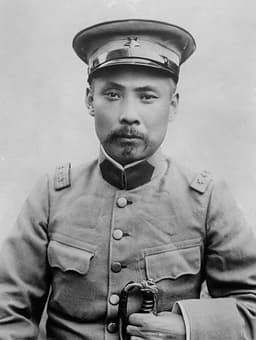
Duan Qirui
General · Modern
53.1Total
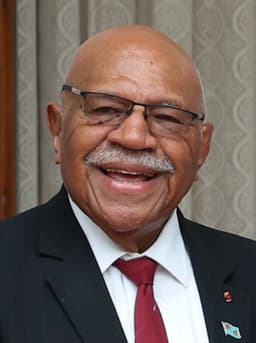
Sitiveni Rabuka
General · Modern
51.7Total
Basic Information
Born
1865
1948
Died
1936
—
Era
Modern
Modern
Nationality
China
Fiji
Occupation
General
General
Civilization
Eastern
Other
Score Comparison
Military (10%)
47.5
10.2
Political (20%)
53.8
60.0
Influence (20%)
53.3
53.3
Legacy (20%)
47.5
46.7
Leadership (15%)
62.0
85.0
Strategy (15%)
58.0
39.6
TOTAL
53.1
51.7
Duan Qirui — Complete Timeline
1919 AD
Resignation as Premier after the May Fourth MovementPolitical Action◆ Major
Duan Qirui resigned as Premier of the Republic of China in 1919 following the May Fourth Movement. The movement protested the weak response of the Chinese government to the Treaty of Versailles. Duan's government was blamed for failing to protect Chinese interests, leading to his resignation.
ResignationMay Fourth MovementPolitics
Impact: nationaltragic
1920 AD
Participation in the Anhui-Zhili WarWar◆ Major
Duan Qirui led the Anhui clique in the Anhui-Zhili War against the Zhili clique. The war was a major conflict in the Warlord Era. Duan's forces were defeated, leading to his resignation as Premier and the decline of the Anhui clique's power.
Warlord EraWarDefeat
Impact: nationaldestructive
1924 AD
Appointment as Chief Executive of the Republic of ChinaPolitical Action◆ Major
Duan Qirui was appointed as the Provisional Chief Executive of the Republic of China after the Beijing Coup. He headed a provisional government that attempted to unify the country but faced opposition from various warlords. His tenure was marked by political instability and military conflicts.
Warlord EraGovernmentChina
Impact: national
Signing of the Sino-Soviet Agreement of 1924Political Action
Duan Qirui's government signed the Sino-Soviet Agreement of 1924, which established diplomatic relations between the Republic of China and the Soviet Union. The agreement recognized Outer Mongolia as part of China but allowed Soviet influence. It was controversial and criticized by some Chinese nationalists.
DiplomacySoviet UnionTreaty
Impact: national
Sitiveni Rabuka — Complete Timeline
1987 AD
1987 Fijian Coup d'étatPolitical Action
Rabuka, as a colonel in the Fijian military, led a coup overthrowing the elected government of Timoci Bavadra. The coup was motivated by ethnic Fijian opposition to Indo-Fijian political influence. Rabuka declared Fiji a republic.
CoupMilitary InterventionEthnic Tension
Impact: nationaldestructive
1992 AD
1992 Election as Prime MinisterPolitical Action◆ Major
Rabuka transitioned from military leader to civilian politician, winning the 1992 general election as leader of the Fijian Political Party. He became Prime Minister, serving until 1999.
ElectionCivilian GovernmentPolitical Transition
Impact: national
1997 AD
1997 Constitution ReformReform◆ Major
Rabuka's government oversaw the adoption of a new constitution that removed ethnic-based voting and provided for a multi-ethnic government. The constitution aimed to reduce ethnic tensions and promote national unity.
ConstitutionReformEthnic Reconciliation
Impact: nationalconstructive
1999 AD
1999 General Election DefeatPolitical Action◆ Major
Rabuka's government was defeated in the general election by the Labour Party led by Mahendra Chaudhry. Rabuka stepped down as Prime Minister, marking the end of his first period in power.
Election DefeatGovernment ChangeChaudhry
Impact: national
2022 AD
2022 Return as Prime MinisterPolitical Action◆ Major
Rabuka led the People's Alliance to victory in the 2022 general election, forming a coalition government. He became Prime Minister again, 23 years after his previous tenure, promising democratic reforms.
ElectionReturn to PowerCoalition Government
Impact: national
Expert Analysis
Sitiveni Rabuka vs Duan Qirui
# The General Who Became Two Men
On a sweltering May morning in 1919, Duan Qirui sat in his Peking office and watched his world crumble. Students were flooding the streets, their placards denouncing the very government he led. Across the Pacific, nearly seven decades later, another colonel in another tropical capital faced a different kind of reckoning. Sitiveni Rabuka, still in his fatigues, had just toppled a government with a whisper of violence. One man resigned; the other seized power. But history, with its strange symmetries, would force both to confront the same question: Can a soldier ever truly govern?
Origins
Duan Qirui was born in 1865, the twilight of an empire. His father died when he was young, and his mother raised him in poverty in Hefei, Anhui province. The Qing dynasty was rotting from within, its Confucian order crumbling before Western guns and ideas. Duan found his escape in the military academies that the dynasty had reluctantly established, learning modern warfare from German instructors. He emerged not as a rebel but as a man of the system—a loyalist who believed in order, hierarchy, and the iron necessity of a strong state.
Sitiveni Rabuka, born in 1948, grew up in a Fiji that was still a British colony, a placid sugar island where ethnic divisions between indigenous Fijians and Indo-Fijians simmered beneath a veneer of colonial calm. His father was a farmer, his mother a homemaker. Rabuka too entered the military, but his training was in the British tradition—a professional, apolitical force. He rose through the ranks, a quiet officer who seemed destined for retirement, not revolution.
The difference in their origins is not merely geographic. Duan came of age in a civilization breaking apart, where the old moral order had failed and nothing had yet replaced it. Rabuka grew up in a world where colonial structures still held, and the question was not whether to tear them down, but who would inherit them.
Rise to Power
Duan Qirui's path was forged in blood. He served under Yuan Shikai, the man who held China together after the 1911 revolution, and learned the art of military politics in the crucible of the early Republic. When Yuan died in 1916, Duan inherited the Beiyang Army's most loyal divisions. He became premier in 1917, ruling through a fragile coalition of warlords and parliamentarians. Power came to him not through a single coup but through a slow accumulation of force and favor—a process that left him perpetually dependent on allies who could turn against him at any moment.
Rabuka's rise was sudden, almost accidental. In 1987, Fiji's first Indo-Fijian-led government was elected, and indigenous Fijians feared dispossession. Rabuka, then a colonel, staged a coup on May 14. He walked into Parliament, ordered the prime minister and his cabinet to leave, and declared himself head of state. It was a crude seizure, lacking the sophisticated maneuvering of a Chinese warlord. Yet it worked—at least for a time.
Duan's rise was a long, grinding ascent through a decaying system; Rabuka's was a violent break with a functioning one. One man was a product of chaos; the other created it.
Leadership & Governance
Duan Qirui governed as a warlord in civilian clothes. His military score of 62.4 and strategy of 81.1 reflect a man who understood war but could never quite win peace. He fought the Anhui-Zhili War in 1920, a fratricidal conflict that tore apart the Beiyang clique he had helped build. His political score of 65.0 is higher than his military, yet he never mastered the art of coalition. He signed the Sino-Soviet Agreement of 1924, recognizing the Soviet Union and securing Chinese sovereignty over the Chinese Eastern Railway—a diplomatic victory that satisfied no one. His leadership score of 80.4 suggests charisma, but charisma without institutions is a candle in a storm.
Rabuka's numbers tell a different story: military 19.9, political 72.0. He was a poor soldier but a skilled politician. After his 1987 coup, he faced international isolation and internal unrest. He transitioned to civilian rule, winning the 1992 election as a democrat. His greatest achievement was the 1997 constitution reform, which abolished ethnic-based voting and created a multiracial democracy. It was a remarkable reversal: the man who had overthrown democracy became its architect. His leadership score of 77.4 reflects this adaptability, his strategy of 44.6 the impulsiveness of his early career.
Duan governed by force and failed; Rabuka governed by persuasion and succeeded—at least for a while.
Triumph & Tragedy
Duan's greatest moment was also his deepest failure. In 1924, after the Beijing Coup, he was appointed Provisional Chief Executive of the Republic of China. He had reached the pinnacle of Chinese politics. But his government was a house of cards: the Anhui clique was shattered, the Zhili clique was ascendant, and the Kuomintang was rising in the south. He resigned in 1926, a broken man, and died in relative obscurity in 1936. His tragedy was that he was a capable leader in an era that demanded a visionary.
Rabuka's triumph came in 2022, when he returned as prime minister at the age of 74. He had been defeated in 1999, his reforms undone by successors. But Fiji's democracy had matured, and Rabuka had changed. He campaigned on reconciliation, won, and formed a coalition. His tragedy is more subtle: he will always be remembered as the man who overthrew democracy, no matter how many constitutions he wrote.
Character & Destiny
Duan Qirui was a man of rigid principles in a flexible world. He believed in a unified China under a strong central government, but he lacked the ruthlessness to impose it. He was, in the words of one historian, "a man who could not be bought but could not be trusted." His personality—proud, stubborn, loyal to a fault—made him a poor warlord. He could not betray his allies, and so his allies betrayed him.
Rabuka was a pragmatist. He staged a coup out of fear, then spent decades trying to undo its consequences. He was not a visionary; he was a man who learned from his mistakes. His character allowed him to evolve, to admit error, to seek forgiveness. That evolution is his greatest legacy.
Legacy
Duan Qirui's legacy score of 66.8 is a quiet number. He is remembered, if at all, as a footnote in the Warlord Era—a bridge between the Qing and the Republic, a man who failed to build what China needed. His influence score of 74.8 suggests a deeper impact: he kept the Beiyang Army intact long enough for the Kuomintang to inherit it. But the Republic he served died with him.
Rabuka's legacy score of 61.2 is lower, yet his influence score of 70.3 reflects a more ambiguous impact. He is a villain to some, a hero to others. His 1997 constitution remains the foundation of Fijian democracy, even if it has been amended. His return in 2022 is a testament to the possibility of redemption—or at least, of second chances.
Conclusion
Duan Qirui and Sitiveni Rabuka were both soldiers who became rulers, but they lived in different worlds. Duan's China was a civilization in collapse, where the old certainties had vanished and nothing had replaced them. Rabuka's Fiji was a small island nation struggling to reconcile its colonial past with its multiracial future. One man failed because he could not adapt; the other succeeded because he did.
Perhaps the deepest difference lies in what they believed. Duan believed in order, but order without justice is tyranny. Rabuka believed in power, but power without legitimacy is mere force. One died in obscurity; the other lives to see his legacy rewritten. The question for every general who becomes a statesman remains the same: Can you learn to govern the people you once commanded? The answer, as these two lives show, depends on whether you are willing to become a different kind of man.
Rankings
🥇
Duan QiruiLeader
Mil: 47.5Pol: 53.8Inf: 53.3
53.1
🥈
Sitiveni Rabuka
Mil: 10.2Pol: 60.0Inf: 53.3
51.7
+1.4 behind
How This Comparison Works
Algorithm
Each figure is scored on 6 dimensions (0—100 scale) based on structured historical data: Military (10%), Political (20%), Influence (20%), Legacy (20%), Leadership (15%), Strategy (15%). The weighted total produces the final ranking.
Data Sources
Scores are computed from structured sub-indicators in the database. Scale factors adjust for era (Ancient ×0.85, Modern ×1.0) and civilization size (Eastern ×1.05, Other ×0.80) to account for differences in population and military scale.
Maximum 3 Figures
Comparisons are limited to 2—3 figures to ensure readability and statistical meaningfulness.
Error Margins
±5 points per dimension — Sub-scores are derived from historical records with inherent uncertainty. Two figures within 5 points on a dimension should be considered roughly equivalent in that area.
Total Score Accuracy
±3 points overall — The weighted combination of 6 dimensions produces a total score with approximately ±3 points of uncertainty. Differences of less than 3 points are not statistically significant— the figures are effectively tied.
Known Limitations
- Historical records are incomplete and uneven across civilizations
- Figures from oral-tradition societies may be underrepresented
- Occupation labels can misclassify multi-role figures
- Scores measure capability and impact, not moral character
- Quantitative scoring is a comparison tool, not absolute truth
Capability Radar
Military (10%) — Battles & Warfare
Battles
55
5
Win Rate
50
5
Expansion
40
5
Political (20%) — Governance & Reform
Reform
55
50
Diplomacy
50
45
Economy
40
40
Influence (20%) — Cultural & Global Reach
Cultural
30
30
Global
20
20
Legacy (20%) — Historical Impact
Historical
45
40
Longevity
30
30
Leadership (15%) — Power & Stability
Tenure
60
55
Stability
30
35
Strategy (15%) — Tactics & Innovation
Strategy
65
10
Tactics
60
10
Reform
70
5
Similar Comparisons
Comments & Discussion
Rabaul's Reckoning6/16/2026
The comparison misses a key asymmetry: Rabuka actually *won* his power struggle. Duan's May Fourth collapse proved a civilian uprising could topple a warlord, while Rabuka's 1987 coup cemented military rule in Fiji for decades. Duan was a Beiyang general who couldn't control the streets; Rabuka was a rugby-playing colonel who controlled the entire islands by seizing parliament. One is a model of failed authoritarianism, the other of successful praetorian takeover. Two different games entirely.
Bamboo Spear Skeptic6/16/2026
别拿斐济的香蕉兵跟北洋正统比。段祺瑞在1916年控制中国北部五省兵力超过三十万,手上有日本借款七千五百万日元组建的参战军。拉布卡呢?他1987年政变时手上就七百个兵,靠的是民族煽动不是真正的军事实力。把中国长江以北的一代权臣跟南太平洋小岛的政变上校并列,是典型的历史文人的小国焦虑——拿弹丸岛国碰瓷帝国将军。
Classics Conundrum6/16/2026
Rabuka's later democratization arc is the real twist here. By 1997, he'd engineered a constitution that gave Indo-Fijians genuine political power, then peacefully handed over leadership in 1999. Duan Qirui? He died in 1936, still convinced the Beiyang clique's strongman politics was China's only salvation, refusing to acknowledge the Kuomintang's legitimacy. One repentant soldier who learned from his sins, one unrepentant general who doubled down. The comparison should be about moral evolution,
铁血书斋主6/16/2026
你们全看走眼了。段祺瑞最大的遗产不是枪杆子,是推动了中国第一个现代兵役制度——他1915年制定《陆军征募条例》,明确要求适龄男性必须服役三年,这是中国历史上首次全民义务兵役制。拉布卡有这种制度创新吗?没有,他只是搞了个种族主义的1990年宪法。段至少在中国军事现代化上留了实打实的制度脚印,拉布卡呢?留下的只有分裂的国家记忆。