Loading...
Duan Qirui vs Yitzhak Rabin
Yitzhak Rabin leads by 13.3 pts · 2 figures compared
…
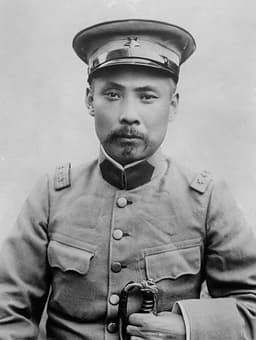
Duan Qirui
General · Modern
53.1Total
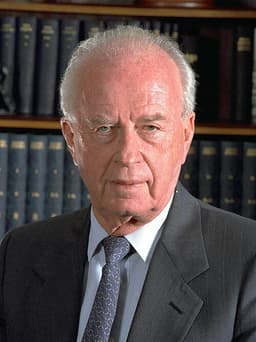
Yitzhak Rabin
General · Modern
66.4Total
Basic Information
Born
1865
1922
Died
1936
—
Era
Modern
Modern
Nationality
China
Israel
Occupation
General
General
Civilization
Eastern
Middle Eastern
Score Comparison
Military (10%)
47.5
61.7
Political (20%)
53.8
82.0
Influence (20%)
53.3
68.0
Legacy (20%)
47.5
55.0
Leadership (15%)
62.0
78.0
Strategy (15%)
58.0
55.0
TOTAL
53.1
66.4
Duan Qirui — Complete Timeline
1919 AD
Resignation as Premier after the May Fourth MovementPolitical Action◆ Major
Duan Qirui resigned as Premier of the Republic of China in 1919 following the May Fourth Movement. The movement protested the weak response of the Chinese government to the Treaty of Versailles. Duan's government was blamed for failing to protect Chinese interests, leading to his resignation.
ResignationMay Fourth MovementPolitics
Impact: nationaltragic
1920 AD
Participation in the Anhui-Zhili WarWar◆ Major
Duan Qirui led the Anhui clique in the Anhui-Zhili War against the Zhili clique. The war was a major conflict in the Warlord Era. Duan's forces were defeated, leading to his resignation as Premier and the decline of the Anhui clique's power.
Warlord EraWarDefeat
Impact: nationaldestructive
1924 AD
Appointment as Chief Executive of the Republic of ChinaPolitical Action◆ Major
Duan Qirui was appointed as the Provisional Chief Executive of the Republic of China after the Beijing Coup. He headed a provisional government that attempted to unify the country but faced opposition from various warlords. His tenure was marked by political instability and military conflicts.
Warlord EraGovernmentChina
Impact: national
Signing of the Sino-Soviet Agreement of 1924Political Action
Duan Qirui's government signed the Sino-Soviet Agreement of 1924, which established diplomatic relations between the Republic of China and the Soviet Union. The agreement recognized Outer Mongolia as part of China but allowed Soviet influence. It was controversial and criticized by some Chinese nationalists.
DiplomacySoviet UnionTreaty
Impact: national
Yitzhak Rabin — Complete Timeline
1967 AD
Chief of Staff during the Six-Day WarWar
As Chief of Staff of the Israel Defense Forces, Rabin commanded the Israeli military during the Six-Day War against Egypt, Jordan, and Syria. Israel captured the Sinai Peninsula, Gaza Strip, West Bank, East Jerusalem, and Golan Heights, reshaping the region.
Six-Day WarTerritorial ExpansionMilitary Victory
Impact: global
1993 AD
Signing of the Oslo AccordsPolitical Action
As prime minister, Rabin signed the Oslo Accords with PLO Chairman Yasser Arafat on the White House lawn. The agreement established the Palestinian Authority and set a framework for Palestinian self-governance in the West Bank and Gaza Strip.
Peace ProcessPalestiniansOslo
Impact: globalconstructive
1995 AD
Assassination at Peace RallyPolitical Action
Rabin was assassinated by Israeli extremist Yigal Amir after a peace rally in Tel Aviv. The assassination shocked Israel and the world, derailing the Oslo peace process and leading to a period of political instability.
AssassinationPeace ProcessPolitical Violence
Impact: globaltragic
Expert Analysis
Yitzhak Rabin vs Duan Qirui
# The General Who Became a Peacemaker: Duan Qirui and Yitzhak Rabin
On a September evening in 1995, Yitzhak Rabin stood before a crowd of 100,000 Israelis in Tel Aviv's Kings of Israel Square, singing a peace song. Moments later, three bullets from an Israeli extremist ended his life. Half a world away and seventy-six years earlier, another general—Duan Qirui—faced a different kind of reckoning: the fury of thousands of Chinese students marching through Beijing's streets, their cries against the Versailles Treaty forcing his resignation as Premier. One man died for peace; the other resigned because he could not prevent a nationalist uprising. Both were generals who became political leaders. Both sought order in chaotic times. Yet their fates diverged radically—not merely because of who they were, but because of the worlds they inhabited.
Origins
Duan Qirui was born in 1865, the son of a minor official in Anhui Province, at a time when the Qing Dynasty was crumbling under the weight of foreign encroachment and internal rebellion. He was educated in traditional Confucian classics but also trained in modern military science at the Tianjin Military Academy, where he studied German tactics. His world was one of warlords, foreign concessions, and a dying imperial order. Yitzhak Rabin, born in 1922 in Jerusalem to Jewish immigrants from Russia, grew up in a completely different crucible: the British Mandate of Palestine, where the dream of a Jewish homeland was being forged through labor, defense, and sheer will. Rabin's father was a socialist Zionist; his mother was a pioneering educator. Where Duan emerged from a collapsing empire, Rabin emerged from a people building a state.
Rise to Power
Duan's path to power was carved through the Beiyang Army, the most modern military force in late Qing China. He served as a protégé of Yuan Shikai, the strongman who briefly declared himself emperor after the 1911 Revolution. When Yuan died in 1916, Duan inherited command of the Anhui clique, one of several warlord factions that carved up China. His rise was a matter of military patronage and regional power—not popular mandate. Rabin's rise was equally martial but fundamentally different in context. He joined the Palmach, the elite strike force of the Jewish underground, and fought in Israel's War of Independence in 1948. By 1964, he was Chief of Staff of the Israel Defense Forces. His ascent was tied not to personal ambition but to the existential survival of a nation under constant threat.
Leadership & Governance
As a ruler, Duan Qirui was a pragmatist who believed in order above all. When he became Provisional Chief Executive in 1924 after the Beijing Coup, he tried to unify China through negotiation and constitutional reform. He signed the Sino-Soviet Agreement of 1924, recognizing the Soviet Union in exchange for Moscow's withdrawal from Outer Mongolia—a deal that pleased no one. His military strategy in the Anhui-Zhili War of 1920 was competent but ultimately failed against better-organized rivals. His leadership score of 80.4 reflects a man who knew how to command but not how to inspire a nation. Rabin, by contrast, governed with a strategic vision that evolved dramatically. As Chief of Staff during the Six-Day War of 1967, he orchestrated a stunning preemptive victory that captured the Sinai, Gaza, the West Bank, and the Golan Heights. But as Prime Minister, he came to understand that military triumph could not bring lasting security. His Oslo Accords of 1993 were a gamble—a general betting that peace with the PLO was the only way to save Israel from endless occupation. His political score of 77.7 and leadership score of 83.4 reflect a man who grew beyond his uniform.
Triumph & Tragedy
Duan's greatest moment was also his most tragic: the May Fourth Movement of 1919. As Premier, he had secretly agreed to let Japan take over German concessions in Shandong Province as part of the Treaty of Versailles. When Chinese students learned of this, they erupted in protests that ignited a nationwide cultural and political awakening. Duan resigned, but his name became synonymous with the old, corrupt order that the movement sought to overthrow. His tragedy was that he was a capable administrator in an era that demanded revolutionaries. Rabin's triumph was the Oslo Accords, signed on the White House lawn in 1993 with Yasser Arafat. It was a moment of historic reconciliation that earned him the Nobel Peace Prize. His tragedy came two years later, when an Israeli extremist killed him at a peace rally. The assassin's bullet was a brutal reminder that peace, like war, has its martyrs.
Character & Destiny
Duan Qirui was stubborn, cautious, and deeply conservative. He believed in strong central authority but lacked the charisma or ideological vision to build it. His strategy score of 81.1 suggests he could plan campaigns, but his total score of 71.8 reflects a life of missed opportunities. He died in 1936 in Shanghai, a forgotten figure in a China that had moved on. Rabin was blunt, gruff, and famously laconic. He was not a natural politician—he was a soldier who learned to negotiate. His assassination transformed him into a symbol of the peace process itself. In death, he achieved what he could not in life: a legacy that transcended politics.
Legacy
Today, Duan Qirui is a footnote in Chinese history—a warlord who tried to hold together a shattered republic but failed. His legacy score of 66.8 reflects a man remembered, if at all, as a symbol of the warlord era's futility. Rabin is a national icon in Israel, his name etched into the country's collective memory. His legacy score of 68.8 is modest for such a figure, perhaps because the peace he sought remains elusive. But his death gave his cause a moral clarity that Duan's resignation never could.
Conclusion
What separates these two generals is not their military skill or their political acumen. It is the historical moment in which they operated. Duan Qirui governed a civilization in collapse, where the old order was dying and no new one had yet been born. Rabin governed a young nation fighting for its survival, where the future was still unwritten. One man tried to preserve what was; the other tried to create what could be. In the end, both were consumed by the very forces they sought to control. But Rabin's death gave his life meaning in a way that Duan's long, quiet decline never could. The difference between a footnote and a monument is not always greatness—sometimes it is simply the courage to keep singing when the bullets are coming.
Rankings
🥇
Yitzhak RabinLeader
Mil: 61.7Pol: 82.0Inf: 68.0
66.4
🥈
Duan Qirui
Mil: 47.5Pol: 53.8Inf: 53.3
53.1
+13.3 behind
How This Comparison Works
Algorithm
Each figure is scored on 6 dimensions (0—100 scale) based on structured historical data: Military (10%), Political (20%), Influence (20%), Legacy (20%), Leadership (15%), Strategy (15%). The weighted total produces the final ranking.
Data Sources
Scores are computed from structured sub-indicators in the database. Scale factors adjust for era (Ancient ×0.85, Modern ×1.0) and civilization size (Eastern ×1.05, Other ×0.80) to account for differences in population and military scale.
Maximum 3 Figures
Comparisons are limited to 2—3 figures to ensure readability and statistical meaningfulness.
Error Margins
±5 points per dimension — Sub-scores are derived from historical records with inherent uncertainty. Two figures within 5 points on a dimension should be considered roughly equivalent in that area.
Total Score Accuracy
±3 points overall — The weighted combination of 6 dimensions produces a total score with approximately ±3 points of uncertainty. Differences of less than 3 points are not statistically significant— the figures are effectively tied.
Known Limitations
- Historical records are incomplete and uneven across civilizations
- Figures from oral-tradition societies may be underrepresented
- Occupation labels can misclassify multi-role figures
- Scores measure capability and impact, not moral character
- Quantitative scoring is a comparison tool, not absolute truth
Capability Radar
Military (10%) — Battles & Warfare
Battles
55
65
Win Rate
50
70
Expansion
40
50
Political (20%) — Governance & Reform
Reform
55
65
Diplomacy
50
85
Economy
40
60
Influence (20%) — Cultural & Global Reach
Cultural
30
55
Global
20
70
Legacy (20%) — Historical Impact
Historical
45
75
Longevity
30
60
Leadership (15%) — Power & Stability
Tenure
60
70
Stability
30
40
Strategy (15%) — Tactics & Innovation
Strategy
65
75
Tactics
60
60
Reform
70
55
Similar Comparisons
Comments & Discussion
RabinThePeacemaker6/16/2026
Rabin's legacy isn't his military career but his assassination for pursuing Oslo Accords with the PLO. He had the guts to shake Arafat's hand in 1993, knowing it could get him killed. Duan Qirui couldn't even hold onto power when students protested Versailles—history remembers him as a weak warlord who caved to foreign pressures. Rabin died for his principles; Duan just resigned.
段祺瑞观察员6/16/2026
拿段祺瑞跟拉宾比,简直是抬举段祺瑞了。段在1919年五四运动时下令镇压学生,结果被迫下台,而他所谓的“爱国”不过是维护北洋军阀利益罢了。拉宾至少敢在1995年面对十万以色列人唱和平之歌。段祺瑞一辈子都在军阀混战中打转,拉宾却是从战场走向谈判桌的革新者。段祺瑞连个稳定的国家都没建立起来,还谈什么和平?
DataSkeptic_426/16/2026
The comparison fails on scale. Rabin faced 100,000 protesters in a country of 5 million—that's 2% of Israel's population. Duan confronted thousands of students in China's 400 million—less than 0.001% mobilization. Rabin was assassinated by one man with a pistol; Duan's political demise came from institutional collapse. Statistically, Rabin's peace movement had far more demographic impact. Duan was just a footnote in China's chaotic transition.
历史辩证者6/16/2026
段祺瑞在1916-1920年执政期间,至少维持了北洋政府的表面统一,而拉宾在1974-1977年首次任总理时,以色列正陷入1973年战争后的混乱。但拉宾敢于1993年签署奥斯陆协议,承认巴解组织,这在当时是革命性的一步。段祺瑞呢?他在1917年还试图复辟帝制,失败后只会靠日本借款苟延残喘。一个向前看,一个向后看,高下立判。
WarlordCritic6/16/2026
Duan Qirui was no statesman—he was a warlord who sold out China's interests to Japan through the Nishihara Loans of 1917-1918, mortgaging China's railways and mines for personal power. Rabin, despite his iron fist against Palestinians in the 1987 First Intifada, eventually recognized the futility of military solutions. One died a martyr for peace; the other died in obscurity in 1936, remembered as a failed caretaker of a dying regime. Context matters, but so do choices.