Loading...
Duan Qirui vs Muhammadu Buhari
Duan Qirui leads by 1.6 pts · 2 figures compared
…
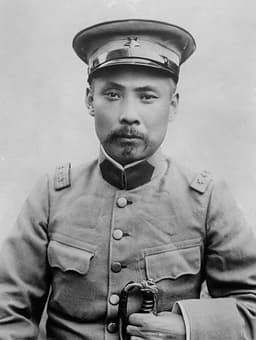
Duan Qirui
General · Modern
53.1Total
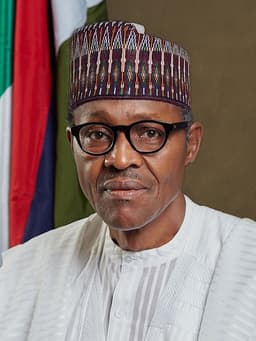
Muhammadu Buhari
General · Modern
51.5Total
Basic Information
Born
1865
1942
Died
1936
—
Era
Modern
Modern
Nationality
China
Nigeria
Occupation
General
General
Civilization
Eastern
Other
Score Comparison
Military (10%)
47.5
22.6
Political (20%)
53.8
68.0
Influence (20%)
53.3
53.3
Legacy (20%)
47.5
43.3
Leadership (15%)
62.0
72.0
Strategy (15%)
58.0
41.0
TOTAL
53.1
51.5
Duan Qirui — Complete Timeline
1919 AD
Resignation as Premier after the May Fourth MovementPolitical Action◆ Major
Duan Qirui resigned as Premier of the Republic of China in 1919 following the May Fourth Movement. The movement protested the weak response of the Chinese government to the Treaty of Versailles. Duan's government was blamed for failing to protect Chinese interests, leading to his resignation.
ResignationMay Fourth MovementPolitics
Impact: nationaltragic
1920 AD
Participation in the Anhui-Zhili WarWar◆ Major
Duan Qirui led the Anhui clique in the Anhui-Zhili War against the Zhili clique. The war was a major conflict in the Warlord Era. Duan's forces were defeated, leading to his resignation as Premier and the decline of the Anhui clique's power.
Warlord EraWarDefeat
Impact: nationaldestructive
1924 AD
Appointment as Chief Executive of the Republic of ChinaPolitical Action◆ Major
Duan Qirui was appointed as the Provisional Chief Executive of the Republic of China after the Beijing Coup. He headed a provisional government that attempted to unify the country but faced opposition from various warlords. His tenure was marked by political instability and military conflicts.
Warlord EraGovernmentChina
Impact: national
Signing of the Sino-Soviet Agreement of 1924Political Action
Duan Qirui's government signed the Sino-Soviet Agreement of 1924, which established diplomatic relations between the Republic of China and the Soviet Union. The agreement recognized Outer Mongolia as part of China but allowed Soviet influence. It was controversial and criticized by some Chinese nationalists.
DiplomacySoviet UnionTreaty
Impact: national
Muhammadu Buhari — Complete Timeline
1983 AD
1983 Nigerian coup d'étatPolitical Action
Major General Muhammadu Buhari led a military coup that overthrew the civilian government of President Shehu Shagari. Buhari cited corruption and economic mismanagement as justifications, and he became the head of state.
CoupMilitary RuleCorruption
Impact: nationaldestructive
1984 AD
War Against Indiscipline (WAI)Reform◆ Major
Buhari launched the War Against Indiscipline, a campaign to enforce discipline and order in Nigerian society. It included harsh penalties for minor offenses, such as queue-jumping, and was criticized for human rights abuses.
DisciplineSocial PolicyHuman Rights
Impact: nationaldestructive
1985 AD
Overthrow by Ibrahim BabangidaPolitical Action◆ Major
Buhari was overthrown in a palace coup led by his Chief of Army Staff, Ibrahim Babangida. Babangida cited Buhari's authoritarian style and failure to address the economy as reasons for the coup.
CoupOverthrowBabangida
Impact: national
2015 AD
Anti-corruption campaignReform◆ Major
Buhari launched a high-profile anti-corruption campaign, targeting government officials and recovering stolen assets. The campaign was praised internationally but criticized for being selective and politically motivated.
Anti-CorruptionReformGovernance
Impact: nationalconstructive
Election as President of NigeriaPolitical Action
Buhari won the 2015 Nigerian presidential election, defeating incumbent Goodluck Jonathan. This was the first time an opposition candidate had defeated a sitting president in Nigeria's history, marking a democratic milestone.
ElectionDemocracyOpposition Victory
Impact: nationalprogressive
Expert Analysis
Muhammadu Buhari vs Duan Qirui
# The General as Reformer: Two Paths from Military Power to Political Legacy
On a sweltering August morning in 1985, Muhammadu Buhari sat in his office in Lagos, the man who had ruled Nigeria with an iron fist for twenty months, when the telephone rang. It was his Chief of Army Staff, Ibrahim Babangida, calling to inform him that he was no longer head of state. The coup was bloodless, almost courteous—a palace ritual that ended Buhari’s first taste of power. Sixty-one years earlier, in November 1924, Duan Qirui rode through the gates of Beijing in a motorcade, freshly appointed as Provisional Chief Executive of the Republic of China, the culmination of decades of maneuvering among warlords. Both men were generals who seized political power in times of national crisis. Both launched ambitious campaigns to discipline their societies. Both were overthrown. Yet one died in relative obscurity, while the other returned from exile to win a democratic presidency. What separates a failed warlord from a twice-risen statesman? The answer lies not in their ambitions, but in the soil in which they planted them.
Origins
Duan Qirui was born in 1865, the twilight of the Qing dynasty, into a family of modest military officials in Hefei, Anhui province. He grew up watching the empire crumble from within—the Taiping Rebellion, the Opium Wars, the humiliation of foreign concessions. The old Confucian order was dying, and the only path to relevance was through the new-style armies being built by men like Yuan Shikai. Duan joined Yuan’s Beiyang Army, rising through the ranks by sheer competence. He was a man of the nineteenth century, shaped by the belief that China could be saved through military strength and authoritarian order—but also by the bitter reality that the empire had already lost its mandate.
Muhammadu Buhari was born in 1942 in Daura, a dusty town in northern Nigeria, to a Fulani family of cattle herders and Islamic scholars. He grew up under British colonial rule, which ended when he was eighteen, and came of age in the chaos of Nigeria’s First Republic—a fragile democracy that collapsed into military coups and a civil war. Buhari joined the Nigerian Army and fought in the Biafran War, watching his country tear itself apart along ethnic and regional lines. He was a man of the twentieth century, shaped by the belief that Africa’s post-colonial states needed discipline, not democracy, to survive. Both men were products of collapsing systems, but Duan inherited an empire’s death rattle, while Buhari inherited a nation’s birth pangs.
Rise to Power
Duan Qirui’s path was a slow climb through the Beiyang Army’s patronage networks. He served as Yuan Shikai’s chief of staff, earning a reputation as a capable administrator and a ruthless enforcer. When Yuan died in 1916, the Republic fractured into warlord fiefdoms. Duan seized his moment: as Premier of the Republic, he controlled the Beijing government, backed by the Anhui clique—a coalition of generals and bureaucrats loyal to him. His power rested on military force, but also on the fragile legitimacy of the presidency. The turning point came in 1919, when the May Fourth Movement erupted against the Treaty of Versailles, which handed German concessions in Shandong to Japan. Duan, who had secretly borrowed Japanese loans to fund his armies, was blamed for selling out China. He resigned as Premier, but refused to surrender power. He retreated to Tianjin, waiting for the chaos to bring him back.
Buhari’s rise was faster and more violent. On December 31, 1983, he led a military coup that overthrew President Shehu Shagari, whose civilian government had collapsed into corruption and economic mismanagement. Buhari justified the coup as a “corrective” measure—a surgeon’s scalpel to cut out the rot. He suspended the constitution, banned political parties, and ruled by decree. Unlike Duan, who had to navigate a web of rival warlords and foreign powers, Buhari faced a simpler landscape: a military that had already grown accustomed to ruling Nigeria. His path to power was a straight line, but it was also a trap—for when you seize power by force, you invite others to do the same.
Leadership & Governance
Duan Qirui governed as a warlord-politician, a man who believed that order came from the barrel of a gun but also understood that legitimacy required a veneer of legality. He reconvened the old parliament, appointed cabinets, and held elections—though he rigged them. His greatest achievement was the Sino-Soviet Agreement of 1924, which established diplomatic relations with the Soviet Union and secured Chinese sovereignty over the Chinese Eastern Railway. It was a genuine diplomatic victory, a rare moment when Beijing spoke with one voice. But Duan could not control his own allies. The Anhui clique was a coalition of convenience, and when the Zhili clique challenged him in 1920, his armies collapsed. He lost the Anhui-Zhili War in a matter of weeks, his power shattered.
Buhari governed as a disciplinarian, a man who believed that Nigeria’s problems were moral, not structural. He launched the War Against Indiscipline (WAI) in 1984, a campaign that punished lateness, littering, and queue-jumping with fines, floggings, and public humiliation. He imprisoned journalists, banned strikes, and forced civil servants to stand in lines for hours to prove their obedience. His anti-corruption campaign was genuine—he recovered stolen assets and jailed former officials—but it was also arbitrary, targeting political enemies while protecting his allies. Unlike Duan, who fought a conventional war and lost, Buhari was undone by his own regime. His authoritarianism alienated the very officers who had put him in power, and when Babangida struck, few mourned.
Triumph & Tragedy
Duan Qirui’s greatest moment was also his last: the 1924 Beijing Coup, when a renegade general named Feng Yuxiang seized the capital and invited Duan back as Provisional Chief Executive. For a brief moment, Duan was the strongman China needed—a unifier who could bridge the warlord factions. But the triumph was hollow. His government was a puppet, dependent on Feng’s goodwill and the tolerance of other cliques. Within two years, the Northern Expedition of Chiang Kai-shek’s National Revolutionary Army swept him aside. Duan retired to Tianjin, where he lived quietly as a Buddhist layman, playing chess and writing poetry. He died in 1936, a footnote to history.
Buhari’s tragedy was more complex: he was overthrown not by enemies, but by his own protégé. The 1985 coup was a palace betrayal, a reminder that military regimes devour themselves. For thirty years, Buhari vanished from power, living in retirement, nursing his grievances. Then came 2015, when he won the Nigerian presidency in a democratic election—the first time an opposition candidate had defeated an incumbent in Nigeria’s history. It was a stunning resurrection, a triumph that seemed to rewrite his legacy. But the second act was harder. His anti-corruption campaign slowed, the economy stumbled, and his health failed. He left office in 2023, a respected but diminished figure.
Character & Destiny
Duan Qirui was a pragmatist, not a visionary. He believed in order, not ideology. He was capable of cruelty—he suppressed protests with violence—but also of restraint, refusing to crush the May Fourth Movement entirely. His flaw was his fatalism: he saw China’s fragmentation as inevitable and played the game of warlord politics without ever trying to transcend it. He was a survivor, not a builder.
Buhari was a moralist, a man of rigid principles. He believed that discipline was the cure for Nigeria’s ills, and he never wavered from that conviction—even when it cost him power. His flaw was his inflexibility: he could not adapt to the messy compromises that democracy requires. In his first term, he was a dictator; in his second, a reluctant democrat. The same stubbornness that made him a failed military ruler also made him a successful presidential candidate.
Legacy
Duan Qirui is remembered, if at all, as a minor figure in the Warlord Era—a competent general who could not escape the chaos of his time. His legacy is the Sino-Soviet Agreement, a diplomatic achievement that mattered for a few years, and the Anhui clique, which dissolved into nothing. He is a cautionary tale: even a strong leader cannot save a broken state.
Buhari is remembered as a man of two halves. To some, he is the dictator who flogged citizens for littering; to others, the democrat who proved that Nigeria could hold a peaceful transfer of power. His anti-corruption campaign, however flawed, set a precedent. He is a symbol of the African strongman who learns, however reluctantly, to share power.
Conclusion
Duan Qirui and Muhammadu Buhari both believed that military men could save their nations. Duan failed because he tried to govern a country that was already disintegrating, where no amount of force could stitch the pieces together. Buhari failed in his first attempt because he governed a country that was still being born, where discipline alone could not build a nation. But Buhari was given a second chance—because Nigeria, for all its chaos, had a democratic framework that could absorb him. Duan had no such framework; his China was a battlefield of warlords, and he was just another soldier. The difference between them is not talent or will, but the architecture of the state they tried to rule. One died in a quiet room, playing chess. The other died in power, having learned that the only way to lead a people is to let them lead themselves.
Rankings
🥇
Duan QiruiLeader
Mil: 47.5Pol: 53.8Inf: 53.3
53.1
🥈
Muhammadu Buhari
Mil: 22.6Pol: 68.0Inf: 53.3
51.5
+1.6 behind
How This Comparison Works
Algorithm
Each figure is scored on 6 dimensions (0—100 scale) based on structured historical data: Military (10%), Political (20%), Influence (20%), Legacy (20%), Leadership (15%), Strategy (15%). The weighted total produces the final ranking.
Data Sources
Scores are computed from structured sub-indicators in the database. Scale factors adjust for era (Ancient ×0.85, Modern ×1.0) and civilization size (Eastern ×1.05, Other ×0.80) to account for differences in population and military scale.
Maximum 3 Figures
Comparisons are limited to 2—3 figures to ensure readability and statistical meaningfulness.
Error Margins
±5 points per dimension — Sub-scores are derived from historical records with inherent uncertainty. Two figures within 5 points on a dimension should be considered roughly equivalent in that area.
Total Score Accuracy
±3 points overall — The weighted combination of 6 dimensions produces a total score with approximately ±3 points of uncertainty. Differences of less than 3 points are not statistically significant— the figures are effectively tied.
Known Limitations
- Historical records are incomplete and uneven across civilizations
- Figures from oral-tradition societies may be underrepresented
- Occupation labels can misclassify multi-role figures
- Scores measure capability and impact, not moral character
- Quantitative scoring is a comparison tool, not absolute truth
Capability Radar
Military (10%) — Battles & Warfare
Battles
55
10
Win Rate
50
10
Expansion
40
5
Political (20%) — Governance & Reform
Reform
55
30
Diplomacy
50
25
Economy
40
20
Influence (20%) — Cultural & Global Reach
Cultural
30
25
Global
20
25
Legacy (20%) — Historical Impact
Historical
45
30
Longevity
30
20
Leadership (15%) — Power & Stability
Tenure
60
45
Stability
30
15
Strategy (15%) — Tactics & Innovation
Strategy
65
15
Tactics
60
15
Reform
70
20
Similar Comparisons
Comments & Discussion
WarLordsUnpacked6/16/2026
Buhari and Duan both prove the same tragic law: a general’s reforms rot when they lack civil roots. Duan imposed a warlord-era “Law on the Punishment of Banditry” that killed thousands, but his Beiyang clique crumbled because he never built parties, only armies. Buhari’s War Against Indiscipline jailed petty thieves while his own junta was ousted by Babangida—another general. Power from a gun always dies by one.
铁腕与纸令6/16/2026
段祺瑞是个失败者,不是枭雄。他1926年下令开枪屠杀请愿学生,酿成“三·一八惨案”,鲁迅骂他“民国最无耻的执政”。军事强人滥用暴力,连鲁迅这种文人都压不住,最后只能躲进天津租界当寓公。布哈里至少1985年下台后没沾血,段祺瑞的手上永远粘着学生血。
ReformOrRig6/16/2026
Data skeptic here: this comparison flatters Buhari. He won 2015 fairly, sure, but his economic record is a disaster—Nigeria’s poverty rate hit 63% in 2022 under his watch. Duan Qirui never ran a clean election, but he actually invested in railways and telegraphy, unifying China’s fragmented infrastructure. Buhari’s “anti-corruption” drive mostly jailed political opponents. Metrics matter, not romantic narratives.
军阀与民主6/16/2026
布哈里是从将军变成民选总统,这看起来像升格,但别忘了他1984年上台后解散工会、关押记者,和段祺瑞的军阀作风没本质区别。段至少推动了“二十一条”后的反日浪潮,布哈里却让尼日利亚陷入更深的北方贫穷。将军穿西装不等于他就是政治家。
LegacyAndLand6/16/2026
The key variable isn’t the general—it’s the system. Buhari returned to a Nigeria where elections, however flawed, had become the only legitimate game in town. Duan operated in a China where the imperial mandate was shattered and no new rules existed. Buhari’s second chance came because institutions (INEC, courts) survived his first rule; Duan had no such safety net. Context, not character, explains the difference.