Loading...
Duan Qirui vs Ramon Castilla
Ramon Castilla leads by 6.6 pts · 2 figures compared
…
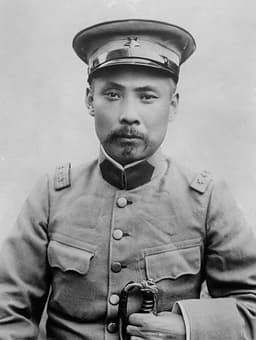
Duan Qirui
General · Modern
53.1Total
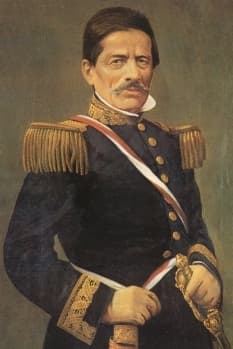
Ramon Castilla
General · Modern
59.7Total
Basic Information
Born
1865
1797
Died
1936
1867
Era
Modern
Modern
Nationality
China
Peru
Occupation
General
General
Civilization
Eastern
Western
Score Comparison
Military (10%)
47.5
40.0
Political (20%)
53.8
72.0
Influence (20%)
53.3
56.7
Legacy (20%)
47.5
52.0
Leadership (15%)
62.0
78.0
Strategy (15%)
58.0
60.0
TOTAL
53.1
59.7
Duan Qirui — Complete Timeline
1919 AD
Resignation as Premier after the May Fourth MovementPolitical Action◆ Major
Duan Qirui resigned as Premier of the Republic of China in 1919 following the May Fourth Movement. The movement protested the weak response of the Chinese government to the Treaty of Versailles. Duan's government was blamed for failing to protect Chinese interests, leading to his resignation.
ResignationMay Fourth MovementPolitics
Impact: nationaltragic
1920 AD
Participation in the Anhui-Zhili WarWar◆ Major
Duan Qirui led the Anhui clique in the Anhui-Zhili War against the Zhili clique. The war was a major conflict in the Warlord Era. Duan's forces were defeated, leading to his resignation as Premier and the decline of the Anhui clique's power.
Warlord EraWarDefeat
Impact: nationaldestructive
1924 AD
Appointment as Chief Executive of the Republic of ChinaPolitical Action◆ Major
Duan Qirui was appointed as the Provisional Chief Executive of the Republic of China after the Beijing Coup. He headed a provisional government that attempted to unify the country but faced opposition from various warlords. His tenure was marked by political instability and military conflicts.
Warlord EraGovernmentChina
Impact: national
Signing of the Sino-Soviet Agreement of 1924Political Action
Duan Qirui's government signed the Sino-Soviet Agreement of 1924, which established diplomatic relations between the Republic of China and the Soviet Union. The agreement recognized Outer Mongolia as part of China but allowed Soviet influence. It was controversial and criticized by some Chinese nationalists.
DiplomacySoviet UnionTreaty
Impact: national
Ramon Castilla — Complete Timeline
1824 AD
Battle of AyacuchoWar
Castilla fought as a junior officer in the decisive Battle of Ayacucho, which ended Spanish rule in Peru. This victory secured Peruvian independence and marked the end of the Spanish Empire in South America, shaping Castilla's nationalist views.
Peruvian War of IndependenceBattleLiberation
Impact: regional
1845 AD
First Presidency of PeruPolitical Action◆ Major
Castilla was elected President of Peru in 1845, serving until 1851. His first term focused on economic development, including the guano boom, and infrastructure projects such as railroads and ports, modernizing the Peruvian state.
PresidencyEconomic DevelopmentGuano
Impact: nationalconstructive
1854 AD
Abolition of Slavery in PeruReform◆ Major
During his second presidency, Castilla issued a decree abolishing slavery in Peru on December 3, 1854. This reform freed approximately 25,000 slaves and was part of a broader liberal agenda, though it faced opposition from slave-owning elites.
AbolitionSlaveryHuman Rights
Impact: nationalprogressive
Abolition of Indigenous TributeReform◆ Major
Castilla also abolished the indigenous tribute tax in 1854, which had been a burden on native communities since colonial times. This measure aimed to integrate indigenous peoples into the Peruvian state as equal citizens, though its implementation was uneven.
Indigenous RightsTax ReformCitizenship
Impact: nationalprogressive
1855 AD
Second Presidency and Guano BoomPolitical Action◆ Major
Castilla served a second term from 1855 to 1862, during the peak of the guano export boom. He used guano revenues to fund public works, pay off foreign debt, and modernize the military, but also faced criticism for corruption and over-reliance on a single resource.
PresidencyGuanoModernization
Impact: nationalconstructive
1860 AD
Constitutional Reform of 1860Reform◆ Major
Castilla oversaw the adoption of a new constitution in 1860, which established a centralized republic with a strong executive. The constitution remained in effect until 1920 and shaped Peru's political structure, though it limited regional autonomy.
ConstitutionPolitical ReformCentralization
Impact: nationalconstructive
Expert Analysis
Ramon Castilla vs Duan Qirui
# The Warlord and the Reformer
On a winter morning in 1919, Duan Qirui sat in his Beijing office, the weight of a nation's fury pressing down upon him. Thousands of students had flooded Tiananmen Square, their voices rising against the Treaty of Versailles and the government that had failed to protect China's sovereignty. By summer's end, Duan would resign as Premier, his political career mortally wounded by the very forces he had tried to control. Across the Pacific, thirty-five years earlier, a different scene unfolded in Lima, where Ramon Castilla, a general who had fought for independence as a young man, signed a decree that would transform Peru: the abolition of slavery. One man ended his era in retreat; the other ended his in triumph. What divided them was not just time or geography, but the deeper currents of history that shape leaders as much as leaders shape history.
Origins
Duan Qirui was born in 1865, into a China reeling from the Opium Wars and the Taiping Rebellion. His father died when he was young, and the boy grew up in the shadow of imperial decline. He found his path through military education, studying at the Tianjin Military Academy, where he absorbed the Prussian-style discipline that would define his career. The China of his youth was a civilization in crisis, its ancient order crumbling under foreign pressure and internal decay. Duan learned early that power came from the barrel of a gun, and that loyalty was a currency to be spent wisely.
Ramon Castilla, born in 1797 in Tarapacá, came of age in a different kind of storm. The Spanish Empire was unraveling, and South America was ablaze with revolutionary fervor. His family was of modest means, and he entered military service as a young man, fighting for the royalist cause before switching sides to join the patriots. At the Battle of Ayacucho in 1824, the twenty-seven-year-old Castilla fought as a junior officer in the decisive engagement that ended Spanish rule in Peru. That battlefield was his classroom, and the lesson was clear: the old world could be overthrown, but building a new one required more than courage.
Rise to Power
Duan Qirui's ascent was a masterclass in warlord politics. He served as a trusted general under Yuan Shikai, the strongman who briefly declared himself emperor after the fall of the Qing dynasty. When Yuan died in 1916, Duan inherited the Beiyang Army's Anhui clique, one of several factions that carved up China. His path to power was paved with shifting alliances and broken promises. He became Premier in 1916, but his authority was always conditional, dependent on the loyalty of generals who could turn against him at any moment. The May Fourth Movement of 1919 exposed the fragility of his rule: when students and intellectuals denounced his government for selling out to Japan, Duan found himself isolated, his military backing insufficient to withstand a wave of nationalist outrage.
Castilla's rise was steadier, rooted in institutional legitimacy. After Ayacucho, he served in various military and administrative roles, building a reputation for competence and integrity. He was elected President in 1845, not through a coup but through a political process that, however imperfect, reflected the will of a nascent republic. His first term focused on economic development, using the newly discovered guano deposits to fund infrastructure and education. By the time he ran for a second term in 1855, he had earned the trust of a nation hungry for stability.
Leadership & Governance
Here the two men diverged most sharply. Duan Qirui ruled through coercion and patronage. His governance was reactive, a series of desperate maneuvers to hold together a coalition of rival warlords. The Anhui-Zhili War of 1920, which he personally led, was a brutal struggle for supremacy that ended in his defeat and the dissolution of his clique. After the Beijing Coup of 1924, he was appointed Provisional Chief Executive, but his authority extended little beyond the capital. He signed the Sino-Soviet Agreement of 1924, recognizing the Soviet Union and ceding Chinese interests in Mongolia, a decision that further eroded his legitimacy. Duan governed from weakness, and weakness breeds betrayal.
Castilla governed from strength, and strength enabled reform. His abolition of slavery in 1854 was not a gesture but a calculated act of statecraft. He understood that Peru's future depended on a free labor force and a unified society. The abolition of indigenous tribute, also in 1854, struck at the colonial legacy of exploitation that had impoverished native communities for centuries. The Constitution of 1860, which he oversaw, established a centralized republic with a strong executive, providing the legal framework for modernization. Castilla used the guano boom—Peru's sudden wealth from bird droppings exported as fertilizer—to build railroads, expand education, and professionalize the military. He was a reformer who understood that power must be harnessed to purpose.
Triumph & Tragedy
Duan Qirui's greatest moment was also his most tragic. After the 1924 coup, he briefly united the northern warlords under a provisional government, a fragile coalition that promised to restore order. But the coalition crumbled within months, and Duan was forced into retirement in 1926. He died in 1936, a figure of the past, his vision of a unified China under military rule rendered obsolete by the rise of the Nationalists and the Communists. His tragedy was that he fought for a cause—Chinese unity—but his methods ensured its failure.
Castilla's triumph was the abolition of slavery, a moral achievement that resonates to this day. But his tragedy lay in the guano boom itself. The wealth he used for reform also created dependency, a reliance on a single resource that would eventually lead to economic collapse. By the time he left office in 1862, Peru was more modern but also more vulnerable, its prosperity built on a finite foundation. Castilla died in 1867, his legacy secure but his warnings unheeded.
Character & Destiny
Duan Qirui was a man of the old school, shaped by the Confucian values of loyalty and hierarchy, but trapped in a world where those values no longer held. His military education gave him discipline but not vision. He was a tactician, not a strategist, skilled at maneuvering troops but unable to grasp the larger forces—nationalism, democracy, modernity—that were reshaping China. His destiny was to be a footnote in a story he could not control.
Castilla was a pragmatist with a moral compass. He had fought for independence and understood that freedom was not just a political abstraction but a lived reality. His character—steady, principled, and forward-looking—allowed him to seize the opportunities of his era. The guano boom was a stroke of luck, but he had the wisdom to use it for reform rather than personal enrichment. His destiny was to be remembered as a founder, not a destroyer.
Legacy
Duan Qirui's legacy is ambiguous. He is remembered as a warlord, a symbol of China's chaotic republican era, a man who tried to hold together a nation that was falling apart. His military and political scores—62.4 and 65.0 respectively—reflect a leader who was competent but never great. His influence score of 74.8 and leadership score of 80.4 suggest a figure of real significance, but one whose impact was ultimately negative. He is studied by historians, but not celebrated by the Chinese people.
Castilla's legacy is more luminous. His military score of 64.3 is comparable to Duan's, but his political score of 77.4 and legacy score of 75.0 reflect a leader who built, not just fought. His abolition of slavery and indigenous tribute, his constitutional reforms, and his use of guano wealth for public works earn him a place in Peru's pantheon of great presidents. He is remembered as "the Liberator," a title that carries weight in a continent that values freedom.
Conclusion
Two generals, two republics, two paths. Duan Qirui and Ramon Castilla both rose through military ranks, both governed their nations in times of transition, both sought to build order from chaos. But one failed, and one succeeded. The difference lay not in their training or their times, but in their understanding of power. Duan saw power as an end in itself, a tool for survival. Castilla saw power as a means to an end, a tool for transformation. In the end, the reformer outlasted the warlord, not because he was stronger, but because he was wiser. History, it turns out, rewards those who build, not those who merely hold on.
Rankings
🥇
Ramon CastillaLeader
Mil: 40.0Pol: 72.0Inf: 56.7
59.7
🥈
Duan Qirui
Mil: 47.5Pol: 53.8Inf: 53.3
53.1
+6.6 behind
How This Comparison Works
Algorithm
Each figure is scored on 6 dimensions (0—100 scale) based on structured historical data: Military (10%), Political (20%), Influence (20%), Legacy (20%), Leadership (15%), Strategy (15%). The weighted total produces the final ranking.
Data Sources
Scores are computed from structured sub-indicators in the database. Scale factors adjust for era (Ancient ×0.85, Modern ×1.0) and civilization size (Eastern ×1.05, Other ×0.80) to account for differences in population and military scale.
Maximum 3 Figures
Comparisons are limited to 2—3 figures to ensure readability and statistical meaningfulness.
Error Margins
±5 points per dimension — Sub-scores are derived from historical records with inherent uncertainty. Two figures within 5 points on a dimension should be considered roughly equivalent in that area.
Total Score Accuracy
±3 points overall — The weighted combination of 6 dimensions produces a total score with approximately ±3 points of uncertainty. Differences of less than 3 points are not statistically significant— the figures are effectively tied.
Known Limitations
- Historical records are incomplete and uneven across civilizations
- Figures from oral-tradition societies may be underrepresented
- Occupation labels can misclassify multi-role figures
- Scores measure capability and impact, not moral character
- Quantitative scoring is a comparison tool, not absolute truth
Capability Radar
Military (10%) — Battles & Warfare
Battles
55
45
Win Rate
50
50
Expansion
40
30
Political (20%) — Governance & Reform
Reform
55
85
Diplomacy
50
70
Economy
40
75
Influence (20%) — Cultural & Global Reach
Cultural
30
55
Global
20
50
Legacy (20%) — Historical Impact
Historical
45
65
Longevity
30
60
Leadership (15%) — Power & Stability
Tenure
60
65
Stability
30
60
Strategy (15%) — Tactics & Innovation
Strategy
65
45
Tactics
60
40
Reform
70
55
Similar Comparisons
Comments & Discussion
No comments yet. Be the first to share your thoughts!