Loading...
Duan Qirui vs Plutarco Elias Calles
Plutarco Elias Calles leads by 5.4 pts · 2 figures compared
…
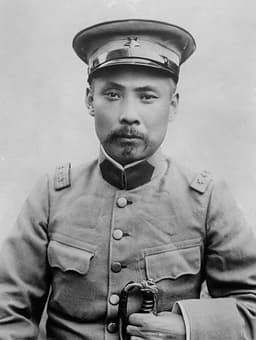
Duan Qirui
General · Modern
53.1Total
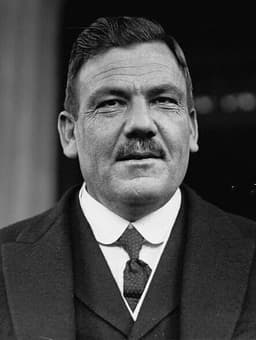
Plutarco Elias Calles
General · Modern
58.5Total
Basic Information
Born
1865
1877
Died
1936
1945
Era
Modern
Modern
Nationality
China
Mexico
Occupation
General
General
Civilization
Eastern
Western
Score Comparison
Military (10%)
47.5
40.0
Political (20%)
53.8
70.3
Influence (20%)
53.3
68.0
Legacy (20%)
47.5
40.0
Leadership (15%)
62.0
78.0
Strategy (15%)
58.0
52.5
TOTAL
53.1
58.5
Duan Qirui — Complete Timeline
1919 AD
Resignation as Premier after the May Fourth MovementPolitical Action◆ Major
Duan Qirui resigned as Premier of the Republic of China in 1919 following the May Fourth Movement. The movement protested the weak response of the Chinese government to the Treaty of Versailles. Duan's government was blamed for failing to protect Chinese interests, leading to his resignation.
ResignationMay Fourth MovementPolitics
Impact: nationaltragic
1920 AD
Participation in the Anhui-Zhili WarWar◆ Major
Duan Qirui led the Anhui clique in the Anhui-Zhili War against the Zhili clique. The war was a major conflict in the Warlord Era. Duan's forces were defeated, leading to his resignation as Premier and the decline of the Anhui clique's power.
Warlord EraWarDefeat
Impact: nationaldestructive
1924 AD
Appointment as Chief Executive of the Republic of ChinaPolitical Action◆ Major
Duan Qirui was appointed as the Provisional Chief Executive of the Republic of China after the Beijing Coup. He headed a provisional government that attempted to unify the country but faced opposition from various warlords. His tenure was marked by political instability and military conflicts.
Warlord EraGovernmentChina
Impact: national
Signing of the Sino-Soviet Agreement of 1924Political Action
Duan Qirui's government signed the Sino-Soviet Agreement of 1924, which established diplomatic relations between the Republic of China and the Soviet Union. The agreement recognized Outer Mongolia as part of China but allowed Soviet influence. It was controversial and criticized by some Chinese nationalists.
DiplomacySoviet UnionTreaty
Impact: national
Plutarco Elias Calles — Complete Timeline
1915 AD
Governorship of SonoraPolitical Action
Calles served as Governor of Sonora from 1915 to 1919, implementing radical reforms including land redistribution, anti-clerical laws, and labor rights. His governorship established him as a key figure in the Sonoran dynasty and a proponent of revolutionary change.
GovernorshipSonoraReforms
Impact: regionalconstructive
1924 AD
Presidency of MexicoPolitical Action◆ Major
Calles was elected President of Mexico in 1924, serving until 1928. His administration continued revolutionary reforms, including land reform, labor rights, and secularization, but also faced opposition from the Catholic Church and conservative groups.
PresidencyMexican RevolutionReforms
Impact: nationalconstructive
1926 AD
Cristero WarWar◆ Major
Calles enforced anti-clerical laws, including the Calles Law, which restricted the Catholic Church's role in society. This sparked the Cristero War (1926-1929), a violent rebellion by Catholic peasants against the state, resulting in tens of thousands of deaths.
Cristero WarAnti-clericalismReligious Conflict
Impact: nationaldestructive
1928 AD
MaximatoPolitical Action◆ Major
After his presidency, Calles remained the de facto ruler of Mexico during the Maximato (1928-1934), controlling puppet presidents. He continued to influence policy, but his power waned as President L
MaximatoPolitical ControlCárdenas
Impact: national
1929 AD
Founding of the National Revolutionary Party (PNR)Political Action
Calles founded the National Revolutionary Party (PNR) in 1929, which later became the Institutional Revolutionary Party (PRI). This party dominated Mexican politics for over 70 years, institutionalizing the revolution's legacy and centralizing power.
Political PartyPRIInstitutionalization
Impact: nationalconstructive
Expert Analysis
Plutarco Elias Calles vs Duan Qirui
# The Iron Fist and the Fragile Republic
In the spring of 1919, as student protesters filled the streets of Beijing demanding China’s sovereignty, Duan Qirui sat alone in his office, the weight of a crumbling dynasty on his shoulders. Half a world away, in the arid northern state of Sonora, Plutarco Elias Calles was distributing land to peasants and closing churches, forging a new Mexico from the ashes of revolution. Both men were generals, both ruled nations in chaos, yet their paths diverged like rivers flowing from the same mountain—one toward a quiet, forgotten grave, the other toward the founding of a party that would dominate Mexico for seven decades. What made the difference?
Origins
Duan Qirui was born in 1865 into a China still reeling from the Opium Wars, a world where the Middle Kingdom’s ancient order was collapsing under Western guns. He was a child of the military academy, trained in modern warfare by German instructors, and rose through the ranks of the Beiyang Army—the most powerful force in late Qing China. His world was one of warlords, foreign concessions, and the desperate attempt to preserve a nation that seemed to be dissolving. Duan was shaped by the Confucian ideal of order, but also by the brutal reality that power came from the barrel of a gun.
Plutarco Elias Calles, born in 1877 in Guaymas, Sonora, grew up in a Mexico ruled by Porfirio Díaz’s dictatorship—a land of vast haciendas, exploited peasants, and a Catholic Church that held immense sway. Calles was a schoolteacher turned revolutionary, a man who fought alongside Pancho Villa and Álvaro Obregón. He was shaped not by ancient empires but by the raw, violent birth of a modern nation. Where Duan inherited a civilization in decay, Calles inherited a revolution in progress.
Rise to Power
Duan Qirui entered the historical stage through the cracks of the Qing Empire. After the 1911 Revolution overthrew the monarchy, he became a key figure in the Beiyang government, serving as Premier multiple times. His rise was not through popular acclaim but through military patronage—he commanded the Anhui clique, one of several warlord factions that carved up China after the death of Yuan Shikai in 1916. His power rested on soldiers, not citizens.
Calles rose differently. In 1915, he became Governor of Sonora and immediately implemented radical reforms: land redistribution, anti-clerical laws, and the breaking of large estates. He was not a warlord but a revolutionary administrator, building a base through policy and organization. When he was elected President of Mexico in 1924, it was through a political system—flawed and violent, yes—but a system nonetheless. His path was institutional; Duan’s was personal.
Leadership & Governance
Duan Qirui’s leadership was defined by a tragic contradiction: he wanted to unify China but could only command a faction. As Chief Executive from 1924, he headed a provisional government that was perpetually weak. His signing of the Sino-Soviet Agreement of 1924, which recognized the Soviet Union and secured some territorial concessions, was a pragmatic move, but it satisfied no one. Duan ruled through negotiation and coercion, never through vision. His military strategy was sound—he won battles against the Zhili clique—but his political wisdom was hollow. He governed a house of cards.
Calles was a builder. As President, he enforced the anti-clerical Calles Law of 1926, sparking the Cristero War, a brutal three-year conflict in which Catholic rebels fought the state. Calles did not flinch. He crushed the rebellion with an iron fist, secularizing Mexico at the point of a bayonet. But he also understood that power needed permanence. In 1929, he founded the National Revolutionary Party (PNR), which later became the Institutional Revolutionary Party (PRI). This was his masterstroke: a party that could outlive any leader, that could absorb factions and channel conflict into bureaucracy. Where Duan ruled through personal loyalty, Calles ruled through institutions.
Triumph & Tragedy
Duan’s greatest moment—his appointment as Chief Executive in 1924—was also his tragedy. He had the chance to rebuild China, but the May Fourth Movement of 1919 had already exposed his fundamental weakness: he was seen as a tool of Japanese interests, a man who had signed the Twenty-One Demands. The students despised him. His resignation in 1919 was a humiliation, and his final years were spent in obscurity, a warlord without an army.
Calles’ triumph was the Maximato (1928-1934), the period after his presidency when he remained the *jefe máximo*—the maximum chief—pulling the strings of puppet presidents. He had institutionalized his power. But his tragedy came later: in 1935, his own creation, the PRI, turned against him. President Lázaro Cárdenas exiled him to the United States. Calles died in 1945, a man who had outlived his own revolution.
Character & Destiny
Duan Qirui was cautious, conservative, and ultimately indecisive. He believed in order but could not create it. His personality was that of a bureaucrat in uniform—competent but uninspiring. He was trapped by his era: a China too fractured for any one man to unite, a nation that needed a Mao or a Chiang, not a compromiser.
Calles was ruthless, visionary, and pragmatic. He understood that revolutions need institutions, not heroes. He was a man who could order the execution of priests and then build a party that would govern for generations. His destiny was to create the modern Mexican state—secular, centralized, and authoritarian. He was the architect, not the builder.
Legacy
Duan Qirui is remembered, if at all, as a footnote—a warlord who failed to save a republic. His legacy score of 66.8 reflects a man who left no lasting institution, no party, no vision. He is a cautionary tale about the limits of military power in a political vacuum.
Calles, with a legacy score of 72.0, left the PRI, which ruled Mexico until 2000. He is both revered and reviled: revered for modernizing the country, reviled for his authoritarianism and the blood of the Cristero War. But he succeeded where Duan failed: he built something that outlasted him.
Conclusion
The difference between Duan Qirui and Plutarco Elias Calles is the difference between a general who governed and a general who founded. Duan fought for a China that no longer existed; Calles fought for a Mexico that had yet to be born. One was a caretaker of collapse; the other was an architect of order. In the end, the question is not who was more skilled or more moral, but who understood that power, to endure, must become structure. Calles built a party. Duan built nothing. And that, perhaps, is the most brutal lesson of history: the men who build institutions outlive the men who only hold swords.
Rankings
🥇
Plutarco Elias CallesLeader
Mil: 40.0Pol: 70.3Inf: 68.0
58.5
🥈
Duan Qirui
Mil: 47.5Pol: 53.8Inf: 53.3
53.1
+5.4 behind
How This Comparison Works
Algorithm
Each figure is scored on 6 dimensions (0—100 scale) based on structured historical data: Military (10%), Political (20%), Influence (20%), Legacy (20%), Leadership (15%), Strategy (15%). The weighted total produces the final ranking.
Data Sources
Scores are computed from structured sub-indicators in the database. Scale factors adjust for era (Ancient ×0.85, Modern ×1.0) and civilization size (Eastern ×1.05, Other ×0.80) to account for differences in population and military scale.
Maximum 3 Figures
Comparisons are limited to 2—3 figures to ensure readability and statistical meaningfulness.
Error Margins
±5 points per dimension — Sub-scores are derived from historical records with inherent uncertainty. Two figures within 5 points on a dimension should be considered roughly equivalent in that area.
Total Score Accuracy
±3 points overall — The weighted combination of 6 dimensions produces a total score with approximately ±3 points of uncertainty. Differences of less than 3 points are not statistically significant— the figures are effectively tied.
Known Limitations
- Historical records are incomplete and uneven across civilizations
- Figures from oral-tradition societies may be underrepresented
- Occupation labels can misclassify multi-role figures
- Scores measure capability and impact, not moral character
- Quantitative scoring is a comparison tool, not absolute truth
Capability Radar
Military (10%) — Battles & Warfare
Battles
55
45
Win Rate
50
50
Expansion
40
30
Political (20%) — Governance & Reform
Reform
55
85
Diplomacy
50
65
Economy
40
60
Influence (20%) — Cultural & Global Reach
Cultural
30
70
Global
20
60
Legacy (20%) — Historical Impact
Historical
45
75
Longevity
30
70
Leadership (15%) — Power & Stability
Tenure
60
70
Stability
30
55
Strategy (15%) — Tactics & Innovation
Strategy
65
55
Tactics
60
40
Reform
70
60
Similar Comparisons
Comments & Discussion
IronDuanist6/16/2026
If Duan Qirui had the ruthless institutional machinery Calles built, the PRC might have been born in 1926. Calles understood that consolidation required a party structure, not just personal loyalties. Duan wasted the Beiyang Army's dominance on factional appeasement. History remembers the man who founds institutions, not the one who merely holds power temporarily.
铁血革新家6/16/2026
卡列斯打倒了教会,段祺瑞却连安福俱乐部都没能撑住。墨西哥的制宪会议1930年代还是个笑话,但卡列斯用总统党和军队编织了铁网——段祺瑞呢?他连冯玉祥都控制不住。一个军阀只知道压榨,另一个军阀在建设国家机器。高下立判。
BeiyangObserver6/16/2026
People romanticize Calles because he built the PRI, but forget his economic failures. Mexico's Cristero War killed 90,000 people—direct result of his anti-clerical fanaticism. Duan at least recognized China needed unity before radicalism. Calles divided his nation permanently along secular-religious lines. Give me Duan's pragmatic realism over Calles' dogmatic social engineering any day.
北洋遗少6/16/2026
段祺瑞输在不懂得包装自己。卡列斯不过是利用农民和工人搞集权,段公却在三造共和后把权力拱手让人。1920年的直皖战争,如果段祺瑞像卡列斯1929年清洗塞拉诺一样果断铲除吴佩孚,中国历史会完全不同。他太"君子"了,在丛林法则的时代,这是致命的软弱。