Loading...
Duan Qirui vs John Lambert
John Lambert leads by 3.6 pts · 2 figures compared
…
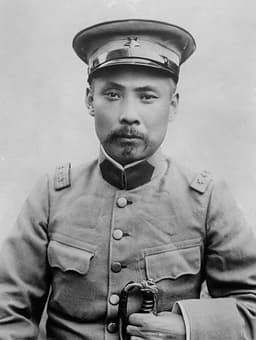
Duan Qirui
General · Modern
53.1Total
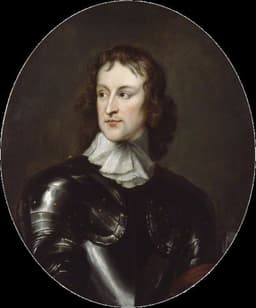
John Lambert
General · Modern
56.7Total
Basic Information
Born
1865
1619
Died
1936
1684
Era
Modern
Modern
Nationality
China
England
Occupation
General
General
Civilization
Eastern
Western
Score Comparison
Military (10%)
47.5
70.0
Political (20%)
53.8
45.0
Influence (20%)
53.3
59.0
Legacy (20%)
47.5
50.0
Leadership (15%)
62.0
68.0
Strategy (15%)
58.0
55.0
TOTAL
53.1
56.7
Duan Qirui — Complete Timeline
1919 AD
Resignation as Premier after the May Fourth MovementPolitical Action◆ Major
Duan Qirui resigned as Premier of the Republic of China in 1919 following the May Fourth Movement. The movement protested the weak response of the Chinese government to the Treaty of Versailles. Duan's government was blamed for failing to protect Chinese interests, leading to his resignation.
ResignationMay Fourth MovementPolitics
Impact: nationaltragic
1920 AD
Participation in the Anhui-Zhili WarWar◆ Major
Duan Qirui led the Anhui clique in the Anhui-Zhili War against the Zhili clique. The war was a major conflict in the Warlord Era. Duan's forces were defeated, leading to his resignation as Premier and the decline of the Anhui clique's power.
Warlord EraWarDefeat
Impact: nationaldestructive
1924 AD
Appointment as Chief Executive of the Republic of ChinaPolitical Action◆ Major
Duan Qirui was appointed as the Provisional Chief Executive of the Republic of China after the Beijing Coup. He headed a provisional government that attempted to unify the country but faced opposition from various warlords. His tenure was marked by political instability and military conflicts.
Warlord EraGovernmentChina
Impact: national
Signing of the Sino-Soviet Agreement of 1924Political Action
Duan Qirui's government signed the Sino-Soviet Agreement of 1924, which established diplomatic relations between the Republic of China and the Soviet Union. The agreement recognized Outer Mongolia as part of China but allowed Soviet influence. It was controversial and criticized by some Chinese nationalists.
DiplomacySoviet UnionTreaty
Impact: national
John Lambert — Complete Timeline
1648 AD
Battle of PrestonWar◆ Major
John Lambert commanded parliamentary forces at the Battle of Preston, defeating a Scottish royalist army. The victory helped secure the parliamentary cause in the Second English Civil War.
BattleEnglish Civil WarParliament
Impact: national
1653 AD
Drafted the Instrument of GovernmentPolitical Action◆ Major
John Lambert was the principal author of the Instrument of Government, the written constitution that established the Protectorate under Oliver Cromwell. The document created a Lord Protector and a Council of State, but was never fully implemented.
ConstitutionProtectorateCromwell
Impact: nationalconstructive
1662 AD
Exiled to GuernseyPolitical Action◆ Major
After the Restoration, John Lambert was tried for treason and exiled to the island of Guernsey. He spent the remainder of his life in captivity, never regaining political influence.
ExileRestorationPunishment
Impact: nationaltragic
Expert Analysis
John Lambert vs Duan Qirui
# The General as Statesman: Duan Qirui and John Lambert
On a spring morning in 1919, Duan Qirui sat in his Beijing office and read the telegrams piling up from across China. Students had poured into the streets of the capital, outraged that the Versailles Treaty had handed German concessions in Shandong to Japan. The protests would soon ignite a national movement, and Duan, the most powerful man in China, would be forced to resign. Half a world away and nearly three centuries earlier, another general faced his own reckoning. John Lambert, the architect of England’s only written constitution, watched as the Republic he helped build crumbled into military rule. Both men were soldiers who reached for political power; both would see their dreams shattered. But their paths, shaped by vastly different worlds, reveal how era and circumstance determine a leader’s fate.
Origins
Duan Qirui was born in 1865, the son of a minor official in Anhui province. The old imperial order was crumbling, and young Duan found his calling not in the civil service examinations but in the new military academies that China’s reformers were building. He studied at the Tianjin Military Academy, where German instructors drilled him in modern warfare. When the Boxer Rebellion erupted in 1900, Duan fought for the Qing dynasty, earning a reputation as a capable and loyal officer. He was a product of a China struggling to modernize while clinging to its ancient identity—a tension that would define his career.
John Lambert came of age in a different storm. Born in 1619 to a Yorkshire gentleman, he grew up in a England torn between king and Parliament. He studied law, but when civil war broke out in 1642, he chose the sword. Lambert was a Puritan, a man of fierce religious conviction who believed that God was on the side of Parliament. His world was one of ideological certainties: king versus Commons, Anglican versus Puritan, tyranny versus liberty. Where Duan navigated a decaying empire, Lambert fought to build something new.
Rise to Power
Duan’s ascent came through the Beiyang Army, the most modern military force in China. By 1912, he was a protégé of Yuan Shikai, the man who forced the last emperor to abdicate. When Yuan died in 1916, Duan inherited control of the Beiyang system and became Premier of the Republic. His power rested on military loyalty, not popular support. He was a warlord in a world of warlords, each commanding personal armies that owed allegiance to no nation.
Lambert’s rise was swifter and more dramatic. At the Battle of Preston in 1648, he commanded the parliamentary cavalry that crushed a Scottish royalist invasion. His tactical brilliance caught the eye of Oliver Cromwell, who made him a trusted lieutenant. When Cromwell died and his son Richard failed to hold the Republic together, Lambert stepped forward. In 1653, he drafted the Instrument of Government, England’s first and only written constitution, which created a Protectorate under Cromwell. Lambert was not just a general; he was a constitutional architect, a man who believed that power could be codified and controlled.
Leadership & Governance
Duan ruled through a system of patronage and coercion. As Chief Executive after the 1924 Beijing Coup, he tried to convene a "Good Works Conference" to unify the fractious warlords, but his authority was hollow. He signed the Sino-Soviet Agreement of 1924, recognizing the Soviet Union and accepting Soviet influence in Mongolia—a pragmatic move that bought diplomatic recognition but cost him nationalist credibility. Duan’s governance was a balancing act: he could command armies but could not command loyalty beyond his own Anhui clique.
Lambert governed differently. The Instrument of Government divided power between a Lord Protector, a council, and a Parliament elected by property-holders. It was a radical experiment in republican constitutionalism. Lambert served as Cromwell’s deputy and military commander, but he believed in the supremacy of law, not the sword. Yet the system was fragile. When Cromwell died, Lambert could not hold the factions together. The army, which he had helped build, turned on him. In 1660, Charles II returned from exile, and the Republic collapsed.
Triumph & Tragedy
Duan’s greatest moment was also his undoing. The May Fourth Movement of 1919 was a genuine popular uprising against the Versailles Treaty, and Duan, as Premier, was its target. He had secretly agreed to Japanese demands in exchange for loans to fund his military campaigns. When the students marched, he ordered their arrest—a decision that made him a national villain. He resigned in disgrace, and his political career never recovered. His tragedy was that he understood military power but not the power of public opinion.
Lambert’s triumph was the Instrument of Government, a document that anticipated modern constitutionalism. His tragedy came after the Restoration. Tried for treason, he was exiled to Guernsey in 1662, where he spent the last twenty-two years of his life in a stone fortress overlooking the sea. He had helped behead a king and draft a constitution; he died forgotten, a relic of a failed revolution.
Character & Destiny
Duan was a pragmatist, not an ideologue. He believed in order and stability, and he was willing to compromise with anyone—warlords, foreigners, even the Japanese—to preserve his power. That pragmatism made him effective in the short term but doomed him in the long term. He could not inspire loyalty beyond personal interest, and when his armies lost, his support evaporated.
Lambert was an idealist, a man who believed that a just society could be built on paper. He drafted a constitution because he believed in law, not men. But his idealism was brittle. He could not adapt when the army turned against Parliament, and he underestimated the enduring appeal of monarchy. Where Duan was too flexible, Lambert was too rigid.
Legacy
Duan Qirui is remembered as a warlord, one of many who tore China apart in the early Republic. His name appears in textbooks as a cautionary tale: the general who failed to become a statesman. Yet his attempt to hold China together through military force was not entirely his fault. The Republic was born into chaos, and Duan was a product of that chaos.
John Lambert is remembered by historians as a forgotten founder of English republicanism. The Instrument of Government was a dead letter within a decade, but its ideas—written constitutions, separation of powers, parliamentary supremacy—echoed in the American and French revolutions. Lambert was a failure in his own time, but his vision outlived him.
Conclusion
Duan Qirui and John Lambert never met, never knew each other’s worlds. One died in obscurity in Tianjin, the other in exile on a Channel island. Yet they share a common fate: both were generals who tried to become statesmen, and both were broken by forces beyond their control. Duan was undone by the rise of popular nationalism; Lambert by the return of monarchy. Their stories remind us that leadership is not just about skill or ambition—it is about timing. The same qualities that make a general successful in war can make him a failure in peace. And the same ideals that inspire a constitution can be crushed by the very armies that defend it.
Rankings
🥇
John LambertLeader
Mil: 70.0Pol: 45.0Inf: 59.0
56.7
🥈
Duan Qirui
Mil: 47.5Pol: 53.8Inf: 53.3
53.1
+3.6 behind
How This Comparison Works
Algorithm
Each figure is scored on 6 dimensions (0—100 scale) based on structured historical data: Military (10%), Political (20%), Influence (20%), Legacy (20%), Leadership (15%), Strategy (15%). The weighted total produces the final ranking.
Data Sources
Scores are computed from structured sub-indicators in the database. Scale factors adjust for era (Ancient ×0.85, Modern ×1.0) and civilization size (Eastern ×1.05, Other ×0.80) to account for differences in population and military scale.
Maximum 3 Figures
Comparisons are limited to 2—3 figures to ensure readability and statistical meaningfulness.
Error Margins
±5 points per dimension — Sub-scores are derived from historical records with inherent uncertainty. Two figures within 5 points on a dimension should be considered roughly equivalent in that area.
Total Score Accuracy
±3 points overall — The weighted combination of 6 dimensions produces a total score with approximately ±3 points of uncertainty. Differences of less than 3 points are not statistically significant— the figures are effectively tied.
Known Limitations
- Historical records are incomplete and uneven across civilizations
- Figures from oral-tradition societies may be underrepresented
- Occupation labels can misclassify multi-role figures
- Scores measure capability and impact, not moral character
- Quantitative scoring is a comparison tool, not absolute truth
Capability Radar
Military (10%) — Battles & Warfare
Battles
55
65
Win Rate
50
60
Expansion
40
40
Political (20%) — Governance & Reform
Reform
55
55
Diplomacy
50
50
Economy
40
45
Influence (20%) — Cultural & Global Reach
Cultural
30
35
Global
20
30
Legacy (20%) — Historical Impact
Historical
45
50
Longevity
30
40
Leadership (15%) — Power & Stability
Tenure
60
60
Stability
30
40
Strategy (15%) — Tactics & Innovation
Strategy
65
65
Tactics
60
70
Reform
70
55
Similar Comparisons
Comments & Discussion
No comments yet. Be the first to share your thoughts!