Loading...
Duan Qirui vs J. B. M. Hertzog
J. B. M. Hertzog leads by 3.0 pts · 2 figures compared
…
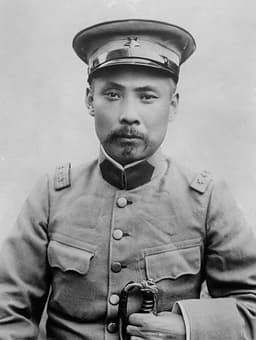
Duan Qirui
General · Modern
53.1Total
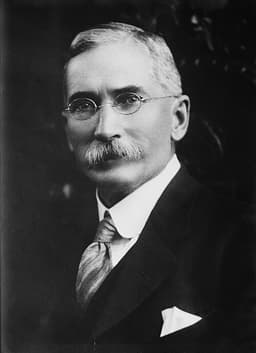
J. B. M. Hertzog
General · Modern
56.1Total
Basic Information
Born
1865
1866
Died
1936
1942
Era
Modern
Modern
Nationality
China
South Africa
Occupation
General
General
Civilization
Eastern
Other
Score Comparison
Military (10%)
47.5
25.0
Political (20%)
53.8
60.0
Influence (20%)
53.3
56.7
Legacy (20%)
47.5
50.0
Leadership (15%)
62.0
79.8
Strategy (15%)
58.0
60.0
TOTAL
53.1
56.1
Duan Qirui — Complete Timeline
1919 AD
Resignation as Premier after the May Fourth MovementPolitical Action◆ Major
Duan Qirui resigned as Premier of the Republic of China in 1919 following the May Fourth Movement. The movement protested the weak response of the Chinese government to the Treaty of Versailles. Duan's government was blamed for failing to protect Chinese interests, leading to his resignation.
ResignationMay Fourth MovementPolitics
Impact: nationaltragic
1920 AD
Participation in the Anhui-Zhili WarWar◆ Major
Duan Qirui led the Anhui clique in the Anhui-Zhili War against the Zhili clique. The war was a major conflict in the Warlord Era. Duan's forces were defeated, leading to his resignation as Premier and the decline of the Anhui clique's power.
Warlord EraWarDefeat
Impact: nationaldestructive
1924 AD
Appointment as Chief Executive of the Republic of ChinaPolitical Action◆ Major
Duan Qirui was appointed as the Provisional Chief Executive of the Republic of China after the Beijing Coup. He headed a provisional government that attempted to unify the country but faced opposition from various warlords. His tenure was marked by political instability and military conflicts.
Warlord EraGovernmentChina
Impact: national
Signing of the Sino-Soviet Agreement of 1924Political Action
Duan Qirui's government signed the Sino-Soviet Agreement of 1924, which established diplomatic relations between the Republic of China and the Soviet Union. The agreement recognized Outer Mongolia as part of China but allowed Soviet influence. It was controversial and criticized by some Chinese nationalists.
DiplomacySoviet UnionTreaty
Impact: national
J. B. M. Hertzog — Complete Timeline
1899 AD
Boer War GeneralWar◆ Major
Hertzog served as a Boer general in the Second Boer War, commanding forces in the Orange Free State. He participated in several battles and became a prominent Afrikaner military leader.
Second Boer WarGeneralMilitary
Impact: regional
1914 AD
Founded the National PartyPolitical Action
Hertzog broke away from the South African Party and founded the National Party, which championed Afrikaner nationalism and opposed British imperial influence. The party would later implement apartheid.
National PartyAfrikaner NationalismFounding
Impact: nationalconstructive
1924 AD
Prime Minister of South AfricaPolitical Action◆ Major
Hertzog became Prime Minister after his National Party won the general election in coalition with the Labour Party. His government implemented policies to protect white workers and promote Afrikaner interests, including the 'civilized labour' policy.
Prime MinisterAfrikaner RightsLabour Policy
Impact: national
1934 AD
Merged with Smuts to Form United PartyPolitical Action◆ Major
Hertzog merged his National Party with Jan Smuts' South African Party to form the United Party. The coalition aimed to address the economic crisis of the Great Depression and promote national unity, but it alienated hardline Afrikaner nationalists.
United PartyCoalitionNational Unity
Impact: nationalconstructive
1936 AD
Passed the Representation of Natives ActReform◆ Major
Hertzog's government passed the Representation of Natives Act, which removed Black voters from the common voters' roll in the Cape Province and allowed them to elect white representatives instead. This further entrenched racial segregation.
SegregationDisenfranchisementLegislation
Impact: nationaldestructive
1939 AD
Resigned Over Neutrality in WWIIPolitical Action◆ Major
Hertzog advocated for South African neutrality in World War II, but his cabinet voted to enter the war on the Allied side. He resigned as Prime Minister and was succeeded by Jan Smuts, splitting the United Party.
World War IINeutralityResignation
Impact: national
Expert Analysis
J. B. M. Hertzog vs Duan Qirui
### The General as Statesman: Duan Qirui and J. B. M. Hertzog
In the summer of 1924, two men who had once led soldiers in battle stood at the pinnacle of civilian power. In Beijing, Duan Qirui, the "Father of the Beiyang Army," was installed as Provisional Chief Executive of a fractured Chinese republic, clutching at the fragments of a nation torn apart by warlords. Half a world away in Pretoria, J. B. M. Hertzog, a Boer general who had fought the British Empire to a standstill, was celebrating his first year as Prime Minister of South Africa, having just won an election on a platform of Afrikaner pride. Both were generals turned politicians, men of the sword who reached for the pen. But their paths—and their legacies—diverged like rivers flowing from the same mountain. Why did one end as a tragic footnote to a civil war, while the other shaped a nation that would endure for decades?
Origins
Duan Qirui was born in 1865, the son of a minor official in Hunan province, a region steeped in the Confucian tradition of scholar-officialdom. But China was in crisis—the Taiping Rebellion had ravaged the land, and the old order was crumbling. Duan chose the military, not as a path to glory, but as a practical route to power in a world where the gun was replacing the brush. He studied at the Tianjin Military Academy, learning modern warfare from German instructors. His era was one of collapse: the Qing dynasty was a corpse waiting to be buried, and the only law was the law of the strongest.
J. B. M. Hertzog, born a year later in 1866, grew up on a farm in the Cape Colony, a child of the frontier. His people were the Boers—Dutch-descended farmers who had trekked into the interior to escape British rule. His father was a veteran of the Great Trek, and the family Bible was as important as the rifle. Hertzog studied law in Europe, at the University of Amsterdam, and returned to the Orange Free State as a judge. His era was one of resistance: the British Empire was expanding, and the Boer republics were fighting for their very existence. For Hertzog, the enemy was not chaos, but imperial domination.
Rise to Power
Duan’s rise came through the Beiyang Army, a modernized force created by Yuan Shikai. He proved himself a capable organizer and commander, earning the nickname "The Little General" for his meticulous planning. By 1912, when the Republic was established, Duan was a key figure in the new government, serving as Premier and Minister of War. But his power was a house of cards. When Yuan Shikai died in 1916, the Beiyang Army shattered into cliques. Duan led the Anhui clique, but his authority was constantly challenged. His moment of crisis came in 1919, when the May Fourth Movement erupted against the Versailles Treaty’s transfer of German concessions in Shandong to Japan. Duan, who had secretly borrowed Japanese loans, was seen as a traitor. He resigned as Premier, his reputation tarnished.
Hertzog’s rise was forged in battle. During the Second Boer War of 1899, he commanded a commando unit in the Orange Free State, earning a reputation for tactical brilliance and stubborn courage. He fought until the bitter end, signing the peace treaty in 1902 with a heavy heart. After the war, he turned to politics, convinced that only Afrikaner unity could prevent the British from erasing Boer culture. In 1914, he broke with the South African Party and founded the National Party, a movement that spoke directly to the grievances of his people. His breakthrough came in 1924, when his party won the election, and he became Prime Minister—a general who had conquered not a province, but a parliament.
Leadership & Governance
As a leader, Duan was a master of strategy but a poor politician. He could plan a campaign—his score of 81.1 in strategy reflects a mind that saw the battlefield as a chessboard. But he lacked the patience for coalition-building. As Chief Executive from 1924, he tried to restore order through a "provisional government" that was anything but stable. He signed the Sino-Soviet Agreement of 1924, recognizing the Soviet Union and accepting its influence in Mongolia and Manchuria, a move that angered nationalists. His reforms were half-hearted; he could not control the warlords who had put him in power. The Anhui-Zhili War of 1920 had already shown his weakness—his clique was crushed, and he was forced to flee.
Hertzog, by contrast, was a political architect. His military score of 48.1 is low, but his political score of 73.0 reflects a man who understood that power in a democracy came from votes, not bullets. As Prime Minister, he passed laws that entrenched Afrikaner rights: the 1924 Pact government protected white labor, and the 1936 Representation of Natives Act removed Black voters from the common roll, cementing racial segregation. He was a champion of his people, but at a terrible cost. In 1934, he merged his National Party with Jan Smuts’ South African Party to form the United Party, a grand coalition that aimed to heal the wounds of the Boer War. It was a masterstroke of compromise—but it also silenced the voices of the majority.
Triumph & Tragedy
Duan’s greatest triumph was his survival. He outlasted Yuan Shikai, weathered the May Fourth Movement, and returned to power in 1924. But his tragedy was that he never truly ruled. He was a puppet of the Fengtian and Zhili cliques, and his government collapsed in 1926 when the Northern Expedition, led by Chiang Kai-shek, swept through China. He retired to Shanghai, a forgotten man, and died in 1936.
Hertzog’s triumph was his legacy as the father of Afrikaner nationalism. He gave his people a voice, a party, and a government. But his tragedy was the path he set South Africa on. The Representation of Natives Act of 1936 was a cornerstone of apartheid, a system that would bring decades of suffering. In 1939, when World War II broke out, Hertzog argued for neutrality—he had fought the British before, and he saw no reason to fight again. But his cabinet voted to enter the war. He resigned, and died three years later, a bitter man.
Character & Destiny
Duan was a man of the old world trying to navigate a new one. He believed in order, hierarchy, and the power of the gun. But he could not adapt to the chaos of warlord politics, where trust was a luxury and betrayal was the currency. His personality was cautious, even passive; he waited for events to shape him, rather than shaping them. Hertzog was the opposite—a man of conviction who believed in the righteousness of his cause. He was stubborn, proud, and unyielding. He could compromise, as he did with Smuts, but only on his own terms. His destiny was to build a nation for his people, even if it meant destroying the hopes of others.
Legacy
Today, Duan Qirui is a footnote in Chinese history, a symbol of the warlord era that the Communists and Nationalists both sought to erase. His total score of 71.8 reflects a man who mattered in his time but was overshadowed by greater forces. Hertzog, with a total score of 68.1, is remembered as a founder of modern South Africa—but his legacy is deeply ambiguous. He is honored by Afrikaners as a hero, but condemned by many as an architect of apartheid. Statues of him have been torn down, and his name is debated in a nation still grappling with its past.
Conclusion
What separates a footnote from a founder? Both Duan and Hertzog were generals who became statesmen, but their worlds were shaped by different forces. Duan fought chaos; Hertzog fought empire. Duan failed because he could not build a stable state; Hertzog succeeded because he built one for his own people, at the expense of others. In the end, the difference is not in their scores, but in the questions they ask: Is it better to rule a broken nation, or to break a nation to rule it? The answer, like history itself, is never simple.
Rankings
🥇
J. B. M. HertzogLeader
Mil: 25.0Pol: 60.0Inf: 56.7
56.1
🥈
Duan Qirui
Mil: 47.5Pol: 53.8Inf: 53.3
53.1
+3.0 behind
How This Comparison Works
Algorithm
Each figure is scored on 6 dimensions (0—100 scale) based on structured historical data: Military (10%), Political (20%), Influence (20%), Legacy (20%), Leadership (15%), Strategy (15%). The weighted total produces the final ranking.
Data Sources
Scores are computed from structured sub-indicators in the database. Scale factors adjust for era (Ancient ×0.85, Modern ×1.0) and civilization size (Eastern ×1.05, Other ×0.80) to account for differences in population and military scale.
Maximum 3 Figures
Comparisons are limited to 2—3 figures to ensure readability and statistical meaningfulness.
Error Margins
±5 points per dimension — Sub-scores are derived from historical records with inherent uncertainty. Two figures within 5 points on a dimension should be considered roughly equivalent in that area.
Total Score Accuracy
±3 points overall — The weighted combination of 6 dimensions produces a total score with approximately ±3 points of uncertainty. Differences of less than 3 points are not statistically significant— the figures are effectively tied.
Known Limitations
- Historical records are incomplete and uneven across civilizations
- Figures from oral-tradition societies may be underrepresented
- Occupation labels can misclassify multi-role figures
- Scores measure capability and impact, not moral character
- Quantitative scoring is a comparison tool, not absolute truth
Capability Radar
Military (10%) — Battles & Warfare
Battles
55
45
Win Rate
50
40
Expansion
40
20
Political (20%) — Governance & Reform
Reform
55
60
Diplomacy
50
55
Economy
40
50
Influence (20%) — Cultural & Global Reach
Cultural
30
50
Global
20
45
Legacy (20%) — Historical Impact
Historical
45
55
Longevity
30
40
Leadership (15%) — Power & Stability
Tenure
60
65
Stability
30
45
Strategy (15%) — Tactics & Innovation
Strategy
65
50
Tactics
60
45
Reform
70
30
Similar Comparisons
Comments & Discussion
BoerBonaparte6/16/2026
Hertzog understood something Duan never did: military glory doesn't translate to national unity. Duan tried to rule China through Beiyang Army loyalty, but warlords only follow strength. Meanwhile, Hertzog built the National Party into a genuine political machine, winning actual elections with actual Afrikaner support. Result? Hertzog shaped South Africa for decades; Duan was kicked out after 18 months as a puppet chief executive.
段氏拆台6/16/2026
别把赫佐格和段祺瑞放一起比!一个是靠选票上台的民选总理,一个是靠枪杆子硬撑的军阀头子。段祺瑞搞"参战军"结果被冯玉祥一锅端,赫佐格在斯穆茨手下当了十年反对党领袖才有机会。说白了,段是旧军阀最后挣扎,赫是真正建国者。拿段祺瑞跟赫佐格比,简直侮辱了民主政治。
VeldtValkyrie6/16/2026
The key difference? Literacy rates. In 1924 South Africa, Afrikaners had printing presses, newspapers, and a unified language movement. China's Beiyang warlords couldn't even agree on a national currency, let alone a shared political vision. Hertzog banned black voting rights to unite whites; Duan couldn't even unite his own faction. One built a nation on exclusion, the other collapsed into civil war chaos. Take your pick, but don't call them comparable.
北洋老参谋6/16/2026
你们这些历史票友就知道贴标签。段祺瑞三造共和、粉碎张勋复辟,这些硬仗赫佐格打得出来?赫佐格一辈子就打过一场像样的仗——马朱巴山,然后就在议会里和史末资斗嘴皮子。段瑞在1917年扶黎元洪上台,1918年毁法安国,这些操作放在欧洲也是顶级政治家。可惜中国太大、军阀太多,换谁来都镇不住场子。
TransvaalTranslator6/16/2026
Let me translate the comparison properly: Hertzog fought for a unified Boer identity against the Empire, then legislated that identity into existence with the 1913 Land Act and 1936 Representation of Natives Act. Duan fought for what? Personal power? The Beiyang clique? He literally propped up puppet presidents while selling out Chinese sovereignty to Japan via the Nishihara Loans. One built a nation's pride, the other bankrupted a nation's honor. Game, set, match.