Loading...
Duan Qirui vs Huang Xing
Huang Xing leads by 4.4 pts · 2 figures compared
…
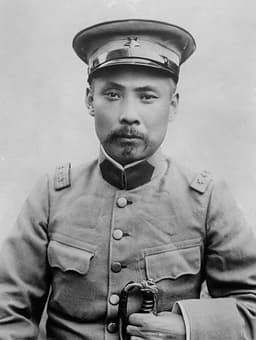
Duan Qirui
General · Modern
53.1Total
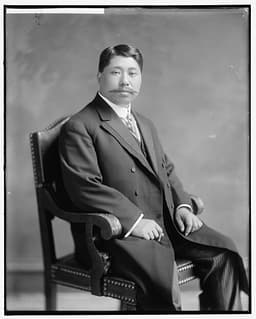
Huang Xing
General · Modern
57.5Total
Basic Information
Born
1865
1874
Died
1936
1916
Era
Modern
Modern
Nationality
China
China
Occupation
General
General
Civilization
Eastern
Eastern
Score Comparison
Military (10%)
47.5
46.7
Political (20%)
53.8
53.8
Influence (20%)
53.3
62.0
Legacy (20%)
47.5
56.0
Leadership (15%)
62.0
62.0
Strategy (15%)
58.0
60.0
TOTAL
53.1
57.5
Duan Qirui — Complete Timeline
1919 AD
Resignation as Premier after the May Fourth MovementPolitical Action◆ Major
Duan Qirui resigned as Premier of the Republic of China in 1919 following the May Fourth Movement. The movement protested the weak response of the Chinese government to the Treaty of Versailles. Duan's government was blamed for failing to protect Chinese interests, leading to his resignation.
ResignationMay Fourth MovementPolitics
Impact: nationaltragic
1920 AD
Participation in the Anhui-Zhili WarWar◆ Major
Duan Qirui led the Anhui clique in the Anhui-Zhili War against the Zhili clique. The war was a major conflict in the Warlord Era. Duan's forces were defeated, leading to his resignation as Premier and the decline of the Anhui clique's power.
Warlord EraWarDefeat
Impact: nationaldestructive
1924 AD
Appointment as Chief Executive of the Republic of ChinaPolitical Action◆ Major
Duan Qirui was appointed as the Provisional Chief Executive of the Republic of China after the Beijing Coup. He headed a provisional government that attempted to unify the country but faced opposition from various warlords. His tenure was marked by political instability and military conflicts.
Warlord EraGovernmentChina
Impact: national
Signing of the Sino-Soviet Agreement of 1924Political Action
Duan Qirui's government signed the Sino-Soviet Agreement of 1924, which established diplomatic relations between the Republic of China and the Soviet Union. The agreement recognized Outer Mongolia as part of China but allowed Soviet influence. It was controversial and criticized by some Chinese nationalists.
DiplomacySoviet UnionTreaty
Impact: national
Huang Xing — Complete Timeline
1905 AD
Co-founded the TongmenghuiPolitical Action◆ Major
Huang Xing co-founded the Tongmenghui (Revolutionary Alliance) in Tokyo with Sun Yat-sen. He became its military leader, organizing armed uprisings against the Qing dynasty.
TongmenghuiRevolutionMilitary
Impact: nationalconstructive
1911 AD
Led the Wuchang UprisingWar
Huang Xing led the Wuchang Uprising, which sparked the Xinhai Revolution. He commanded revolutionary forces against Qing troops, securing initial victories that led to the dynasty's collapse.
Xinhai RevolutionUprisingMilitary
Impact: nationalconstructive
1912 AD
Served as Minister of War in the RepublicPolitical Action◆ Major
Huang Xing served as Minister of War in the provisional government of the Republic of China. He worked to organize a national army and defend the republic against counter-revolutionary forces.
GovernmentMilitaryRepublic
Impact: nationalconstructive
1913 AD
Led the Second Revolution Against Yuan ShikaiWar◆ Major
Huang Xing led the Second Revolution, an armed uprising against President Yuan Shikai's authoritarian rule. The rebellion failed due to lack of coordination and military inferiority, forcing Huang into exile.
Second RevolutionYuan ShikaiExile
Impact: nationaltragic
1916 AD
Died in Exile in ShanghaiPolitical Action
Huang Xing died in Shanghai after returning from exile in Japan and the United States. His death marked the loss of a key military leader of the Chinese revolution, though his legacy endured.
DeathExileRevolution
Impact: nationaltragic
Expert Analysis
Huang Xing vs Duan Qirui
# The Warlord and the Revolutionary
On a sweltering June day in 1919, two men who had once shared the same dream of a modern China found themselves on opposite sides of history. Duan Qirui, the stern-faced premier of the Republic, sat in his Beijing office as student protesters flooded Tiananmen Square, their anger directed at the very government he led. Meanwhile, Huang Xing had been dead for three years, his body buried in Shanghai after a life of exile, but his spirit animated the revolutionaries who now demanded Duan’s head. How had these two men, both generals, both patriots, ended up as symbols of such different Chinas?
Origins
Duan Qirui was born in 1865 into a China still reeling from the Taiping Rebellion. His father, a low-ranking officer, died when Duan was young, leaving him to be raised by relatives in the hardscrabble countryside of Anhui province. The boy found his path through the military academy at Tianjin, where he absorbed German drill techniques and the Confucian ideal of order. By the time he graduated, Duan believed that China’s salvation lay not in revolution but in discipline—in a strong army that could impose stability from above.
Huang Xing, born nine years later in 1874, came from a gentry family in Hunan. His father was a scholar who taught at a local academy, and young Huang excelled at the classics. But the Boxer Rebellion and the humiliation of foreign occupation radicalized him. He traveled to Japan in 1902, where he studied Western military science and met the exiled revolutionaries who would become his comrades. For Huang, China’s sickness was not chaos but tyranny—and only a clean break with the imperial past could cure it.
Rise to Power
Duan’s ascent was methodical, a ladder of loyalty and competence. He served under Yuan Shikai, the strongman who modernized the Beiyang Army, and became Yuan’s chief lieutenant. When the Qing dynasty fell in 1911, Duan helped Yuan seize power, then maneuvered through the treacherous politics of the early republic. By 1916, after Yuan’s death, Duan emerged as the leader of the Anhui clique, one of the most powerful warlord factions in northern China. His power came from his army, his network, and his reputation as a man who could get things done—even if those things were brutal.
Huang’s rise was the opposite: a leap of faith. In 1905, he co-founded the Tongmenghui in Tokyo with Sun Yat-sen, becoming the movement’s military commander. While Sun was the visionary, Huang was the organizer and the fighter. When the Wuchang Uprising erupted in October 1911, Huang rushed to lead it, personally commanding revolutionary troops against Qing loyalists. The uprising succeeded, and Huang became the first Minister of War of the provisional republic. But his power was fleeting—based on revolutionary fervor, not entrenched armies.
Leadership & Governance
As premier from 1916 to 1918, Duan was a pragmatist who believed in centralization. He borrowed heavily from Japan to build a modern military, suppressed dissent with a heavy hand, and sought foreign loans to prop up his government. His signature achievement was the Sino-Soviet Agreement of 1924, which restored diplomatic relations with the Soviet Union and secured recognition for his provisional government. But his methods were dictatorial: he banned opposition newspapers, arrested critics, and used secret police to crush labor movements.
Huang, by contrast, was a builder of institutions rather than a ruler. As Minister of War in 1912, he tried to create a national army loyal to the republic, not to any warlord. He advocated for constitutional government and land reform. But he was a better revolutionary than administrator. His greatest failure came in 1913, when he led the Second Revolution against Yuan Shikai—a poorly planned uprising that collapsed within months, forcing him to flee to Japan. Huang lacked Duan’s ruthlessness; he wanted to win people’s hearts, not break their wills.
Triumph & Tragedy
Duan’s moment of triumph came in 1924, when he was appointed Provisional Chief Executive after the Beijing Coup. For a brief period, he seemed to unify China, brokering peace between warlord factions and hosting international conferences. But his tragedy was also his making: the May Fourth Movement of 1919, which forced his resignation as premier. The students and intellectuals who protested the Treaty of Versailles saw Duan as a tool of the Japanese. He had sold out China for foreign loans. In truth, Duan was a nationalist who believed that only a strong, centralized state could resist imperialism—but he was willing to compromise with the Japanese to get there.
Huang’s triumph was the Wuchang Uprising itself. He had lit the fuse that ended 2,000 years of imperial rule. But his tragedy was that he never lived to see the republic he helped create. He died in 1916 at age 42, in Shanghai, after years of exile in Japan and the United States. His last years were spent watching warlords like Duan tear apart the nation he had fought for. His death was quiet, overshadowed by the noise of civil war.
Character & Destiny
Duan was a man of iron will and narrow vision. His leadership score of 80.4 reflects his ability to command loyalty and organize armies, but his political score of 65.0 reveals his failure to build a broad coalition. He saw China as a machine that needed a strong hand to run it. He was not evil—he refused to betray Yuan Shikai even when offered power—but he was trapped by his own belief in force.
Huang was a man of passion and principle, with a leadership score of 75.5 but a military score of only 42.1. He was a better speaker than a strategist, a better martyr than a ruler. His strategy score of 57.6 shows his weakness: he could inspire men to fight but not to win. He died believing that the revolution had failed, but his ideas—of democracy, of national sovereignty—outlived him.
Legacy
Duan Qirui is remembered as a warlord, a footnote in the story of China’s chaos. His total score of 71.8 is respectable but forgettable. Historians note his role in the Anhui-Zhili War and the Sino-Soviet Agreement, but few mourn him. He died in 1936, a relic of a dying era.
Huang Xing is remembered as a founding father. His legacy score of 66.6 is lower than Duan’s, but his influence score of 70.6 is higher, because his ideas lived on. Sun Yat-sen gets the credit, but Huang was the man who made the revolution happen. In Taiwan and among Chinese democrats, he is a hero. In mainland China, he is honored as a precursor to the Communist revolution.
Conclusion
Standing at the crossroads of China’s modern history, Duan and Huang represent two paths that never fully diverged. Duan believed in order through power; Huang believed in freedom through revolution. Both failed, but their failures shaped the China that followed. The warlord era ended in 1928, when Chiang Kai-shek unified the country—but he used Duan’s methods, not Huang’s. The Communist victory in 1949 was a revolution, but it was also a consolidation of power. In the end, China needed both the iron hand and the fiery heart. Duan built the machine; Huang lit the spark. Neither could finish the journey alone.
Rankings
🥇
Huang XingLeader
Mil: 46.7Pol: 53.8Inf: 62.0
57.5
🥈
Duan Qirui
Mil: 47.5Pol: 53.8Inf: 53.3
53.1
+4.4 behind
How This Comparison Works
Algorithm
Each figure is scored on 6 dimensions (0—100 scale) based on structured historical data: Military (10%), Political (20%), Influence (20%), Legacy (20%), Leadership (15%), Strategy (15%). The weighted total produces the final ranking.
Data Sources
Scores are computed from structured sub-indicators in the database. Scale factors adjust for era (Ancient ×0.85, Modern ×1.0) and civilization size (Eastern ×1.05, Other ×0.80) to account for differences in population and military scale.
Maximum 3 Figures
Comparisons are limited to 2—3 figures to ensure readability and statistical meaningfulness.
Error Margins
±5 points per dimension — Sub-scores are derived from historical records with inherent uncertainty. Two figures within 5 points on a dimension should be considered roughly equivalent in that area.
Total Score Accuracy
±3 points overall — The weighted combination of 6 dimensions produces a total score with approximately ±3 points of uncertainty. Differences of less than 3 points are not statistically significant— the figures are effectively tied.
Known Limitations
- Historical records are incomplete and uneven across civilizations
- Figures from oral-tradition societies may be underrepresented
- Occupation labels can misclassify multi-role figures
- Scores measure capability and impact, not moral character
- Quantitative scoring is a comparison tool, not absolute truth
Capability Radar
Military (10%) — Battles & Warfare
Battles
55
35
Win Rate
50
30
Expansion
40
20
Political (20%) — Governance & Reform
Reform
55
60
Diplomacy
50
55
Economy
40
30
Influence (20%) — Cultural & Global Reach
Cultural
30
40
Global
20
40
Legacy (20%) — Historical Impact
Historical
45
55
Longevity
30
45
Leadership (15%) — Power & Stability
Tenure
60
40
Stability
30
25
Strategy (15%) — Tactics & Innovation
Strategy
65
45
Tactics
60
40
Reform
70
50
Similar Comparisons
Comments & Discussion
The Gilded Titan6/16/2026
Duan was the real driving force behind the Beiyang Army's modernization—anyone who thinks Yuan Shikai alone built that machine is ignoring Duan's Japanese-trained staff work and his ruthless pragmatism during the 1911 Revolution. Huang Xing, for all his battlefield bravery at Wuchang, was a tactical leader, not a systemic reformer. Duan turned military power into political bureaucracy, which is why he survived so many purges while Huang died in obscurity.
北洋刀笔客6/16/2026
说段祺瑞是“军阀”,那是历史课本的简化版!他主导了北洋政府对德奥宣战,为中国换回山东权益,可惜被巴黎和会坑了。黄兴固然是推翻帝制的英雄,但他晚年优柔寡断,把同盟会领导权拱手让给孙中山,自己带出来的湘军全成了派系内耗的炮灰。历史不记失败者,但段祺瑞的三造共和,比黄兴的一次武昌起义更持久。
The Paper Tiger's Shadow6/16/2026
Huang Xing's tactical incompetence at the Second Revolution in 1913 is glossed over by romantic nationalist histories. He abandoned Nanjing without a real fight, leaving his poorly organized troops to be slaughtered by Duan's disciplined Beiyang divisions. Duan understood the grim reality of total war; Huang still fought like a Taiping-era chieftain—brave in skirmishes, useless in modern operational planning. Heroism doesn't win wars; logistics and ruthless command do.
湘魂楚魄6/16/2026
黄兴才是真正愿意放下身段的实干家——他辞去陆军总长时,实际上是主动让位给袁世凯的北洋系,避免中国陷入南北割裂的内战。反观段祺瑞,他打着“武力统一”的旗号,实则是替北洋军阀集团敛财扩权。1920年直皖战争,段祺瑞的精锐边防军在短短五天就溃败,暴露了他迷信德国式操练、忽略政治根基的致命弱点。黄兴若活到1920年代,中国未必会有那么大分裂。
The Accidental Iconoclast6/16/2026
Comparing these two is almost unfair—Duan represented the ossified end of Qing military bureaucracy, while Huang embodied the chaotic birth of revolutionary nationalism. The tragedy is they both were ultimately consumed by forces they couldn't control. Duan's refusal to capitulate to the May Fourth Movement wasn't just stubbornness; he genuinely believed Order could save China, while Huang's faith in decentralized rebellion proved naive. Both failed because 1911 left no foundational institutions