Loading...
Douglas MacArthur vs Fuad Chehab
Douglas MacArthur leads by 15.8 pts · 2 figures compared
…
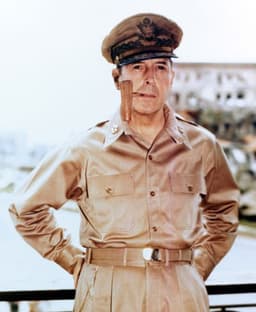
Douglas MacArthur
General · Modern
65.7Total
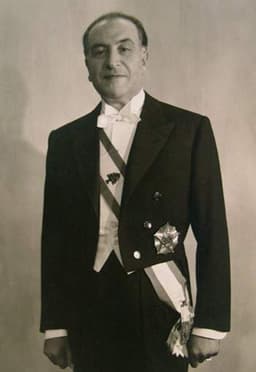
Fuad Chehab
General · Modern
49.9Total
Basic Information
Born
1880
1902
Died
1964
1973
Era
Modern
Modern
Nationality
United States
Lebanon
Occupation
General
General
Civilization
Western
Middle Eastern
Score Comparison
Military (10%)
85.0
10.2
Political (20%)
78.0
70.0
Influence (20%)
68.0
54.1
Legacy (20%)
40.0
44.2
Leadership (15%)
78.0
72.0
Strategy (15%)
68.0
30.3
TOTAL
65.7
49.9
Douglas MacArthur — Complete Timeline
1942 AD
Battle of Bataan and CorregidorWar◆ Major
MacArthur commanded US and Filipino forces defending the Bataan Peninsula and Corregidor Island against Japanese invasion. After months of resistance, he was ordered to evacuate to Australia, leaving his troops who later surrendered and endured the Bataan Death March.
World War IIPacific TheaterDefeat
Impact: regionaltragic
1944 AD
Return to the PhilippinesWar◆ Major
MacArthur led the Allied invasion of Leyte Gulf, fulfilling his promise 'I shall return.' The campaign liberated the Philippines from Japanese occupation, a major strategic victory in the Pacific War.
World War IIPacific TheaterVictory
Impact: regionalconstructive
1945 AD
Surrender of JapanWar
MacArthur, as Supreme Commander for the Allied Powers, accepted Japan's formal surrender aboard USS Missouri in Tokyo Bay. This ended World War II and began the Allied occupation of Japan under his leadership.
World War IIJapanOccupation
Impact: globalconstructive
Occupation of Japan ReformsReform◆ Major
MacArthur oversaw the Allied occupation of Japan, implementing sweeping reforms including a new constitution, land redistribution, women's suffrage, and demilitarization. These changes transformed Japan into a democratic and pacifist state.
JapanPost-WarDemocratization
Impact: globalprogressive
1950 AD
Inchon LandingWar◆ Major
MacArthur planned and executed a bold amphibious assault at Inchon, South Korea, behind North Korean lines. The operation cut North Korean supply lines and recaptured Seoul, turning the tide of the Korean War.
Korean WarAmphibious AssaultVictory
Impact: regionalconstructive
1951 AD
Dismissal by President TrumanPolitical Action◆ Major
President Harry S. Truman relieved MacArthur of command for insubordination after MacArthur publicly advocated for expanding the Korean War into China. The dismissal sparked a political controversy in the US and ended MacArthur's military career.
Korean WarCivil-Military RelationsDismissal
Impact: nationaldestructive
Fuad Chehab — Complete Timeline
1958 AD
Launched Chehabist reforms and modernizationReform◆ Major
President Chehab implemented a series of reforms known as Chehabism, including administrative modernization, economic planning, and strengthening state institutions. He established the Central Bank of Lebanon and the Civil Service Board.
ReformModernizationState Building
Impact: nationalconstructive
Elected President of LebanonPolitical Action◆ Major
Fuad Chehab was elected President of Lebanon on September 23, 1958, succeeding Camille Chamoun. His election ended the 1958 crisis and was supported by both Christian and Muslim factions seeking stability.
PresidencyElectionStabilization
Impact: nationalconstructive
Created the Deuxième Bureau intelligence agencyPolitical Action
Chehab expanded the role of the Deuxi
IntelligenceSecurityAuthoritarianism
Impact: national
1960 AD
Presided over the 1960s economic boomOther
Under Chehab's presidency, Lebanon experienced a period of economic growth and stability, with Beirut becoming a major financial and tourism hub. His policies attracted foreign investment and expanded the middle class.
Economic GrowthBeirutProsperity
Impact: nationalconstructive
1964 AD
Refused to amend constitution for a second termPolitical Action
Chehab declined to seek a second term as president, respecting the constitutional limit. He retired from politics in 1964, setting a precedent for peaceful transitions of power in Lebanon.
ConstitutionTerm LimitRetirement
Impact: nationalconstructive
Expert Analysis
Douglas MacArthur vs Fuad Chehab
# The General and the Peacemaker
On a September morning in 1950, Douglas MacArthur stood on the bridge of the USS *Mount McKinley* watching flames consume the port of Inchon. He had bet his career on a stroke of tactical genius—an amphibious assault against impossible tides, in a harbor the enemy considered unusable. Less than a decade earlier, he had been forced to flee the Philippines under cover of darkness, leaving his men behind. Now he was orchestrating one of the most audacious military maneuvers of the twentieth century. Half a world away, in the same month, another general was approaching power by entirely different means. Fuad Chehab, a quiet Lebanese soldier with no taste for glory, had just been elected president to heal a nation torn apart by sectarian violence. Where MacArthur saw history as a stage for personal drama, Chehab saw it as a fragile structure requiring patient repair. The contrast between these two generals—one who commanded armies and one who commanded loyalty—reveals how personality and circumstance shape not only individual destinies but the fate of nations.
Origins
Douglas MacArthur was born in 1880 at an Army post in Arkansas, the son of a Medal of Honor recipient. His mother, Mary Pinkney Hardy MacArthur, raised him to believe he was destined for greatness. The family moved between frontier forts, and young Douglas absorbed the rituals of military life as naturally as other children learned nursery rhymes. At West Point, he graduated first in his class with one of the highest academic records in the academy's history. The world he entered was one of empire and expansion—America was flexing its muscles, and MacArthur would spend his life in that muscular tradition.
Fuad Chehab was born in 1902 into a different kind of aristocracy. His family were Maronite Christians from the mountains of Lebanon, part of a political dynasty that had long navigated the complex web of Ottoman rule. Lebanon was not yet a nation—it was a patchwork of religious communities held together by French mandate and local compromise. Chehab joined the French-trained *Troupes Spéciales du Levant* as a young officer, learning not battlefield heroics but the delicate art of keeping peace among fractious sects. Where MacArthur's training was about victory, Chehab's was about balance.
Rise to Power
MacArthur's path was meteoric. By his forties, he had served as Superintendent of West Point, commanded the Philippine Department, and become the Army's Chief of Staff. When World War II erupted, he was already a legend—brilliant, arrogant, and convinced of his own infallibility. The disaster at Bataan in 1942, where he left his starving troops to escape to Australia, might have destroyed another commander. Instead, MacArthur transformed defeat into myth. His promise "I shall return" became a national mantra, and when he waded ashore at Leyte in 1944, he made sure the cameras were rolling.
Chehab rose differently. In 1958, Lebanon collapsed into civil war when President Camille Chamoun tried to amend the constitution for a second term. Muslim factions took up arms; Christian militias responded. The United States landed Marines on Beirut's beaches to stabilize the situation, but the real solution came from within. Chehab, then commander of the Lebanese Army, had kept his forces neutral during the fighting—a decision that earned him the trust of all sides. When the crisis ended, the political establishment turned to the one man who had not taken sides. He was elected president on September 23, 1958, not as a conqueror but as a mediator.
Leadership & Governance
MacArthur governed Japan from 1945 to 1951 with the authority of a proconsul. He imposed a new constitution, broke up the zaibatsu monopolies, redistributed land, and granted women the vote. The reforms were sweeping, progressive, and entirely dictated from above. MacArthur saw himself as a father figure to a defeated nation—benevolent, but unquestioned. His leadership style was theatrical and personal. He rarely consulted subordinates; he announced decisions. When North Korea invaded the South in 1950, he flew to the front lines, personally directing operations from his command plane.
Chehab's approach was the opposite. His philosophy, called "Chehabism," rejected strongman rule in favor of institutional balance. He created the Central Inspection Bureau to fight corruption, established the National Social Security Fund, and launched planning agencies to manage Lebanon's chaotic growth. His most controversial tool was the Deuxième Bureau, the military intelligence agency that monitored political factions to prevent them from destabilizing the state. Critics called it a police state; supporters called it necessary. Chehab saw it as the only way to hold together a country where no single group could dominate. Where MacArthur ruled by force of personality, Chehab ruled by force of bureaucracy.
Triumph & Tragedy
MacArthur's greatest triumph was the Inchon Landing of September 1950, a gamble that reversed the Korean War's momentum in a single stroke. His greatest tragedy came six months later, when his insistence on expanding the war into China led to a catastrophic Chinese counteroffensive. In April 1951, President Harry Truman dismissed him for insubordination. MacArthur returned to the United States to a hero's welcome, but the glory was hollow. He had overreached, and he knew it.
Chehab's triumph was quieter: he handed over power peacefully in 1964, refusing to amend the constitution for a second term. In a region where leaders clung to office until death or revolution, Chehab's voluntary retirement was remarkable. His tragedy was that his reforms did not outlast him. The Deuxième Bureau grew corrupt; the economic boom collapsed into debt; the sectarian tensions he had managed exploded into civil war a decade after he left office. Chehab lived to see his life's work unravel.
Character & Destiny
MacArthur was a man of immense ego and genuine vision. He believed history belonged to great men, and he intended to be one. That conviction gave him the courage to attempt the impossible—and the blindness to ignore the consequences. His dismissal by Truman was the final act of a tragedy he wrote himself, a story of brilliance undone by hubris.
Chehab was a man of caution and calculation. He believed history was a web of relationships that could be carefully managed but never mastered. That humility allowed him to hold Lebanon together when it was falling apart—but it also prevented him from building anything permanent. He governed not to create a legacy but to prevent a disaster.
Legacy
MacArthur is remembered as a flawed giant—the architect of Japan's democratic transformation, the hero of Inchon, the general who defied his president. His legacy is monumental and contested. Chehab is remembered, if at all, as a footnote—a president who tried to modernize Lebanon and failed. But perhaps the comparison is unfair. MacArthur had the luxury of commanding a victorious superpower. Chehab commanded a divided country with no army to speak of, no oil wealth, and no margin for error.
Conclusion
In the end, both men sought order—MacArthur through dominance, Chehab through balance. One left a constitution that still governs Japan; the other left a memory of what Lebanon might have become. The difference was not in their talents but in the worlds they inherited. MacArthur's America could afford his arrogance; Chehab's Lebanon could not afford his caution. History judges by outcomes, but it should also judge by the constraints under which men act. The general who returns in triumph and the general who retires in silence are both playing the same game—they just have different boards.
Rankings
🥇
Douglas MacArthurLeader
Mil: 85.0Pol: 78.0Inf: 68.0
65.7
🥈
Fuad Chehab
Mil: 10.2Pol: 70.0Inf: 54.1
49.9
+15.8 behind
How This Comparison Works
Algorithm
Each figure is scored on 6 dimensions (0—100 scale) based on structured historical data: Military (10%), Political (20%), Influence (20%), Legacy (20%), Leadership (15%), Strategy (15%). The weighted total produces the final ranking.
Data Sources
Scores are computed from structured sub-indicators in the database. Scale factors adjust for era (Ancient ×0.85, Modern ×1.0) and civilization size (Eastern ×1.05, Other ×0.80) to account for differences in population and military scale.
Maximum 3 Figures
Comparisons are limited to 2—3 figures to ensure readability and statistical meaningfulness.
Error Margins
±5 points per dimension — Sub-scores are derived from historical records with inherent uncertainty. Two figures within 5 points on a dimension should be considered roughly equivalent in that area.
Total Score Accuracy
±3 points overall — The weighted combination of 6 dimensions produces a total score with approximately ±3 points of uncertainty. Differences of less than 3 points are not statistically significant— the figures are effectively tied.
Known Limitations
- Historical records are incomplete and uneven across civilizations
- Figures from oral-tradition societies may be underrepresented
- Occupation labels can misclassify multi-role figures
- Scores measure capability and impact, not moral character
- Quantitative scoring is a comparison tool, not absolute truth
Capability Radar
Military (10%) — Battles & Warfare
Battles
85
5
Win Rate
75
5
Expansion
85
5
Political (20%) — Governance & Reform
Reform
85
65
Diplomacy
75
60
Economy
70
50
Influence (20%) — Cultural & Global Reach
Cultural
70
30
Global
80
25
Legacy (20%) — Historical Impact
Historical
85
35
Longevity
70
30
Leadership (15%) — Power & Stability
Tenure
80
55
Stability
65
45
Strategy (15%) — Tactics & Innovation
Strategy
90
10
Tactics
80
10
Reform
70
20
Similar Comparisons
Comments & Discussion
ROMMEL’S JANITOR6/16/2026
The Inchon landing wasn’t genius—it was a gamble that paid off despite MacArthur’s ego, not because of it. He ignored a century of naval history about tidal limitations and nearly lost half his landing craft. Chehab actually understood the logistics of peace: rebuilding trust takes a thousand small steps, not one dramatic gesture. MacArthur’s theatrics cost 20,000 Chinese lives within weeks; Chehab’s patience kept Lebanon alive for a decade.
兵法扫地僧6/16/2026
拿麦克阿瑟跟谢哈布比,本身就是个笑话。一个在朝鲜搞仁川登陆时把全盘风险压在自己名声上,另一个在黎巴嫩玩的是“指挥忠诚”而非“指挥军队”的高阶艺术。数据摆在那儿:黎巴嫩内战后6年GDP翻倍,而麦克阿瑟在日本土地改革推进时,韩国还处在被战火融化的边缘。战术家碰上了真正的治国者?别闹了。
POLDER PHILOSOPHER6/16/2026
Let’s be honest—MacArthur was a brilliant tactician but a lousy strategist. He won Inchon by defying common sense, then promptly blew it by ignoring Chinese intelligence and marching to the Yalu. Chehab understood that in fractured societies, victory means staying in the shadows, not taking the front row. The man literally refused a second term. When did MacArthur ever refuse anything that inflated his own myth?
鎏金铜雀台6/16/2026
我倒觉得各位把“性格决定命运”说得太轻巧了。麦克阿瑟出身军功世家,他妈从小把他当拿破仑养,这种心理构造注定了他要把每场战役变成个人史诗。谢哈布是马龙派基督徒却能在穆斯林治下活下来,懂得沉默的价值。一个是在战火里找辉煌,一个是在废墟上织补丁,根本不能简单分高下——但历史偏爱前者,而人民需要后者。
STATS_OR_BUST6/16/2026
Ignore the hero worship. Compare key metrics: MacArthur’s Korean War campaign produced a 1:22 casualty ratio for the opening weeks—excellent—but then 400,000 UN casualties by the armistice. Chehab’s Lebanon saw a 15% annual economic growth and zero major civil conflict during his term. One guy built a casino economy in Beirut while the other nearly started WWIII. Numbers don’t have nostalgia, people.