Loading...
Deodoro da Fonseca vs Plutarco Elias Calles
Plutarco Elias Calles leads by 9.7 pts · 2 figures compared
…
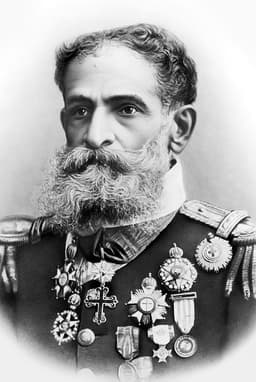
Deodoro da Fonseca
General · Modern
48.8Total
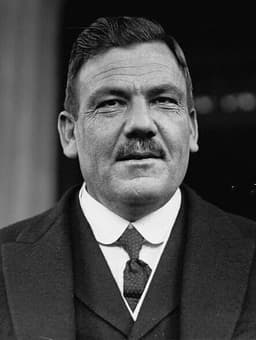
Plutarco Elias Calles
General · Modern
58.5Total
Basic Information
Born
1827
1877
Died
1892
1945
Era
Modern
Modern
Nationality
Brazil
Mexico
Occupation
General
General
Civilization
Western
Western
Score Comparison
Military (10%)
50.0
40.0
Political (20%)
45.1
70.3
Influence (20%)
54.1
68.0
Legacy (20%)
44.2
40.0
Leadership (15%)
57.6
78.0
Strategy (15%)
38.6
52.5
TOTAL
48.8
58.5
Deodoro da Fonseca — Complete Timeline
1889 AD
Proclamation of the Brazilian RepublicPolitical Action
Deodoro da Fonseca led a military coup that overthrew Emperor Pedro II on November 15, 1889. He proclaimed the Republic of the United States of Brazil, ending 67 years of imperial rule.
CoupRepublic
Impact: globalprogressive
1891 AD
Election as First President of BrazilPolitical Action◆ Major
Deodoro da Fonseca was elected the first President of Brazil by the Constituent Congress on February 25, 1891. He took office under the new republican constitution, but his rule was brief and authoritarian.
ElectionPresidency
Impact: national
Dissolution of the National CongressPolitical Action◆ Major
Facing political opposition, Deodoro da Fonseca dissolved the National Congress on November 3, 1891, and declared a state of siege. This authoritarian act triggered a naval revolt and his eventual resignation.
AuthoritarianismPolitical Crisis
Impact: nationaldestructive
Resignation from the PresidencyPolitical Action◆ Major
Deodoro da Fonseca resigned the presidency on November 23, 1891, after a naval rebellion threatened his government. He handed power to Vice President Floriano Peixoto, ending his 9-month rule.
ResignationPolitical Crisis
Impact: nationaltragic
Plutarco Elias Calles — Complete Timeline
1915 AD
Governorship of SonoraPolitical Action
Calles served as Governor of Sonora from 1915 to 1919, implementing radical reforms including land redistribution, anti-clerical laws, and labor rights. His governorship established him as a key figure in the Sonoran dynasty and a proponent of revolutionary change.
GovernorshipSonoraReforms
Impact: regionalconstructive
1924 AD
Presidency of MexicoPolitical Action◆ Major
Calles was elected President of Mexico in 1924, serving until 1928. His administration continued revolutionary reforms, including land reform, labor rights, and secularization, but also faced opposition from the Catholic Church and conservative groups.
PresidencyMexican RevolutionReforms
Impact: nationalconstructive
1926 AD
Cristero WarWar◆ Major
Calles enforced anti-clerical laws, including the Calles Law, which restricted the Catholic Church's role in society. This sparked the Cristero War (1926-1929), a violent rebellion by Catholic peasants against the state, resulting in tens of thousands of deaths.
Cristero WarAnti-clericalismReligious Conflict
Impact: nationaldestructive
1928 AD
MaximatoPolitical Action◆ Major
After his presidency, Calles remained the de facto ruler of Mexico during the Maximato (1928-1934), controlling puppet presidents. He continued to influence policy, but his power waned as President L
MaximatoPolitical ControlCárdenas
Impact: national
1929 AD
Founding of the National Revolutionary Party (PNR)Political Action
Calles founded the National Revolutionary Party (PNR) in 1929, which later became the Institutional Revolutionary Party (PRI). This party dominated Mexican politics for over 70 years, institutionalizing the revolution's legacy and centralizing power.
Political PartyPRIInstitutionalization
Impact: nationalconstructive
Expert Analysis
Deodoro da Fonseca vs Plutarco Elias Calles
# The General Who Built a Dynasty, and the General Who Built a Republic
On a sweltering November afternoon in 1891, a tired and humiliated general boarded a ship in Rio de Janeiro harbor, leaving behind a presidency he had held for less than a year. Half a continent away and three decades later, another general would leave the Mexican presidency after a full term, only to rule from the shadows for six more years, pulling the strings of puppet presidents like a master puppeteer. Why did one man’s republic crumble in months, while another’s political machine endured for seven decades? The answer lies not in their uniforms, but in the worlds they inherited and the worlds they dared to build.
Origins
Deodoro da Fonseca was born in 1827 into the established order of the Brazilian Empire, a monarchy that had ruled peacefully for nearly seven decades. He was a military man through and through, shaped by the rigid hierarchies of the army and the conservative values of a slave-owning aristocracy. Brazil in the late nineteenth century was a land of coffee barons and imperial pageantry, where change came slowly, if at all.
Plutarco Elías Calles, born half a century later in 1877, emerged from the chaos of revolutionary Mexico. His father was absent, his mother died young, and he grew up in the gritty border state of Sonora, where violence and ambition were the only constants. The Mexico of his youth was a country torn apart by the Porfiriato’s iron fist and then by the Mexican Revolution’s bloody upheaval. Calles learned early that power was not inherited—it was taken, held, and institutionalized.
Rise to Power
Fonseca’s path to power was almost accidental. A respected but not brilliant military commander, he became the figurehead of a conspiracy of disgruntled republicans and ambitious officers who saw the aging Emperor Pedro II as a obstacle to modernity. On November 15, 1889, Fonseca led a bloodless coup, marching troops through Rio de Janeiro and proclaiming the Republic. He did not plan the revolution; he merely stood at its head when the moment came.
Calles, by contrast, clawed his way up through the brutal school of revolutionary politics. He served as governor of Sonora from 1915, implementing radical land reforms and crushing his enemies with ruthless efficiency. When he ran for president in 1924, he was not a reluctant figurehead but a seasoned political brawler who understood that in Mexico, the presidency was not a crown to be worn—it was a weapon to be wielded.
Leadership & Governance
As president, Fonseca proved disastrous. His political philosophy was vague, his administrative skills mediocre, and his temperament volatile. When the Constituent Congress elected him president in February 1891, he had no party, no coherent program, and no base of support beyond the army. Within months, his government was paralyzed by infighting. In a desperate act, he dissolved the National Congress on November 3, 1891, declaring a state of emergency. It was the move of a man who had run out of ideas.
Calles governed with a vision as sharp as a knife. His presidency from 1924 to 1928 was a whirlwind of revolutionary reform: land redistribution, labor rights, public education, and—most controversially—the enforcement of the Calles Law, which stripped the Catholic Church of its property, closed monasteries, and banned foreign priests. The Cristero War that erupted in 1926 was a brutal, bloody conflict that killed tens of thousands. But Calles did not flinch. He understood that in Mexico, the state had to dominate the church, or the church would dominate the state.
Triumph & Tragedy
Fonseca’s greatest moment was also his undoing. The proclamation of the Republic on November 15, 1889, was a triumph that he could not sustain. His tragedy was that he had no plan for the day after the revolution. When a naval rebellion threatened his government in November 1891, he resigned rather than fight. He died the following year, a broken and forgotten man.
Calles’s greatest triumph was not his presidency but what came after. In 1929, he founded the National Revolutionary Party (PNR), which would evolve into the Institutional Revolutionary Party (PRI). This was his masterpiece: a political machine that absorbed every faction, every ambition, and every rival into a single, disciplined organization. During the Maximato from 1928 to 1934, Calles ruled Mexico without being president, choosing pliable successors and crushing any who dared to challenge him. His tragedy was that his own creation would eventually turn against him—in 1936, his protégé Lázaro Cárdenas exiled him, proving that the machine he built was stronger than the man who built it.
Character & Destiny
Fonseca was a man of honor but not of vision. He believed in the Republic as an idea but lacked the ruthlessness to make it real. His character was that of a gentleman soldier, ill-suited for the dirty work of political consolidation. He wanted to be liked, and so he was easily manipulated.
Calles was a man of iron. He was called the “Jefe Máximo” (Supreme Chief) for a reason. He believed that order had to be imposed, that institutions had to be built, and that sentimentality was a luxury that revolutionaries could not afford. His character was forged in the crucible of Sonora, where mercy was weakness and victory was survival.
Legacy
Deodoro da Fonseca is a footnote in Brazilian history, remembered as the man who started the Republic but could not finish it. His name appears in textbooks, but his influence died with his resignation. Brazil’s First Republic would stumble on for decades, but his personal legacy is negligible.
Plutarco Elías Calles left a monument that stood for seventy-one years. The PRI ruled Mexico until 2000, a one-party state that brought stability at the cost of democracy. Calles’s secularization of Mexico is still contested, his anti-clerical laws a source of bitter memory. But he understood something that Fonseca never did: that a revolution is not a moment but a machine. And machines, if built well, can outlast their creators.
Conclusion
Two generals, two republics, two destinies. Fonseca’s republic died because he could not build the institutions to sustain it. Calles’s republic endured because he built institutions that could survive even him. In the end, the difference between a footnote and a dynasty is not courage or intelligence—it is the willingness to do the unglamorous work of politics: the deal-making, the party-building, the long, grinding labor of turning chaos into order. Fonseca wanted to be a liberator; Calles wanted to be a builder. History remembers the builders.
Rankings
🥇
Plutarco Elias CallesLeader
Mil: 40.0Pol: 70.3Inf: 68.0
58.5
🥈
Deodoro da Fonseca
Mil: 50.0Pol: 45.1Inf: 54.1
48.8
+9.7 behind
How This Comparison Works
Algorithm
Each figure is scored on 6 dimensions (0—100 scale) based on structured historical data: Military (10%), Political (20%), Influence (20%), Legacy (20%), Leadership (15%), Strategy (15%). The weighted total produces the final ranking.
Data Sources
Scores are computed from structured sub-indicators in the database. Scale factors adjust for era (Ancient ×0.85, Modern ×1.0) and civilization size (Eastern ×1.05, Other ×0.80) to account for differences in population and military scale.
Maximum 3 Figures
Comparisons are limited to 2—3 figures to ensure readability and statistical meaningfulness.
Error Margins
±5 points per dimension — Sub-scores are derived from historical records with inherent uncertainty. Two figures within 5 points on a dimension should be considered roughly equivalent in that area.
Total Score Accuracy
±3 points overall — The weighted combination of 6 dimensions produces a total score with approximately ±3 points of uncertainty. Differences of less than 3 points are not statistically significant— the figures are effectively tied.
Known Limitations
- Historical records are incomplete and uneven across civilizations
- Figures from oral-tradition societies may be underrepresented
- Occupation labels can misclassify multi-role figures
- Scores measure capability and impact, not moral character
- Quantitative scoring is a comparison tool, not absolute truth
Capability Radar
Military (10%) — Battles & Warfare
Battles
20
45
Win Rate
25
50
Expansion
10
30
Political (20%) — Governance & Reform
Reform
40
85
Diplomacy
25
65
Economy
15
60
Influence (20%) — Cultural & Global Reach
Cultural
20
70
Global
15
60
Legacy (20%) — Historical Impact
Historical
35
75
Longevity
20
70
Leadership (15%) — Power & Stability
Tenure
30
70
Stability
10
55
Strategy (15%) — Tactics & Innovation
Strategy
25
55
Tactics
20
40
Reform
15
60
Similar Comparisons
Comments & Discussion
DEODORO_DISASTER6/16/2026
Comparing Deodoro to Calles is like comparing a firecracker to a guided missile. Sorry, but Fonseca had zero political instincts—he lasted 9 months, resigned because he couldn't handle a constitutional crisis, and left Brazil in worse shape. Calles? He created the PRI, which ran Mexico for 71 years. One's a cautionary footnote, the other built a dynasty that outlasted most 20th-century regimes. Give me institutional staying power over a uniform any day.
冷幽默将军6/16/2026
Deodoro根本就是个穿着军装的喜剧演员——他执政时因为解散国会差点引发内战,结果自己先怂了,灰溜溜下台。Calles至少知道怎么玩政治:把革命制度化、创立PNR、让墨西哥军队乖乖回家。要我说,一个是被历史踹出门的失败者,一个是把门焊死的游戏规则制定者。短跑选手和马拉松冠军没有可比性。