Loading...
Deodoro da Fonseca vs J. B. M. Hertzog
J. B. M. Hertzog leads by 7.3 pts · 2 figures compared
…
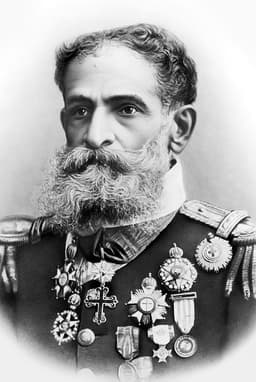
Deodoro da Fonseca
General · Modern
48.8Total
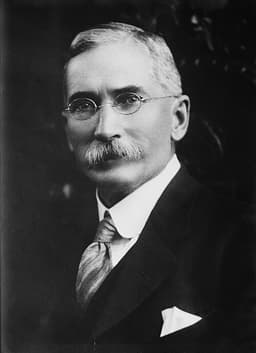
J. B. M. Hertzog
General · Modern
56.1Total
Basic Information
Born
1827
1866
Died
1892
1942
Era
Modern
Modern
Nationality
Brazil
South Africa
Occupation
General
General
Civilization
Western
Other
Score Comparison
Military (10%)
50.0
25.0
Political (20%)
45.1
60.0
Influence (20%)
54.1
56.7
Legacy (20%)
44.2
50.0
Leadership (15%)
57.6
79.8
Strategy (15%)
38.6
60.0
TOTAL
48.8
56.1
Deodoro da Fonseca — Complete Timeline
1889 AD
Proclamation of the Brazilian RepublicPolitical Action
Deodoro da Fonseca led a military coup that overthrew Emperor Pedro II on November 15, 1889. He proclaimed the Republic of the United States of Brazil, ending 67 years of imperial rule.
CoupRepublic
Impact: globalprogressive
1891 AD
Election as First President of BrazilPolitical Action◆ Major
Deodoro da Fonseca was elected the first President of Brazil by the Constituent Congress on February 25, 1891. He took office under the new republican constitution, but his rule was brief and authoritarian.
ElectionPresidency
Impact: national
Dissolution of the National CongressPolitical Action◆ Major
Facing political opposition, Deodoro da Fonseca dissolved the National Congress on November 3, 1891, and declared a state of siege. This authoritarian act triggered a naval revolt and his eventual resignation.
AuthoritarianismPolitical Crisis
Impact: nationaldestructive
Resignation from the PresidencyPolitical Action◆ Major
Deodoro da Fonseca resigned the presidency on November 23, 1891, after a naval rebellion threatened his government. He handed power to Vice President Floriano Peixoto, ending his 9-month rule.
ResignationPolitical Crisis
Impact: nationaltragic
J. B. M. Hertzog — Complete Timeline
1899 AD
Boer War GeneralWar◆ Major
Hertzog served as a Boer general in the Second Boer War, commanding forces in the Orange Free State. He participated in several battles and became a prominent Afrikaner military leader.
Second Boer WarGeneralMilitary
Impact: regional
1914 AD
Founded the National PartyPolitical Action
Hertzog broke away from the South African Party and founded the National Party, which championed Afrikaner nationalism and opposed British imperial influence. The party would later implement apartheid.
National PartyAfrikaner NationalismFounding
Impact: nationalconstructive
1924 AD
Prime Minister of South AfricaPolitical Action◆ Major
Hertzog became Prime Minister after his National Party won the general election in coalition with the Labour Party. His government implemented policies to protect white workers and promote Afrikaner interests, including the 'civilized labour' policy.
Prime MinisterAfrikaner RightsLabour Policy
Impact: national
1934 AD
Merged with Smuts to Form United PartyPolitical Action◆ Major
Hertzog merged his National Party with Jan Smuts' South African Party to form the United Party. The coalition aimed to address the economic crisis of the Great Depression and promote national unity, but it alienated hardline Afrikaner nationalists.
United PartyCoalitionNational Unity
Impact: nationalconstructive
1936 AD
Passed the Representation of Natives ActReform◆ Major
Hertzog's government passed the Representation of Natives Act, which removed Black voters from the common voters' roll in the Cape Province and allowed them to elect white representatives instead. This further entrenched racial segregation.
SegregationDisenfranchisementLegislation
Impact: nationaldestructive
1939 AD
Resigned Over Neutrality in WWIIPolitical Action◆ Major
Hertzog advocated for South African neutrality in World War II, but his cabinet voted to enter the war on the Allied side. He resigned as Prime Minister and was succeeded by Jan Smuts, splitting the United Party.
World War IINeutralityResignation
Impact: national
Expert Analysis
J. B. M. Hertzog vs Deodoro da Fonseca
# The General Who Became a Nation Builder
On a November morning in 1891, two generals faced very different fates. In Rio de Janeiro, Deodoro da Fonseca, the first president of Brazil, sat alone in his palace, his resignation letter before him. A naval rebellion had just forced him from power after only nine months. Thousands of miles away, in South Africa, J. B. M. Hertzog was still a Boer lawyer and farmer, his greatest triumphs yet to come. Both men were generals who became political founders. Both shaped nations at their most fragile moments. Yet one built a party that would dominate his country for decades, while the other watched his republic collapse around him within a year. What made the difference?
Origins
Deodoro da Fonseca was born in 1827 into a military family in Alagoas, Brazil. The empire of Pedro II seemed eternal, stable, and progressive. Fonseca grew up in a world where the army was a respected institution, and loyalty to the crown was unquestioned. He fought in the Paraguayan War, rising through the ranks with steady competence. By 1889, he was a respected marshal, but not a revolutionary.
Hertzog, born in 1866 in the Cape Colony, came of age in a very different world. The British had annexed his homeland, and the Boer republics were under constant pressure. He studied law in Europe, returned to practice in Pretoria, and watched as tensions between the British Empire and the Transvaal Republic escalated into war. When the Second Boer War broke out in 1899, Hertzog became a general—not by training, but by necessity. He commanded forces in the Orange Free State, fighting a guerrilla war against the world's most powerful empire. That experience forged him into something Fonseca never became: a political warrior.
Rise to Power
Fonseca's rise was almost accidental. By 1889, the Brazilian monarchy was weakening. A growing republican movement, inspired by positivism and military discontent, needed a figurehead. Fonseca was reluctant. He had served the emperor for decades. But when a political crisis erupted over the succession, the military pressured him to act. On November 15, 1889, he led a bloodless coup, proclaiming the republic. He became the provisional president, then, in February 1891, was elected the first constitutional president. He had never sought power; it had been thrust upon him.
Hertzog, by contrast, built his power deliberately. After the Boer War ended in 1902, he entered politics. In 1914, he founded the National Party, breaking away from the South African Party to champion Afrikaner nationalism. He was not a reluctant leader; he was a builder. He spent a decade organizing, campaigning, and consolidating support among Afrikaners who felt marginalized by British dominance. When his party won the 1924 election, Hertzog became prime minister with a clear mandate and a coherent vision.
Leadership & Governance
Hertzog governed with a strategist's mind. His first term focused on protecting Afrikaner language and culture, promoting local industry, and securing South Africa's autonomy within the British Empire. He was pragmatic enough to form a coalition with the Labour Party in 1924, and bold enough to merge with Jan Smuts' South African Party in 1934 to create the United Party. This merger was a masterstroke of political engineering—it created a broad coalition that could govern stably.
But Hertzog's leadership had a dark side. In 1936, his government passed the Representation of Natives Act, removing Black voters from the common roll in the Cape Province. This was not an act of desperation; it was a calculated move to entrench white political dominance. Hertzog believed he was protecting Afrikaner civilization. In doing so, he laid legal foundations for apartheid.
Fonseca's governance was chaotic. As president, he faced a divided congress and a restless military. He had no party apparatus, no political base, and little experience in civilian administration. When congress opposed his policies, he dissolved it on November 3, 1891, declaring a state of siege. It was a desperate act, not a strategic one. Within three weeks, a naval rebellion forced his resignation. He had ruled for less than a year.
Triumph & Tragedy
Hertzog's greatest moment came in 1939, when he faced his ultimate test. World War II had begun, and South Africa had to choose sides. Hertzog, remembering the Boer War, advocated neutrality. But his cabinet voted to enter the war on the Allied side. Rather than split his party, he resigned. It was a principled act—he put national unity above personal power.
His tragedy was that his principles were flawed. The 1936 Natives Act was a betrayal of the liberal ideals he sometimes claimed. He had fought for Afrikaner freedom while denying freedom to others. That contradiction would haunt South Africa for generations.
Fonseca's triumph was the republic itself. He ended the Brazilian Empire, a system that had lasted 67 years. But his tragedy was his inability to govern the republic he created. He was a general, not a statesman. He could overthrow a monarchy, but he could not build a stable democracy.
Character & Destiny
Hertzog was patient, calculating, and resilient. He built a party over a decade, governed for 15 years, and left a lasting political legacy. His personality was suited to the slow work of politics—negotiation, coalition-building, compromise. He understood that power required patience.
Fonseca was impulsive and indecisive. He hesitated before the coup, then acted rashly as president. He dissolved congress without preparing for the consequences. He was a man of action, but not of strategy. His personality led him to seize power, then lose it.
Legacy
Hertzog is remembered as the father of Afrikaner nationalism. His National Party, though it merged with Smuts, would later evolve into the party that implemented full apartheid. His statue stands in Bloemfontein, but also provokes controversy. He is a symbol of Afrikaner pride and of racial oppression.
Fonseca is remembered as the founder of the Brazilian Republic. His name is on streets and squares, but his actual presidency is a footnote. Brazil moved on, found more stable leaders, and built a lasting republic. Fonseca was the spark, not the fire.
Conclusion
Both men were generals who became founders. But Hertzog built a political machine that shaped a nation for decades, while Fonseca could not hold power for a year. The difference was not in their military skill—both were competent, neither was brilliant. It was in their political patience. Hertzog understood that building a nation takes time, compromise, and the willingness to make alliances with former enemies. Fonseca believed that power could be seized by force and held by decree. History teaches us that the patient builder outlasts the impulsive conqueror. But it also teaches us that the builder's flaws become the foundation of future tragedies.
Rankings
🥇
J. B. M. HertzogLeader
Mil: 25.0Pol: 60.0Inf: 56.7
56.1
🥈
Deodoro da Fonseca
Mil: 50.0Pol: 45.1Inf: 54.1
48.8
+7.3 behind
How This Comparison Works
Algorithm
Each figure is scored on 6 dimensions (0—100 scale) based on structured historical data: Military (10%), Political (20%), Influence (20%), Legacy (20%), Leadership (15%), Strategy (15%). The weighted total produces the final ranking.
Data Sources
Scores are computed from structured sub-indicators in the database. Scale factors adjust for era (Ancient ×0.85, Modern ×1.0) and civilization size (Eastern ×1.05, Other ×0.80) to account for differences in population and military scale.
Maximum 3 Figures
Comparisons are limited to 2—3 figures to ensure readability and statistical meaningfulness.
Error Margins
±5 points per dimension — Sub-scores are derived from historical records with inherent uncertainty. Two figures within 5 points on a dimension should be considered roughly equivalent in that area.
Total Score Accuracy
±3 points overall — The weighted combination of 6 dimensions produces a total score with approximately ±3 points of uncertainty. Differences of less than 3 points are not statistically significant— the figures are effectively tied.
Known Limitations
- Historical records are incomplete and uneven across civilizations
- Figures from oral-tradition societies may be underrepresented
- Occupation labels can misclassify multi-role figures
- Scores measure capability and impact, not moral character
- Quantitative scoring is a comparison tool, not absolute truth
Capability Radar
Military (10%) — Battles & Warfare
Battles
20
45
Win Rate
25
40
Expansion
10
20
Political (20%) — Governance & Reform
Reform
40
60
Diplomacy
25
55
Economy
15
50
Influence (20%) — Cultural & Global Reach
Cultural
20
50
Global
15
45
Legacy (20%) — Historical Impact
Historical
35
55
Longevity
20
40
Leadership (15%) — Power & Stability
Tenure
30
65
Stability
10
45
Strategy (15%) — Tactics & Innovation
Strategy
25
50
Tactics
20
45
Reform
15
30
Similar Comparisons
Comments & Discussion
BOER BRASS6/16/2026
Hertzog was the real deal—a lawyer-farmer who actually led men in the field during the Second Boer War, unlike Fonseca who coasted on Paraguayan War glory and then crumpled like wet cardboard when a navy revolt hit. Fonseca's "republic" was a farce: nine months, no party, no policy, just a military clique that evaporated. Hertzog built the National Party, crafted bilingualism into law, and kept South Africa stable through depression and war. Military competence translates to political survival—H
战地侦探6/16/2026
别被“将军建国”的光环骗了。戴奥多罗·达·丰塞卡在1891年的垮台,本质是巴西军事独裁彻底失败的缩影——他解散国会、镇压反对派,却连海军都控制不住,里约湾的几艘铁甲舰就让他滚蛋。赫佐格不同,他从布尔战争中的游击战术学到了政治韧性:懂妥协、会结盟。丰塞卡是暴发户军阀,赫佐格是战略家。差距不在军阶,在脑子里的策略书。
FREUDIAN FIELD MARSHAL6/16/2026
What I find fascinating is the psychological weight each man carried. Hertzog was forged in defeat—the Boer War trauma of camps and scorched earth—which gave him a survivor's instinct. He knew failure intimately before victory. Fonseca, however, was a product of empire's stability: his entire career was a slow ascent in a system that never tested him until the moment it shattered. The naval revolt was a shock he couldn't process. There's a lesson here: nations built by generals who've lost first
废墟拾荒者6/16/2026
比较这两人,必须承认背景的致命差异:赫佐格是在南非联邦的英帝国框架内玩政治,有游戏规则可循;丰塞卡面对的是巴西帝国的废墟和香蕉共和国式的混乱。赫佐格能主导政治三十年,部分因为他运气好——有稳定的宪政外壳。丰塞卡?他接盘的是一个缺乏公民社会、军队派系林立的畸形物。不是丰塞卡太弱,是巴西这局太难。赫佐格要是生在1889年的里约,恐怕半年内就被枪毙了。
THE NUMBERS CRUNCHER6/16/2026
Let's talk hard data. Fonseca ruled for exactly 287 days—not enough time to pass a budget, let alone a constitution. His "presidency" had zero legislative achievements; the 1891 Brazilian Constitution he supposedly championed was drafted before he took office. Hertzog served as PM for 15 years (1924-1939) and his party governed