Loading...
This comparison has not been analyzed yet.
One-time AI generation (~1 minute). Scores and timeline are already available below.
Denis Sassou-Nguesso vs Valentine Strasser
Denis Sassou-Nguesso leads by 15.3 pts · 2 figures compared
…
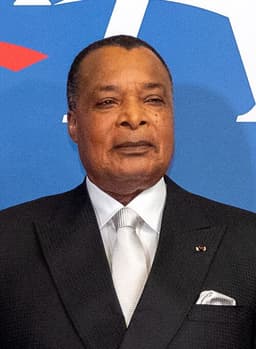
Denis Sassou-Nguesso
General · Modern
49.4Total
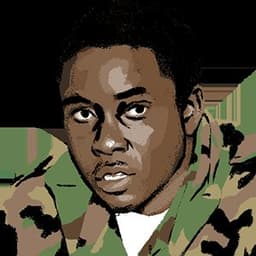
Valentine Strasser
General · Modern
34.1Total
Basic Information
Born
1943
1967
Died
—
—
Era
Modern
Modern
Nationality
Congo Republic
Sierra Leone
Occupation
General
General
Civilization
Other
Other
Score Comparison
Military (10%)
10.2
10.2
Political (20%)
68.0
29.3
Influence (20%)
51.8
48.6
Legacy (20%)
46.7
38.3
Leadership (15%)
62.0
30.0
Strategy (15%)
42.3
25.0
TOTAL
49.4
34.1
Denis Sassou-Nguesso — Complete Timeline
1979 AD
Seized Power in CoupPolitical Action
Denis Sassou-Nguesso, a military officer, became President of the People's Republic of the Congo after a coup that ousted President Joachim Yhombi-Opango. He led the Congolese Party of Labour (PCT).
Coup d'étatCongoMilitary Rule
Impact: national
1990 AD
Transition to Multi-Party PoliticsReform◆ Major
Under pressure, Sassou-Nguesso's government introduced multi-party politics, ending the one-party Marxist-Leninist system. A national conference was held in 1991, leading to a transition to civilian rule.
Political ReformDemocracyCongo
Impact: national
1992 AD
Lost Presidential ElectionPolitical Action◆ Major
Sassou-Nguesso lost the 1992 presidential election to Pascal Lissouba. This was the first multi-party election in the country since independence, and Sassou-Nguesso peacefully handed over power.
ElectionDemocracyCongo
Impact: national
1997 AD
Returned to Power via Civil WarWar
Sassou-Nguesso's militia, backed by Angolan troops, captured Brazzaville, overthrowing President Pascal Lissouba. This ended a four-month civil war and returned Sassou-Nguesso to the presidency.
Civil WarCongoPower Struggle
Impact: nationaldestructive
2002 AD
Won Controversial Re-electionsPolitical Action◆ Major
Sassou-Nguesso won the 2002 presidential election with over 89% of the vote. The election was boycotted by major opposition candidates and criticized as neither free nor fair.
ElectionCongoControversy
Impact: national
2015 AD
Constitutional Referendum to Extend TermPolitical Action◆ Major
Sassou-Nguesso's government held a constitutional referendum that removed the age limit and two-term limit for the presidency. The change allowed him to run for re-election in 2016 and potentially remain in power.
Constitutional ReformCongoPower Consolidation
Impact: national
Valentine Strasser — Complete Timeline
1992 AD
Seized Power in CoupPolitical Action
Strasser led a military coup that overthrew President Joseph Momoh, becoming head of state at age 25. He established the National Provisional Ruling Council and became the world's youngest head of state.
CoupSierra LeoneMilitary Rule
Impact: nationaldestructive
1996 AD
Forced into ExilePolitical Action◆ Major
Strasser was overthrown by his own deputy, Julius Maada Bio, and forced into exile. His rule ended after four years of military governance, marked by civil war and international isolation.
ExileSierra LeoneOverthrow
Impact: nationaltragic
This comparison has not been analyzed yet.
One-time AI generation (~1 minute). Scores and timeline are already available below.
Rankings
🥇
Denis Sassou-NguessoLeader
Mil: 10.2Pol: 68.0Inf: 51.8
49.4
🥈
Valentine Strasser
Mil: 10.2Pol: 29.3Inf: 48.6
34.1
+15.3 behind
How This Comparison Works
Algorithm
Each figure is scored on 6 dimensions (0—100 scale) based on structured historical data: Military (10%), Political (20%), Influence (20%), Legacy (20%), Leadership (15%), Strategy (15%). The weighted total produces the final ranking.
Data Sources
Scores are computed from structured sub-indicators in the database. Scale factors adjust for era (Ancient ×0.85, Modern ×1.0) and civilization size (Eastern ×1.05, Other ×0.80) to account for differences in population and military scale.
Maximum 3 Figures
Comparisons are limited to 2—3 figures to ensure readability and statistical meaningfulness.
Error Margins
±5 points per dimension — Sub-scores are derived from historical records with inherent uncertainty. Two figures within 5 points on a dimension should be considered roughly equivalent in that area.
Total Score Accuracy
±3 points overall — The weighted combination of 6 dimensions produces a total score with approximately ±3 points of uncertainty. Differences of less than 3 points are not statistically significant— the figures are effectively tied.
Known Limitations
- Historical records are incomplete and uneven across civilizations
- Figures from oral-tradition societies may be underrepresented
- Occupation labels can misclassify multi-role figures
- Scores measure capability and impact, not moral character
- Quantitative scoring is a comparison tool, not absolute truth
Capability Radar
Military (10%) — Battles & Warfare
Battles
5
5
Win Rate
5
5
Expansion
5
5
Political (20%) — Governance & Reform
Reform
30
20
Diplomacy
50
10
Economy
30
10
Influence (20%) — Cultural & Global Reach
Cultural
20
10
Global
20
10
Legacy (20%) — Historical Impact
Historical
30
15
Longevity
40
5
Leadership (15%) — Power & Stability
Tenure
70
15
Stability
20
5
Strategy (15%) — Tactics & Innovation
Strategy
5
10
Tactics
5
10
Reform
10
15
Similar Comparisons
Comments & Discussion
No comments yet. Be the first to share your thoughts!