Loading...
Denis Sassou-Nguesso vs Yitzhak Rabin
Yitzhak Rabin leads by 17.0 pts · 2 figures compared
…
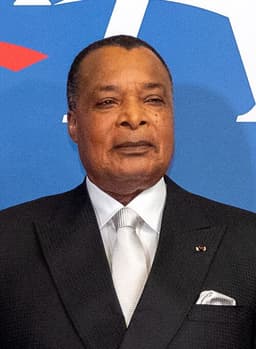
Denis Sassou-Nguesso
General · Modern
49.4Total
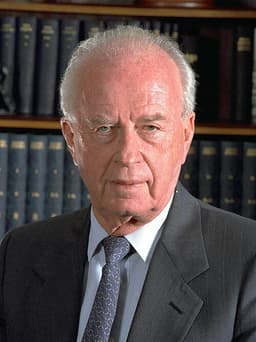
Yitzhak Rabin
General · Modern
66.4Total
Basic Information
Born
1943
1922
Died
—
—
Era
Modern
Modern
Nationality
Congo Republic
Israel
Occupation
General
General
Civilization
Other
Middle Eastern
Score Comparison
Military (10%)
10.2
61.7
Political (20%)
68.0
82.0
Influence (20%)
51.8
68.0
Legacy (20%)
46.7
55.0
Leadership (15%)
62.0
78.0
Strategy (15%)
42.3
55.0
TOTAL
49.4
66.4
Denis Sassou-Nguesso — Complete Timeline
1979 AD
Seized Power in CoupPolitical Action
Denis Sassou-Nguesso, a military officer, became President of the People's Republic of the Congo after a coup that ousted President Joachim Yhombi-Opango. He led the Congolese Party of Labour (PCT).
Coup d'étatCongoMilitary Rule
Impact: national
1990 AD
Transition to Multi-Party PoliticsReform◆ Major
Under pressure, Sassou-Nguesso's government introduced multi-party politics, ending the one-party Marxist-Leninist system. A national conference was held in 1991, leading to a transition to civilian rule.
Political ReformDemocracyCongo
Impact: national
1992 AD
Lost Presidential ElectionPolitical Action◆ Major
Sassou-Nguesso lost the 1992 presidential election to Pascal Lissouba. This was the first multi-party election in the country since independence, and Sassou-Nguesso peacefully handed over power.
ElectionDemocracyCongo
Impact: national
1997 AD
Returned to Power via Civil WarWar
Sassou-Nguesso's militia, backed by Angolan troops, captured Brazzaville, overthrowing President Pascal Lissouba. This ended a four-month civil war and returned Sassou-Nguesso to the presidency.
Civil WarCongoPower Struggle
Impact: nationaldestructive
2002 AD
Won Controversial Re-electionsPolitical Action◆ Major
Sassou-Nguesso won the 2002 presidential election with over 89% of the vote. The election was boycotted by major opposition candidates and criticized as neither free nor fair.
ElectionCongoControversy
Impact: national
2015 AD
Constitutional Referendum to Extend TermPolitical Action◆ Major
Sassou-Nguesso's government held a constitutional referendum that removed the age limit and two-term limit for the presidency. The change allowed him to run for re-election in 2016 and potentially remain in power.
Constitutional ReformCongoPower Consolidation
Impact: national
Yitzhak Rabin — Complete Timeline
1967 AD
Chief of Staff during the Six-Day WarWar
As Chief of Staff of the Israel Defense Forces, Rabin commanded the Israeli military during the Six-Day War against Egypt, Jordan, and Syria. Israel captured the Sinai Peninsula, Gaza Strip, West Bank, East Jerusalem, and Golan Heights, reshaping the region.
Six-Day WarTerritorial ExpansionMilitary Victory
Impact: global
1993 AD
Signing of the Oslo AccordsPolitical Action
As prime minister, Rabin signed the Oslo Accords with PLO Chairman Yasser Arafat on the White House lawn. The agreement established the Palestinian Authority and set a framework for Palestinian self-governance in the West Bank and Gaza Strip.
Peace ProcessPalestiniansOslo
Impact: globalconstructive
1995 AD
Assassination at Peace RallyPolitical Action
Rabin was assassinated by Israeli extremist Yigal Amir after a peace rally in Tel Aviv. The assassination shocked Israel and the world, derailing the Oslo peace process and leading to a period of political instability.
AssassinationPeace ProcessPolitical Violence
Impact: globaltragic
Expert Analysis
Yitzhak Rabin vs Denis Sassou-Nguesso
# The General’s Choice: Why One Peacemaker Was Killed and Another Clings to Power
On the evening of November 4, 1995, Yitzhak Rabin walked down the steps of the Tel Aviv town hall, a song sheet in his pocket, a smile on his face. Minutes later, he lay bleeding on the pavement, shot by a young Israeli who believed the prime minister had betrayed his country. In Brazzaville, two years later, Denis Sassou-Nguesso rode back into the capital atop a captured truck, his militia having just ousted an elected president. One general died for making peace; the other lived by making war. What separates these two men, both soldiers turned heads of state, is not merely circumstance but the fundamental choice of whether to rule through consent or coercion.
Origins
Rabin was born in Jerusalem in 1922 to socialist Zionist parents who had fled pogroms in Russia. He grew up in a land of pioneers, where the gun and the plow were twin instruments of survival. His generation believed that military strength was the necessary precondition for Jewish sovereignty—and that sovereignty, once achieved, could be used for something nobler. Sassou-Nguesso, born in 1943 in the village of Edou, in what was then French Equatorial Africa, came of age in a different crucible. His father was a cook for French colonial administrators; the young Denis joined the army not to build a nation but to rise within a system of patronage. The Congo that emerged from French rule in 1960 was not a democracy but a collection of ethnic factions held together by the barrel of a gun.
Rise to Power
Rabin’s ascent was institutional. He rose through the ranks of the Israel Defense Forces, a meritocracy forged by existential threat. By 1967, as Chief of Staff, he commanded the lightning campaign that crushed Egypt, Jordan, and Syria in six days. That war made him a national hero, but it also taught him a lesson that would define his later years: military victory, however brilliant, could not solve the political problem of the Palestinians. Sassou-Nguesso’s path was different. In 1979, he seized power in a coup, inheriting a Marxist-Leninist state that had already failed its people. Where Rabin earned his authority through a war of survival, Sassou-Nguesso took his through a backroom deal among colonels.
Leadership & Governance
As prime minister, Rabin governed with a pragmatist’s instinct. He crushed the First Intifada with an iron fist, then realized that force alone was futile. In 1993, he shook hands with Yasser Arafat on the White House lawn, signing the Oslo Accords that promised Palestinian self-rule. His military background gave him the credibility to make concessions: no one could call him soft. He was a builder, not a visionary—he once said he would “pursue peace as if there were no terrorism, and fight terrorism as if there were no peace.” Sassou-Nguesso governed differently. He introduced multi-party politics in 1990 under pressure, lost the 1992 election, and then waited three years before reclaiming power through a civil war backed by Angolan tanks. Once restored, he changed the constitution to remove term limits and won elections with 89 percent of the vote—after the opposition boycotted. His governance is not about persuasion but control.
Triumph & Tragedy
Rabin’s greatest triumph was also his tragedy. The Oslo Accords were a masterstroke of political courage, but they were built on fragile trust. When Rabin was assassinated in 1995 by Yigal Amir, a religious nationalist who believed he was saving Israel from apostasy, the peace process died with him. His funeral brought together kings and presidents, but the bullet had already shattered the hope he embodied. Sassou-Nguesso’s triumphs are of a different order. He has survived in power for over four decades, outlasting rivals and rebels alike. His tragedy is not a single moment but a slow erosion: the Congo remains one of the poorest countries in the world, its oil wealth siphoned by a narrow elite. He has never been shot, but his nation has never been healed.
Character & Destiny
Rabin was a reluctant peacemaker, a man of few words and deep internal conflicts. He once told an interviewer, “I am not a man of peace. I am a man of war who wants peace.” That contradiction made him credible to Israelis and Palestinians alike, but it also made him vulnerable. He believed that a leader’s duty was to take risks for the common good, even at personal cost. Sassou-Nguesso is different. He is a survivor, not a risk-taker. His character is defined by an almost reptilian patience: he waits out storms, absorbs pressure, and strikes when the moment is right. Where Rabin saw leadership as a moral burden, Sassou-Nguesso sees it as a prize to be held.
Legacy
Rabin is remembered as a martyr for peace. His name adorns streets, schools, and plazas across Israel. But his legacy is also a warning: peace requires two sides willing to compromise, and one bullet can unravel years of work. Sassou-Nguesso is remembered as a strongman who outlasted his enemies. His legacy is the stability of a regime that has never known a peaceful transfer of power. In the Congo, they do not name streets after him while he is alive; they name them after themselves.
Conclusion
One general died with a song sheet in his pocket, having chosen reconciliation over revenge. The other still rules from a palace in Brazzaville, having chosen power over principle. Both were soldiers. Both became leaders. But Rabin believed that the ultimate test of strength is the willingness to lay down arms. Sassou-Nguesso believed that the ultimate test is the ability to keep holding them. In the end, history does not judge by survival alone. It asks what a leader did with the power he held—and whether he dared to use it for something greater than himself.
Rankings
🥇
Yitzhak RabinLeader
Mil: 61.7Pol: 82.0Inf: 68.0
66.4
🥈
Denis Sassou-Nguesso
Mil: 10.2Pol: 68.0Inf: 51.8
49.4
+17.0 behind
How This Comparison Works
Algorithm
Each figure is scored on 6 dimensions (0—100 scale) based on structured historical data: Military (10%), Political (20%), Influence (20%), Legacy (20%), Leadership (15%), Strategy (15%). The weighted total produces the final ranking.
Data Sources
Scores are computed from structured sub-indicators in the database. Scale factors adjust for era (Ancient ×0.85, Modern ×1.0) and civilization size (Eastern ×1.05, Other ×0.80) to account for differences in population and military scale.
Maximum 3 Figures
Comparisons are limited to 2—3 figures to ensure readability and statistical meaningfulness.
Error Margins
±5 points per dimension — Sub-scores are derived from historical records with inherent uncertainty. Two figures within 5 points on a dimension should be considered roughly equivalent in that area.
Total Score Accuracy
±3 points overall — The weighted combination of 6 dimensions produces a total score with approximately ±3 points of uncertainty. Differences of less than 3 points are not statistically significant— the figures are effectively tied.
Known Limitations
- Historical records are incomplete and uneven across civilizations
- Figures from oral-tradition societies may be underrepresented
- Occupation labels can misclassify multi-role figures
- Scores measure capability and impact, not moral character
- Quantitative scoring is a comparison tool, not absolute truth
Capability Radar
Military (10%) — Battles & Warfare
Battles
5
65
Win Rate
5
70
Expansion
5
50
Political (20%) — Governance & Reform
Reform
30
65
Diplomacy
50
85
Economy
30
60
Influence (20%) — Cultural & Global Reach
Cultural
20
55
Global
20
70
Legacy (20%) — Historical Impact
Historical
30
75
Longevity
40
60
Leadership (15%) — Power & Stability
Tenure
70
70
Stability
20
40
Strategy (15%) — Tactics & Innovation
Strategy
5
75
Tactics
5
60
Reform
10
55
Similar Comparisons
Comments & Discussion
SABRA_SABER6/16/2026
Rabin was no naive peacemonger—he was the architect of the 1967 Six-Day War victory, personally ordering the capture of East Jerusalem. That’s what made his assassin’s bullet so tragically ironic. A man who crushed Arab armies dared to shake Arafat’s hand, and his own people called it betrayal. Sassou? He’s never taken a real peace risk. He just switches between French-backed strongman and Chinese-backed oil boss. Rabin died because he chose peace over tribe. Sassou survives because he only choo
军阀老爹6/16/2026
拿拉宾跟萨苏比?拉宾是让以色列人从“全民皆兵”变成“梦想和平”的转折点,结果被自己人崩了。萨苏呢?1997年他靠安哥拉和古巴的雇佣军打回布拉柴维尔,把民选总统利苏巴赶下台,之后三次修宪赖着不走。一个是在枪口下张开双臂的英雄,一个是抱着枪杆子不放的政变专业户。这俩放一起,简直是侮辱“领导人”这个词。
PEACE_AND_POWER6/16/2026
The raw data tells a story Rabin-haters ignore: in the three years after Oslo, Palestinian terror attacks killed 256 Israelis, yet Rabin still didn’t reverse course. That’s not naivety—that’s political suicide with conviction. Meanwhile, Sassou-Nguesso has presided over a country where the poverty rate sits at 50% and oil revenues flow into opaque state accounts since 1979. One leader gambled his life on a vision of coexistence; the other gambles his people’s future on a barrel of crude. History
数据猎手6/16/2026
比寿命?萨苏从1979年掌权至今,中间只断过五年,人家这不叫“擅长掌权”,这叫“把国家当自家牧场”。拉宾1992年二度上台才三年就被刺杀,可这三年里以色列GDP增长了7%,通货膨胀从18%砍到8%。萨苏的刚果呢?人类发展指数全球倒数20名常客,六成人口日均不到1.9美元。长寿的独裁者从不缺,敢用政治生命换和平的将军千年等一回。
TEL_AVIV_VS_BRAZZAVILLE6/16/2026
Let’s talk trust: Rabin’s assassination came from a Jewish extremist who cited the Halakhic law of rodef—the pursuer who endangers others. That means Rabin died because a fellow Jew literally redefined him as a traitor to his own faith. Sassou faces no such ideological bullets—his opposition is either jailed, exiled, or bought off with oil bribes. Rabin lost his life to the price of principle.