Loading...
Denis Sassou-Nguesso vs Francisco Morazan
Francisco Morazan leads by 8.6 pts · 2 figures compared
…
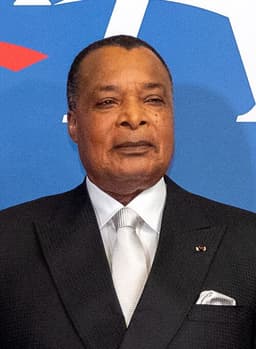
Denis Sassou-Nguesso
General · Modern
49.4Total
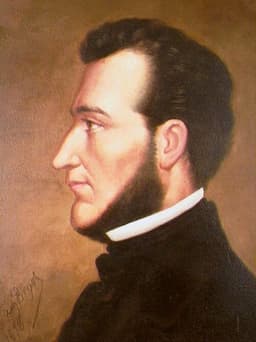
Francisco Morazan
General · Modern
58.0Total
Basic Information
Born
1943
1792
Died
—
1842
Era
Modern
Modern
Nationality
Congo Republic
Honduras
Occupation
General
General
Civilization
Other
Western
Score Comparison
Military (10%)
10.2
52.5
Political (20%)
68.0
60.0
Influence (20%)
51.8
62.0
Legacy (20%)
46.7
50.0
Leadership (15%)
62.0
68.0
Strategy (15%)
42.3
55.0
TOTAL
49.4
58.0
Denis Sassou-Nguesso — Complete Timeline
1979 AD
Seized Power in CoupPolitical Action
Denis Sassou-Nguesso, a military officer, became President of the People's Republic of the Congo after a coup that ousted President Joachim Yhombi-Opango. He led the Congolese Party of Labour (PCT).
Coup d'étatCongoMilitary Rule
Impact: national
1990 AD
Transition to Multi-Party PoliticsReform◆ Major
Under pressure, Sassou-Nguesso's government introduced multi-party politics, ending the one-party Marxist-Leninist system. A national conference was held in 1991, leading to a transition to civilian rule.
Political ReformDemocracyCongo
Impact: national
1992 AD
Lost Presidential ElectionPolitical Action◆ Major
Sassou-Nguesso lost the 1992 presidential election to Pascal Lissouba. This was the first multi-party election in the country since independence, and Sassou-Nguesso peacefully handed over power.
ElectionDemocracyCongo
Impact: national
1997 AD
Returned to Power via Civil WarWar
Sassou-Nguesso's militia, backed by Angolan troops, captured Brazzaville, overthrowing President Pascal Lissouba. This ended a four-month civil war and returned Sassou-Nguesso to the presidency.
Civil WarCongoPower Struggle
Impact: nationaldestructive
2002 AD
Won Controversial Re-electionsPolitical Action◆ Major
Sassou-Nguesso won the 2002 presidential election with over 89% of the vote. The election was boycotted by major opposition candidates and criticized as neither free nor fair.
ElectionCongoControversy
Impact: national
2015 AD
Constitutional Referendum to Extend TermPolitical Action◆ Major
Sassou-Nguesso's government held a constitutional referendum that removed the age limit and two-term limit for the presidency. The change allowed him to run for re-election in 2016 and potentially remain in power.
Constitutional ReformCongoPower Consolidation
Impact: national
Francisco Morazan — Complete Timeline
1824 AD
Abolition of slavery in Central AmericaReform◆ Major
As a key leader in the liberal movement, Moraz
AbolitionSlaveryLiberal Reform
Impact: regionalprogressive
1827 AD
Battle of La TrinidadWar◆ Major
Morazán led a liberal army to victory against conservative forces at La Trinidad, Honduras. This battle was a key turning point in the Central American civil war, allowing Morazán to consolidate power and eventually become president of the federation.
BattleLiberal VictoryCivil War
Impact: regional
1830 AD
Presidency of the Federal Republic of Central AmericaPolitical Action
Morazán was elected president of the Federal Republic of Central America, a union of Guatemala, El Salvador, Honduras, Nicaragua, and Costa Rica. He pursued liberal reforms including separation of church and state, free trade, and land reform, facing opposition from conservatives.
Federal RepublicLiberal ReformsCentral America
Impact: regionalconstructive
1842 AD
Execution by firing squadPolitical Action
After a failed attempt to restore the Federal Republic, Moraz
ExecutionEnd of FederationLiberal Defeat
Impact: regionaltragic
Expert Analysis
Francisco Morazan vs Denis Sassou-Nguesso
### Two Generals, Two Republics: The Divergent Paths of Morazán and Sassou-Nguesso
On a humid morning in September 1842, Francisco Morazán stood before a firing squad in San José, Costa Rica. He was just fifty years old, but his dream of a united Central America had died long before him. As the rifles raised, he reportedly told his executioners, “I die with no regret, but with the sorrow of leaving my country in ruins.” A century and a half later, on the other side of the world, another general, Denis Sassou-Nguesso, was doing the opposite: returning from exile to seize power in a civil war, then holding onto it for decades. Both men were generals. Both became presidents. But one fell as a martyr for a lost cause, while the other still rules as a master of survival. What drove these two men so far apart?
### Origins
Francisco Morazán was born in 1792 in Tegucigalpa, Honduras, into a Creole family of modest means. His world was the twilight of Spanish colonial rule, a time when liberal ideas from the French and American revolutions were seeping into Central America. He was shaped by Enlightenment philosophy—the belief in reason, progress, and the rights of man. His education was informal but deep: he read Rousseau, Montesquieu, and the works of the early U.S. founders. This intellectual foundation made him a natural reformer, a man who believed that government could be a tool for human improvement.
Denis Sassou-Nguesso, born in 1943 in the village of Edou, in what was then French Equatorial Africa, came from a different world entirely. His Congo was a colony of extraction, where rubber and timber flowed out and French administrators ruled. He joined the army young, training in France and Algeria. His era was the Cold War, when African strongmen could trade allegiance for Soviet or Western backing. Sassou-Nguesso learned not from philosophers but from the barracks: power came from the barrel of a gun, and ideology was a costume you could change.
### Rise to Power
Morazán’s rise was a story of battlefield brilliance and political conviction. In 1827, at the Battle of La Trinidad, he led a ragged liberal army to defeat conservative forces, turning the tide of a civil war. By 1830, he had been elected president of the Federal Republic of Central America—a union of five states modeled loosely on the United States. His path was legal, democratic, and revolutionary. He abolished slavery in 1824, granted land to peasants, and separated church and state. He was a general who believed in ballots as much as bullets.
Sassou-Nguesso’s ascent was simpler. In 1979, he was a military officer who seized power in a coup, ousting a predecessor who had himself come to power through a coup. There were no elections, no debates. He became the head of the People’s Republic of the Congo, a Marxist-Leninist state. His legitimacy came from the army, not the people. Where Morazán had to win hearts, Sassou-Nguesso only needed to control guns.
### Leadership & Governance
As a leader, Morazán was a whirlwind of reform. He built schools, opened ports to free trade, and tried to create a secular state. But his vision was too grand for his time. The conservative landowners, the clergy, and the rural poor who clung to tradition resisted him. His Federal Republic was a fragile patchwork; each state had its own army and ambitions. He governed by decree, but he also held elections. His military genius was real—he won battles again and again—but his political wisdom was undermined by his idealism. He believed that if he could just win one more battle, the union would hold.
Sassou-Nguesso governed with the opposite philosophy. He was a pragmatist, not an idealist. When the Cold War ended, he did not fight; he adapted. In 1990, under pressure, he introduced multi-party politics, ending the one-party Marxist system. He lost the 1992 election to Pascal Lissouba, then waited. When the opportunity came in 1997, he returned with Angolan tanks and recaptured Brazzaville. Once back, he did not abolish elections—he rigged them. In 2002, he won with 89% of the vote, after the opposition boycotted. In 2015, he held a constitutional referendum to remove term limits, ensuring he could stay indefinitely. His leadership was not about building a nation but about holding power.
### Triumph & Tragedy
Morazán’s greatest triumph was the abolition of slavery—a moral act that set Central America ahead of many countries. His greatest tragedy was the collapse of the Federal Republic in 1839, torn apart by civil war and regionalism. He tried to restore it in 1842, invading Costa Rica, but was captured and executed. He died believing in a country that never really existed.
Sassou-Nguesso’s triumph is his longevity. He has been president for over forty years, surviving coups, civil wars, and the end of the Cold War. His tragedy is the cost: a country that remains poor, corrupt, and divided. He has built nothing that will outlast him—no institutions, no legacy of reform. His Congo is a personal fiefdom, not a nation.
### Character & Destiny
Morazán’s character was his destiny. He was a romantic, a man of principle in a world of compromise. He could have cut a deal, accepted a smaller role, lived in exile. Instead, he chose a martyr’s death. His personality—proud, idealistic, uncompromising—drove him to the firing squad.
Sassou-Nguesso’s character is the opposite: patient, pragmatic, ruthless. He never fights a battle he cannot win. He never sacrifices power for principle. His destiny was not a dramatic fall but a long, gray tenure. He is not a hero or a villain; he is a survivor.
### Legacy
Morazán is remembered as the “Simón Bolívar of Central America”—a symbol of unity and reform. His face is on currency, his name on streets. But his dream failed, and his legacy is a ghost that haunts the region.
Sassou-Nguesso is remembered as a strongman, a symbol of Africa’s post-colonial curse. He is still alive, still in power, still rewriting the constitution. His legacy is not yet written, but it will not be kind.
### Conclusion
One man died for a dream that could not be realized; the other lives for a power he will not relinquish. Morazán and Sassou-Nguesso are two faces of the same coin: the general who becomes a president. But the difference between them is the difference between idealism and survival, between building a nation and occupying a palace. History judges both, but it remembers only one with love. The other it merely endures.
Rankings
🥇
Francisco MorazanLeader
Mil: 52.5Pol: 60.0Inf: 62.0
58.0
🥈
Denis Sassou-Nguesso
Mil: 10.2Pol: 68.0Inf: 51.8
49.4
+8.6 behind
How This Comparison Works
Algorithm
Each figure is scored on 6 dimensions (0—100 scale) based on structured historical data: Military (10%), Political (20%), Influence (20%), Legacy (20%), Leadership (15%), Strategy (15%). The weighted total produces the final ranking.
Data Sources
Scores are computed from structured sub-indicators in the database. Scale factors adjust for era (Ancient ×0.85, Modern ×1.0) and civilization size (Eastern ×1.05, Other ×0.80) to account for differences in population and military scale.
Maximum 3 Figures
Comparisons are limited to 2—3 figures to ensure readability and statistical meaningfulness.
Error Margins
±5 points per dimension — Sub-scores are derived from historical records with inherent uncertainty. Two figures within 5 points on a dimension should be considered roughly equivalent in that area.
Total Score Accuracy
±3 points overall — The weighted combination of 6 dimensions produces a total score with approximately ±3 points of uncertainty. Differences of less than 3 points are not statistically significant— the figures are effectively tied.
Known Limitations
- Historical records are incomplete and uneven across civilizations
- Figures from oral-tradition societies may be underrepresented
- Occupation labels can misclassify multi-role figures
- Scores measure capability and impact, not moral character
- Quantitative scoring is a comparison tool, not absolute truth
Capability Radar
Military (10%) — Battles & Warfare
Battles
5
55
Win Rate
5
60
Expansion
5
40
Political (20%) — Governance & Reform
Reform
30
70
Diplomacy
50
45
Economy
30
50
Influence (20%) — Cultural & Global Reach
Cultural
20
45
Global
20
35
Legacy (20%) — Historical Impact
Historical
30
50
Longevity
40
40
Leadership (15%) — Power & Stability
Tenure
70
55
Stability
20
30
Strategy (15%) — Tactics & Innovation
Strategy
5
55
Tactics
5
50
Reform
10
45
Similar Comparisons
Comments & Discussion
MARTYR_MAKER6/16/2026
Morazán is the tragic Übermensch of Central America—a visionary who actually believed liberal ideals could triumph over caudillo chaos. He was fighting for a unified federation in 1830s when everyone else was playing petty warlord. The firing squad didn't kill his idea; it immortalized the dream of a Central American union. Sassou's just a fossil in a general's uniform, clinging to power through oil deals and show elections.
进步之刃6/16/2026
把弗朗西斯科·莫拉桑和德尼·萨苏-恩格索放一起比,简直是对历史逻辑的侮辱。莫拉桑是启蒙思想的热血践行者——他在1839年还坚持联邦理想,而那时连美国都还没搞定自己的南部问题。萨苏呢?三次政变上台,从马克思主义者摇身变成石油寡头,唯一不变的只有对权力的贪婪。一个为理念死在枪下,一个靠油田活到今天。
DATA_GUY6/16/2026
Let's crunch numbers: Morazán ruled a federation of 5 states for about 9 years total across two presidencies. Sassou-Nguesso has been Congo-Brazzaville's president for 41 years cumulatively (1979-1992, 1997-present). That's 4.5x longer. Morazán united Central America temporarily; Sassou's "unified" his country by winning a civil war with Angolan tanks in 1997. One man's legacy required a firing squad; the other's requires a Petro-Congo bank account.
古典学人6/16/2026
莫拉桑的最后一天像罗马悲剧:他面对行刑队时说“我死而无憾,只是遗憾国家毁于一旦”,这让人想起加图的乌提卡之死。他读的是卢梭和杰斐逊,但命运却像西塞罗——为共和理想献祭于内战废墟中。萨苏?他更像一个腐败的晚期朱利安皇帝,用油井当祭坛,统治着一片资源诅咒之地。一个死在历史眼中,一个活在历史之外。
REVISIONIST_HITMAN6/16/2026
Stop canonizing Morazán. He was a military strongman who imposed liberal reforms at gunpoint—abolishing religious orders, confiscating church property, and suppressing indigenous communal lands. The "union" he died for was a top-down project that ignored regional realities. Sassou at least plays the game: he's kept Congo stable through pragmatic alliances with France, China, and Angola. Morazán martyrdom is just romanticized failure; Sassou's survival is the real political art.