Loading...
Denis Sassou-Nguesso vs Muhammadu Buhari
Muhammadu Buhari leads by 2.1 pts · 2 figures compared
…
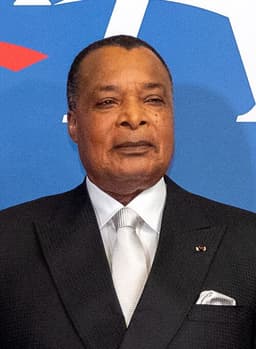
Denis Sassou-Nguesso
General · Modern
49.4Total
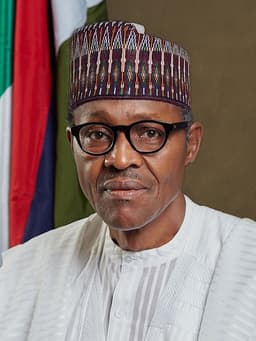
Muhammadu Buhari
General · Modern
51.5Total
Basic Information
Born
1943
1942
Died
—
—
Era
Modern
Modern
Nationality
Congo Republic
Nigeria
Occupation
General
General
Civilization
Other
Other
Score Comparison
Military (10%)
10.2
22.6
Political (20%)
68.0
68.0
Influence (20%)
51.8
53.3
Legacy (20%)
46.7
43.3
Leadership (15%)
62.0
72.0
Strategy (15%)
42.3
41.0
TOTAL
49.4
51.5
Denis Sassou-Nguesso — Complete Timeline
1979 AD
Seized Power in CoupPolitical Action
Denis Sassou-Nguesso, a military officer, became President of the People's Republic of the Congo after a coup that ousted President Joachim Yhombi-Opango. He led the Congolese Party of Labour (PCT).
Coup d'étatCongoMilitary Rule
Impact: national
1990 AD
Transition to Multi-Party PoliticsReform◆ Major
Under pressure, Sassou-Nguesso's government introduced multi-party politics, ending the one-party Marxist-Leninist system. A national conference was held in 1991, leading to a transition to civilian rule.
Political ReformDemocracyCongo
Impact: national
1992 AD
Lost Presidential ElectionPolitical Action◆ Major
Sassou-Nguesso lost the 1992 presidential election to Pascal Lissouba. This was the first multi-party election in the country since independence, and Sassou-Nguesso peacefully handed over power.
ElectionDemocracyCongo
Impact: national
1997 AD
Returned to Power via Civil WarWar
Sassou-Nguesso's militia, backed by Angolan troops, captured Brazzaville, overthrowing President Pascal Lissouba. This ended a four-month civil war and returned Sassou-Nguesso to the presidency.
Civil WarCongoPower Struggle
Impact: nationaldestructive
2002 AD
Won Controversial Re-electionsPolitical Action◆ Major
Sassou-Nguesso won the 2002 presidential election with over 89% of the vote. The election was boycotted by major opposition candidates and criticized as neither free nor fair.
ElectionCongoControversy
Impact: national
2015 AD
Constitutional Referendum to Extend TermPolitical Action◆ Major
Sassou-Nguesso's government held a constitutional referendum that removed the age limit and two-term limit for the presidency. The change allowed him to run for re-election in 2016 and potentially remain in power.
Constitutional ReformCongoPower Consolidation
Impact: national
Muhammadu Buhari — Complete Timeline
1983 AD
1983 Nigerian coup d'étatPolitical Action
Major General Muhammadu Buhari led a military coup that overthrew the civilian government of President Shehu Shagari. Buhari cited corruption and economic mismanagement as justifications, and he became the head of state.
CoupMilitary RuleCorruption
Impact: nationaldestructive
1984 AD
War Against Indiscipline (WAI)Reform◆ Major
Buhari launched the War Against Indiscipline, a campaign to enforce discipline and order in Nigerian society. It included harsh penalties for minor offenses, such as queue-jumping, and was criticized for human rights abuses.
DisciplineSocial PolicyHuman Rights
Impact: nationaldestructive
1985 AD
Overthrow by Ibrahim BabangidaPolitical Action◆ Major
Buhari was overthrown in a palace coup led by his Chief of Army Staff, Ibrahim Babangida. Babangida cited Buhari's authoritarian style and failure to address the economy as reasons for the coup.
CoupOverthrowBabangida
Impact: national
2015 AD
Anti-corruption campaignReform◆ Major
Buhari launched a high-profile anti-corruption campaign, targeting government officials and recovering stolen assets. The campaign was praised internationally but criticized for being selective and politically motivated.
Anti-CorruptionReformGovernance
Impact: nationalconstructive
Election as President of NigeriaPolitical Action
Buhari won the 2015 Nigerian presidential election, defeating incumbent Goodluck Jonathan. This was the first time an opposition candidate had defeated a sitting president in Nigeria's history, marking a democratic milestone.
ElectionDemocracyOpposition Victory
Impact: nationalprogressive
Expert Analysis
Muhammadu Buhari vs Denis Sassou-Nguesso
# The Long Shadow of Power: Muhammadu Buhari and Denis Sassou-Nguesso
In the summer of 2015, two African strongmen stood at very different crossroads. In Nigeria, Muhammadu Buhari had just won a democratic election—the first time in the nation's history that an opposition candidate had defeated an incumbent president. In Brazzaville, Denis Sassou-Nguesso was preparing to cement his third decade in power, his militia having crushed a civil war to return him to the presidency eighteen years earlier. Both men were generals who had first seized power through coups in the 1980s. But their paths since then could not have diverged more dramatically. What explains the difference between the man who submitted to the ballot box and the man who rewrote the constitution to stay?
Origins
Both Buhari and Sassou-Nguesso came of age in the turbulent years of African independence. Born in 1942 in Daura, northern Nigeria, Buhari was the son of a Fulani chief, raised in a conservative Muslim household that valued discipline and hierarchy. He joined the Nigerian Army in 1962, just two years after independence, and trained at elite institutions including the Royal Military Academy Sandhurst. The Biafran War (1967-1970) forged his military identity: he served as a battalion commander, witnessing the brutal cost of national disintegration.
Sassou-Nguesso, born a year later in 1943 in Edou, a village in northern Congo, was also a product of the colonial military system. He joined the French army at twenty, serving in Algeria before returning to the newly independent Congo. Where Buhari's formative experience was the Biafran war, Sassou-Nguesso's was the ideological ferment of the 1960s—the rise of Marxist-Leninist movements across Africa. He joined the Congolese Army in 1968, just as the country was becoming a one-party Marxist state under Marien Ngouabi. His rise was not through battlefield heroism but through political maneuvering within the ruling Congolese Party of Labour.
Rise to Power
Buhari's 1983 coup was a response to chaos. President Shehu Shagari's civilian government had presided over an oil boom that became a bust, with corruption spiraling and the economy collapsing. On December 31, 1983, Major General Buhari led a bloodless coup, declaring that the military had to "save the nation from collapse." He was forty-one years old. The coup was widely welcomed by a public exhausted by mismanagement.
Sassou-Nguesso's path was more circuitous. He first seized power in 1979, also through a coup, after the assassination of President Joachim Yhombi-Opango. At thirty-six, he became the leader of the People's Republic of the Congo, a Marxist-Leninist state. But his rule was never as secure as Buhari's initial grip on Nigeria. The Congo's small, oil-dependent economy was volatile, and Sassou-Nguesso faced constant factional infighting within the party and military.
Leadership & Governance
Buhari's first rule (1984-1985) was defined by the War Against Indiscipline (WAI), launched in 1984. This was a campaign of enforced order: public servants who arrived late were forced to do frog jumps; queue-jumpers were publicly shamed; markets were raided for price gouging. The WAI was popular among ordinary Nigerians tired of chaos, but it was also authoritarian. Critics were jailed, newspapers closed, and trade unions crushed. Buhari governed like a headmaster, not a politician. His regime's slogan—"Discipline is the foundation of all progress"—captured his worldview: that Nigeria's problems were moral failures, not structural ones.
Sassou-Nguesso's first rule (1979-1992) was more ideologically rigid. He maintained the Marxist-Leninist framework, nationalizing key industries and aligning with the Soviet bloc. But by 1990, the collapse of the USSR and domestic protests forced him to introduce multi-party politics. In 1992, he lost the election to Pascal Lissouba. This was a genuine democratic defeat—and Sassou-Nguesso accepted it, temporarily. But his acceptance was tactical. He spent five years in opposition, building his militia, the Cobras, and waiting for his moment.
That moment came in 1997, when civil war erupted between Lissouba's forces and Sassou-Nguesso's Cobras, backed by Angolan troops. The result was a military victory that returned Sassou-Nguesso to power. This time, he governed differently. He abandoned Marxism, embraced oil-backed capitalism, and became a master of political survival. He held elections—but they were rigged. In 2002, he won with 89% of the vote after the opposition boycotted. In 2015, he held a constitutional referendum that removed term limits and the age limit, allowing him to run indefinitely. His strategy was not to crush dissent but to co-opt, bribe, and outmaneuver it.
Buhari's return to power in 2015 was the opposite. After his 1985 overthrow, he spent thirty years in the wilderness—arrested, retired, and largely forgotten. He ran for president three times before winning in 2015, campaigning as a reformed democrat. His second rule was defined by an anti-corruption campaign that recovered billions of dollars in stolen assets and prosecuted high-profile officials. But his governance was slow, cautious, and often ineffective. The economy stagnated, and his health declined. He was not a master of political survival like Sassou-Nguesso; he was a man who believed in process, even when it failed him.
Triumph & Tragedy
Buhari's greatest triumph was the 2015 election itself—a peaceful transfer of power that broke Nigeria's cycle of military coups and electoral fraud. His greatest tragedy was his failure to translate that triumph into lasting reform. The anti-corruption campaign lost momentum; the economy never recovered; and his second term was marked by rising insecurity from Boko Haram and banditry. He left office in 2023 with his reputation intact but his achievements ambiguous.
Sassou-Nguesso's triumph was his survival—three decades in power, through coups, civil war, and economic collapse. His tragedy is that he has become a symbol of African authoritarianism, a man who promised democracy in 1990 and then spent the next thirty years dismantling it. His constitutional referendum of 2015 was a brazen act of self-preservation that drew international condemnation.
Character & Destiny
Buhari was a disciplinarian who believed in rules. This made him a poor politician—he could not charm, compromise, or build coalitions—but it also made him, ultimately, a democrat. He accepted defeat in 1985, and he accepted victory in 2015 on democratic terms. Sassou-Nguesso was a survivor who believed in power. This made him a brilliant tactician—he could wait, adapt, and strike—but it also made him a prisoner of his own ambition. He could not imagine life without the presidency.
Legacy
Buhari's legacy is ambiguous. He will be remembered as the general who became a democrat, but also as the president who failed to deliver on his promises. Sassou-Nguesso's legacy is clearer: he is one of Africa's longest-serving rulers, a man who mastered the art of staying in power. But that mastery came at a cost—the erosion of democratic institutions, the stifling of opposition, and the entrenchment of a family dynasty.
Conclusion
The difference between these two generals is not in their origins—both were military men who seized power in the 1980s—but in their relationship with power itself. Buhari saw power as a duty, something to be used and then surrendered. Sassou-Nguesso saw power as a possession, something to be held at all costs. One submitted to the ballot box; the other rewrote the constitution. In the end, the question is not whether they were good or bad leaders, but what they reveal about the nature of power in post-colonial Africa: how it can be both a burden and an addiction, a tool for reform and a trap for the soul.
Rankings
🥇
Muhammadu BuhariLeader
Mil: 22.6Pol: 68.0Inf: 53.3
51.5
🥈
Denis Sassou-Nguesso
Mil: 10.2Pol: 68.0Inf: 51.8
49.4
+2.1 behind
How This Comparison Works
Algorithm
Each figure is scored on 6 dimensions (0—100 scale) based on structured historical data: Military (10%), Political (20%), Influence (20%), Legacy (20%), Leadership (15%), Strategy (15%). The weighted total produces the final ranking.
Data Sources
Scores are computed from structured sub-indicators in the database. Scale factors adjust for era (Ancient ×0.85, Modern ×1.0) and civilization size (Eastern ×1.05, Other ×0.80) to account for differences in population and military scale.
Maximum 3 Figures
Comparisons are limited to 2—3 figures to ensure readability and statistical meaningfulness.
Error Margins
±5 points per dimension — Sub-scores are derived from historical records with inherent uncertainty. Two figures within 5 points on a dimension should be considered roughly equivalent in that area.
Total Score Accuracy
±3 points overall — The weighted combination of 6 dimensions produces a total score with approximately ±3 points of uncertainty. Differences of less than 3 points are not statistically significant— the figures are effectively tied.
Known Limitations
- Historical records are incomplete and uneven across civilizations
- Figures from oral-tradition societies may be underrepresented
- Occupation labels can misclassify multi-role figures
- Scores measure capability and impact, not moral character
- Quantitative scoring is a comparison tool, not absolute truth
Capability Radar
Military (10%) — Battles & Warfare
Battles
5
10
Win Rate
5
10
Expansion
5
5
Political (20%) — Governance & Reform
Reform
30
30
Diplomacy
50
25
Economy
30
20
Influence (20%) — Cultural & Global Reach
Cultural
20
25
Global
20
25
Legacy (20%) — Historical Impact
Historical
30
30
Longevity
40
20
Leadership (15%) — Power & Stability
Tenure
70
45
Stability
20
15
Strategy (15%) — Tactics & Innovation
Strategy
5
15
Tactics
5
15
Reform
10
20
Similar Comparisons
Comments & Discussion
Buhari's Iron Fist6/16/2026
Comparing Buhari to Sassou-Nguesso ignores a crucial fact: Buhari actually stepped down after losing an election in 2015. That's unprecedented for any African strongman. Sassou-Nguesso rewrote his constitution in 2015 to stay past 2021. One man accepted the ballot box, the other shredded it. Military background doesn't define you; choices do. Buhari may have been a flawed reformer, but he wasn't a dynasty builder. That alone sets them light-years apart.
Congo的常青树6/16/2026
别被Buhari的民主剧本骗了。Sassou-Nguesso才是活生生的教科书:他1984年政变上台,1992年下台,1997年靠安哥拉坦克杀回刚果,统治至今超过40年。这叫生存本能。Buhari呢?2015年赢了选举,但治理呢?经济烂、安全崩、反腐败成笑话。Sassou-Nguesso至少把刚果稳定成了自己的家族企业,石油收入稳固权力。强人的本质不是善恶,而是控制力。这一点,Sassou赢了。