Loading...
Afonso de Albuquerque vs Denis Sassou-Nguesso
Afonso de Albuquerque leads by 30.2 pts · 2 figures compared
…
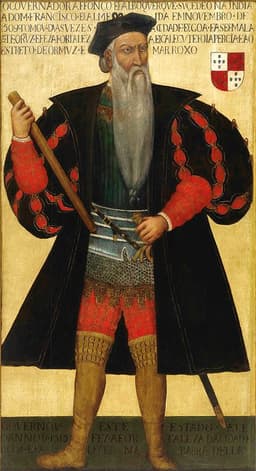
Afonso de Albuquerque
General · Medieval
79.6Total
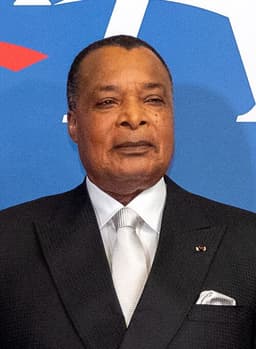
Denis Sassou-Nguesso
General · Modern
49.4Total
Basic Information
Born
1453
1943
Died
1515
—
Era
Medieval
Modern
Nationality
Portugal
Congo Republic
Occupation
General
General
Civilization
Western
Other
Score Comparison
Military (10%)
77.5
10.2
Political (20%)
88.0
68.0
Influence (20%)
80.0
51.8
Legacy (20%)
75.0
46.7
Leadership (15%)
78.0
62.0
Strategy (15%)
82.0
42.3
TOTAL
79.6
49.4
Afonso de Albuquerque — Complete Timeline
1503 AD
First voyage to IndiaWar◆ Major
Afonso de Albuquerque led a fleet to India, establishing the first Portuguese fort at Cochin. This voyage laid the foundation for Portuguese control of the Indian Ocean trade.
ExplorationColonialismIndia
Impact: global
1510 AD
Conquest of GoaWar◆ Major
Albuquerque captured Goa from the Sultan of Bijapur. He made Goa the capital of Portuguese India, a position it held for over 400 years.
ConquestColonialismIndia
Impact: regional
1511 AD
Conquest of MalaccaWar◆ Major
Albuquerque led a Portuguese fleet to capture the strategic port of Malacca. This gave Portugal control of the spice trade route between the Indian Ocean and the Pacific.
ConquestSpice TradeSoutheast Asia
Impact: global
1513 AD
Siege of AdenWar
Albuquerque attempted to capture Aden in Yemen but failed. This failure prevented Portugal from controlling the entrance to the Red Sea and limited their influence in the region.
SiegeFailureRed Sea
Impact: regional
1515 AD
Death at seaOther◆ Major
Afonso de Albuquerque died at sea off the coast of Goa, possibly from illness or poison. His death left the Portuguese Empire in the Indian Ocean without its most capable leader.
DeathLeadershipEmpire
Impact: regionaltragic
Denis Sassou-Nguesso — Complete Timeline
1979 AD
Seized Power in CoupPolitical Action
Denis Sassou-Nguesso, a military officer, became President of the People's Republic of the Congo after a coup that ousted President Joachim Yhombi-Opango. He led the Congolese Party of Labour (PCT).
Coup d'étatCongoMilitary Rule
Impact: national
1990 AD
Transition to Multi-Party PoliticsReform◆ Major
Under pressure, Sassou-Nguesso's government introduced multi-party politics, ending the one-party Marxist-Leninist system. A national conference was held in 1991, leading to a transition to civilian rule.
Political ReformDemocracyCongo
Impact: national
1992 AD
Lost Presidential ElectionPolitical Action◆ Major
Sassou-Nguesso lost the 1992 presidential election to Pascal Lissouba. This was the first multi-party election in the country since independence, and Sassou-Nguesso peacefully handed over power.
ElectionDemocracyCongo
Impact: national
1997 AD
Returned to Power via Civil WarWar
Sassou-Nguesso's militia, backed by Angolan troops, captured Brazzaville, overthrowing President Pascal Lissouba. This ended a four-month civil war and returned Sassou-Nguesso to the presidency.
Civil WarCongoPower Struggle
Impact: nationaldestructive
2002 AD
Won Controversial Re-electionsPolitical Action◆ Major
Sassou-Nguesso won the 2002 presidential election with over 89% of the vote. The election was boycotted by major opposition candidates and criticized as neither free nor fair.
ElectionCongoControversy
Impact: national
2015 AD
Constitutional Referendum to Extend TermPolitical Action◆ Major
Sassou-Nguesso's government held a constitutional referendum that removed the age limit and two-term limit for the presidency. The change allowed him to run for re-election in 2016 and potentially remain in power.
Constitutional ReformCongoPower Consolidation
Impact: national
Expert Analysis
Afonso de Albuquerque vs Denis Sassou-Nguesso
### The Conqueror and the Survivor
In the summer of 1515, a dying Portuguese viceroy lay on the deck of a ship off the coast of Goa, dictating a final letter to his king. He was bitter, exhausted, and convinced that his life’s work—the foundation of a Portuguese empire in the East—would crumble without him. Four and a half centuries later, in the capital of the Republic of Congo, another general-president stood before a crowd, his grip on power secured by a constitutional referendum that erased term limits, allowing him to rule into his eighties. One man built an empire and died in despair. The other has built a dynasty and refuses to let go. Why did these two military strongmen, separated by half a millennium, follow such different arcs?
### Origins
Afonso de Albuquerque was born in 1453, the year Constantinople fell to the Ottomans, a date that sent shockwaves through Christendom. He came from the minor Portuguese nobility, a class bred for war and service to the crown. His world was one of small, aggressive kingdoms jostling for a place in a globalizing age. Portugal, a poor nation on the edge of Europe, had already begun its maritime explorations. Albuquerque was raised on a diet of crusading zeal and mercantile ambition—God, gold, and glory were not separate ideals but a single, burning mission.
Denis Sassou-Nguesso was born in 1943 in the French colony of Moyen-Congo, into the Mbochi ethnic group, a people often marginalized by the more numerous Kongo and Téké. His formative years were shaped not by medieval chivalry but by the Cold War. He joined the French army, fought in Algeria, and returned to a Congo that gained independence in 1960, only to descend into coups, assassinations, and ideological chaos. His world was one of fragile states, foreign patrons, and the brutal logic of “you eat or you are eaten.” Where Albuquerque saw a world to conquer for king and cross, Sassou-Nguesso saw a world to survive—and one day dominate.
### Rise to Power
Albuquerque’s path was forged at sea. In 1503, he led his first fleet to India, a voyage that established the first Portuguese fort at Cochin. This was not a dramatic seizure of power but a slow, methodical insertion of Portuguese influence into the fractured politics of the Malabar Coast. He was a servant of the crown, not a usurper. His rise depended on the favor of King Manuel I and his own proven competence in battle.
Sassou-Nguesso’s rise was a coup—literally. In 1979, as a military officer, he seized power after the ouster of his predecessor, Joachim Yhombi-Opango. He was not a distant servant but a man who took the throne. The People’s Republic of the Congo was a one-party Marxist-Leninist state, and Sassou-Nguesso became its supreme leader. His legitimacy came not from a distant monarch but from the barrel of a gun and the backing of the Soviet Union. He did not conquer a foreign empire; he conquered a state.
### Leadership & Governance
Albuquerque’s rule was a masterpiece of strategic genius and brutal pragmatism. In 1510, he captured Goa from the Sultan of Bijapur, then made it the capital of Portuguese India. He understood that empire required more than forts—it needed a population. He encouraged Portuguese men to marry local women, granting land and privileges. In 1511, he took Malacca, the spice trade’s chokehold, giving Portugal control of the routes that had made Venice rich. His governance was imperial: build forts, control trade, enforce a monopoly with firepower. He was a builder, not a politician.
Sassou-Nguesso is a politician in uniform. He transformed Congo from a Marxist state into a personal fiefdom. In 1990, under pressure from the collapse of the Soviet Union and internal protests, he introduced multi-party politics. It was a tactical retreat. He lost the 1992 election to Pascal Lissouba—a rare moment of democratic transition in Africa. But Sassou-Nguesso did not accept defeat. In 1997, he returned, his militia backed by Angolan troops, and captured Brazzaville in a brutal civil war. His governance is about control: co-opting elites, suppressing dissent, and rewriting constitutions. In 2015, he held a referendum that removed age and term limits, ensuring he could rule for life. Where Albuquerque built an empire, Sassou-Nguesso built a system.
### Triumph & Tragedy
Albuquerque’s greatest triumph was the conquest of Malacca in 1511. It was a daring amphibious assault that cracked the heart of the Malay sultanate. But his greatest tragedy came in 1513, when he failed to capture Aden in Yemen. This failure meant Portugal could never fully control the entrance to the Red Sea, leaving a backdoor for Egyptian and Ottoman competition. His final tragedy was his death at sea in 1515, possibly poisoned, convinced that his work would be undone. He died a lonely, bitter man.
Sassou-Nguesso’s triumph was his return in 1997. After five years out of power, he reclaimed the presidency through war, a feat few African strongmen have managed. His tragedy is the slow erosion of his own legitimacy. The 2002 election, which he won with 89% of the vote, was boycotted by the opposition. The 2015 referendum was widely condemned as a power grab. He has presided over oil wealth that has enriched a small elite while most Congolese remain poor. His triumph is survival; his tragedy is that survival has come at the cost of the nation’s promise.
### Character & Destiny
Albuquerque was a man of iron will and grand vision. He wrote to his king, “If I had been born ten years earlier, I would have made the whole world Portuguese.” His character was that of a crusader—ruthless, devout, and utterly convinced of his mission. This drove him to build, but also to isolate. He made enemies not only among the Indians and Malays but among his own men, who resented his arrogance. His destiny was to be a founder, but a lonely one.
Sassou-Nguesso is a survivor first. He has been called the “Prince of the Congolese political scene,” a man who adapts, waits, and strikes. He has switched ideologies—from Marxism to a kind of state capitalism—with ease. His character is that of a chess player, not a crusader. This has allowed him to outlast coups, elections, and civil wars. But it has also made him a figure of cynicism. His destiny is to remain, not to create.
### Legacy
Albuquerque is remembered as the founder of the Portuguese Empire in the East. His name adorns streets in Lisbon and statues in Goa. His legacy is tangible: the forts, the trade routes, the Portuguese language that survives in parts of India and Southeast Asia. But his empire was short-lived. By the 17th century, the Dutch and English had eclipsed Portugal. His legacy is one of boldness and fragility.
Sassou-Nguesso is still writing his legacy, and it is contested. To his supporters, he is a father of the nation, a man who brought stability to a volatile region. To his critics, he is a classic African strongman, a man who has stolen elections, crushed opposition, and looted his country’s oil wealth. His legacy will likely be that of a survivor, not a builder. He will be remembered as the man who held power for four decades, not for what he built with it.
### Conclusion
Standing on the deck of that ship off Goa in 1515, Albuquerque saw his life’s work as a failure. He was wrong. The empire he built, though flawed, reshaped the world. Sassou-Nguesso, still alive and in power, may one day face a similar reckoning. But therein lies the difference: Albuquerque was driven by a vision of something beyond himself—a kingdom, a faith, a world order. Sassou-Nguesso is driven by the simple, relentless will to rule. One man conquered an ocean; the other conquered a country. Which is harder, and which lasts longer, is a question that history, not power, will decide.
Rankings
🥇
Afonso de AlbuquerqueLeader
Mil: 77.5Pol: 88.0Inf: 80.0
79.6
🥈
Denis Sassou-Nguesso
Mil: 10.2Pol: 68.0Inf: 51.8
49.4
+30.2 behind
How This Comparison Works
Algorithm
Each figure is scored on 6 dimensions (0—100 scale) based on structured historical data: Military (10%), Political (20%), Influence (20%), Legacy (20%), Leadership (15%), Strategy (15%). The weighted total produces the final ranking.
Data Sources
Scores are computed from structured sub-indicators in the database. Scale factors adjust for era (Ancient ×0.85, Modern ×1.0) and civilization size (Eastern ×1.05, Other ×0.80) to account for differences in population and military scale.
Maximum 3 Figures
Comparisons are limited to 2—3 figures to ensure readability and statistical meaningfulness.
Error Margins
±5 points per dimension — Sub-scores are derived from historical records with inherent uncertainty. Two figures within 5 points on a dimension should be considered roughly equivalent in that area.
Total Score Accuracy
±3 points overall — The weighted combination of 6 dimensions produces a total score with approximately ±3 points of uncertainty. Differences of less than 3 points are not statistically significant— the figures are effectively tied.
Known Limitations
- Historical records are incomplete and uneven across civilizations
- Figures from oral-tradition societies may be underrepresented
- Occupation labels can misclassify multi-role figures
- Scores measure capability and impact, not moral character
- Quantitative scoring is a comparison tool, not absolute truth
Capability Radar
Military (10%) — Battles & Warfare
Battles
85
5
Win Rate
80
5
Expansion
95
5
Political (20%) — Governance & Reform
Reform
80
30
Diplomacy
85
50
Economy
80
30
Influence (20%) — Cultural & Global Reach
Cultural
70
20
Global
85
20
Legacy (20%) — Historical Impact
Historical
85
30
Longevity
80
40
Leadership (15%) — Power & Stability
Tenure
70
70
Stability
65
20
Strategy (15%) — Tactics & Innovation
Strategy
95
5
Tactics
90
5
Reform
75
10
Similar Comparisons
Comments & Discussion
No comments yet. Be the first to share your thoughts!