Loading...
Denis Sassou-Nguesso vs J. B. M. Hertzog
J. B. M. Hertzog leads by 6.7 pts · 2 figures compared
…
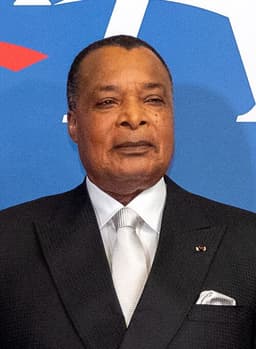
Denis Sassou-Nguesso
General · Modern
49.4Total
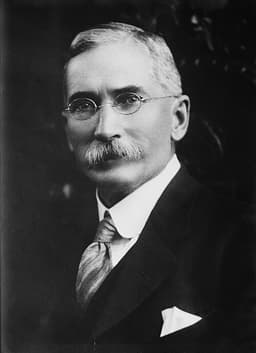
J. B. M. Hertzog
General · Modern
56.1Total
Basic Information
Born
1943
1866
Died
—
1942
Era
Modern
Modern
Nationality
Congo Republic
South Africa
Occupation
General
General
Civilization
Other
Other
Score Comparison
Military (10%)
10.2
25.0
Political (20%)
68.0
60.0
Influence (20%)
51.8
56.7
Legacy (20%)
46.7
50.0
Leadership (15%)
62.0
79.8
Strategy (15%)
42.3
60.0
TOTAL
49.4
56.1
Denis Sassou-Nguesso — Complete Timeline
1979 AD
Seized Power in CoupPolitical Action
Denis Sassou-Nguesso, a military officer, became President of the People's Republic of the Congo after a coup that ousted President Joachim Yhombi-Opango. He led the Congolese Party of Labour (PCT).
Coup d'étatCongoMilitary Rule
Impact: national
1990 AD
Transition to Multi-Party PoliticsReform◆ Major
Under pressure, Sassou-Nguesso's government introduced multi-party politics, ending the one-party Marxist-Leninist system. A national conference was held in 1991, leading to a transition to civilian rule.
Political ReformDemocracyCongo
Impact: national
1992 AD
Lost Presidential ElectionPolitical Action◆ Major
Sassou-Nguesso lost the 1992 presidential election to Pascal Lissouba. This was the first multi-party election in the country since independence, and Sassou-Nguesso peacefully handed over power.
ElectionDemocracyCongo
Impact: national
1997 AD
Returned to Power via Civil WarWar
Sassou-Nguesso's militia, backed by Angolan troops, captured Brazzaville, overthrowing President Pascal Lissouba. This ended a four-month civil war and returned Sassou-Nguesso to the presidency.
Civil WarCongoPower Struggle
Impact: nationaldestructive
2002 AD
Won Controversial Re-electionsPolitical Action◆ Major
Sassou-Nguesso won the 2002 presidential election with over 89% of the vote. The election was boycotted by major opposition candidates and criticized as neither free nor fair.
ElectionCongoControversy
Impact: national
2015 AD
Constitutional Referendum to Extend TermPolitical Action◆ Major
Sassou-Nguesso's government held a constitutional referendum that removed the age limit and two-term limit for the presidency. The change allowed him to run for re-election in 2016 and potentially remain in power.
Constitutional ReformCongoPower Consolidation
Impact: national
J. B. M. Hertzog — Complete Timeline
1899 AD
Boer War GeneralWar◆ Major
Hertzog served as a Boer general in the Second Boer War, commanding forces in the Orange Free State. He participated in several battles and became a prominent Afrikaner military leader.
Second Boer WarGeneralMilitary
Impact: regional
1914 AD
Founded the National PartyPolitical Action
Hertzog broke away from the South African Party and founded the National Party, which championed Afrikaner nationalism and opposed British imperial influence. The party would later implement apartheid.
National PartyAfrikaner NationalismFounding
Impact: nationalconstructive
1924 AD
Prime Minister of South AfricaPolitical Action◆ Major
Hertzog became Prime Minister after his National Party won the general election in coalition with the Labour Party. His government implemented policies to protect white workers and promote Afrikaner interests, including the 'civilized labour' policy.
Prime MinisterAfrikaner RightsLabour Policy
Impact: national
1934 AD
Merged with Smuts to Form United PartyPolitical Action◆ Major
Hertzog merged his National Party with Jan Smuts' South African Party to form the United Party. The coalition aimed to address the economic crisis of the Great Depression and promote national unity, but it alienated hardline Afrikaner nationalists.
United PartyCoalitionNational Unity
Impact: nationalconstructive
1936 AD
Passed the Representation of Natives ActReform◆ Major
Hertzog's government passed the Representation of Natives Act, which removed Black voters from the common voters' roll in the Cape Province and allowed them to elect white representatives instead. This further entrenched racial segregation.
SegregationDisenfranchisementLegislation
Impact: nationaldestructive
1939 AD
Resigned Over Neutrality in WWIIPolitical Action◆ Major
Hertzog advocated for South African neutrality in World War II, but his cabinet voted to enter the war on the Allied side. He resigned as Prime Minister and was succeeded by Jan Smuts, splitting the United Party.
World War IINeutralityResignation
Impact: national
Expert Analysis
J. B. M. Hertzog vs Denis Sassou-Nguesso
### The General and the Prime Minister
On a dusty street in Brazzaville in 1997, a column of Angolan tanks rolled past cheering militiamen, sealing the return of Denis Sassou-Nguesso to power. Half a century earlier and thousands of miles south, in the halls of Cape Town’s parliament in 1939, another general, J. B. M. Hertzog, watched his cabinet vote to enter a world war he abhorred, then quietly resigned. One man seized power through civil war; the other surrendered it through principle. Both were generals who became political leaders, yet their paths, their eras, and their outcomes could not have diverged more sharply. What drove these two men—one a Marxist-Leninist turned autocrat, the other an Afrikaner nationalist turned democrat—to such different fates?
### Origins: Two Worlds Apart
Denis Sassou-Nguesso was born in 1943 in the French colony of Moyen-Congo, into the Mbochi ethnic group from the northern region. He came of age in the twilight of colonial rule, when African independence movements were sweeping the continent. His world was one of Cold War alignments, where a young officer could rise through the Congolese army and find himself at the center of a Marxist revolution. In 1979, at just thirty-six, he seized power in a coup that ousted the previous military junta, proclaiming the People’s Republic of the Congo. His Congo was a land of oil wealth, ethnic rivalry, and brittle institutions.
James Barry Munnik Hertzog was born in 1866 in the Cape Colony, the son of a Boer farmer. He grew up speaking Afrikaans in a land dominated by British imperial power. The defining trauma of his generation was the Second Boer War (1899–1902), in which he served as a Boer general, fighting a guerrilla campaign against the British Empire. After the war, he channeled that bitterness into politics. He founded the National Party in 1914 to champion Afrikaner rights, language, and identity. His South Africa was a union of former Boer republics and British colonies, where white supremacy was assumed but Afrikaners felt themselves second-class citizens under British rule.
### Rise to Power: Coup and Coalition
Sassou-Nguesso’s rise was abrupt and violent. In 1979, he was a military officer when a coup brought him to the presidency of the People’s Republic. He consolidated power by embracing a single-party Marxist-Leninist system, with himself as the head of the Congolese Party of Labour. His legitimacy rested on the gun and on Soviet support. When the Cold War ended, he faced a crisis. In 1990, under immense internal and external pressure, he introduced multi-party politics, ending the one-party state. Two years later, in 1992, he lost the country’s first free presidential election to Pascal Lissouba. He accepted defeat—but only temporarily.
Hertzog’s rise was gradual and democratic. After founding the National Party in 1914, he built a coalition of Afrikaner farmers, workers, and intellectuals. In 1924, his party won the general election in alliance with the Labour Party, and he became Prime Minister. He did not seize power; he won it at the ballot box. His path was one of parliamentary maneuvering, not military force. Where Sassou-Nguesso’s legitimacy came from a coup, Hertzog’s came from a constitution—one that, for all its flaws, was a product of British compromise and Boer stubbornness.
### Leadership & Governance: Oil and Apartheid
Sassou-Nguesso governed as a classic African strongman. His first term (1979–1992) was marked by state control of the economy, reliance on oil revenues, and repression of dissent. When he returned to power in 1997—after a brutal civil war in which his militia, backed by Angolan troops, captured Brazzaville—he ruled even more ruthlessly. In 2002, he won a controversial election with over 89% of the vote, boycotted by the opposition. In 2015, he held a constitutional referendum that removed age and term limits, allowing him to stand indefinitely. His military score of 19.9 reflects his reliance on force, but his political score of 61.2 shows a cunning ability to manipulate institutions.
Hertzog governed as a nationalist reformer. As Prime Minister from 1924 to 1939, he championed Afrikaner economic empowerment, protected Afrikaans language and culture, and negotiated greater independence from Britain. In 1934, he merged his National Party with Jan Smuts’ South African Party to form the United Party, aiming to unite white South Africans. Yet his legacy is deeply stained: in 1936, his government passed the Representation of Natives Act, which removed Black voters from the common roll in the Cape Province, entrenching racial segregation. His leadership score of 79.9 reflects his skill in navigating white politics, but his strategy score of 55.9 shows a man who failed to see the storm coming.
### Triumph & Tragedy
Sassou-Nguesso’s greatest triumph was his 1997 return to power, a stunning reversal of fortune that proved his resilience and ruthlessness. His tragedy is that he has become a caricature of the African strongman: clinging to power for decades, enriching his inner circle, and leaving his country poor and unstable. His legacy score of 61.2 reflects a man who is neither loved nor entirely hated—just endured.
Hertzog’s greatest triumph was the 1924 election victory, which broke British political dominance and gave Afrikaners a voice. His tragedy was his resignation in 1939 over neutrality in World War II. He believed South Africa should stay out of Britain’s war, but his cabinet voted to join the Allies. He stepped down rather than betray his principles. That act of resignation stands in stark contrast to Sassou-Nguesso’s willingness to burn his country to stay in power. Hertzog’s influence score of 74.8 reflects a man who shaped a nation’s identity, but his legacy is forever tied to the apartheid system he helped build.
### Character & Destiny
Sassou-Nguesso was a survivor, not a visionary. He adapted from Marxist to capitalist, from Cold War ally to oil broker, from one-party ruler to electoral autocrat. His character was pragmatic and ruthless. He saw power as an end in itself. Hertzog was a man of conviction, even when those convictions were wrong. He believed in Afrikaner nationalism and white supremacy, but he also believed in constitutional process. He could have staged a coup in 1939; he chose to resign. That choice defined him.
### Legacy: Two Shadows
Sassou-Nguesso remains president of the Republic of Congo as of 2025, a living relic of an era most Africans have left behind. His legacy is one of stagnation: oil wealth that has not transformed the country, and a political system that mocks democracy. Hertzog died in 1942, a year after resigning, remembered as the father of Afrikaner nationalism. His legacy is more complex: he gave Afrikaners a place in the sun, but he also laid the legal groundwork for apartheid. Both men built systems that served their own people at the expense of others.
### Conclusion
What separates a general who dies in office from one who dies in retirement? Opportunity and principle. Sassou-Nguesso had the opportunity to step aside in 1992, but he chose to return through war. Hertzog had the opportunity to cling to power in 1939, but he chose to leave. One man saw power as a prize to be held at any cost; the other saw it as a trust to be honored. In the end, the difference between them is not just the length of their reigns, but the depth of their convictions. One is remembered for how he stayed; the other, for how he left.
Rankings
🥇
J. B. M. HertzogLeader
Mil: 25.0Pol: 60.0Inf: 56.7
56.1
🥈
Denis Sassou-Nguesso
Mil: 10.2Pol: 68.0Inf: 51.8
49.4
+6.7 behind
How This Comparison Works
Algorithm
Each figure is scored on 6 dimensions (0—100 scale) based on structured historical data: Military (10%), Political (20%), Influence (20%), Legacy (20%), Leadership (15%), Strategy (15%). The weighted total produces the final ranking.
Data Sources
Scores are computed from structured sub-indicators in the database. Scale factors adjust for era (Ancient ×0.85, Modern ×1.0) and civilization size (Eastern ×1.05, Other ×0.80) to account for differences in population and military scale.
Maximum 3 Figures
Comparisons are limited to 2—3 figures to ensure readability and statistical meaningfulness.
Error Margins
±5 points per dimension — Sub-scores are derived from historical records with inherent uncertainty. Two figures within 5 points on a dimension should be considered roughly equivalent in that area.
Total Score Accuracy
±3 points overall — The weighted combination of 6 dimensions produces a total score with approximately ±3 points of uncertainty. Differences of less than 3 points are not statistically significant— the figures are effectively tied.
Known Limitations
- Historical records are incomplete and uneven across civilizations
- Figures from oral-tradition societies may be underrepresented
- Occupation labels can misclassify multi-role figures
- Scores measure capability and impact, not moral character
- Quantitative scoring is a comparison tool, not absolute truth
Capability Radar
Military (10%) — Battles & Warfare
Battles
5
45
Win Rate
5
40
Expansion
5
20
Political (20%) — Governance & Reform
Reform
30
60
Diplomacy
50
55
Economy
30
50
Influence (20%) — Cultural & Global Reach
Cultural
20
50
Global
20
45
Legacy (20%) — Historical Impact
Historical
30
55
Longevity
40
40
Leadership (15%) — Power & Stability
Tenure
70
65
Stability
20
45
Strategy (15%) — Tactics & Innovation
Strategy
5
50
Tactics
5
45
Reform
10
30
Similar Comparisons
Comments & Discussion
数据侦探6/16/2026
数据不会说谎:对比统治时长,赫佐格当总理才15年(1924-1939),而萨苏-恩格索从1979年算起已经统治刚果(布)超过40年。赫佐格下台是因为议会投票反对他的中立政策,这是民主制度的胜利;萨苏每次"选举"得票率都超过80%,连2015年修宪取消两届任期的公投都通过了。所谓"原则"和"权谋"的区别,赤裸裸地体现在任期数字上。
Classics Scholar6/16/2026
I find it tragically ironic how both men embodied Plato's "philosopher-king" ideal in opposite ways. Hertzog studied law, wrote poetry, and genuinely believed in Afrikaner self-determination—he had a moral compass, however flawed by racial exclusion. Sassou-Nguesso studied in a Soviet military academy, learned to quote Marx, and built a cult of personality with an iron fist. Hertzog's 1939 resignation reminds me of Cincinnatus returning to his plow; Sassou-Nguesso's 1997 comeback with Angolan ta
历史碎片收集者6/16/2026
别被西方叙事骗了:赫佐格1939年辞职确实体面,但他1924年就推动通过了《工种隔离法》,1937年又搞了《班图人教育法》,把种族隔离制度牢牢钉在南非。萨苏-恩格索确实独裁,但他1990年代放弃马克思主义,引入多党制(虽然是假的),还搞了刚果加入非洲联盟的谈判。这两人都是殖民时代和后殖民时代的产物,一个维护白人至上,一个维护家族统治。谁也别吹谁高尚,都是政治生存的野生动物。
The Iron Charisma Critic6/16/2026
Honestly, the only thing impressive about Sassou-Nguesso is his political longevity—he's outlasted three US presidents and every scandal imaginable. But comparing him to Hertzog exposes how we romanticize "principled" leaders. Hertzog's "princ
Chronicler16006/16/2026
As a military historian, I see a study in contrasts. Hertzog was a Boer War veteran who literally fought for his people's survival against the British Empire—he knew war's cost intimately, which is why he opposed entering WWII despite his nationalism. Sassou-Nguesso? He was a Cold War soldier who never fought a real war, just coups and civil conflicts where Angolan and Cuban allies did the heavy lifting. Hertzog lost his prime ministership over principle; Sassou-Nguesso traded Marxist rhetoric f