Loading...
Denis Sassou-Nguesso vs Sitiveni Rabuka
Sitiveni Rabuka leads by 2.3 pts · 2 figures compared
…
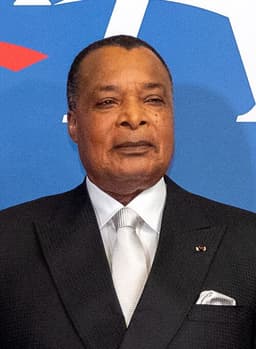
Denis Sassou-Nguesso
General · Modern
49.4Total
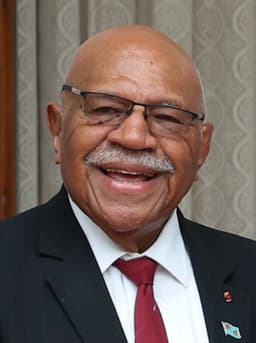
Sitiveni Rabuka
General · Modern
51.7Total
Basic Information
Born
1943
1948
Died
—
—
Era
Modern
Modern
Nationality
Congo Republic
Fiji
Occupation
General
General
Civilization
Other
Other
Score Comparison
Military (10%)
10.2
10.2
Political (20%)
68.0
60.0
Influence (20%)
51.8
53.3
Legacy (20%)
46.7
46.7
Leadership (15%)
62.0
85.0
Strategy (15%)
42.3
39.6
TOTAL
49.4
51.7
Denis Sassou-Nguesso — Complete Timeline
1979 AD
Seized Power in CoupPolitical Action
Denis Sassou-Nguesso, a military officer, became President of the People's Republic of the Congo after a coup that ousted President Joachim Yhombi-Opango. He led the Congolese Party of Labour (PCT).
Coup d'étatCongoMilitary Rule
Impact: national
1990 AD
Transition to Multi-Party PoliticsReform◆ Major
Under pressure, Sassou-Nguesso's government introduced multi-party politics, ending the one-party Marxist-Leninist system. A national conference was held in 1991, leading to a transition to civilian rule.
Political ReformDemocracyCongo
Impact: national
1992 AD
Lost Presidential ElectionPolitical Action◆ Major
Sassou-Nguesso lost the 1992 presidential election to Pascal Lissouba. This was the first multi-party election in the country since independence, and Sassou-Nguesso peacefully handed over power.
ElectionDemocracyCongo
Impact: national
1997 AD
Returned to Power via Civil WarWar
Sassou-Nguesso's militia, backed by Angolan troops, captured Brazzaville, overthrowing President Pascal Lissouba. This ended a four-month civil war and returned Sassou-Nguesso to the presidency.
Civil WarCongoPower Struggle
Impact: nationaldestructive
2002 AD
Won Controversial Re-electionsPolitical Action◆ Major
Sassou-Nguesso won the 2002 presidential election with over 89% of the vote. The election was boycotted by major opposition candidates and criticized as neither free nor fair.
ElectionCongoControversy
Impact: national
2015 AD
Constitutional Referendum to Extend TermPolitical Action◆ Major
Sassou-Nguesso's government held a constitutional referendum that removed the age limit and two-term limit for the presidency. The change allowed him to run for re-election in 2016 and potentially remain in power.
Constitutional ReformCongoPower Consolidation
Impact: national
Sitiveni Rabuka — Complete Timeline
1987 AD
1987 Fijian Coup d'étatPolitical Action
Rabuka, as a colonel in the Fijian military, led a coup overthrowing the elected government of Timoci Bavadra. The coup was motivated by ethnic Fijian opposition to Indo-Fijian political influence. Rabuka declared Fiji a republic.
CoupMilitary InterventionEthnic Tension
Impact: nationaldestructive
1992 AD
1992 Election as Prime MinisterPolitical Action◆ Major
Rabuka transitioned from military leader to civilian politician, winning the 1992 general election as leader of the Fijian Political Party. He became Prime Minister, serving until 1999.
ElectionCivilian GovernmentPolitical Transition
Impact: national
1997 AD
1997 Constitution ReformReform◆ Major
Rabuka's government oversaw the adoption of a new constitution that removed ethnic-based voting and provided for a multi-ethnic government. The constitution aimed to reduce ethnic tensions and promote national unity.
ConstitutionReformEthnic Reconciliation
Impact: nationalconstructive
1999 AD
1999 General Election DefeatPolitical Action◆ Major
Rabuka's government was defeated in the general election by the Labour Party led by Mahendra Chaudhry. Rabuka stepped down as Prime Minister, marking the end of his first period in power.
Election DefeatGovernment ChangeChaudhry
Impact: national
2022 AD
2022 Return as Prime MinisterPolitical Action◆ Major
Rabuka led the People's Alliance to victory in the 2022 general election, forming a coalition government. He became Prime Minister again, 23 years after his previous tenure, promising democratic reforms.
ElectionReturn to PowerCoalition Government
Impact: national
Expert Analysis
Sitiveni Rabuka vs Denis Sassou-Nguesso
# The Coup Maker’s Dilemma: Two Paths from Power to Redemption
In 1997, as Angolan tanks rolled through the streets of Brazzaville to restore Denis Sassou-Nguesso to a presidency he had lost five years earlier, a very different scene unfolded 2,000 miles east across the Pacific. On the island of Fiji, Sitiveni Rabuka—who had also seized power by force a decade before—was quietly serving out his term as an elected prime minister, working on a new constitution that would dismantle the very ethnic voting system he had once used to justify his coup. Both men began as military strongmen. Both ended up as presidents. But the trajectories of their lives tell a deeply revealing story about the choices that separate a despot from a democrat.
Origins
Denis Sassou-Nguesso was born in 1943 in the village of Edou, in the northern Cuvette region of the Republic of Congo. He grew up in a country that had only recently emerged from French colonial rule, where politics was a brutal game of ethnic alliances and military force. The Congo’s post-independence history was a revolving door of coups and counter-coups, and young Sassou-Nguesso, trained as a paratrooper in France and Algeria, absorbed the lesson early: power belonged to whoever held the gun.
Sitiveni Rabuka, born five years later in 1948 in the village of Dreketi, came of age in a Fiji still deeply loyal to the British Crown. He was a rugby star and a devout Methodist, raised in a culture where chiefly authority and military discipline merged seamlessly. When he joined the Fijian army, he did so not as a revolutionary but as a career officer—a man who believed in order, hierarchy, and the protection of indigenous Fijian land rights against what he saw as the creeping influence of Indo-Fijian political power.
The difference in their origins is subtle but crucial. Sassou-Nguesso grew up in a failed state where violence was the only language of succession. Rabuka grew up in a functioning one where the army was a guardian, not a predator.
Rise to Power
Sassou-Nguesso’s path was straightforward. In 1979, as a 36-year-old colonel, he seized power in a coup that ousted the existing Marxist-Leninist government. He then spent the next decade consolidating control, running the People’s Republic of the Congo as a one-party state with himself as its unchallenged leader. There was no ideology beyond survival, no vision beyond staying in power.
Rabuka’s rise was more complicated—and more revealing. In 1987, when the newly elected coalition government of Timoci Bavadra (an Indo-Fijian-led alliance) took office, Rabuka, then a colonel, led a coup on the grounds that indigenous Fijians were losing control of their country. He arrested the prime minister, suspended the constitution, and declared Fiji a republic. But unlike Sassou-Nguesso, Rabuka did not immediately install himself as dictator. He handed power to a civilian interim government, then—in a move that would define his legacy—stepped back and ran for office himself.
That is the fork in the road. Sassou-Nguesso saw the coup as the beginning of his rule. Rabuka saw it as a temporary correction, after which he would submit to the ballot box.
Leadership & Governance
As president of the People’s Republic of the Congo, Sassou-Nguesso governed with an iron fist. His “Marxist-Leninist” system was a facade for a personalized autocracy built on oil revenues and northern ethnic loyalties. When the Soviet Union collapsed and international pressure mounted, he reluctantly introduced multi-party politics in 1990—but only to preserve his grip. In 1992, he actually lost the election to Pascal Lissouba, a defeat he accepted only as a tactical retreat. Five years later, he returned with Angolan guns, launching a civil war that killed thousands and left Brazzaville in ruins.
Rabuka took the opposite path. After winning the 1992 election as prime minister—the same election he had made possible by his coup—he did not entrench ethnic Fijian supremacy. Instead, in 1997, he oversaw a constitutional reform that abolished the ethnic voting system, created a multi-racial parliament, and guaranteed equal rights for Indo-Fijians. It was a stunning reversal from the man who had once justified a coup on racial grounds. “I have changed,” Rabuka later said. “I have seen the futility of division.”
The contrast is stark. Sassou-Nguesso used democracy as a mask for autocracy. Rabuka used autocracy as a painful step toward democracy.
Triumph & Tragedy
Sassou-Nguesso’s greatest triumph was his 1997 return to power—a military victory that erased his 1992 defeat. His greatest tragedy was that this victory condemned his country to perpetual instability. Since then, he has won elections with 89% of the vote (2002), abolished term limits via a 2015 constitutional referendum, and crushed all opposition. At 81, he remains president, having ruled for over 40 of the last 45 years.
Rabuka’s greatest triumph was the 1997 constitution—a document that, for a time, made Fiji a model of racial reconciliation. His greatest tragedy was that he lost the 1999 election to Mahendra Chaudhry, the very Indo-Fijian leader he had once overthrown. But here is the remarkable part: Rabuka accepted his defeat, stepped down, and spent the next two decades in political obscurity. Then, in 2022, at age 74, he returned to lead a coalition government as prime minister—a democratically elected one, this time.
Character & Destiny
What drove these two men in opposite directions? The answer lies in the difference between a soldier who sees power as a possession and a soldier who sees it as a trust.
Sassou-Nguesso’s character was forged in the crucible of Cold War Africa, where loyalty meant nothing and survival meant everything. He learned to treat politics as war by other means—and he never unlearned it. Rabuka, by contrast, was shaped by the Fijian chiefly tradition of service, by his Methodist faith, and by the humbling experience of watching his own coup create more problems than it solved. He had the capacity for self-reflection that Sassou-Nguesso lacked.
Legacy
Sassou-Nguesso’s legacy is a cautionary tale: the coup maker who never stopped being a coup maker, who turned his country into a personal fiefdom and his people into subjects. He will be remembered as a brilliant survivor—and a catastrophic leader.
Rabuka’s legacy is more complex and more hopeful. He will be remembered as the man who tore down democracy, then rebuilt it—who had the courage to admit he was wrong, and the grace to let history judge him. His story suggests that even those who seize power by force can, if they choose, become the architects of their own obsolescence.
Conclusion
In the end, both men began as colonels with guns. One became a president who never trusted elections. The other became a president who trusted them so much that he stepped down when he lost. The difference was not in their origins, their eras, or their countries. It was in the quiet, private decision each man made when he looked in the mirror and asked himself: Am I a ruler, or am I a servant? The answer, for Sassou-Nguesso, was power. For Rabuka, it was redemption.
Rankings
🥇
Sitiveni RabukaLeader
Mil: 10.2Pol: 60.0Inf: 53.3
51.7
🥈
Denis Sassou-Nguesso
Mil: 10.2Pol: 68.0Inf: 51.8
49.4
+2.3 behind
How This Comparison Works
Algorithm
Each figure is scored on 6 dimensions (0—100 scale) based on structured historical data: Military (10%), Political (20%), Influence (20%), Legacy (20%), Leadership (15%), Strategy (15%). The weighted total produces the final ranking.
Data Sources
Scores are computed from structured sub-indicators in the database. Scale factors adjust for era (Ancient ×0.85, Modern ×1.0) and civilization size (Eastern ×1.05, Other ×0.80) to account for differences in population and military scale.
Maximum 3 Figures
Comparisons are limited to 2—3 figures to ensure readability and statistical meaningfulness.
Error Margins
±5 points per dimension — Sub-scores are derived from historical records with inherent uncertainty. Two figures within 5 points on a dimension should be considered roughly equivalent in that area.
Total Score Accuracy
±3 points overall — The weighted combination of 6 dimensions produces a total score with approximately ±3 points of uncertainty. Differences of less than 3 points are not statistically significant— the figures are effectively tied.
Known Limitations
- Historical records are incomplete and uneven across civilizations
- Figures from oral-tradition societies may be underrepresented
- Occupation labels can misclassify multi-role figures
- Scores measure capability and impact, not moral character
- Quantitative scoring is a comparison tool, not absolute truth
Capability Radar
Military (10%) — Battles & Warfare
Battles
5
5
Win Rate
5
5
Expansion
5
5
Political (20%) — Governance & Reform
Reform
30
50
Diplomacy
50
45
Economy
30
40
Influence (20%) — Cultural & Global Reach
Cultural
20
30
Global
20
20
Legacy (20%) — Historical Impact
Historical
30
40
Longevity
40
30
Leadership (15%) — Power & Stability
Tenure
70
55
Stability
20
35
Strategy (15%) — Tactics & Innovation
Strategy
5
10
Tactics
5
10
Reform
10
5
Similar Comparisons
Comments & Discussion
COLDSTEEL CLASSICIST6/16/2026
Sassou-Nguesso's paratrooper training in France and Algeria made him a perfect product of Cold War realpolitik. He learned from colonizers how to rule by force—and never unlearned it. Rabuka, by contrast, had no such 'education'. He overthrew a government, then actually walked the path back to democracy, drafting multi-ethnic constitutions. That's not just a pivot; it's a near-miraculous conversion. Sassou stayed a soldier with a suit; Rabuka became a civilian with a conscience.
兵棋推演佬6/16/2026
把Sassou-Nguesso和Rabuka放在一起比较,本身就带着误导性。Congo的人口结构是南北对立、资源诅咒缠身,Angola坦克开进来时,Sassou-Nguesso根本没有选择退路——他要是学Rabuka搞什么制宪改革,第二天就会被对手清算。Rabuka能在Fiji转型成功,是因为岛国的族群矛盾远没有刚果那种石油和冷武器库的暴力逻辑。这不是道德差异,是地缘政治格局划出的不同生存曲线。别美化环境带来的红利。
SASSOU SYMPATHIZER6/16/2026
Let’s be honest: Sassou-Nguesso didn't "choose" despotism—he adapted to a failed state where reform was suicide. Rabuka had the luxury of a coherent civil service and a British legal legacy; Sassou inherited a wreckage of competing militias and oil-backed chaos. Calling Rabuka a democrat and Sassou a despot ignores that the latter faced a predator state, not a rugby field. You can't draft a new constitution when your predecessor's loyalists are waiting to slit your throat.
数据拆弹员6/16/2026
分析说Rabuka“安静地”做完了总理任期并起草新宪法——但请查一下细账:Fiji在1990年代经历了四次政变威胁,Rabuka的军头旧部从未真正缴械。他那部1997年宪法虽然取消了种族选举制,却留下了军队特权条款,直接纵容了2000年George Speight的政变。事实上,Rabuka的“民主转型”更像是包装良好的权力重组,而Sassou-Nguesso至少没有用“和解”的名义给自己的继任者埋雷。别把半吊子改革吹成道德胜利。
CORRUPTED IDEALIST6/16/2026
最让我心痛的是这段对比暴露的真相:Sassou-Nguesso从未真正想过放下权力,哪怕1997年Angola的坦克帮了他,他此后二十多年依然是那个用石油贿赂对手、镇压异议的军阀总统。而Rabuka,一个曾是政变领袖的人,居然能在2006年站出来反对Frank Bainimarama的第二次政变。一个人从夺权者变成了宪政捍卫者,另一个从夺