Loading...
Denis Sassou-Nguesso vs Sun Chuanfang
Sun Chuanfang leads by 5.0 pts · 2 figures compared
…
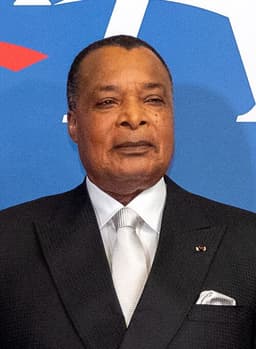
Denis Sassou-Nguesso
General · Modern
49.4Total

Sun Chuanfang
General · Modern
54.4Total
Basic Information
Born
1943
1885
Died
—
1935
Era
Modern
Modern
Nationality
Congo Republic
China
Occupation
General
General
Civilization
Other
Eastern
Score Comparison
Military (10%)
10.2
67.5
Political (20%)
68.0
54.7
Influence (20%)
51.8
52.5
Legacy (20%)
46.7
43.3
Leadership (15%)
62.0
65.0
Strategy (15%)
42.3
57.5
TOTAL
49.4
54.4
Denis Sassou-Nguesso — Complete Timeline
1979 AD
Seized Power in CoupPolitical Action
Denis Sassou-Nguesso, a military officer, became President of the People's Republic of the Congo after a coup that ousted President Joachim Yhombi-Opango. He led the Congolese Party of Labour (PCT).
Coup d'étatCongoMilitary Rule
Impact: national
1990 AD
Transition to Multi-Party PoliticsReform◆ Major
Under pressure, Sassou-Nguesso's government introduced multi-party politics, ending the one-party Marxist-Leninist system. A national conference was held in 1991, leading to a transition to civilian rule.
Political ReformDemocracyCongo
Impact: national
1992 AD
Lost Presidential ElectionPolitical Action◆ Major
Sassou-Nguesso lost the 1992 presidential election to Pascal Lissouba. This was the first multi-party election in the country since independence, and Sassou-Nguesso peacefully handed over power.
ElectionDemocracyCongo
Impact: national
1997 AD
Returned to Power via Civil WarWar
Sassou-Nguesso's militia, backed by Angolan troops, captured Brazzaville, overthrowing President Pascal Lissouba. This ended a four-month civil war and returned Sassou-Nguesso to the presidency.
Civil WarCongoPower Struggle
Impact: nationaldestructive
2002 AD
Won Controversial Re-electionsPolitical Action◆ Major
Sassou-Nguesso won the 2002 presidential election with over 89% of the vote. The election was boycotted by major opposition candidates and criticized as neither free nor fair.
ElectionCongoControversy
Impact: national
2015 AD
Constitutional Referendum to Extend TermPolitical Action◆ Major
Sassou-Nguesso's government held a constitutional referendum that removed the age limit and two-term limit for the presidency. The change allowed him to run for re-election in 2016 and potentially remain in power.
Constitutional ReformCongoPower Consolidation
Impact: national
Sun Chuanfang — Complete Timeline
1923 AD
Control of the Lower YangtzePolitical Action◆ Major
Sun Chuanfang established control over the wealthy Lower Yangtze region, including Jiangsu, Zhejiang, Anhui, Fujian, and Jiangxi provinces. He became one of the most powerful warlords in southern China, commanding substantial revenues and military forces.
Warlord EraTerritorial ControlPower
Impact: regional
1924 AD
Formation of the Five Provinces AlliancePolitical Action
Sun Chuanfang formed the Five Provinces Alliance with other warlords to resist the expansion of the Fengtian clique. This alliance temporarily stabilized his position in the Lower Yangtze region.
Warlord EraAlliancePolitics
Impact: regional
1927 AD
Defeat by the National Revolutionary ArmyWar◆ Major
Sun Chuanfang's forces were decisively defeated by the National Revolutionary Army during the Northern Expedition. He lost control of the Lower Yangtze provinces and fled, ending his warlord rule.
Northern ExpeditionWarDefeat
Impact: nationaltragic
1935 AD
AssassinationPolitical Action
Sun Chuanfang was assassinated in Tianjin by a woman named Shi Jianqiao, who claimed revenge for her father's death during the warlord conflicts. His death marked the end of his influence in Chinese politics.
AssassinationWarlord EraDeath
tragic
Expert Analysis
Origins
Denis Sassou-Nguesso was born in 1943 in Edou, a village in northern Congo. He joined the French army and later the Congolese armed forces, rising through the ranks. His military career gave him access to power when he participated in the 1968 coup that brought Marien Ngouabi to power. In contrast, Sun Chuanfang was born in 1885 in Shandong, China, into a poor family. He joined the Beiyang Army and studied at the Baoding Military Academy. His early career under the Beiyang government provided the foundation for his later warlord status. Both men came from modest backgrounds but used military service as a springboard.
Rise to Power
Sassou-Nguesso seized power in a bloodless coup in 1979 after the death of President Joachim Yhombi-Opa. He became head of the Congolese Workers' Party and president of the People's Republic of Congo. His rise was facilitated by his position as a senior military officer and party insider. Sun Chuanfang rose through the Beiyang military hierarchy, gaining control of the wealthy Lower Yangtze region by 1925. He defeated rival warlords and established himself as the leader of the Five Provinces Alliance (Jiangsu, Zhejiang, Anhui, Fujian, Jiangxi). His rise was marked by strategic alliances and military campaigns. Sassou-Nguesso's path was more political, while Sun's was purely military.
Leadership & Governance
Sassou-Nguesso governed Congo as a Marxist-Leninist state until 1991, when he transitioned to multi-party politics under pressure. He maintained power through a mix of repression, patronage, and manipulation of ethnic divisions. He scored 62.0 in leadership and 68.0 in political acumen. His governance was marked by state control of the economy and reliance on oil revenues. Sun Chuanfang ruled his territories as a military governor, focusing on tax collection and maintaining order. He did not implement significant reforms. His leadership score of 65.0 reflects his military command, but his political score of 54.7 indicates weaker governance. Sun's rule was more extractive than developmental.
Triumph & Tragedy
Sassou-Nguesso's greatest triumph was returning to power in 1997 after a civil war, backed by Angolan troops. He won subsequent elections with over 89% of the vote, though these were criticized as flawed. His tragedy includes the 1992 election loss and the civil war that killed thousands. Sun Chuanfang's triumph was his control of the Lower Yangtze, one of China's richest regions. His tragedy was his decisive defeat by the National Revolutionary Army in 1927, leading to loss of his territories. He was later assassinated in 1935 by a woman seeking revenge. Both experienced dramatic reversals of fortune.
Character & Destiny
Sassou-Nguesso is characterized by political resilience and adaptability. He shifted from Marxism to multi-party politics and remained in power for decades. His destiny was shaped by his ability to navigate external support and internal divisions. Sun Chuanfang was known for his military competence but political inflexibility. He failed to adapt to the rising nationalist movement. His assassination ended any chance of a comeback. Historical assessments note Sun's tactical skill but strategic limitations. Sassou-Nguesso's character allowed him to outlast his rivals, while Sun's rigidity led to his downfall.
Legacy
Sassou-Nguesso's legacy is mixed: he is criticized for authoritarianism and corruption but credited with maintaining stability. He remains in power as of 2025, with a legacy score of 46.7. Sun Chuanfang is remembered as a typical warlord of the Republican period, with limited lasting impact. His legacy score of 43.3 reflects his minor role in Chinese history. Neither created enduring institutions.
Conclusion
Denis Sassou-Nguesso had greater overall impact than Sun Chuanfang. Despite Sun's higher total score (54.4 vs 49.4), Sassou-Nguesso's political longevity and influence on Congo's modern history are more significant. Sun's control was brief and ended in defeat, while Sassou-Nguesso shaped his country for over 40 years. The 5-point score gap is misleading because political and influence scores (68.0 and 51.8) reflect Sassou-Nguesso's sustained power. Sun's military score (67.5) is higher but his legacy is narrower. Sassou-Nguesso's ability to return to power after losing an election demonstrates strategic resilience that Sun lacked.
Rankings
🥇
Sun ChuanfangLeader
Mil: 67.5Pol: 54.7Inf: 52.5
54.4
🥈
Denis Sassou-Nguesso
Mil: 10.2Pol: 68.0Inf: 51.8
49.4
+5.0 behind
How This Comparison Works
Algorithm
Each figure is scored on 6 dimensions (0—100 scale) based on structured historical data: Military (10%), Political (20%), Influence (20%), Legacy (20%), Leadership (15%), Strategy (15%). The weighted total produces the final ranking.
Data Sources
Scores are computed from structured sub-indicators in the database. Scale factors adjust for era (Ancient ×0.85, Modern ×1.0) and civilization size (Eastern ×1.05, Other ×0.80) to account for differences in population and military scale.
Maximum 3 Figures
Comparisons are limited to 2—3 figures to ensure readability and statistical meaningfulness.
Error Margins
±5 points per dimension — Sub-scores are derived from historical records with inherent uncertainty. Two figures within 5 points on a dimension should be considered roughly equivalent in that area.
Total Score Accuracy
±3 points overall — The weighted combination of 6 dimensions produces a total score with approximately ±3 points of uncertainty. Differences of less than 3 points are not statistically significant— the figures are effectively tied.
Known Limitations
- Historical records are incomplete and uneven across civilizations
- Figures from oral-tradition societies may be underrepresented
- Occupation labels can misclassify multi-role figures
- Scores measure capability and impact, not moral character
- Quantitative scoring is a comparison tool, not absolute truth
Capability Radar
Military (10%) — Battles & Warfare
Battles
5
65
Win Rate
5
55
Expansion
5
60
Political (20%) — Governance & Reform
Reform
30
25
Diplomacy
50
45
Economy
30
40
Influence (20%) — Cultural & Global Reach
Cultural
20
20
Global
20
15
Legacy (20%) — Historical Impact
Historical
30
30
Longevity
40
20
Leadership (15%) — Power & Stability
Tenure
70
50
Stability
20
30
Strategy (15%) — Tactics & Innovation
Strategy
5
55
Tactics
5
60
Reform
10
30
Similar Comparisons
Comments & Discussion
No comments yet. Be the first to share your thoughts!